




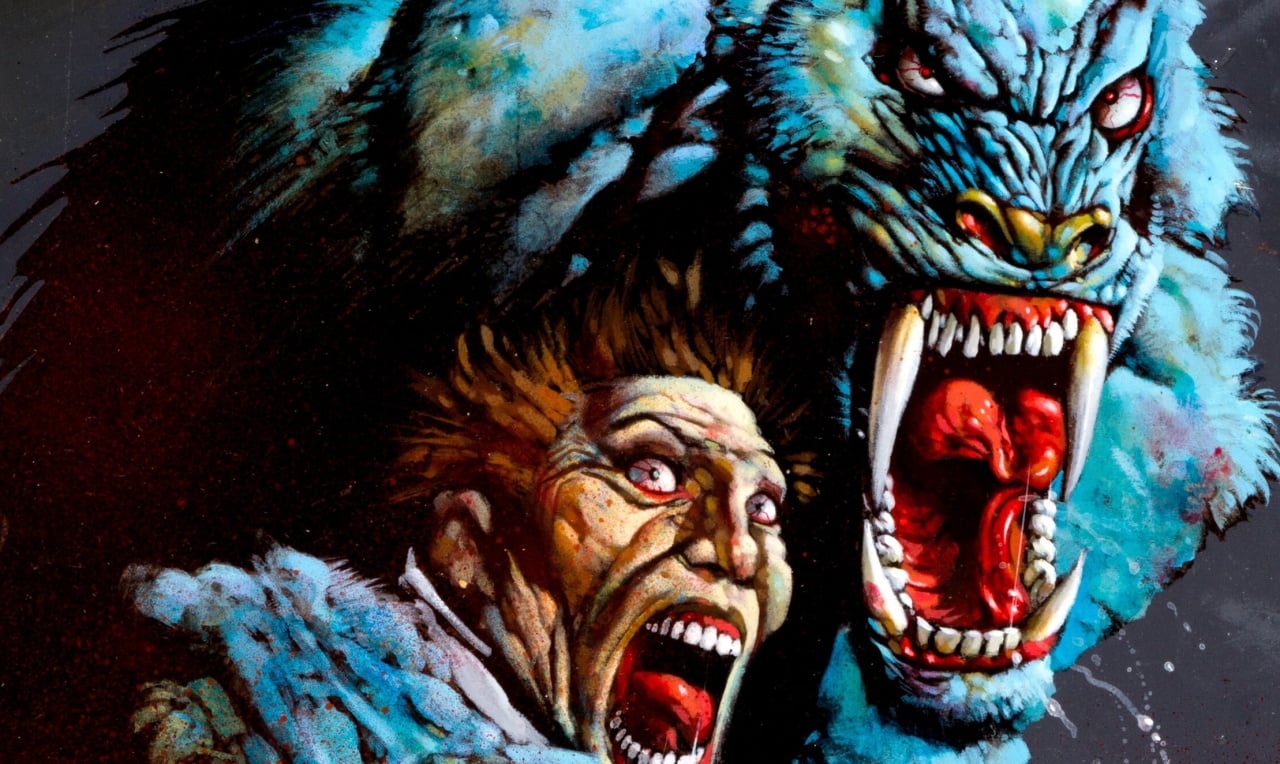
An 18-rated ellipsoid classic.
Cast your mind back to the video game landscape of the early ’90s, and 2D remains king. Granted, 3D gaming was on the rise thanks to titles such as Star Fox, Alone in the Dark, Virtua Racing and Doom, but with the wave of 32-bit consoles yet to materialise, the industry was at an odd crossroads; CD-ROM tech had mostly been used for FMV and pre-rendered titles like The 7th Guest, Night Trap and Myst—games which promised an immersive, cinematic experience yet lacked a deep and meaningful degree of interaction.
Into this landscape, a tiny two-man UK studio released a game which offered an innovative way to represent characters in 3D whilst maintaining a film-like level of storytelling and player agency, making it far more suitable for the name “interactive movie” than any of the FMV pretenders of the 1990s; it also joins Alone in the Dark as a pre-Resident Evil example of a what would eventually be known as “survival horror”. That game was 1994’s Ecstatica, developed by Andrew Spencer (of Andrew Spencer Studios) and Alain Maindron.
Read the full article on timeextension.com
An 18-rated ellipsoid classic.
Cast your mind back to the video game landscape of the early ’90s, and 2D remains king. Granted, 3D gaming was on the rise thanks to titles such as Star Fox, Alone in the Dark, Virtua Racing and Doom, but with the wave of 32-bit consoles yet to materialise, the industry was at an odd crossroads; CD-ROM tech had mostly been used for FMV and pre-rendered titles like The 7th Guest, Night Trap and Myst—games which promised an immersive, cinematic experience yet lacked a deep and meaningful degree of interaction.
Into this landscape, a tiny two-man UK studio released a game which offered an innovative way to represent characters in 3D whilst maintaining a film-like level of storytelling and player agency, making it far more suitable for the name “interactive movie” than any of the FMV pretenders of the 1990s; it also joins Alone in the Dark as a pre-Resident Evil example of a what would eventually be known as “survival horror”. That game was 1994’s Ecstatica, developed by Andrew Spencer (of Andrew Spencer Studios) and Alain Maindron.
Read the full article on timeextension.com