





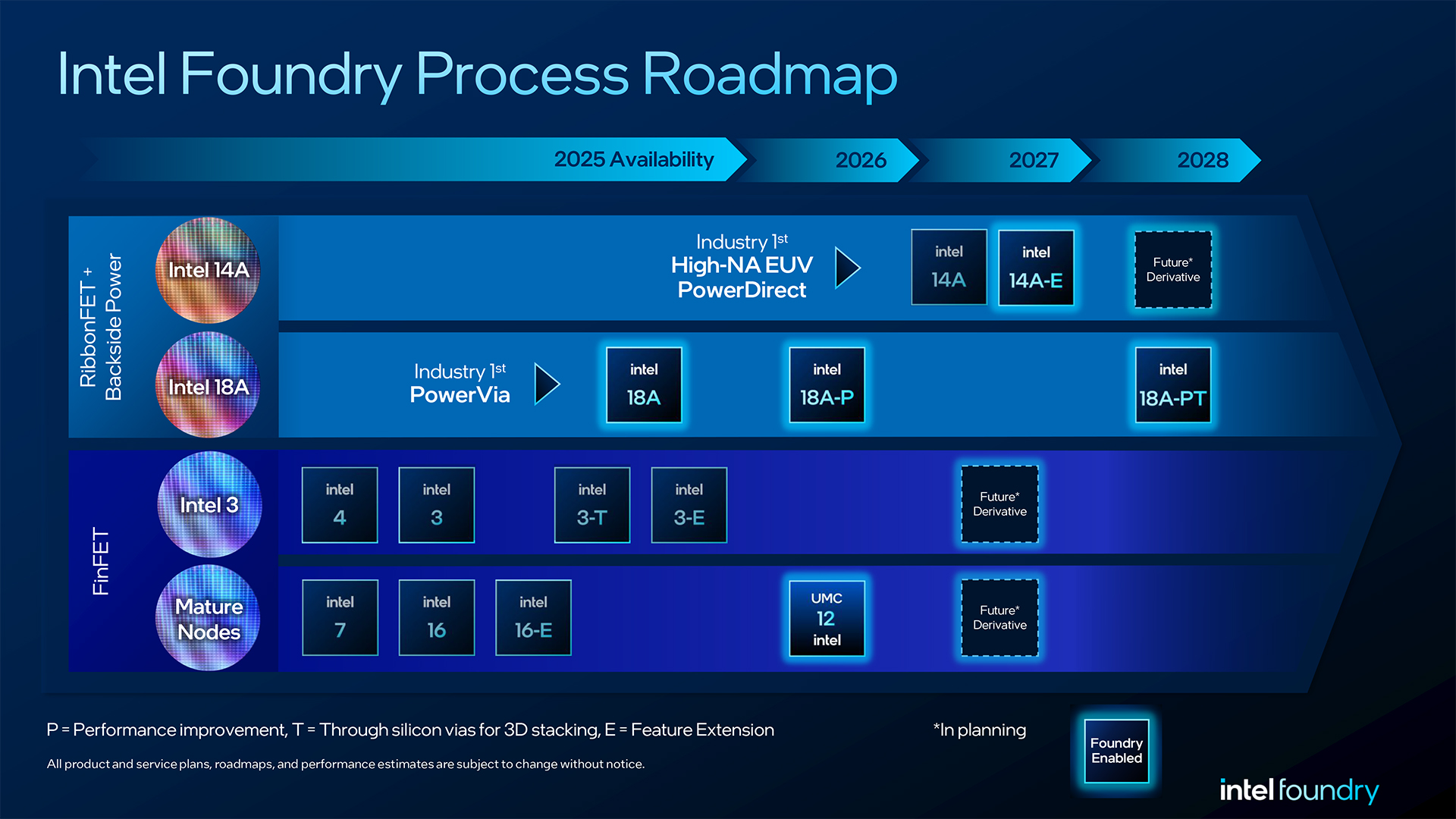
Intel gave the world its first look at the upcoming 14A and 14A-E node technology at the Intel Foundry Direct 2025 event in San Jose, California earlier this week, and one term in particular stood out: Turbo Cells. Intel says that Turbo Cell technology can improve the maximum frequency and performance per watt of chips built on the new processes, thanks to some clever library-stacking tech.
Intel’s 14A process has three cell libraries: tall, mid-size, and short (via Hardware Luxx). Turbo Cells are an adaptable cell concept that can be used for the latter, most-commonly used type, providing maximum transistor density in critical signal paths while using relatively low amounts of power, thanks in part to their capability to be used as transistor current-boosting double height libraries.
In essence, Turbo Cells can be used to create a high-density cell arrangement that Intel says can provide better efficiency for critical chip paths, while also widening a bottleneck present in conventional chip designs.
Ordinarily, these critical paths would be serviced by relatively power-inefficient yet highly-performant conventional cells, but stacked Turbo Cells can be mixed in with traditional cell designs to potentially improve performance, power efficiency, and area-usage depending on what blend of regular cells and Turbo Cells are thrown into the mix.
It’s about providing options for chip designers, allowing them to potentially maximise chip performance while reducing power consumption and improving transistor density at the same time.
I think. This is all pretty complicated stuff, but the key takeaway is that Turbo Cells are designed to improve the weakest link in the chain, which could potentially lead to chips with faster clock speeds, better performance, and lower power usage all at once. And that, this two-cups-of-coffee-in-on-a-Friday-morning hardware writer can get behind.
Not only that, but thanks to backside power delivery (now referred to as Power Direct), a wider threshold voltage range, and a 1.3X increase in transistor density thanks to new RibbonFet 2 tech used in conjunction with the little Turbo beasties, it seems that chips built on the new node have the potential to be souped up in all sorts of promising ways.
However, it looks like it’ll be a while before we see any new chips making use of the new tech, as we’re only just starting to hear potential details about Intel’s Panther Lake CPUs built on Intel’s long-awaited 18A process. By Intel’s own admission, 14A and 14A-E won’t be ready until 2027, which should give chip designers plenty of time to get their heads around how best to use Turbo Cell tech. 10 GHz chips finally beckoning, yeah?
That being said, we’re still living in the era of an Intel with a relatively uncertain future. After a dismal 2024, and amid the inevitable tumult of a new CEO and reports that it’s planning to cut 20% of its workforce, Intel still looks like something of a rocking ship on stormy seas, with its foundry business still looking like a major point of contention.
Still, higher speeds, better power efficiency, and more tools in the chip designer’s toolbox? I can’t be the only one that wants to see what a Turbo Cell-equipped chip might be capable of in a handheld gaming PC, can I?

Best CPU for gaming: Top chips from Intel and AMD.
Best gaming motherboard: The right boards.
Best graphics card: Your perfect pixel-pusher awaits.
Best SSD for gaming: Get into the game first.