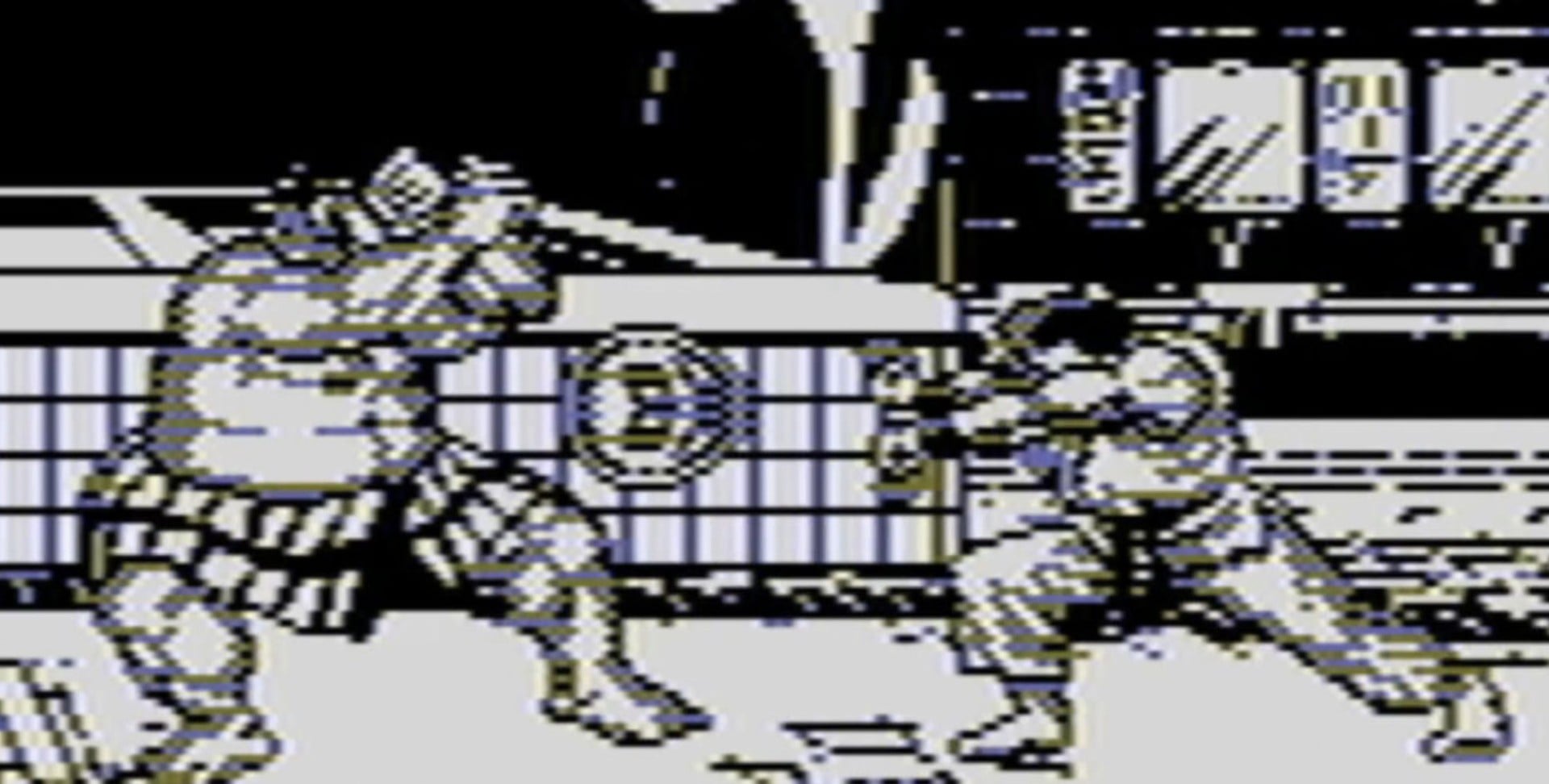





Garry Kitchen’s GameMaker Title Screen
The dream of many a gamer is to turn their big gaming ideas into reality. The 8-bit micros of the 80s came with the tools to do so built in, with BASIC baked into the system. But, even with the extensive manual provided by Commodore for the C64’s Microsoft BASIC v2.0, the thought of turning all of those commands into a functional program was daunting, to say the least. Fortunately, developers were there to help ambitious users.
There was really no shortage of titles with construction elements on the Commodore 64. For nearly every major genre of game, you could build your own ideas, to some level. A number of titles, such as Fast Tracks: The Computer Slot Car Construction Kit, Boulder Dash Construction Kit, and Pinball Construction Set, were more focused on building scenarios for the base games than creating actual games. For many gamers, this was exactly what they were looking for: the chance to race on their own tracks, play their own pinball tables, and challenge their own Boulder Dash levels. But there were those of us who wanted to take it to the next level. We had plenty of opportunity for that, as well.
Adventure Construction Set (EA, 1984)

Adventure Construction Set
There were actually a number of titles released on the C64 in the 80s that let users create their own adventures. Electronic Arts’ Adventure Construction Set (ACS) holds a special place in my heart, not only because it was one of the first AAA, non-budget titles that I ever received for the C64, but because I am a huge fan of games like the Ultima series, which ACS does an excellent job of emulating, albeit on a much smaller scale.
The core mechanics of ACS are built around “regions” and “rooms”. The regions are the world maps and towns, where the rooms are things like the insides of buildings and dungeons. The graphics use tiles much the same way Ultima does. You can use the extensive built-in library of graphics for terrain, creatures, objects, and players, or you can use the graphic editor to create your own designs. Special tiles can be used to trigger things like spells, traps, and in-game dialog. Most adventures are designed in a spoke-and-wheel method, with a central world map branching off into smaller regions as you complete the narrative.
Though the limitations of the engine could be severe (15 regions, 16 rooms per region, and a total of 128 creatures in the entire game), ACS was capable of pulling off some surprisingly deep adventures. The ability to export your ACS game to a disk that did not require the ACS software to run made it possible to challenge all of your friends to complete your latest opus. The ability to design for different narrative genres (sci-fi, fantasy, or spy/mystery), and the option to have ACS either complete your adventure design for you, or design one completely on its own (based on your parameters), made this package a must-have for open-world RPG fans.
Garry Kitchen’s GameMaker (Activision, 1985)

Garry Kitchen’s GameMaker
There are very few names in the history of computers that are as intricately connected with games as Garry Kitchen. From his port of the arcade classic Donkey Kong to the Coleco home console, to games such as Keystone Kapers for the Atari 2600 and Ghostbusters for the Commodore 64, there’s a good chance that you’ve played and loved a Garry Kitchen game from the 80s. So, if you’re going to create a program that lets users make their own games, who else would you turn to?
GameMaker was unique in that it wasn’t the menu-driven experience of titles like Arcade Game Construction Kit or The Games Creator. Even though you could still accomplish the vast majority of operations with the joystick, it still felt more like code development. The design process was built around four “Maker” tools: SceneMaker, SpriteMaker, SoundMaker, and MusicMaker. The assets created with these tools were combined in The Editor. Here, you use a vocabulary of around 90 programming commands to make the logic of your game. In practice, it is similar to languages like BASIC and PASCAL, but not quite as flexible, as it is constrained to the routines you would need to create for games.
Like all C64 construction titles, there are constraints that are, in part, necessitated by the C64’s architecture, with additional limitations due to the construction engine’s overhead. GameMaker allows for two Scenes to be used in a game. Sprite collisions are limited to other sprites, “anyone”, or colors 2 and 3 of the scene background. And you are limited to 128 if/then statements in the code. Additionally, completed games cannot access the disk, which helps explain some of the constraints placed on the game design.
Even with these constraints, it was possible to make some very impressive final products with GameMaker, as evidenced by the included sample projects. One project was a complete port of the Atari 2600 classic Pitfall! with full-color sprite graphics and all of the original elements. Another sample project was a port of the Atari 2600 shooter, Megamania. Once again, it was a full port, with all of the enemy variations fully rendered in C64 sprites. While it took a bit more time to wrap your brain around the methods, the end products were high-quality.
Shoot-’Em-Up Construction Kit (SEUCK) (Sensible Software, 1987)

Shoot-‘Em Up Construction Kit
Of all the construction titles available for 8- and 16-bit micros in the ’80s and ’90s, one of the most well-known and popular was Sensible Software’s Shoot-‘Em Up Construction Kit (SEUCK). It isn’t too surprising, given that the shoot-’em up, or shmup, genre is likely one of the most popular retro gaming styles. Who wouldn’t want the opportunity to send their own waves of alien invaders against unsuspecting players with reckless abandon? SEUCK gave them the tools to do just that.
The design process was really simple. Start with the Sprite Editor and create your player, your enemies, and your bullets and explosions. Move to the Objects Editor, which allows you to assign the sprites to objects to be used in the game. Edit the parameters of each object, such as the animation speed, movement parameters, and how many hits are required to destroy enemies. The Background Editor gives you the opportunity to create the various graphics that will make up the scrolling playfield of your game. Sound is created with the SFX Editor. The Player Limitations are set next, allowing you to configure the number of lives and the movement constraints of the player object. Next, you delve into the real meat of the SEUCK experience, the Attack Waves designer. Here, you will create the movement patterns of your enemy objects and their placement in the level. You can spend hours designing your graphics and sound effects, but your enemy patterns and placement will be the deciding factor between a lackluster game and a blockbuster. You finish up by editing the levels themselves, including scrolling speed, scrolling behavior, and pauses. Lastly, give your game a killer startup screen, and then test it.
Of all the full-game construction sets, SEUCK has some of the least restrictive constraints given the genre it represents. Probably the biggest constraint, at least with the Commodore 64 version of the game, is the limited color palette. You are allowed three fixed shared colors per project, plus a fourth variable color that can be reassigned to each sprite and background tile. While it does require users to plan their designs carefully, it has helped give SEUCK games a recognizable look.
SEUCK is still used today to design new games, with modern tools developed to overcome some of the original engine’s limitations. Compiled games can be modified to support background music, high-score saving, and more advanced game intros. There are also tools that allow users to edit the sprites and character sets outside of the SEUCK design program. It’s hard to argue with the legacy of a construction program like SEUCK, which has lasted for nearly 40 years.
The post Anyone Can Make a Game: Construction tools on the C64 appeared first on Old School Gamer Magazine.