




When I sat down to play Diablo 4’s new warlock class about a month ago at Blizzard HQ, I didn’t expect to come away from the experience thinking about all the other, older classes.
Lord of Hatred is an expansion with a much bigger scope, introducing not one, but two new classes, and a major refresh to the other six. The warlock is the first time I’ve seen what a class looks like in this new era for the game and all it made me want to do is create a bunch of characters and experiment.
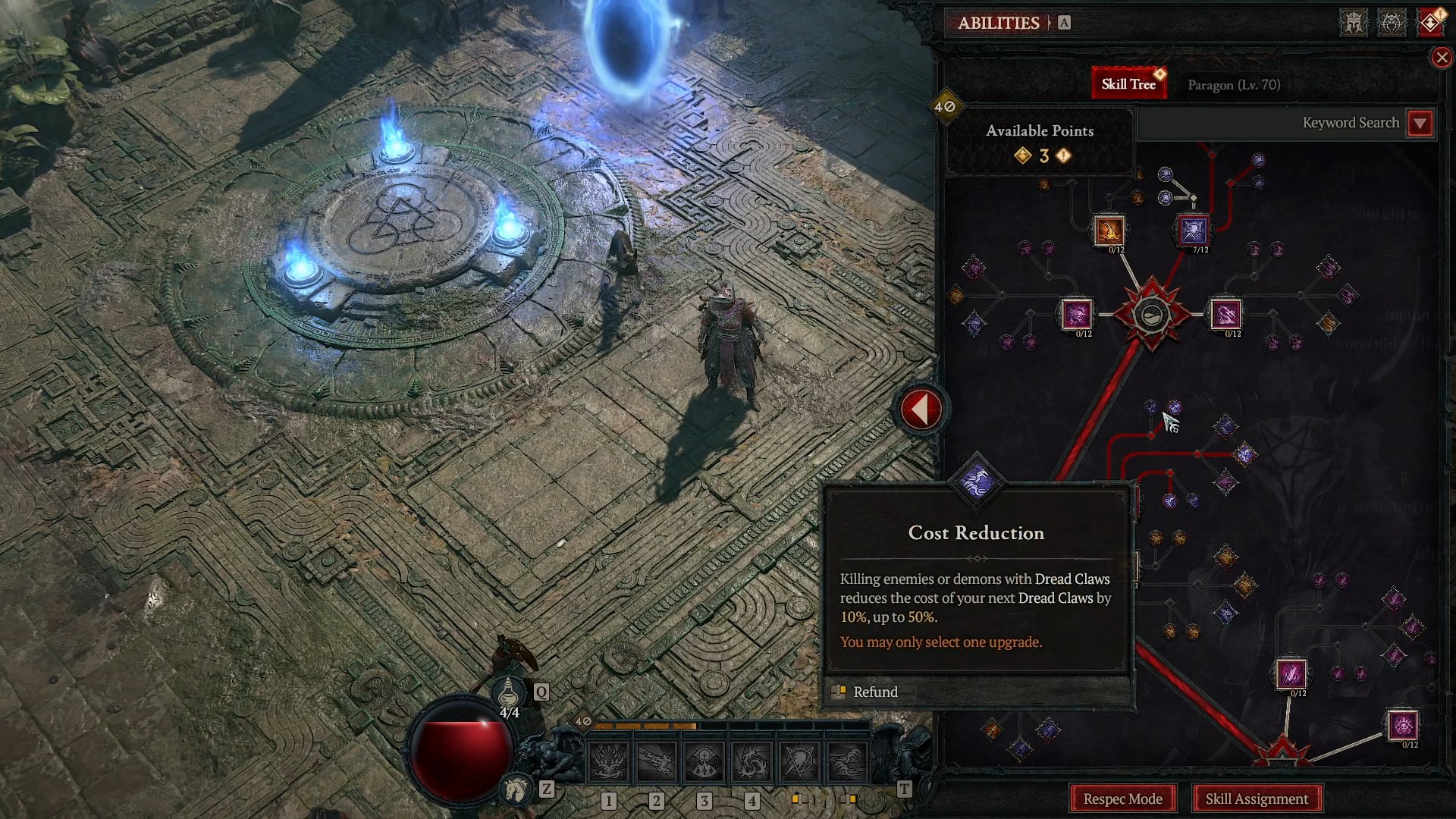
I knew this would be a problem the moment I opened up the warlock’s skill tree and saw exactly what Blizzard meant when it said Diablo 4 is leaving its “skill twigs” behind. Each skill in the new trees has so many branching options that I had to stop myself from trying to read through them all in the painfully short 30 minutes I had with the class.
In retrospect, this is a good sign: A dense skill tree implies more customization and flexibility than Diablo 4 has ever had. Your build should be born out of the skills and modifiers you choose, not just the gear you wear. The warlock gave me the most convincing evidence that Blizzard is embracing complexity where Diablo 4 needed it most.
A new kind of summoner
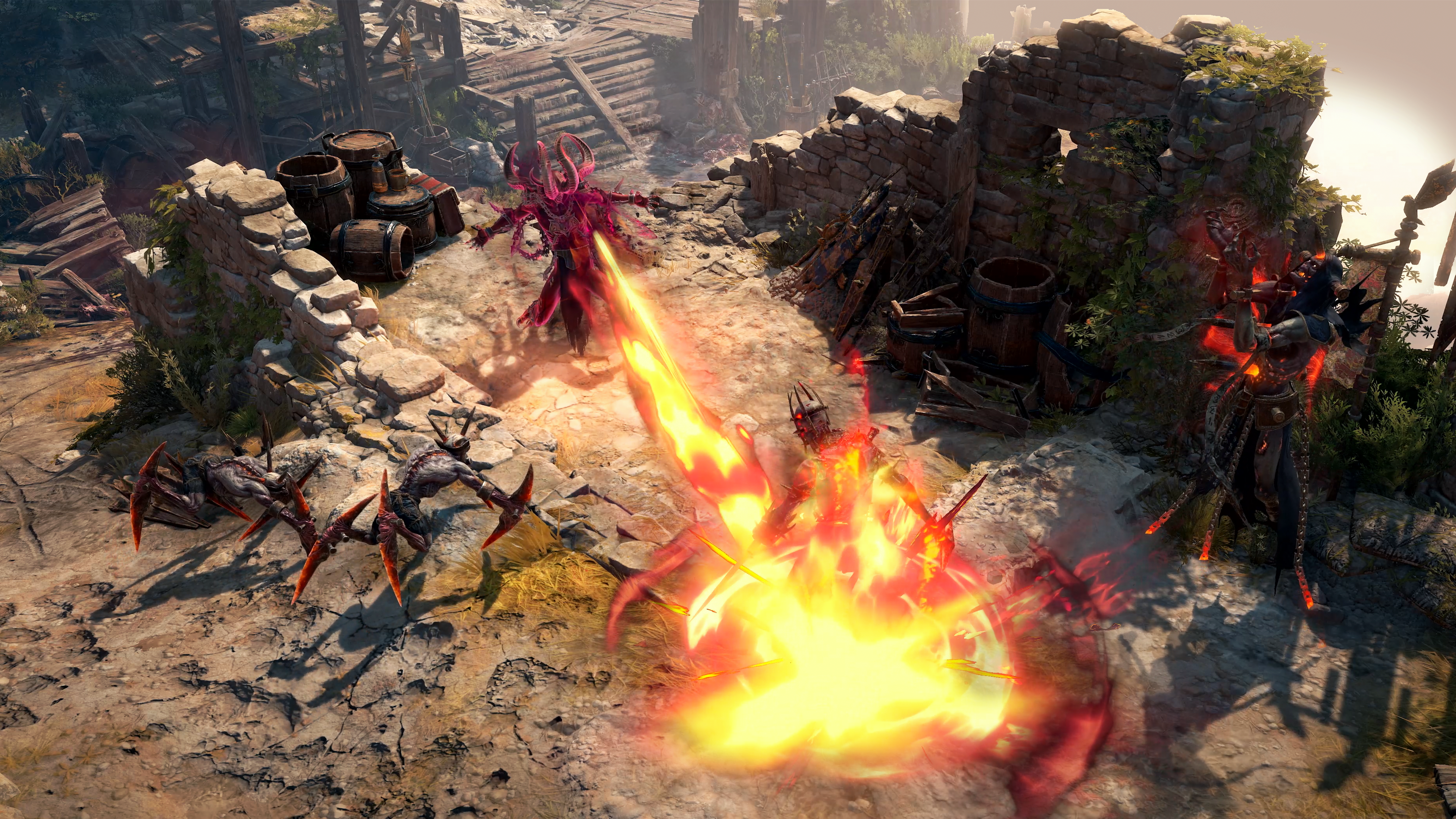
There’s nothing delicate about the warlocks.
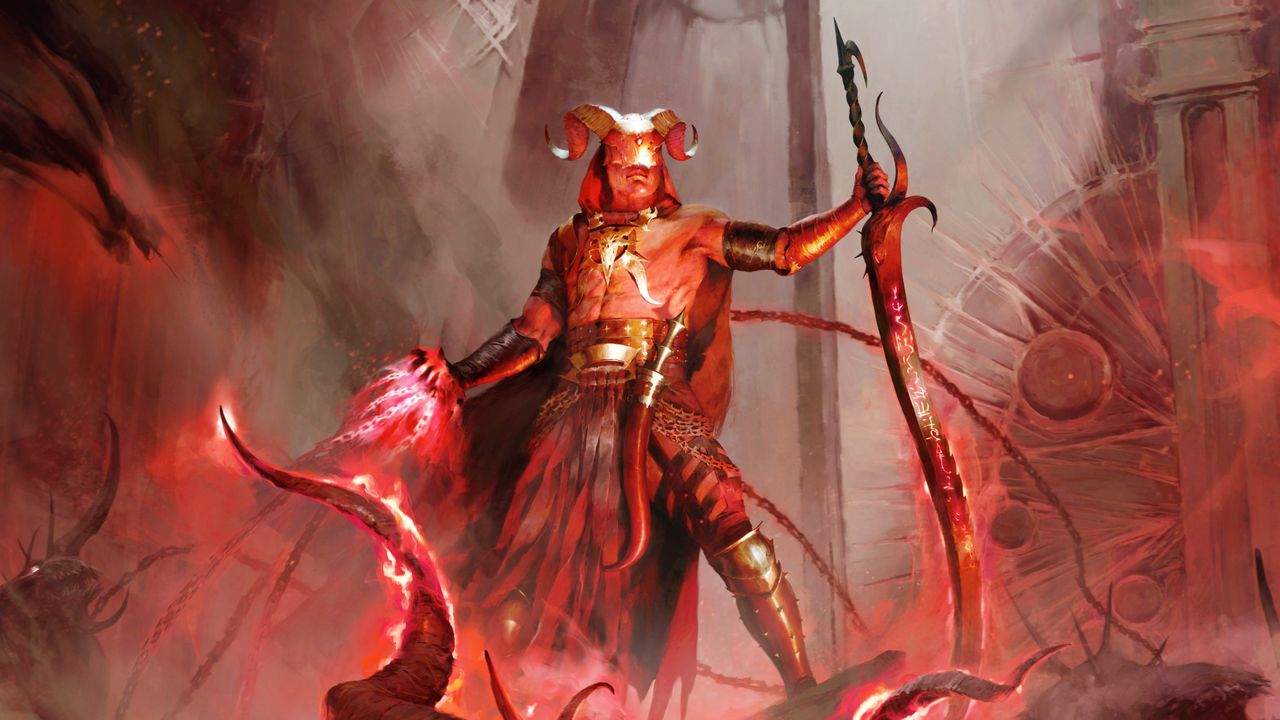
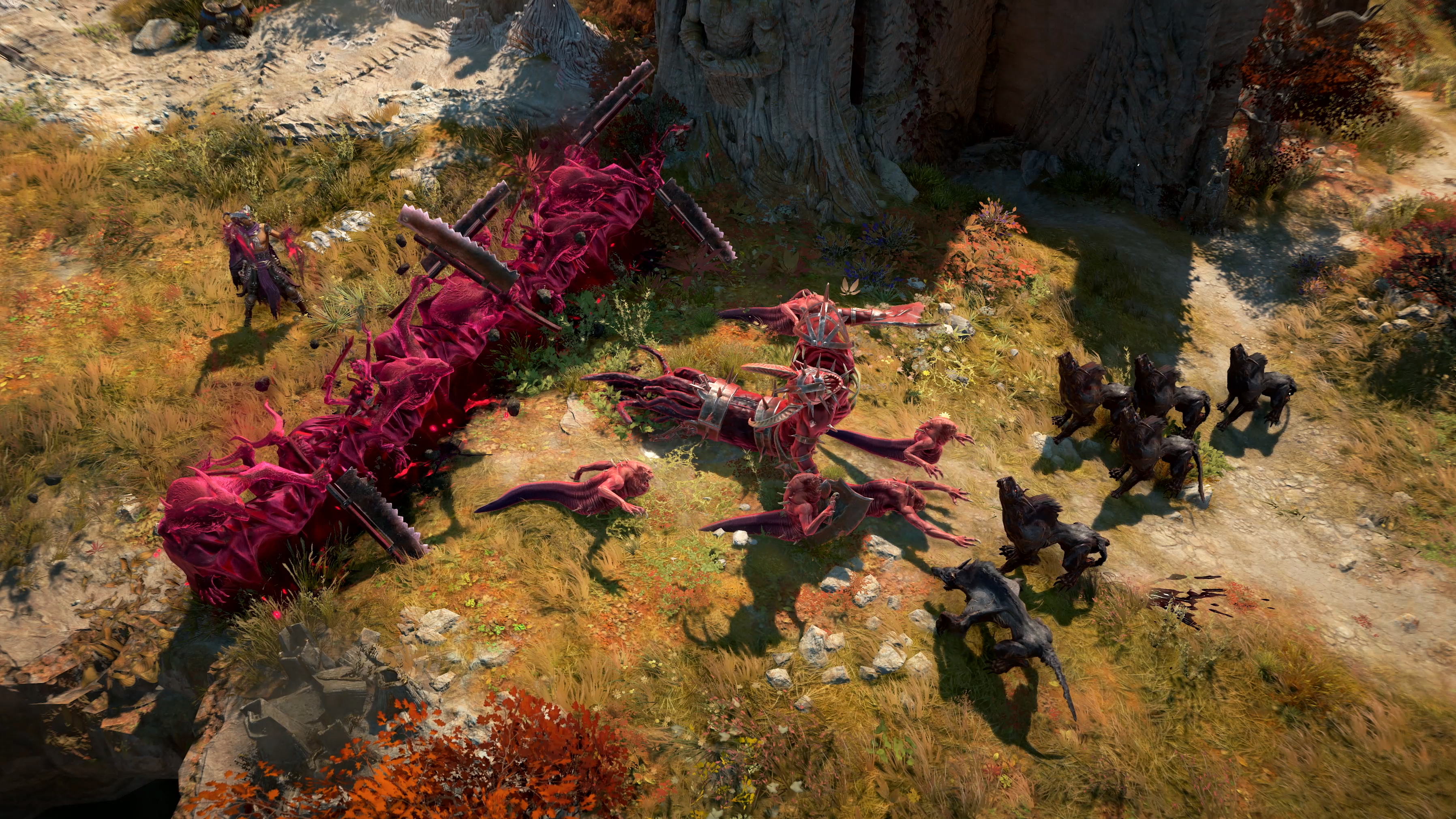
The first question I had when playing the warlock was how it differs from the necromancer, a class that already focuses on summoning monsters to aid them in battle. I had my answer as soon as I used my first skill and watched my character tear open a portal that spewed demons out like a hose. Necromancers command skeletons to fight for them; Warlocks rip demons out of hell and use them like weapons against their will.
“When we were talking about warlocks, [we asked ourselves] how are they different from necromancers and sorceresses, as spellcasters? And the thing that we came to is if they got into a fist fight between the three, the warlock would beat both of them,” lead class designer Stephen Trinh said in a group interview last month with PC Gamer.
There’s nothing delicate about the warlocks. Wall of Agony is a skill that fuses writhing demons together into an impenetrable wall. Fiend of Abaddon, one of their ultimate skills, causes a gigantic demon to erupt out of the ground and start cleaving through nearby monsters. Warlocks can transform into a demon and even ride one around as a mount, leaving lava landmines in their wake. They play like a spellcaster who’s crawled out of hell with a lust for bloodshed and pockets full of limbs and claws.
My favorite skill, Dread Claws, carves through monsters with dark blades made out of smoke. The basic version sends them out in front of you, but you can keep them centered to your character as an AoE through a skill tree upgrade. There’s a satisfying rumble as the claws carve lines into the ground whenever you use it. And there are plenty of options to boost its power.
Dread Claws are part of the abyss category of skills, which seems to focus on hexing enemies for debuffs and entering a stealthy shadowform to enhance your attacks. As much as I liked the savagery of the demon- and fire-focused specializations, I was most interested in the occult side of the warlock. Necromancers never quite let me live my dream of wielding pure shadow magic, but warlocks have a whole set of skills that shred monsters apart with thick black and pink smoke. I found a potent little combo where I dashed into groups of enemies using a burrowing movement skill and chopped them into pieces with the claws.
Tougher monsters melted when I brought out the big demonic eye and its debilitating beam. And if they somehow survived that, they’d get pulled into the maw of a giant worm demon I could call on as part of my specialization. Nothing in Diablo 4 looks as cool as a warlock clouding the screen in darkness. Like a personal gift to me from Blizzard, they made a class capable of letting me relive my glory days as a shadowbolt-casting warlock from World of Warcraft.
Make it your own
The warlock’s skill tree is overflowing with tools to play with, and—in line with every other class when Lord of Hatred launches—a complete lack of passive buffs that give you broad increases to the damage you deal. Instead of investing your points into the nodes that make the numbers go up the most, your options are all tied to transforming how a skill functions and scales up in power.
This is a big shift in how Diablo 4 has encouraged you to play in the last three years. A lot of skills were so weak and simplistic that your power would largely come from your gear. Unique items became mandatory and skills wouldn’t do much of anything without the perfect, cookie-cutter setup. Build variety was entirely dependent on what skills the developers decided to feature that season with a new, synergistic item.
Bouncing between each class’ flavor of the month can be fun, but good luck trying to play something that isn’t in the patch notes. The warlock, and the paladin before it, gave me some clues about how Blizzard is going to fix this problem. Loot will still matter, but it won’t be the only key to unlock a particular style of character—many of those options have been moved into your skill tree.
“I feel like too much of today’s Diablo is very narrow: I’m going to put all the [legendary] aspects on one skill. And that means there just aren’t multi-skill builds, and there’s a sort of narrowing of overall build width,” design director of systems Colin Finer explained in a group interview with PC Gamer. “The goal of all of this—the itemization changes, the skill tree—is to really maximize the amount of buildcrafting and the possible builds in the game.”
If Blizzard pulls this off, freestyling a build will not only be much more intuitive, but stronger than it has ever been in the past.
We’ve already seen examples of how sorceresses can change their fire hydras into frost hydras or lightning hydras using the new skill trees. Each variant hooks into legendary aspects on your gear that give generic increases to specific types of elemental damage rather than hydra-specific upgrades. If Blizzard pulls this off, freestyling a build will not only be much more intuitive, but stronger than it has ever been in the past. In a game all about incrementally growing the power of your character, it will be a relief to not feel like you’re doing it wrong because you didn’t follow someone’s build guide.
The warlock was the first glimpse I had of a Diablo 4 that seems to be moving closer to what I loved about Diablo 3’s skill-altering rune system. I want to be able to decide, based on my gear or the monsters I’m facing, when I want those Dread Claws to be an AoE or not. I want to find a legendary item that prompts me to open the skill tree and see how I can make it work for my build without having to change my entire setup.
I’ve played almost every single class in Diablo 4 (sorry, druids) because I like seeing how they all work. Warlocks will undoubtedly join the list, but they’ve also cursed me with the foresight that I’ll be making the rounds again with the rest of the roster to see what will be possible when Lord of Hatred launches on April 28.

2026 games: All the upcoming games
Best PC games: Our all-time favorites
Free PC games: Freebie fest
Best FPS games: Finest gunplay
Best RPGs: Grand adventures
Best co-op games: Better together