




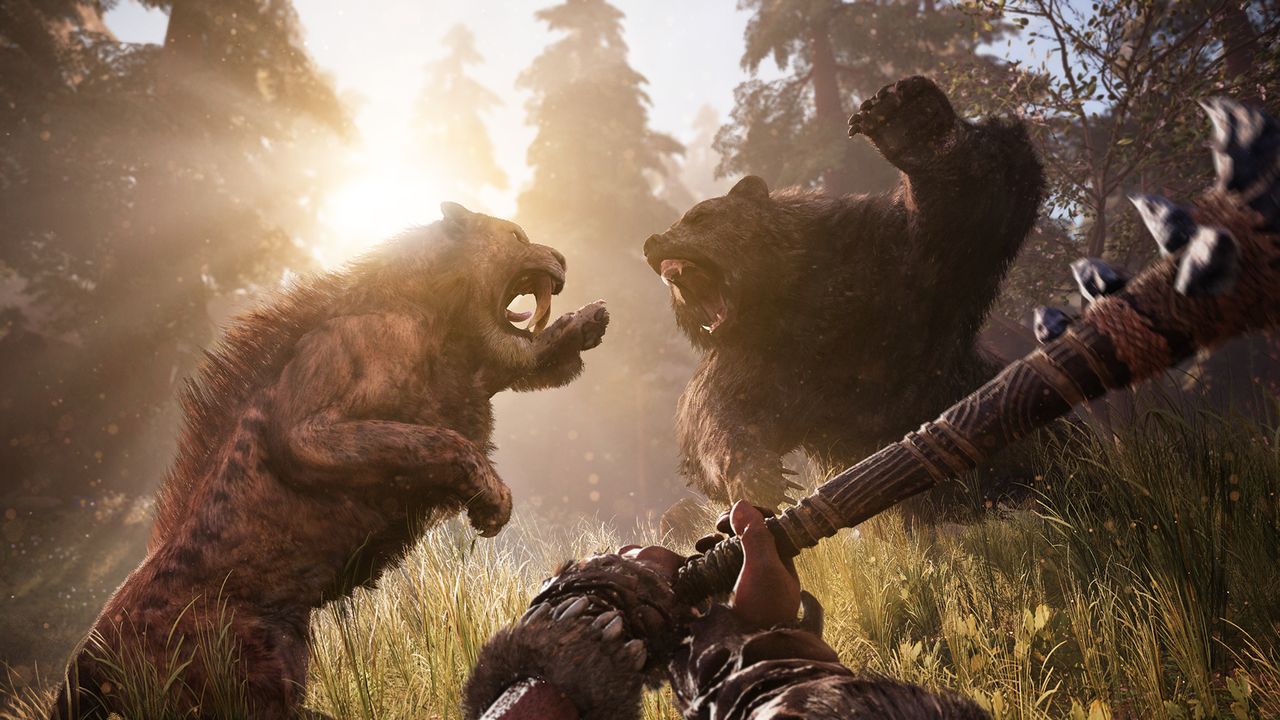
Do you remember Far Cry Primal? Ubisoft’s prehistoric spinoff was pitched as an intriguing departure from the formula, in which players would leave their jeeps and helicopters behind to embrace life at the dawn of the Mesolithic period. They would tread lightly between the Carpathian mountains, taking down saber-toothed cats as a club-wielding tribesman with the voice of Adam Jensen from Deus Ex.
Then, within the first week of release, players started to experience deja vu. They noticed a familiar curvature to Far Cry Primal’s waterways, and a well-worn pattern to the paths that crisscrossed the Oros valley. This, despite the geographical and historical disparity, was roughly the same map they’d conquered in Far Cry 4.
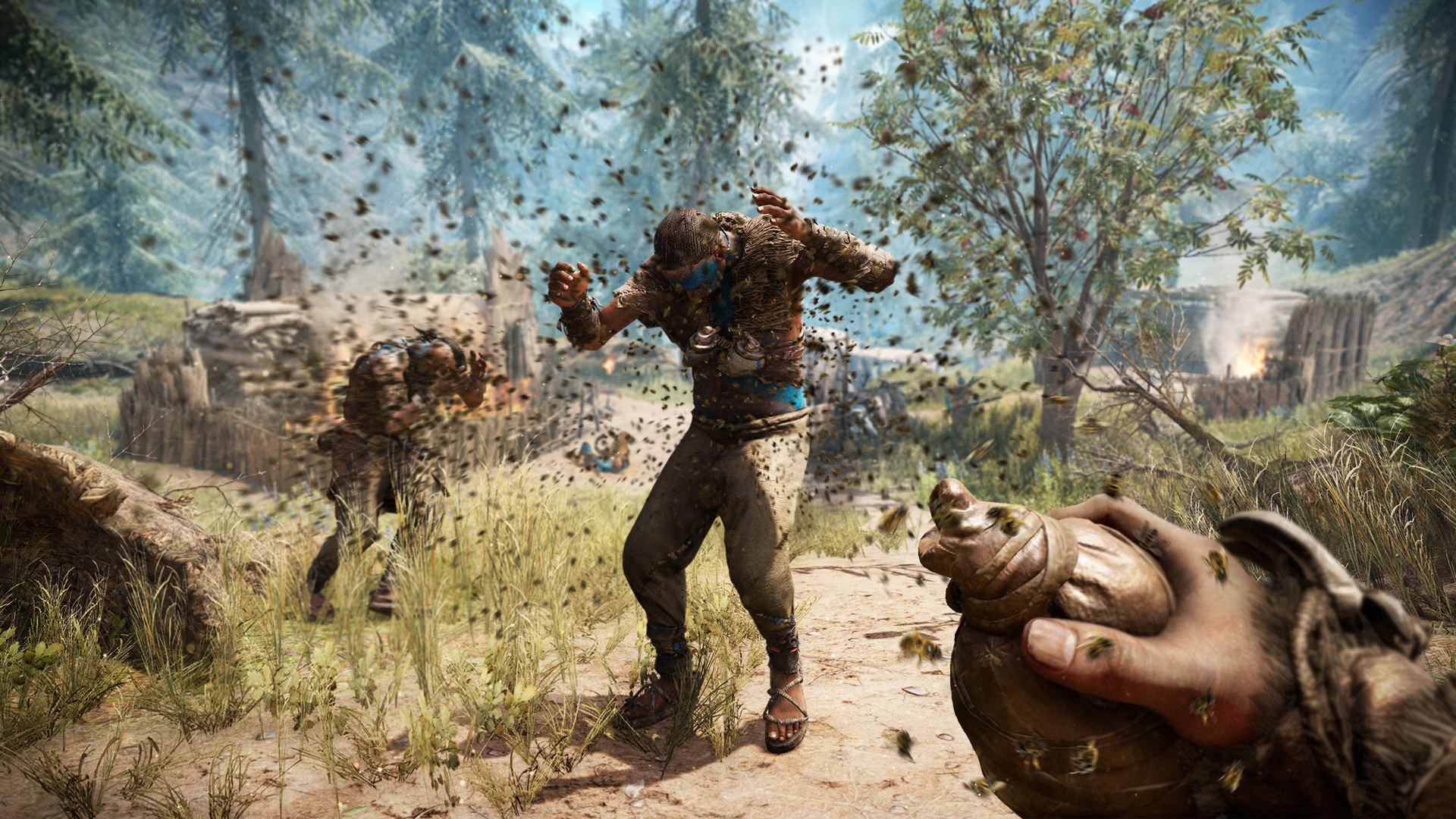
The controversy was a source of frustration to Alex Hutchinson, Far Cry 4’s director, who was still working at Ubisoft during the development of Primal. “I kept saying to them, ‘Just announce it, because someone will figure it out. Just say it’s the same place 40,000 years ago. And then it’s cool.’ They didn’t say anything and then everyone was like, ‘Cheap developers!’, as always.”
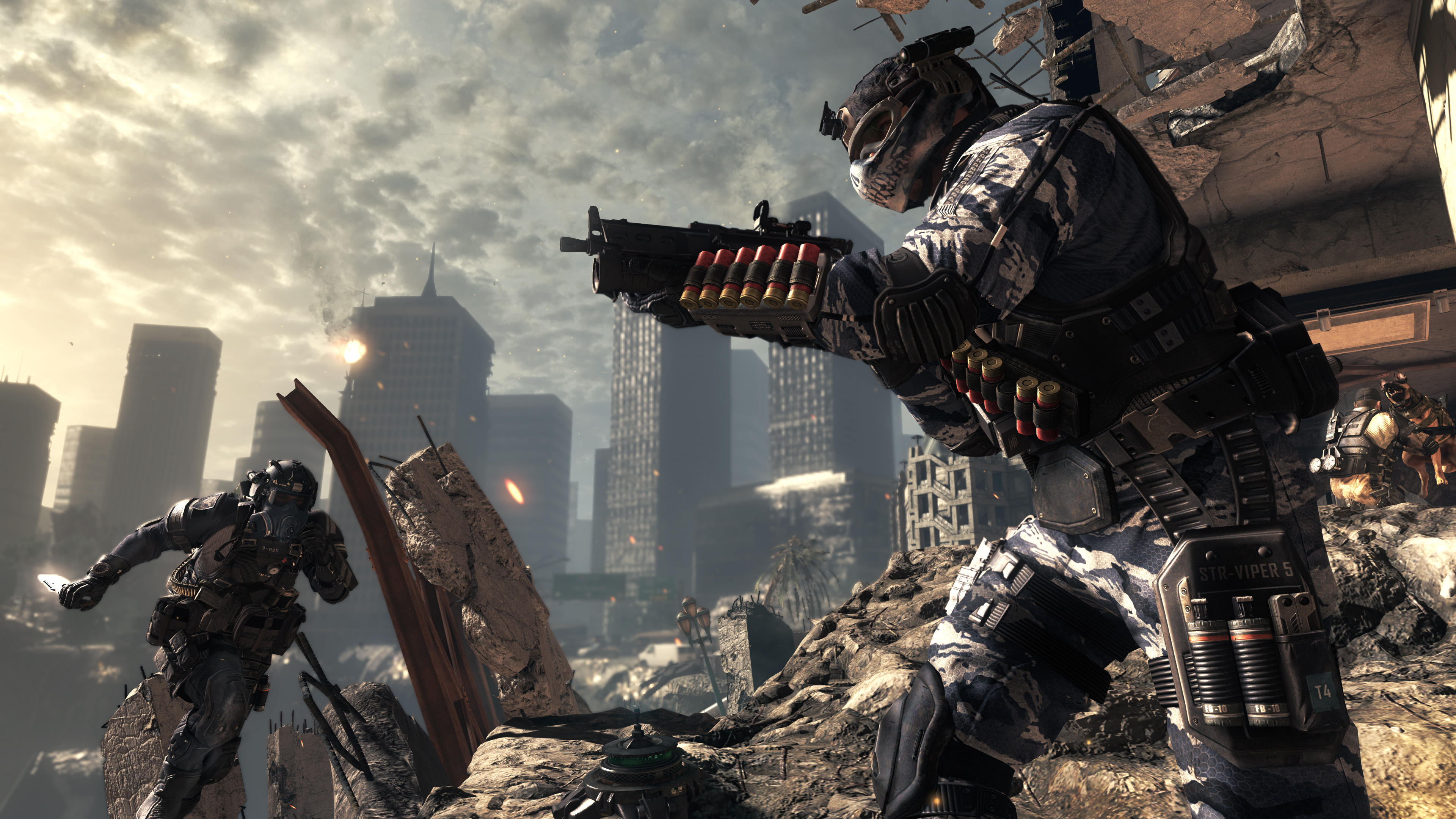
The Far Cry Primal map debacle wasn’t the first of its kind. A couple of years earlier, Activision released Call of Duty: Ghosts, and fans picked up on the fact that its opening mimicked the motions of Modern Warfare 2’s ending—reusing a highly specific set of animations in which two limping and injured characters were escorted across a blasted warzone. At the time, the scene was viewed as evidence that the series had lost its power to surprise—a major PR blow for an FPS sold on the promise of expensively-rendered spectacle.
For a while there, asset reuse became a byword for laziness in the eyes of many gamers. And this was a big problem for developers, who relied on an iterative model to create better sequels to their games; it was the groundwork provided by previous entries that allowed them to build higher, dedicating time to new features and ideas.
“In Assassin’s Creed, animations move through multiple iterations,” Hutchinson says. “Black Flag reused like 80% of Assassin’s Creed 3. So there’s always some reuse, at least in the big studios.”
Search YouTube for videos on asset reuse today, however, and you’ll notice the tone has turned. The platform is no longer dominated by damning capture of identical animations. It’s also home to arguments on ‘Why reusing assets is crucial’, ‘Hating on reused assets is boring’, and list features highlighting ‘5 fascinating examples of FromSoftware’s asset reuse’.
It’s the latter take, in my view, that holds the key to understanding what’s changed. Some of the most popular and commercially successful Japanese studios of our time have made a merit of undisguised asset reuse, and been championed by gaming audiences for doing so.
As Hutchinson points out, it wasn’t a straightforward road to get there. “We’re in a period where the Western devs are struggling and the Asian devs are thriving,” he says. “And that’s kind of the inverse of 15 years ago, when Western devs were thriving and Japanese devs were struggling and Chinese devs didn’t exist. One reason that the Japanese were struggling is they had a history of bespoke engines per game, which is insane, right? So they would basically make it almost from the metal every time. And it took them that whole period to figure out that it was better to use engines and build tools. I think they’ve got their head around it now.”
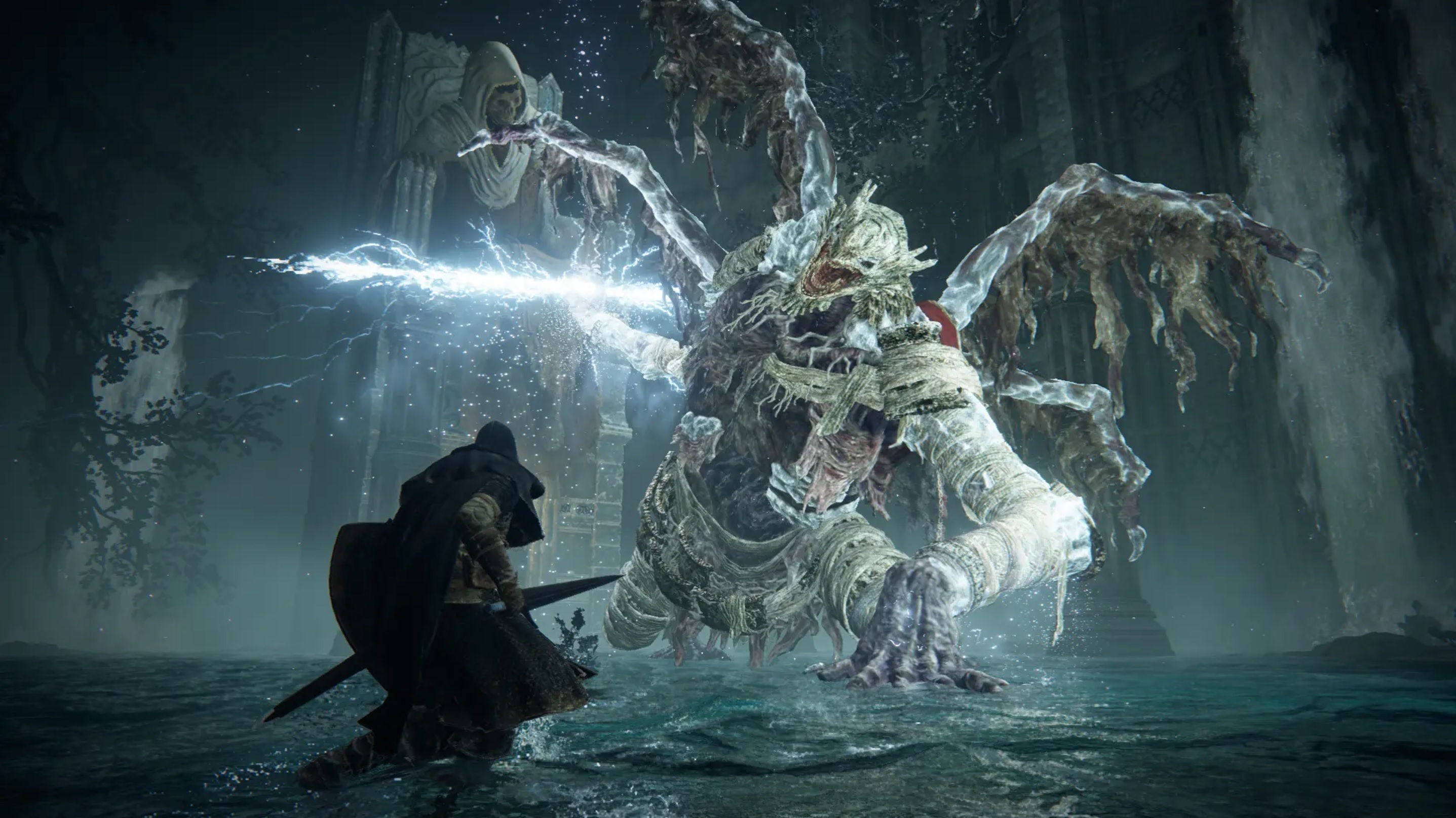
Dark Souls, Elden Ring and Yakuza have since normalised the creative recycling of old elements. “The genius of Yakuza was always for me that you’re revisiting the same place,” Hutchinson says. “So you kind of want to see the asset reuse in a way. It’s taking a limitation, almost like the fog in Silent Hill, and making it core to the experience, so you like it, in a weird way.”
It’s an approach in stark contrast to some industry-standard habits at Western game studios. “Every time you make a shooter, you go and re-record the guns,” Hutchinson says. “Not only that, but then when you get back in, the audio people realise that all guns sound exactly the same. There’s only the shotgun, rifle and pistol, but all of them sound basically the same, except for rate-of-fire or if they have a wooden stock. So then, after doing all this pointless work, you spend months making fake guns, to make them sound the way you think they should. We do a lot of dopey things in the games industry. We redo too much stuff. Although with modern engines, hopefully we can get around it.”

Today, with so many studios short on funding and spiralling budgets no longer an option, the public acceptance of asset reuse has become a matter of survival. “We don’t reuse enough,” says Hutchinson, who now runs Raccoon Logic, the indie developer behind Revenge of the Savage Planet. “Maybe the future is, to use the dirty word, AI vibe-coding for prototypes that you can hand off to engineers to try and save some months.”
Yet Hutchinson is fundamentally an AI sceptic, and doesn’t expect the technology to save the industry. Far from it.
“I was talking about it with the guys yesterday,” he says. “I was like, ‘Alright, if we imagine what we would actually have to do to make an Assassin’s Creed, we have to somehow write the prompts to generate two and a half hours of story cinematics, with 22 kilometres of open world.’ Even if it did stuff, it would take years of prompts. Anything of any real complexity, imagining how to describe in words what you wanted would be so hard. At a certain point you’d be like, ‘We should just get some people to do this.'”
2026 games: All the upcoming games
Best PC games: Our all-time favorites
Free PC games: Freebie fest
Best FPS games: Finest gunplay
Best RPGs: Grand adventures
Best co-op games: Better together