



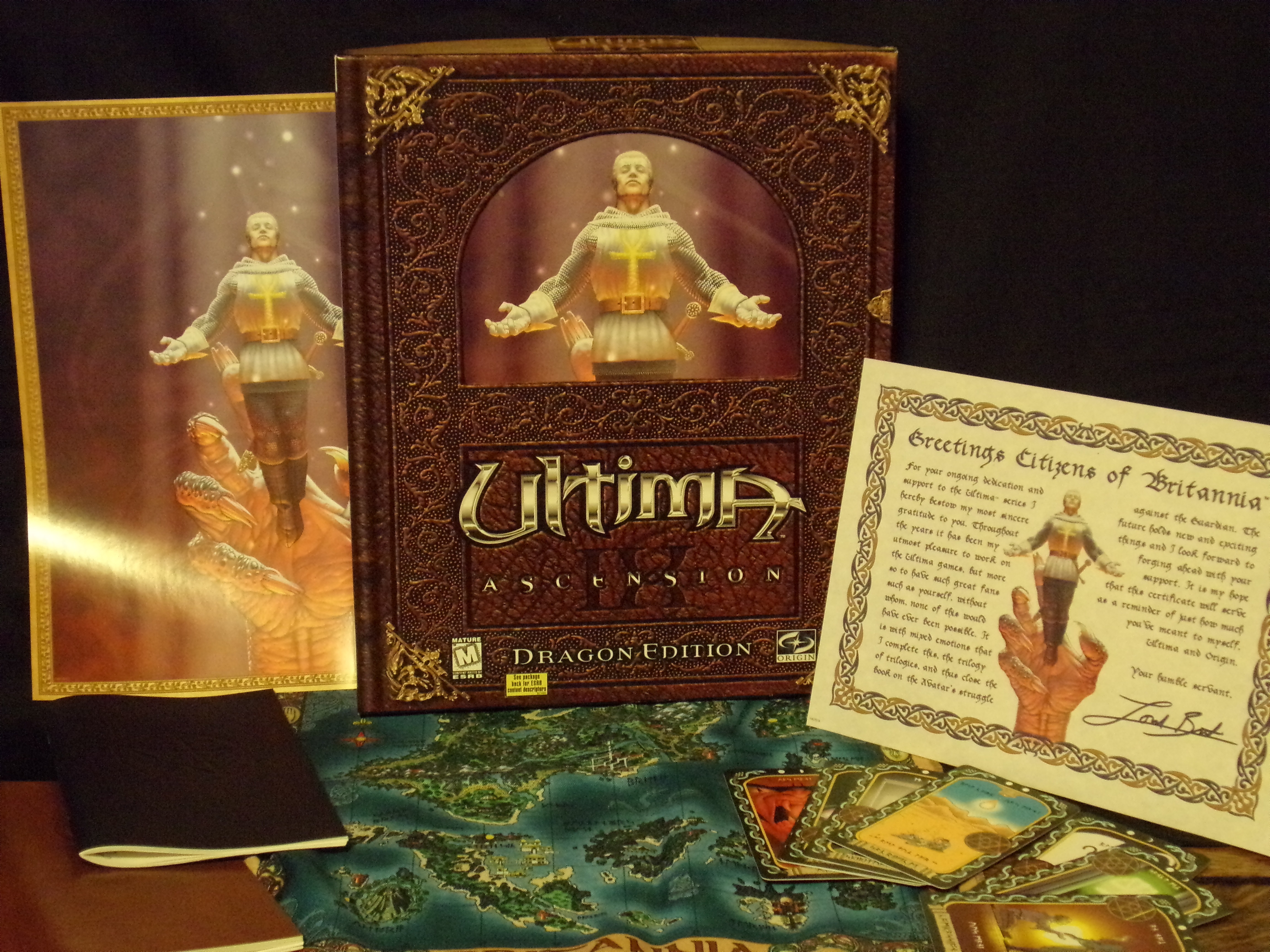
You may have heard of a little RPG series called Ultima, which was so successful in the ’80s and ’90s that series creator Richard Garriott earned enough money to travel to the bottom of the ocean and also the International Space Station. Part of the success of his game studio, Origin Systems, was due to his brother Robert Garriott, who later became a vice president at EA and then ran the US branch of Guild Wars studio NCSoft when it was launching MMOs like City of Heroes.
Before all that, though, Robert Garriott showed up to the 1989 Computer Game Developers Conference in his role as the business brain at Origin Systems, to talk about a very 2026 problem: There are just too many dang computer games!
Thanks to the Videogame History Foundation, which has digitized a near-complete set of cassette tapes from the 1989 conference, we can hear Garriott speaking on a panel with publishers from other big names at the time, including EA (which bought Origin Systems a few years later), Broderbund, and Accolade. During Garriott’s turn at the mic, he addresses the “industry slump that everyone’s been talking about,” with PC game sales apparently going through a rocky period.
“The question everyone seems to be asking right now is why? Why did this happen?” Garriott asks. “Everyone’s saying Nintendo, Nintendo’s the obvious reason. I view Nintendo as something of a scapegoat.”
Garriott claimed that arcade games and “entry-level roleplaying and strategy games” were being affected by the exploding popularity of the Nintendo Entertainment System, which was raising alarm bells across the PC industry at the time (check out this Computer Game World article from June 1988 titled “The Nintendo Threat?”). But Garriott argued that more in-depth PC RPGs and strategy games weren’t viable on the game console, so why were sales down for them, too?
He blamed a drop in PC hardware sales from Apple, Commodore, and Dell, but also a “product proliferation.” That’s 1989 business speak for ‘too many videogames.’
“The computer game industry has seen sales increase 15-25% every year for the last three years, which is a pretty healthy increase for any normal industry in America,” Garriott said. “But unfortunately the number of new titles in the US market probably increased by 25-50%, so what that means is the sales per title have necessarily decreased. If everything else was the same, the sales per title has to be going down. I think that’s also a factor in this issue.”
Another problem afflicting the PC gaming industry in 1989? Some of the games sucked! “The consumer is being very confused,” Garriott went on to say. “The consumer doesn’t really know what to buy for their computer, and they’re being basically lost from the entertainment market.”
(Thankfully, the computer gamer of the day didn’t have to wait too long for salvation—PC Gamer magazine debuted in November 1993, offering impeccable buying advice to the hopelessly confused masses. No longer would they have to suss out the qualities of the handful of new games being released every month on their own.)
Garriott was refreshingly candid, saying he was “embarrassed to say that I don’t believe software publishers really understand the relative weight of all these factors,” but that he was confident game sales would pick back up at some point. He had no idea at the time, of course, how gargantuan PC gaming would turn out to be in the years to come, or that more games would eventually launch on Steam in a single day than the computer industry of 1989 would see in a month.
His closing advice seems just as relevant today as it did 37 years ago, though.
“We have to develop products that cannot be duplicated on game machines. We’re worried about Nintendo. We’ve got to develop long-playing, in-depth, high graphic, lots-of-memory types of products. And the final thing we need to do is we need to increase our quality. Quality always has, and always will, sell.”