
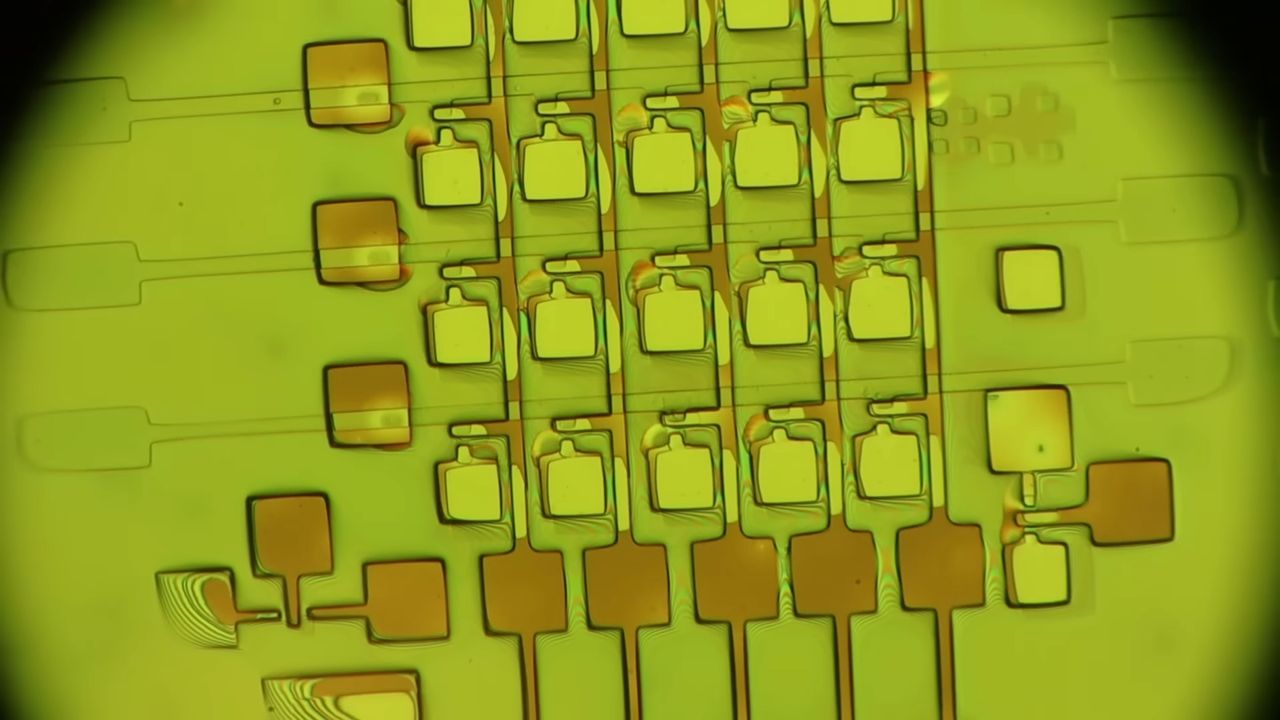
We’ve previously reported on the adventures of Dr. Semiconductor, a YouTuber who managed to build a working cleanroom in their backyard shed. As if that achievement wasn’t impressive enough, the good doctor is now using said cleanroom to make their own DRAM cells.
Yes, the RAMpocalypse has come for us all, but Dr. Semiconductor appears to be leading the way in terms of DIY solutions.
As you would imagine, making your own DRAM is far from easy. Starting off with pre-made silicon wafers, Dr. Semiconductor cut them down into workable sizes with the help of a diamond scribe (via Hackaday). The individual pieces were then cleaned in an acetone and isopropyl alcohol solution to remove most of the unwanted particles on the surface.
The silicon chips were then heated to 1,100 °C in a furnace, which is about the same temperature as volcanic lava. This ‘rusts’ the chips, essentially growing 3,300 angstroms of glass on the surface as a mask. It also turns them green. The more you know!
The chips were then coated with an adhesion layer, then baked, before a photosensitive film was coated onto the top surface. Once baked again, the chips were left with a photosensitive surface around 1 micron in thickness, ready for UV etching.
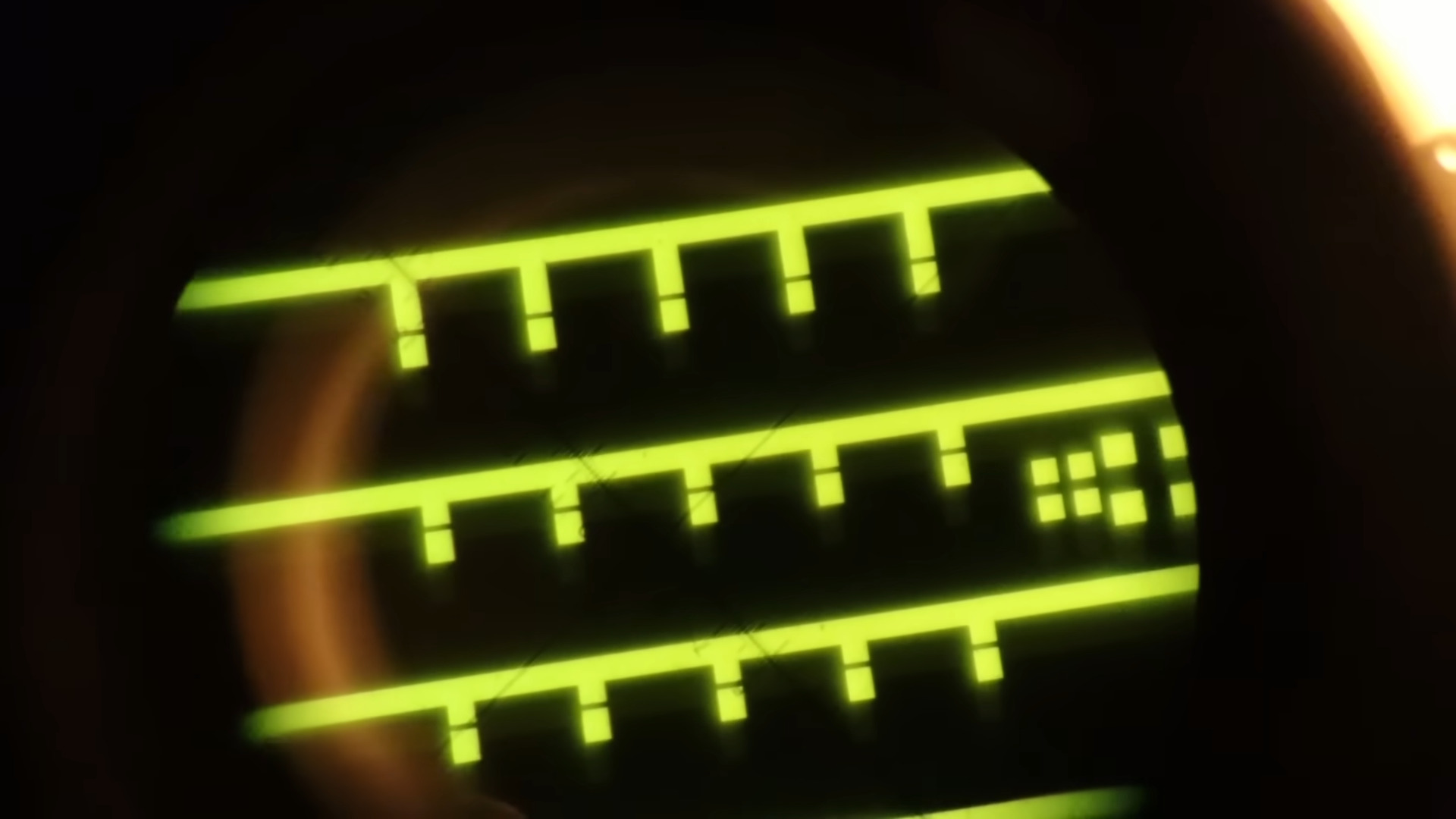
A UV mask pattern was then shrunk down with microscope magnification stages to an appropriate size, and with the help of some software, the transistor patterns were dry-etched onto the chips. The photoresist mask was then stripped with dimethyl sulfoxide, leaving an etched oxide pattern behind.
The source and drain for the transistors (essentially the input and output for electrons) were created by adding phosphorus into the silicon with a homemade method. I’ll be honest, I lost track of the process here as it involved a custom solution created by another YouTuber. It’s freaking cool, though. That I can say with confidence.
The gates were then created with yet more layers, more cleaning, and more removal of material. It’s genuinely astonishing that all of this can be accomplished in a garden shed, albeit with some esoteric machinery and a hell of a lot of back knowledge of the chip production process.
It’s essentially a how-to of chip manufacturing techniques—and the end result, after many, many more processes I don’t have space to go into here, is a complete 5×4 array of cells, with all the transistors, capacitors, and connections needed to make them function. Technically. The big question, though, is do the homebrewed DRAM cells actually work?
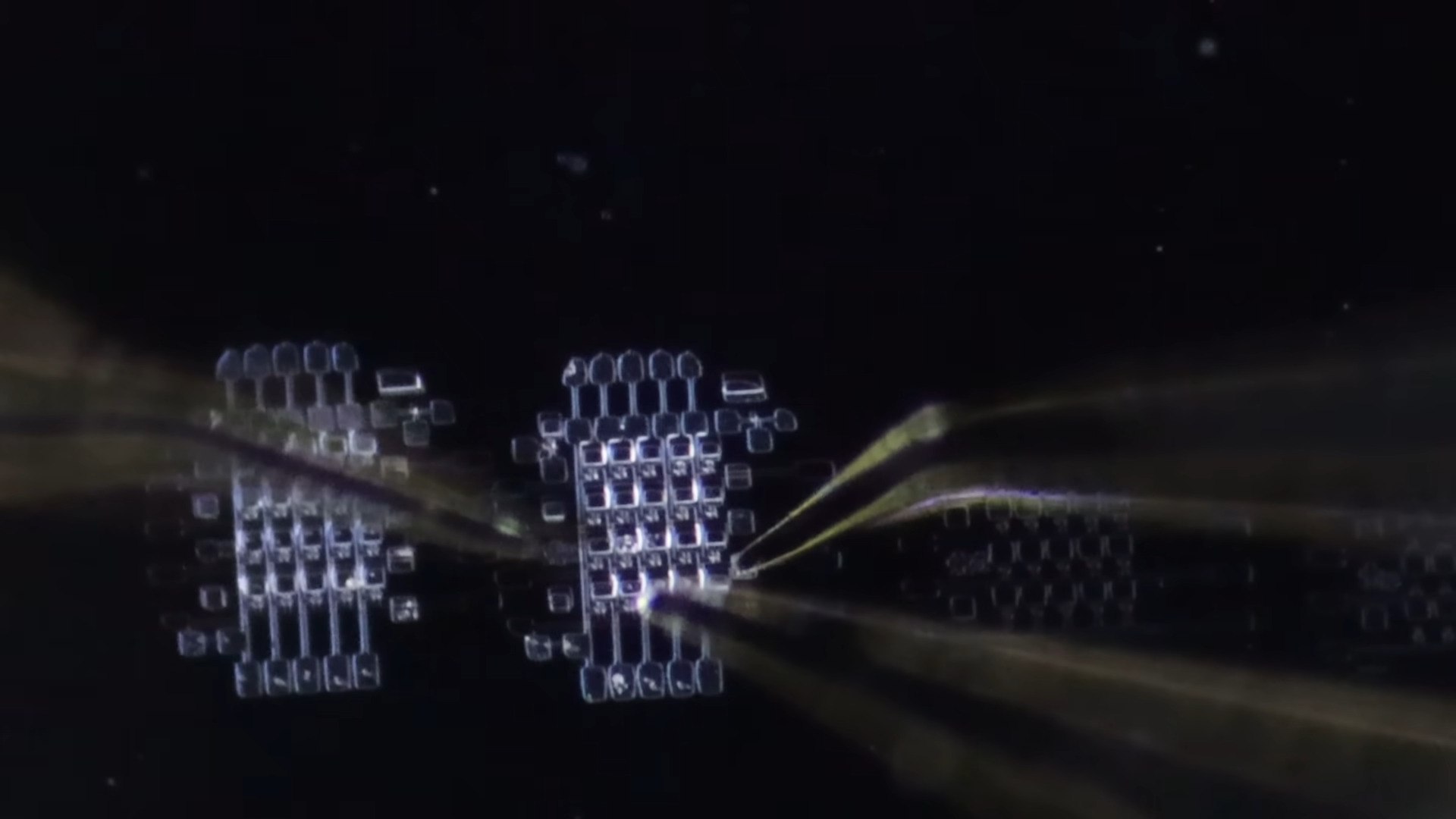
Well, Dr. Semiconductor has a whole bunch of testing equipment in their living room that can find out. We’ve left the safety of the shed, and we’re now in a dog-friendly environment. And yes, the cells are functional, although the capacitors bleed off charge over time at a faster rate than expected.
This would mean the caps would need to be recharged at a higher frequency than conventional DRAM, but this is still quite possibly the first working example of DRAM cells built at home.
So, what’s next? Well, Dr. Semiconductor plans to stitch a bunch of these cells together to make a much larger array. And then, of course, to hook it up to a PC. There are hints that Doom might be a test platform for the homemade DRAM chips, which would add the good doctor’s work to the great pantheon of unlikely electronics that id Software’s classic can be forced to run upon.
Godspeed, and good luck. I wonder what else can be cooked up in the garden shed cleanroom? Mine’s simply full of spiders, and that’s much less fun.