
Some toys are fun. Some toys accidentally predict the future. The Texas Instruments Speak & Spell did both. To a kid in early middle school back in the late 70s / early 80s, it felt less like a spelling toy and more like a tiny robot computer from another planet.
A Toy That Felt Like the Future
Introduced in 1978, the Speak & Spell was one of the earliest consumer products to use digital speech synthesis. It did not play recordings. It generated a computerized version of human speech. Press a button, and the machine talked back. It asked questions, corrected you and felt strangely alive.
That Unmistakable Voice and the Glowing Display
The voice was everything. It was friendly, robotic, nasal, and slightly eerie. Every word sounded clipped and important. When you got an answer right, you seemed pleased. When you got one wrong, it corrected you like a tiny electronic teacher with very little patience. That voice is why I still remember it.
The Speak & Spell also had memorable musical sounds: chirps, beeps, little victory tones, and electronic blips that felt part classroom, part arcade.
Then there was the display. The original 1978 Texas Instruments Speak & Spell featured a vacuum fluorescent display, or VFD, capable of showing 8 alphanumeric characters at once. Those fluorescent letters glowed with a look no modern screen really duplicates. They were simple, bright, and oddly official, like instructions from a tiny command center.

The best I can do at “Old School Gamer” on Speak & Spell
Speak & Math and the Talking Toy Family
The Speak & Spell had sibling devices, including the Speak & Math, which applied the same talking-toy magic to numbers.
The Speak & Math did not become quite as famous, but it had the same futuristic charm: rubbery buttons, electronic sounds, and a voice that made math feel like it belonged in a sci-fi classroom.
E.T. and the Speak & Spell’s Movie Fame
The Speak & Spell’s most famous screen appearance is E.T. the Extra-Terrestrial. E.T. uses one as part of his homemade communicator to “phone home.” It was the perfect prop. The toy already looked and sounded slightly alien, so of course, an alien would know what to do with it.
That scene helped make the Speak & Spell iconic.
Other Pop-Culture Appearances
The Speak & Spell, or toys inspired by it, kept showing up in pop culture. Pixar gave us Mr. Spell in the Toy Story universe, a clear tribute to the Texas Instruments toy. The device has also been associated with films such as Bride of Chucky and Poltergeist III.
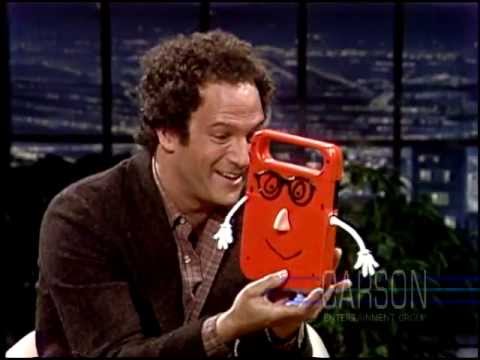
On TV, it appeared more often in documentary or variety contexts, including Modern Marvels and a reported Albert Brooks bit on The Tonight Show Starring Johnny Carson.
Here is Albert Brooks bit on The Tonight Show Starring Johnny Carson
The Speak & Spell in Music
Musicians loved the Speak & Spell because its voice was instantly recognizable and emotionally strange.
One of the clearest examples is “Genetic Engineering” by Orchestral Manoeuvres in the Dark, where the Speak & Spell sound is directly credited.
You can see that video on YouTube here:
“Genetic Engineering” by Orchestral Manoeuvres in the Dark
Kraftwerk’s “Home Computer” and “Numbers” live in a similar robotic voice world. Pet Shop Boys’ “Two Divided by Zero” is often linked to the Speak & Math. Other artists, including 808 State, Beck, Dizzee Rascal, and Röyksopp and Robyn, have also been connected to Speak & Spell-style sounds.
Here is “Two Divided by Zero” by the Pet Shop Boys on YouTube.
Circuit Bending
Circuit bending gave the Speak & Spell another life.
People opened the toy, altered its circuits, and turned its already-weird voice into glitches, drones, distortions, and alien noises. What began as an educational device became an experimental instrument.
Circuit benders found the ghost that had always been hiding inside the machine.
The Reboot That Wasn’t Quite the Same
A few years ago, the Speak & Spell was brought back for a new generation. The reboot looked familiar and operated in much the same way: press the buttons, hear the voice, spell the words, get the response. But for anyone who remembered the original, it did not feel quite the same.
The display was far weaker compared with that beautiful old VFD glow, and the whole machine felt lighter and less robust. It was nice to see the Speak & Spell return, but the original had a physical presence the newer version could not fully recreate.
Why It Still Matters
The Speak & Spell taught spelling, but it also taught a generation what digital speech could sound like.
It belonged in backpacks, bedrooms, movies, songs, and experimental music setups. For those of us who had one, it was not just a toy. It was a glowing red voice from the future, asking us to spell.
William W. Winter is the creator of Apple II Adventure Studio, where you can try your hand at making text adventures with a modern web-based design tool. You can try it out and make your own text adventures for free at: https://textadventurestudio.com
Old School Gamer Magazine readers can sign up for a free account. More articles from William can be found here.
The post The Weird, Wonderful Magic of the Speak & Spell appeared first on Old School Gamer Magazine.