
The UK’s controversial Online Safety Act (OSA) mandated sites take measures to stop children accessing some parts of the internet through a series of checks, like seeking a digital ID, or simply analysing one’s face to see if they look over 18. Since it started to roll out over a year ago, the online landscape has changed significantly, though a new report suggests children are bypassing it in creative ways.
According to Internet Matters and its survey of 1,270 UK children between the ages of 9 and 16 (plus their parents), 46% of children believe checks are easy to bypass. A mother of a 12-year-old boy says, “I did catch my son using an eyebrow pencil to draw a moustache on his face, and it verified him as 15 years old.”
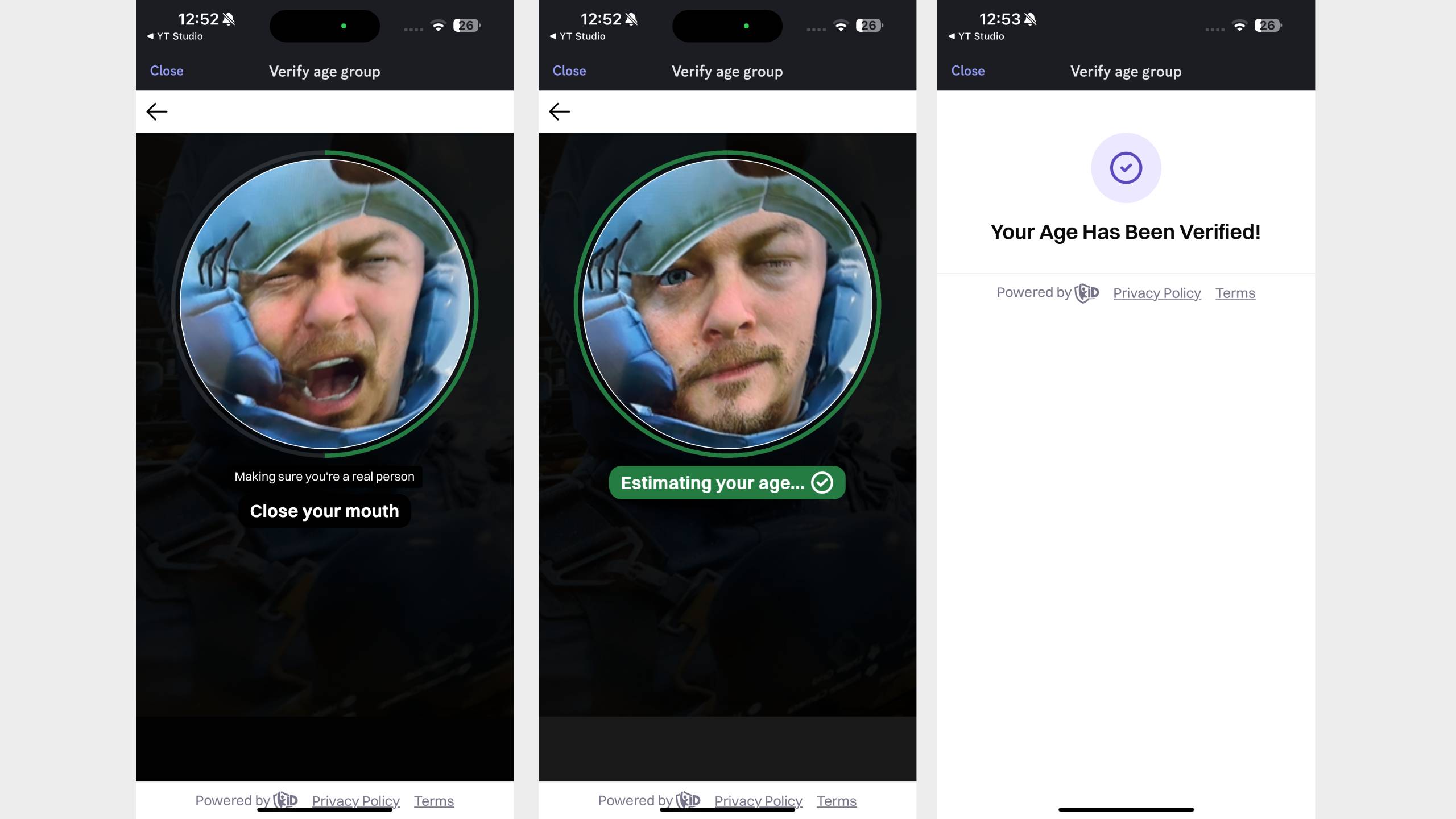
Reportedly, 32% of children have bypassed age checks, with 13% entering a fake birth date, 9% using someone else’s login, and some even taking to fake moustaches. One 11-year-old girl reports seeing clips of people using video games to bypass it. This is a problem we spotted last year; as I personally verified, you could get around Discord’s age verification process by simply using Death Stranding’s photo mode, then making Sam Porter Bridges do different faces (mine was even wearing the otter hood).
Age verification systems all have downsides. Asking for ID not only feels like an overstep of their privacy to many, but it also risks your data getting accessed by bad actors. After it rolled out its own age verification system last year, 70,000 age verification ID photos may have found their way into a Discord breach. And this is before mentioning Discord’s age verification vendor’s ties to Palantir co-founder Peter Thiel.
But then, verifying age with a picture or video of a face is easier than ever to spoof, thanks to video games and generative AI. Internet Matters’ report even claims that a quarter of parents have allowed children to bypass age checks, with 17% helping the children and 9% “turning a blind eye.”
Despite these problems, the report claims that views on the Act are somewhat positive. 90% of children want an improved block and reporting process, with 77% wanting restrictions on who children can contact, and 74% want limited access to livestreams or the ability to comment. 39% of parents believe the internet world is safer, post-OSA, with 28% believing the opposite. Alternatively, 42% of children believe it is safer now, and 16% believe it is not.
Still, according to Internet Matters, 49% of surveyed children report seeing harmful content online, ranging from violent and hateful content to content that promotes unrealistic body types.
However, only 22% of parents and 31% of children believe the UK government is actively doing enough to protect children online, and 62% of parents who responded to the survey support a ban on social media for under-16s. Last December, access to many social media platforms was blocked for under-16s in Australia, the world’s first ban of its kind. A similar ban is being debated for use in the UK, too.
It seems, according to this report, the problem isn’t necessarily with verifying age, but how it is done, for which demographic, and why. This is not the first time we’ve seen such a response. Last August, it was revealed that nearly two-thirds of Brits in a survey thought the verification was ineffective, but more than that support them being introduced.