
What is it? An action roguelike inspired by Spore’s creature phase.
Release date May 8, 2026
Expect to pay $9 / £7
Developer Odd Dreams Digital
Publisher Secret Mode
Reviewed on Nvidia Geforce RTX 3080, AMD Ryzen 9 5900X, 32GB RAM
Steam Deck Verified
Link Official site
The roguelike genre is not only more crowded than it’s ever been, it’s more iterative too. The vast majority of games simply build on or remix an existing formula—whether walking in the footsteps of Slay the Spire, Hades, or Vampire Survivors. It’s rare to find something truly unique.
So it’s refreshing to be able to say that Everything is Crab is not quite like any other roguelike you can play right now. That’s not to say it doesn’t have its influences—the most obvious being the creature phase from controversial 2008 sim Spore—but its focus on ecosystem and evolution sends it down all sorts of fascinating avenues.
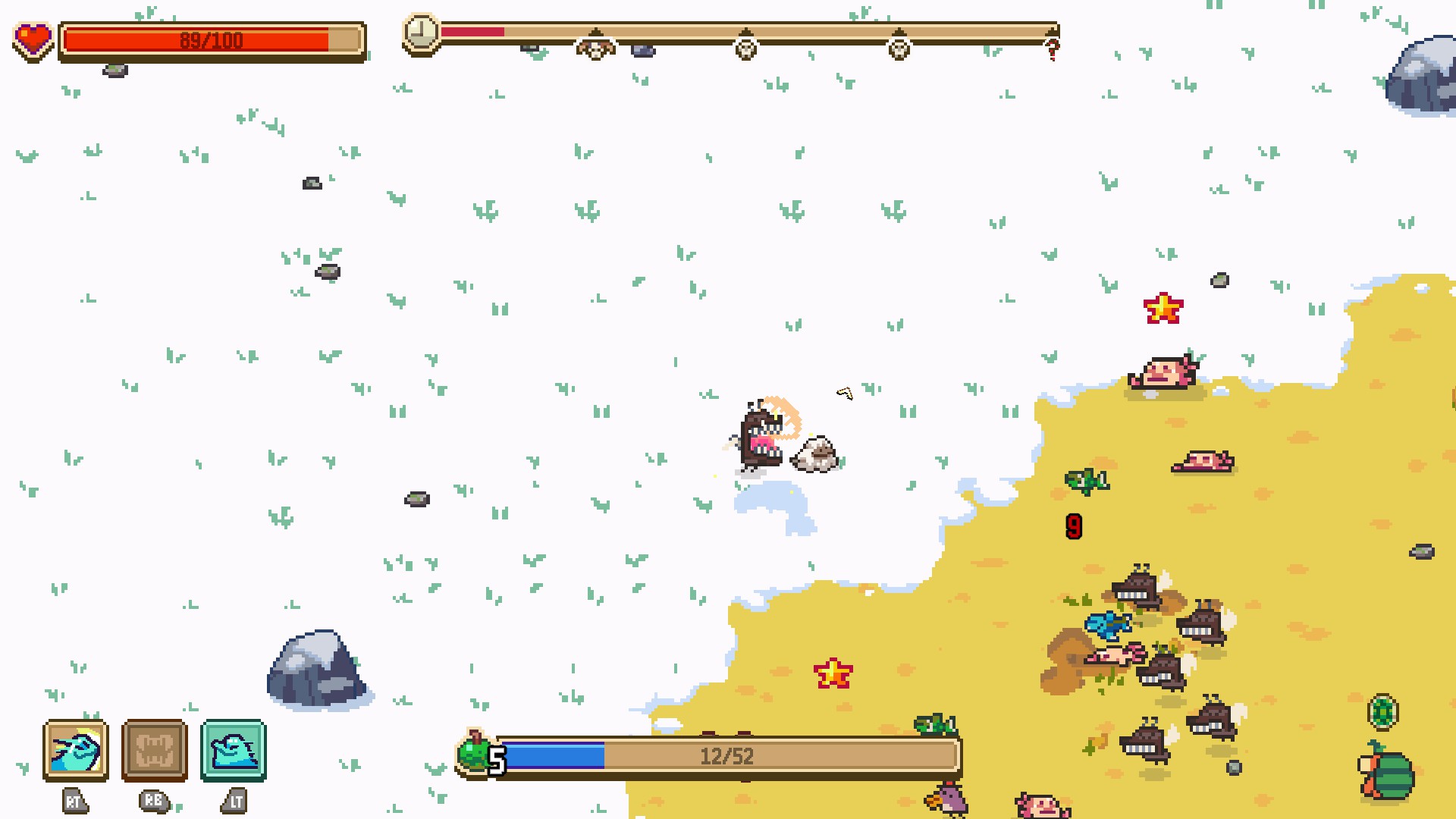
The premise, though, is simple. You play as a little blue blob, trying to survive in a world of weird animal hybrids. It’s essentially a top-down action-RPG, with your attacks and dodges on cooldowns—but starting out, you’re slow and weak with no real abilities to your name. You’re not much of a threat to the land’s various predators.
Food is the key. As you snatch meals here and there—from fallen fruits to the flesh of slain animals—you start to level up, which gains you new evolutionary traits. With extra eyes, a sharp beak, a developed brain, and six legs, you can become an agile, precision fighter, dodging around enemy strikes, while increased size, a set of horns, and a protective shell will let you charge into the fray as a tough brawler.
An impressive number of these evolutions are represented visually on your character. This is really Everything is Crab’s coolest trick—animating whatever nightmarish mish-mash of body parts and organs you put together seamlessly, with details as subtle as which specific kind of snout you have or exactly how many legs and eyes you’ve thus far acquired.
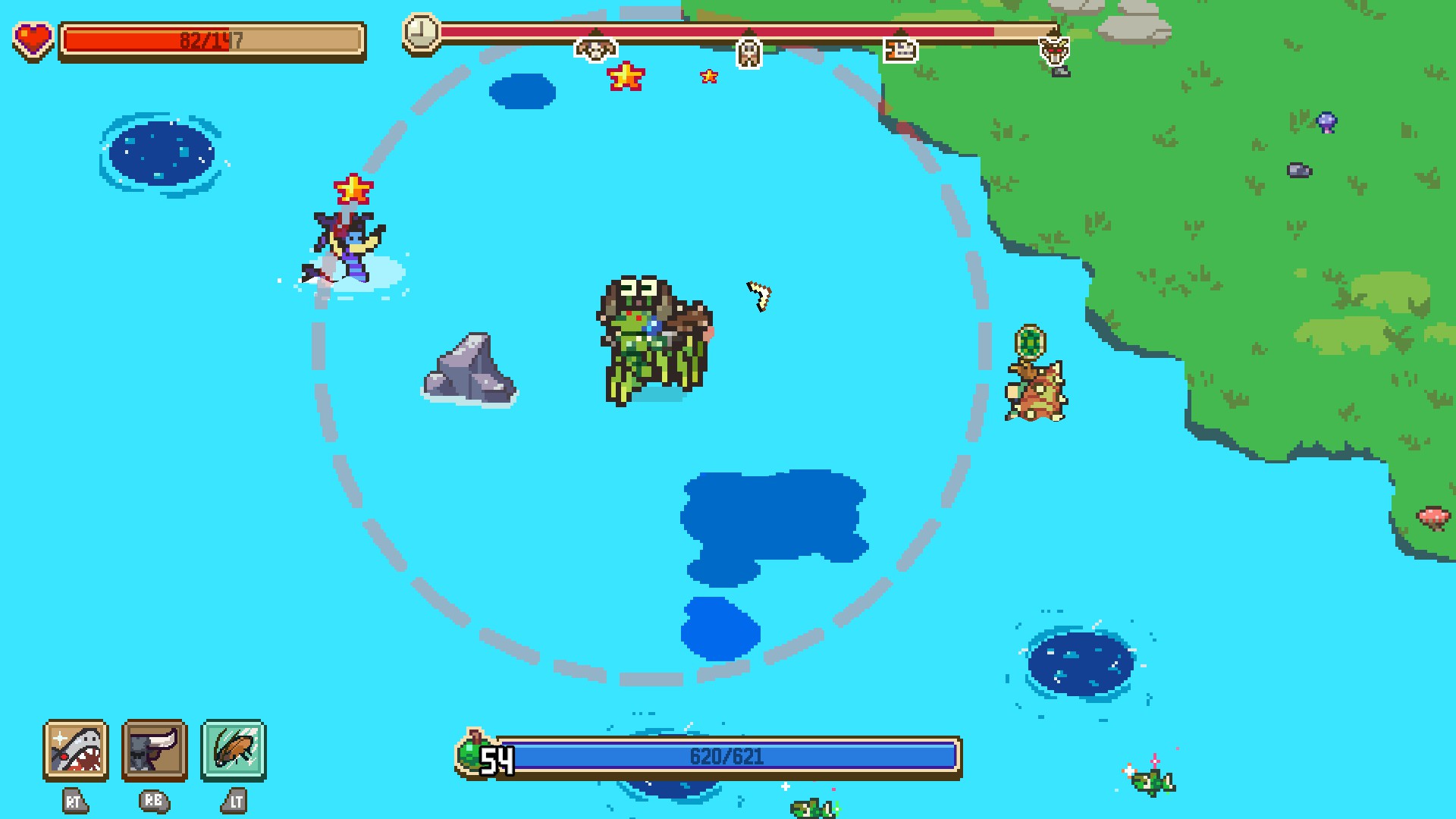
The most interesting part, however, is that it’s not just about creating the most powerful combat build you can. You’re not clearing rooms in a dungeon, you’re finding a niche in an ecosystem. Enemies don’t just exist to fight you, they follow their own patterns of behaviour, including hunting smaller prey, foraging, and fleeing from danger.
Success isn’t in how many of them you can defeat, it’s in how much sustenance you can get, however you can get it. Being an apex predator, feasting on the meat of fallen beasts, is one way, but equally another is to live as a tiny scavenger, stealing meat from others’ kills and dodging nimbly away when they retaliate to hide in a burrow. Or as a lumbering herbivore, eating fruit and mushrooms and trusting in natural defences like spikes and poison to keep you safe.
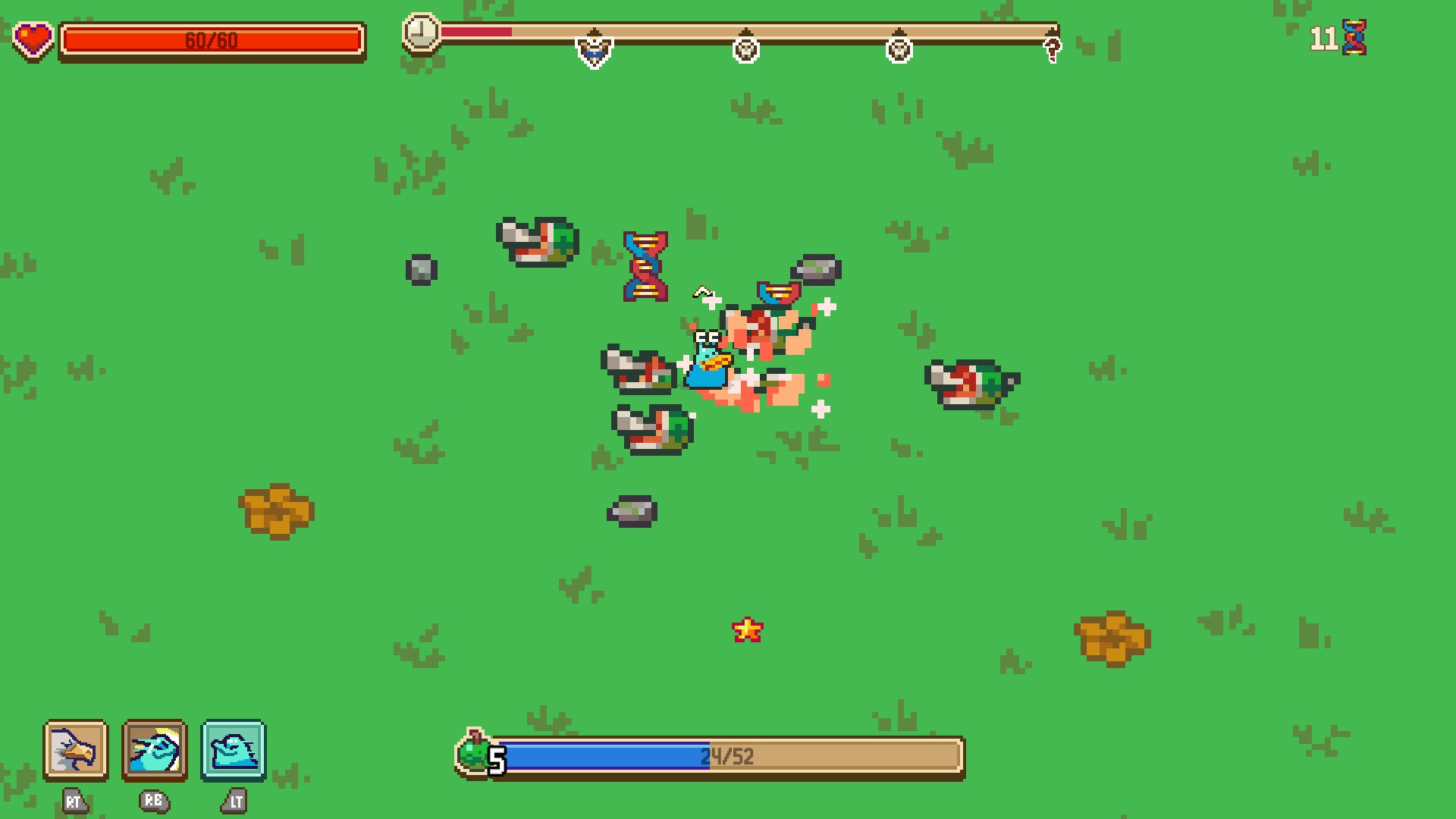
A central hook of the game is carcinisation—the idea that convergent evolution frequently leads different unrelated species to develop crab-like traits. It’s played for laughs, with several crab-hybrid bosses, but it’s also a game mechanic: any crab-like traits you choose, such as a carapace or claws, add to your carcinisation value, which gradually increases the game’s difficulty but also increases the spawn rate of higher quality food. Trying to fully become a crab is like a little sidequest of its own to pursue, with unlocks tied to how far you’re able to get.
You can specialise in surviving in different environments—growing fur so you can range into snowy regions, scales to protect you from the desert heat, a prehensile tail for swinging between trees in the forest, or wings for flying over the sea. As you evolve, so do other animals, opening up even weirder niches. I’m fond, for example, of stacking up my poison resistance so I can keep preying on blobfish long after they’ve mutated to make everyone else who hunts them die a slow, painful death.
At regular intervals, your journey is interrupted by a boss fight, penning you in to face a huge monster. But brilliantly even these much more constrained encounters still offer wide open possibilities. If you’re not equipped to battle, you don’t have to—you can dodge, hide, or simply heal through their attacks until their patience is exhausted, at which point they’ll wander off into the world to rampage through other creatures instead. Or you can slay them in a whole myriad of different ways, from brute force to poison to an army of hypnotised minions.
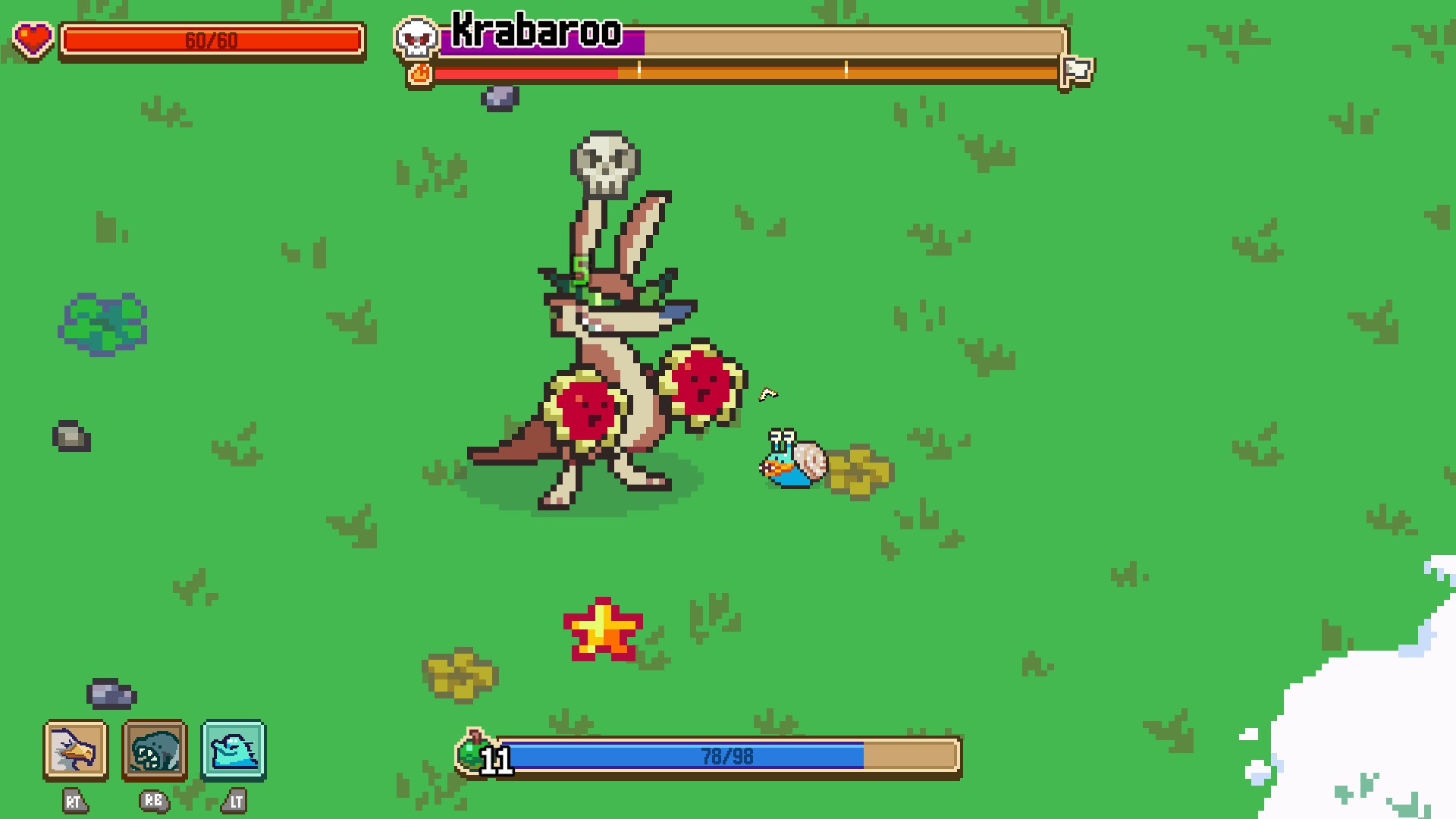
One of my favourite little features is that at the end of a run, you can click a button to make a record of the bizarre creature you ultimately became, saved as a set of screenshots of your build and even a little animated gif of you in action. Now that’s a game understanding what it does best.
Everything is Crab is a really interesting, creative take on a genre that all too often takes elements for granted, and though nowhere near as ambitious as Spore, in some ways it does realise some of its goals in a much more fun and interactive way. But unfortunately it’s not without a few recessive traits that grow increasingly difficult to ignore.
Level headed
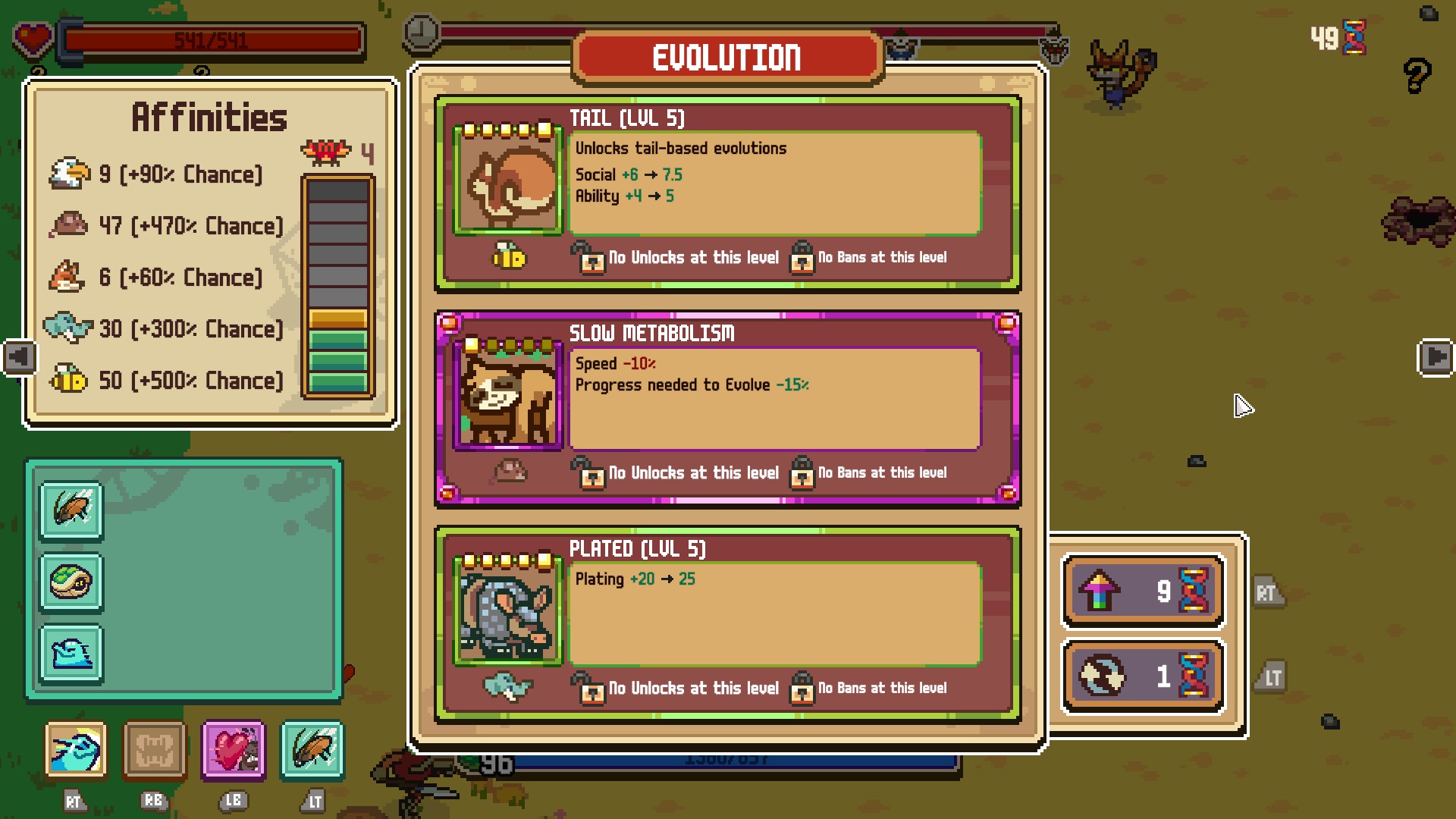
The biggest problem is that you simply level up too much. Yes, I’m complaining that my lobster is too buttery, but the much too frequent acquisition of new evolutions diminishes the personality of each run, as you find yourself gathering many of the same traits over and over. The game is so eager to show you its best material that it burns through it too fast, and the thrill of trying out new mutations is quickly lost.
At its worst, it can totally disrupt the flow of a run. Many of the game’s most effective strategies revolve around increasing the pace of level ups—through everything from upgrading your eating speed to increasing the spawn rate of vegetables to gaining passive progress from chewing the cud.
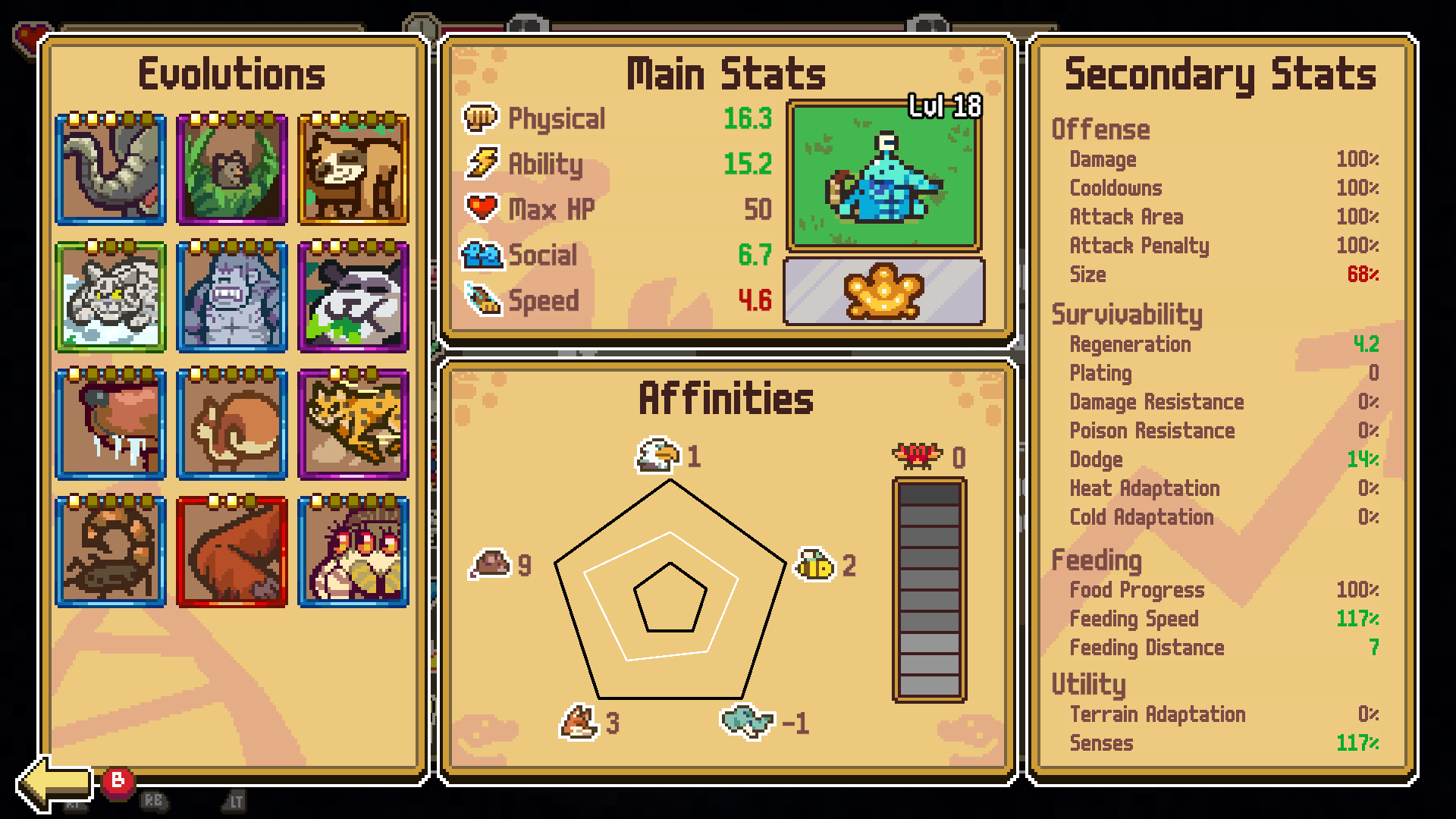
Given those extra level ups can also be used to purchase more traits that speed up your levelling even more, a snowball effect can quickly take hold that leads to constant interruptions in the action. At worst I’ve had runs where I can barely go a few seconds between just-slightly-too-slow evolution pop-ups, my time in the menus completely eclipsing the actual action.
Outside of runs, the game has something of the opposite problem. The overall meta-progression is disappointingly slow and unsatisfying. There are a few things to unlock, but fundamentally the main mode consists of just doing the same runs over and over through slowly increasing difficulty levels.
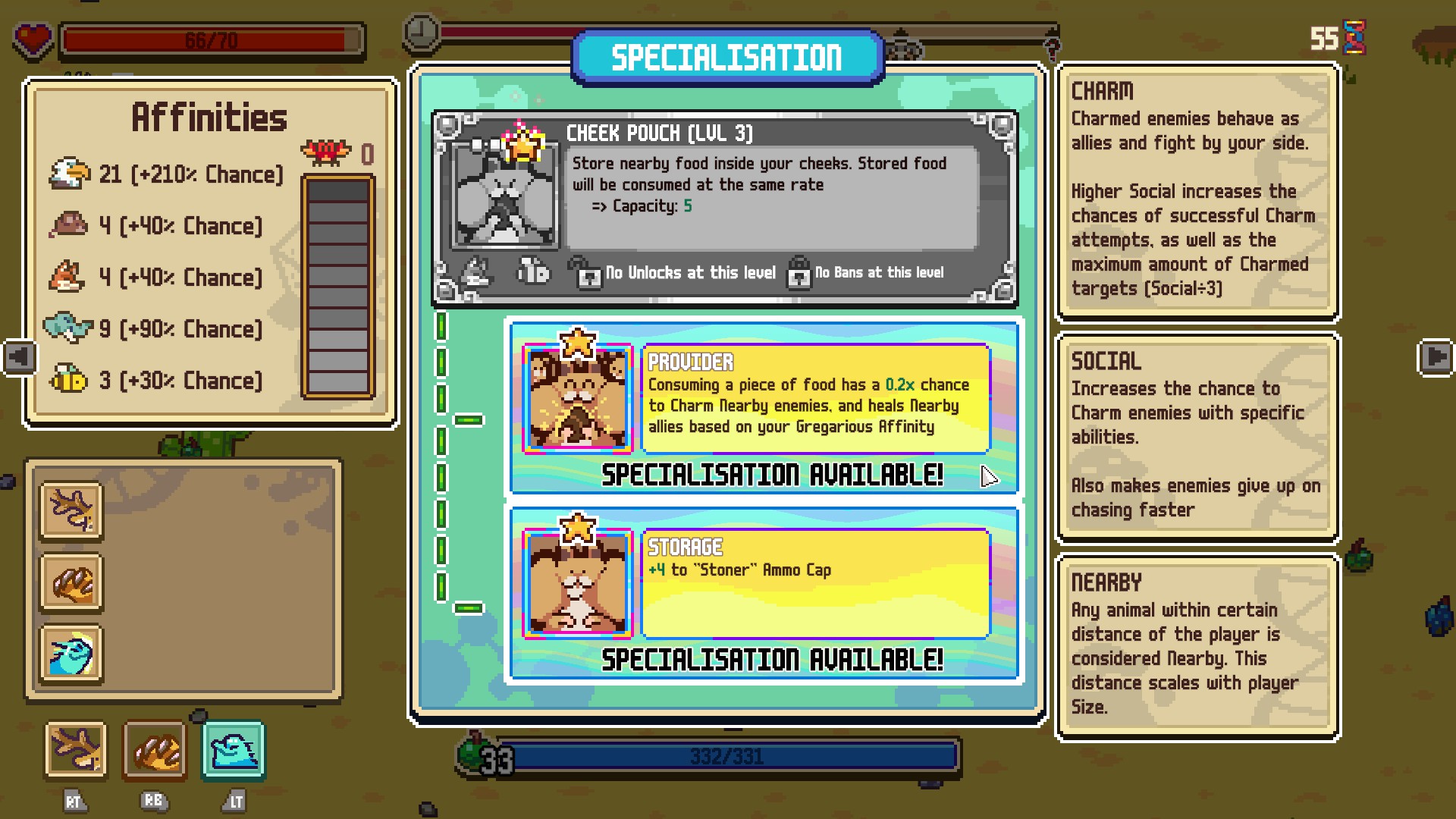
Variety is in theory provided by challenges—one-off runs with more extreme modifiers, such as turning the entire world into a desert or making every animal but you a giant. But it takes a long time to unlock new ones to try, and many of them simply feel more harsh than fun.
Too many are variations on partly or completely randomising your evolutions, which just removes the joy of build-crafting, and modifiers like “you cannot heal in any way” feel needlessly cruel. In such an interesting digital ecosystem, it feels like there should be more exciting variations to explore.
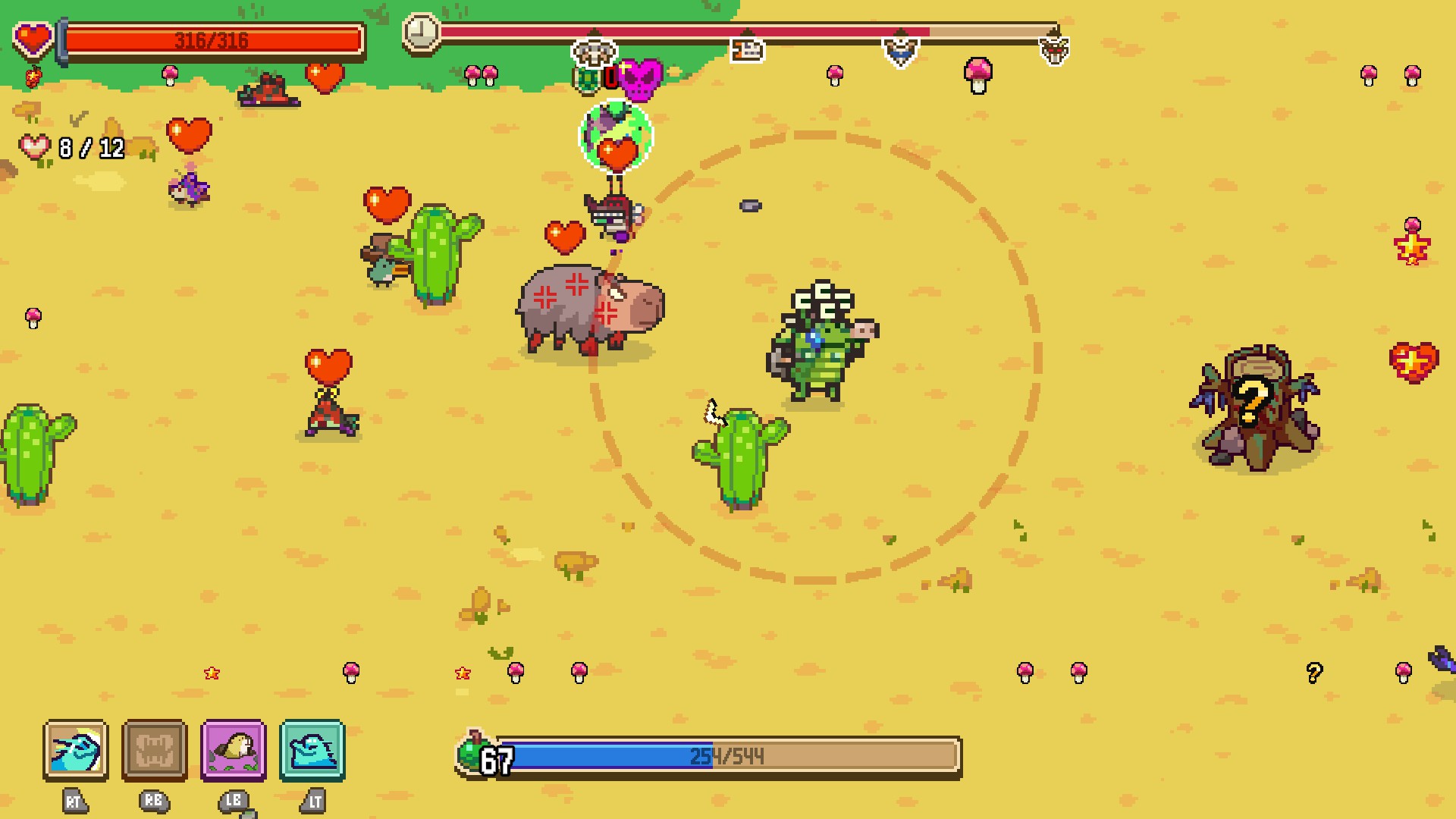
The result is that Everything is Crab makes a really wonderful first impression, but its long-term survival is a little more questionable. I’ve had fun with it for the 15 hours or so I’ve played so far, but really I’d probably already seen the majority of what it had to offer 10 hours ago. I’m certainly not feeling the kind of pull that can make the roguelike genre so all-consuming, to keep coming back for one more run.
That does make Everything is Crab feel more like a novelty than the next big thing—but I still love quite how novel it is. Even if some of its ideas need more refinement or more support around them, they are still really creative, fresh ideas, and well worth experiencing, especially at its agreeably low price. Hopefully with ongoing support, it may continue to evolve in the coming months, perhaps gaining the mutations it needs to lure me back for more.