
Special commentary on this classic PC Gamer review provided by:
Demigod review – PC Gamer issue #201 (UK, June 2009)
From the archives: The review below appears as originally written, with only minor changes in formatting and presentation. By Graham Smith
Demigod is gloriously bombastic, the introductory cutscene intoning the slight backstory in its best, booming Christopher Lee voice. One of the gods has been destroyed after leaking company secrets. As one of eight monstrous, magical demigods, you’re fighting for promotion to the suddenly vacant position of Totalgod.
The story needs no greater depth than this because there’s no campaign. You simply battle in individual skirmishes or larger tournaments against bots and other people, the various demigods separated inconsequentially into two teams for the event: the Forces of Light and the Forces of Darkness.
Demi war
What is it? A fantasy strategy game with experience points and skill trees in place of base-building
Release date: April 14, 2009
Expect to pay: $40 / £25 in 2009
Developer: Gas Powered Games
Publisher: Stardock
Influenced by: The Defence of the Ancients mod for Warcraft 3
Play it on: 2GHz CPU, 1GB RAM, 128MB 3D card, broadband internet
Copy protection: None, but integrates with Stardock’s Impulse service
On their surface, these fights resemble traditional RTS, albeit focused upon one unit. Succinctly, you point and click to tell your demigod where to go and what to hit.
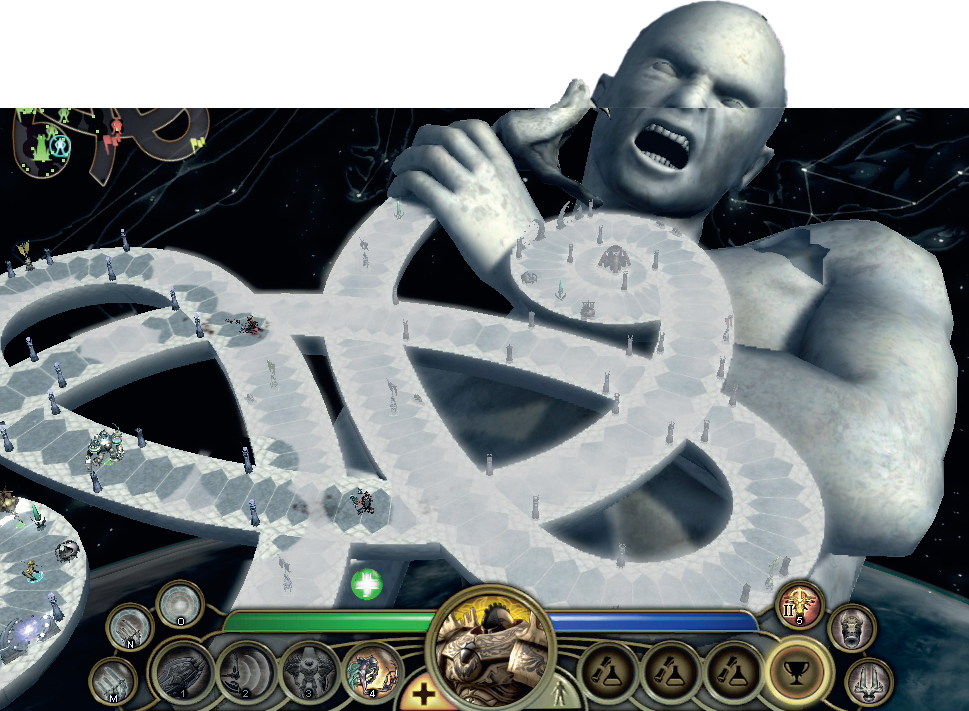
Battle takes place across eight maps, each small and symmetrical, covered with capturable flags and enormous Grecian statues. It’s an appropriately decadent stage for battles between hulking immortals and the AI minions at their feet. One map is surrounded by beautiful waterfalls, another takes place atop the coiled body of a two-headed snake, gripped in the hands of a screaming statue that floats in space.
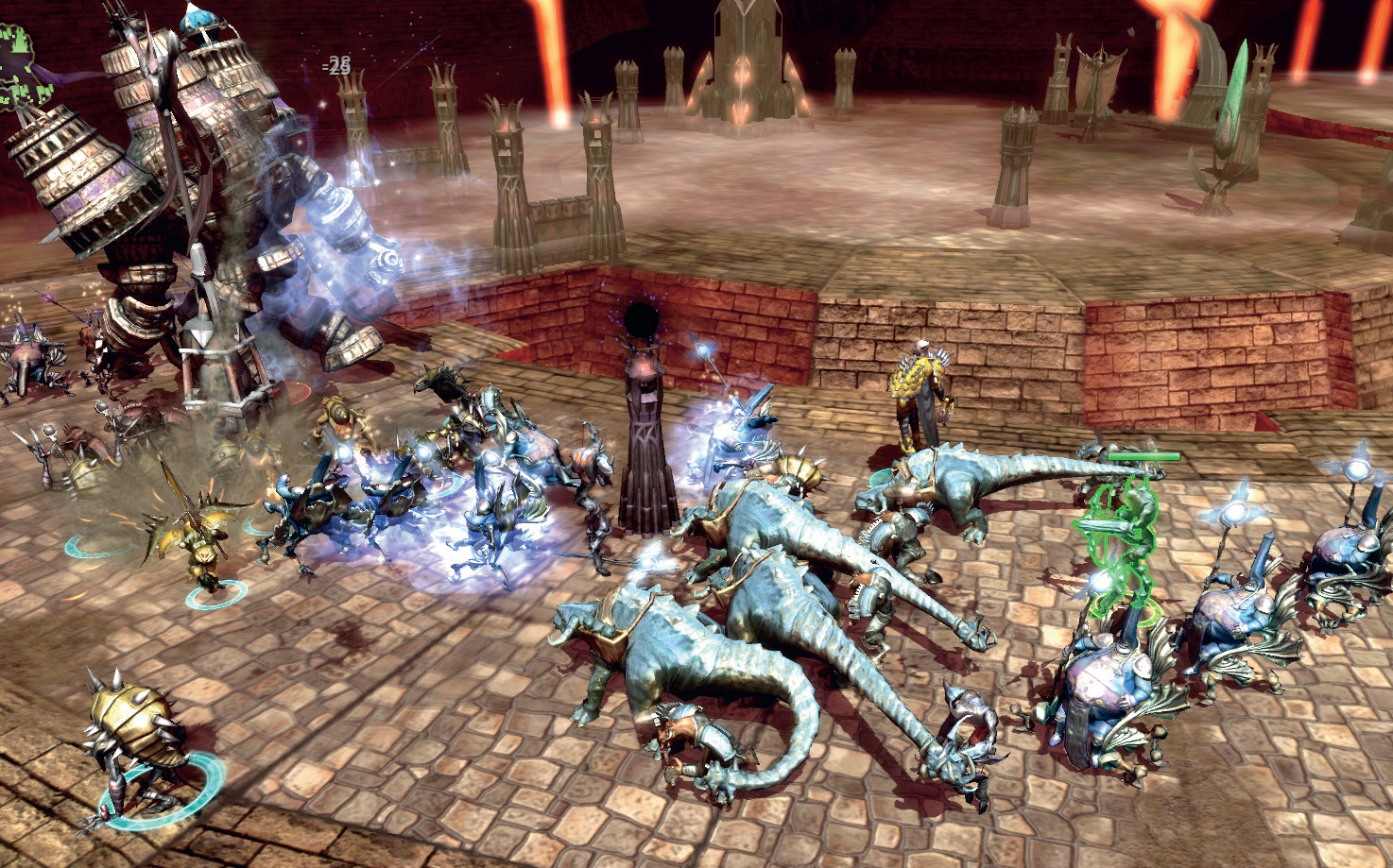
These battles start small, but by the end levels are obscured by giants, demons and blubberous priests, all casting magic, throwing boulders and wreaking havoc. Beneath this lies a core of action roleplaying, where instead of building a base you’re growing your character by gaining experience, choosing skills and purchasing armour and magical items that provide buffs. In other words, your demigod is your base.
Except for your base, which I’ll come back to in a minute.
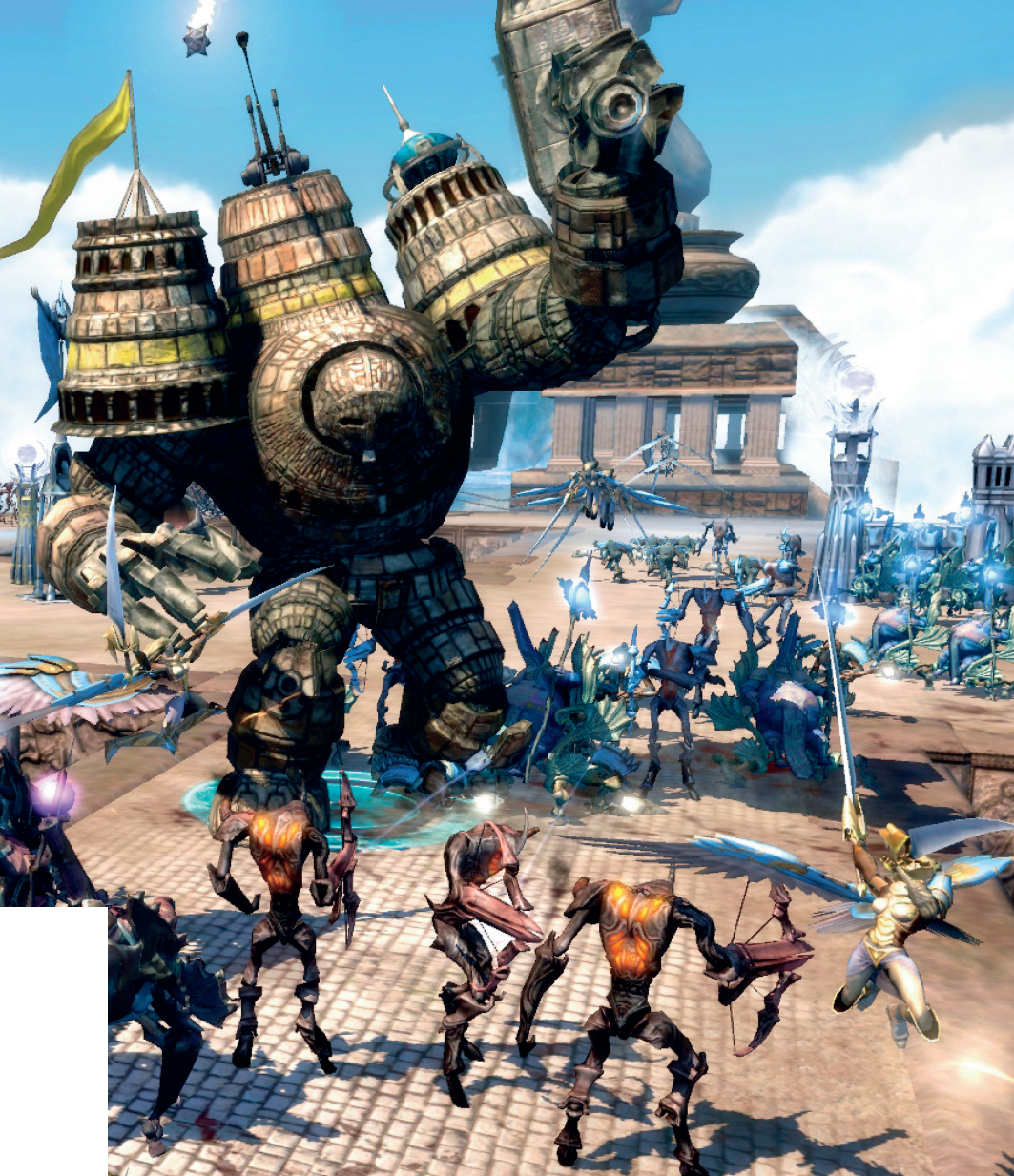
The demigod-as-base idea is best exemplified in the game’s most iconic character: the Rook. The largest of Demigod’s semi-deities, the Rook is an anthropomorphic castle imbued with all the wist and sorrow of one of the massive creatures from Shadow of the Colossus or something out of a Miyazaki film. He looks enormously cool, and he’s the first demigod I played. Either by design or by coincidence, this proved a good call, as he’s the easiest to grasp in a game that suffers from having no tutorial and no hint system. Despite this lack of knowledge, by the end of my first skirmish I’d levelled up my Rook to the point where his left shoulder was full of archers, his right shoulder was a kind of automatically firing Tesla coil, while a central tower balanced a trebuchet.
Now with wings
While the Rook is immediately appealing, the other demigod designs don’t make a similarly immediate connection. The game is all about the demigods, and it’s their distinct attributes that make the game a delight, rather than the game modes. But you may have to play each at length for those beautiful- on-the-inside attributes to become clear. In early matches I dismissed Regulus, an angelic sniper designed for ranged combat, as too weak to be useful. Then I realised that his skills, enhanced through levelling and judicious item purchases, make him great for protecting control points with mines and felling fleeing enemies with a single shot. Plus, tell him to walk somewhere and he’ll occasionally say, “This would be faster with wings,” and then you get a skill that lets him grow wings.
All of the demigods have at least one thing that falls into this category: an idea that is silly, or extreme, but ultimately cool in a 12-year-old high-five comic book kind of way. Both the Rook and Regulus are Assassins, one of Demigod’s two classes, and do most of their fighting themselves. Their two remaining classmates are Untamed Beast, a roaring, lizard-tailed creature with the ability to spread the plague, and Torch Bearer, who can use ice magic to slow and debuff enemies and with the click of a button “relive his fiery death.” That is, burst into flame and use fire magic to damage them directly. While burning, he repeatedly screams, and switching back to ice magic afterward is described as “ending his suffering.” Again, cool.
Yeti gain
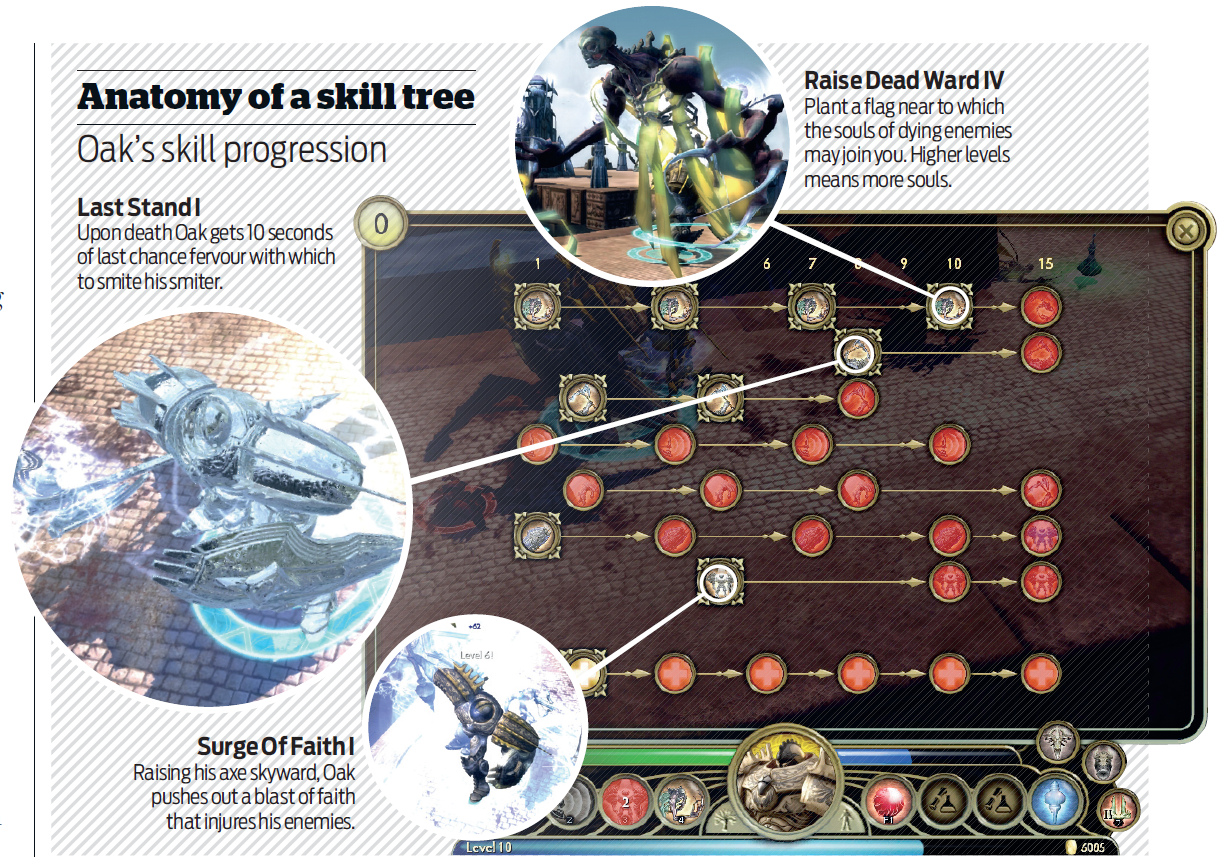
The other class of demigods are the Generals, who while still possessing considerable personal strength rely on summoned minions to aid them, making the game slightly more like a traditional RTS. Oak is your best entry point, possessing enough strength to withstand melee fights while also able to reap the souls of his enemy’s fallen minions. Once you’re comfortable commanding troops, you can move on to trying the Queen of Thorns, a buxom lady floating above a plant held aloft on the backs of beetles; Sedna, who rides atop a giant cat and summons yetis to her cause; and the vampiric, pointy-eared Lord Erebus, who can reap souls, but also turn into a painful mist.
This review was originally published in PC Gamer #201 (UK, June 2009).
You can still subscribe to PC Gamer to get new issues of the magazine (in print!) every month.
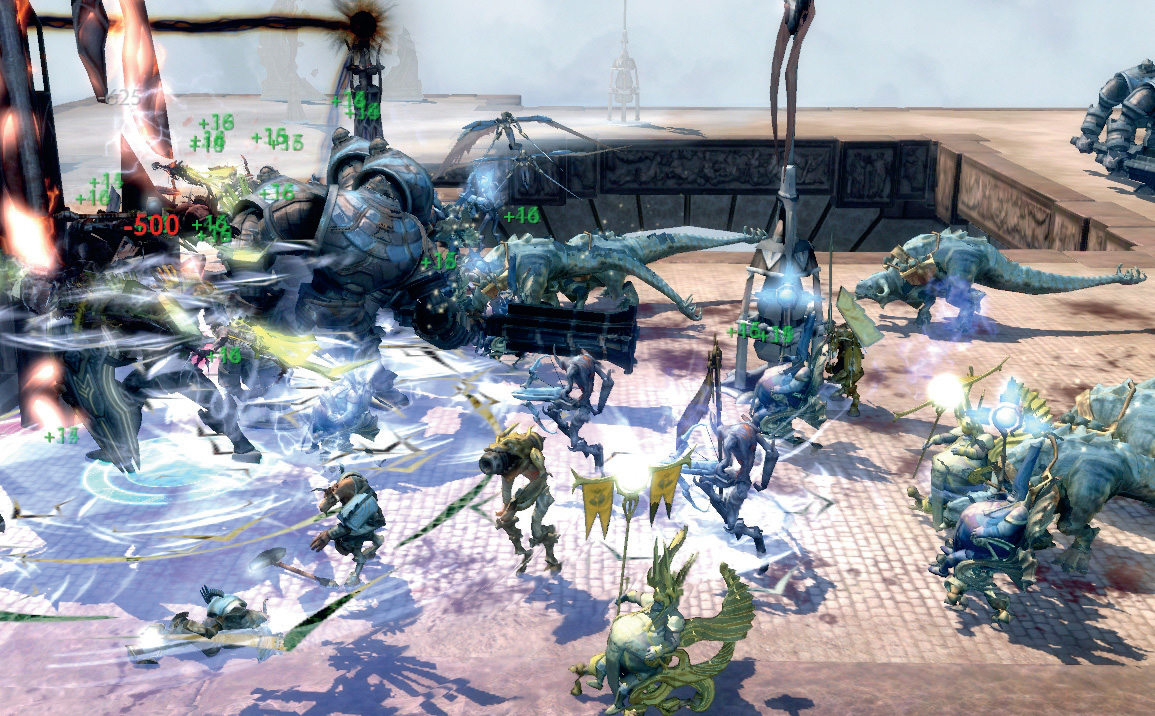
Using the Generals, there are moments when swarming enemies with minions is hugely satisfying, and times when it simply becomes confusing as to whether my guys are still alive amongst the ruckus of laser blasts and area of effect spells. It’s all colourful and beautiful, but it’s not always informative.
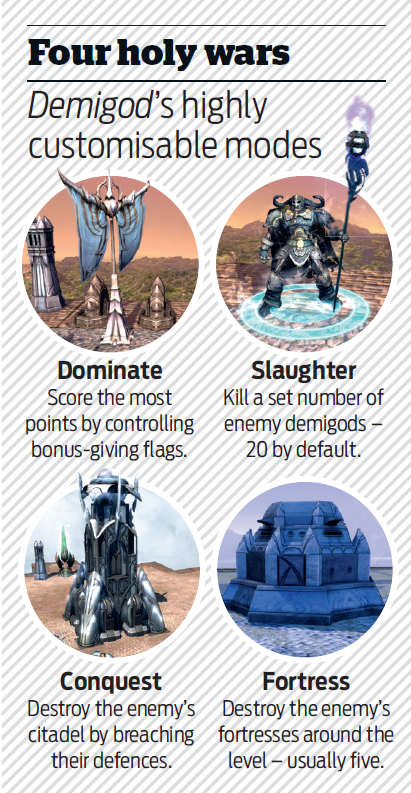
The distinctive demigods, and the different tactics required in the four game types (see ‘Four Holy Wars’), make it interesting to see which character combinations prove most useful. Conquest and Fortress require direct assaults on defensive turrets, for example. Sadly, this can cause matches to quickly become attritional, the inevitable winner clear long before the finish, and fights against turrets fixed in place by a level designer are a lot less fun than fighting giant monsters.
Those turrets, though fixed, can be upgraded via the Citadel at the centre of your other, more traditional base. Trekking back here from the frontlines is tedious, but there are big rewards to upgrading.
None more obvious than the changes you can make to your minion reinforcements, who spawn from portals bracketing each map.
These aren’t controllable by anyone, even Generals, but flow through the map on a fixed path to clash against the enemy’s minions. It’s by these creatures’ progress that you can tell the status of a battle. Upgrading at the citadel leads to new, larger creatures joining your side: first clerics, later the excellently named catapultasaurii, and lastly concrete- stick wielding giants bigger than some of the demigods.
Not like this
You accrue in-game money as you go, and if you’re not interested in spending it to benefit your team, you can instead benefit yourself by purchasing artefacts and items. This is why I refer to my Rook as my Rook.
On my second night of play I found myself online, reading forums and advice on character builds. I thought the roleplaying elements would be a nice way of getting RPG fans to play an RTS. It never occurred to me that the opposite was also true.
I’ve played and loved roleplaying games before, but not like this. Not where I actually paid attention to the numbers operating beneath it all.
Demigod is a Trojan horse filled with statistics. The Mage Slayer provides a 40% chance on hit to stun the target for 0.2 seconds? Man! I am all over that. That will totally benefit my Rook against faster opponents.
Demigod has about a dozen small but obvious flaws right now – most easily fixable, some bewildering.
These include some iffy pathfinding and the oddity of the game world being shrouded by grey sludge upon death. But the one that really matters is that its netcode is very patchy indeed. Joining a game via automatic matchmaking, the server browser, or even a friends list, is a perilous process where a single player with connection issues can prevent everyone else from playing the game. I expect this will be quickly fixed, which is why I didn’t mention it upfront, but at the time of writing, this multiplayer game, with its online matches and scoreboards, is frequently only playable against the computer. That’s a travesty.
Yet I’ve had nothing but fun while playing, both against the PC and when it’s worked online. Demigod’s blending of traditional strategy with RPG stats-based tactics leads to something that at least feels new, but it’s the unabashedly cartoony voices and over-the-top abilities that make the game fun.