
Samsung has developed a new prototype NAND memory chip composed of an incredible 900 layers, according to a new report. The chip is actually achieved by stacking two 450-layer cell wafers.
ET News (via Sammobile) says, “Samsung Electronics recently implemented a 900-layer Class V-NAND integrated system utilizing Cell Multi-Bonding (CMB) technology, which bonds two 450-layer cell wafers into one.”
The outlet says that the current highest layer count for NAND flash memory is SK Hynix’s 321-layer NAND technology. Samsung is said to be prepping its own 10th Gen V-NAND with over 400 layers and this new 900-layer prototype seems to be bonding two of that class of NAND chip together.
The challenge here, as we understand it, involves the intricacies of bonding chips together, which include the incredible precision required to align the cell wafers and their interconnects accurately, along with a so-called “warping” phenomenon during manufacture. ET News says the latter was solved courtesy of an advanced Upper Chuck design, which is the tool that holds the wafers in place during bonding.
While it’s easy to see how this new 900-layer memory will increase memory capacity without expanding the physical dimensions of a NAND chip, the cost implications are less obvious. Taken at face value, two 450-layer chips are required, plus the time and cost to bond them together.
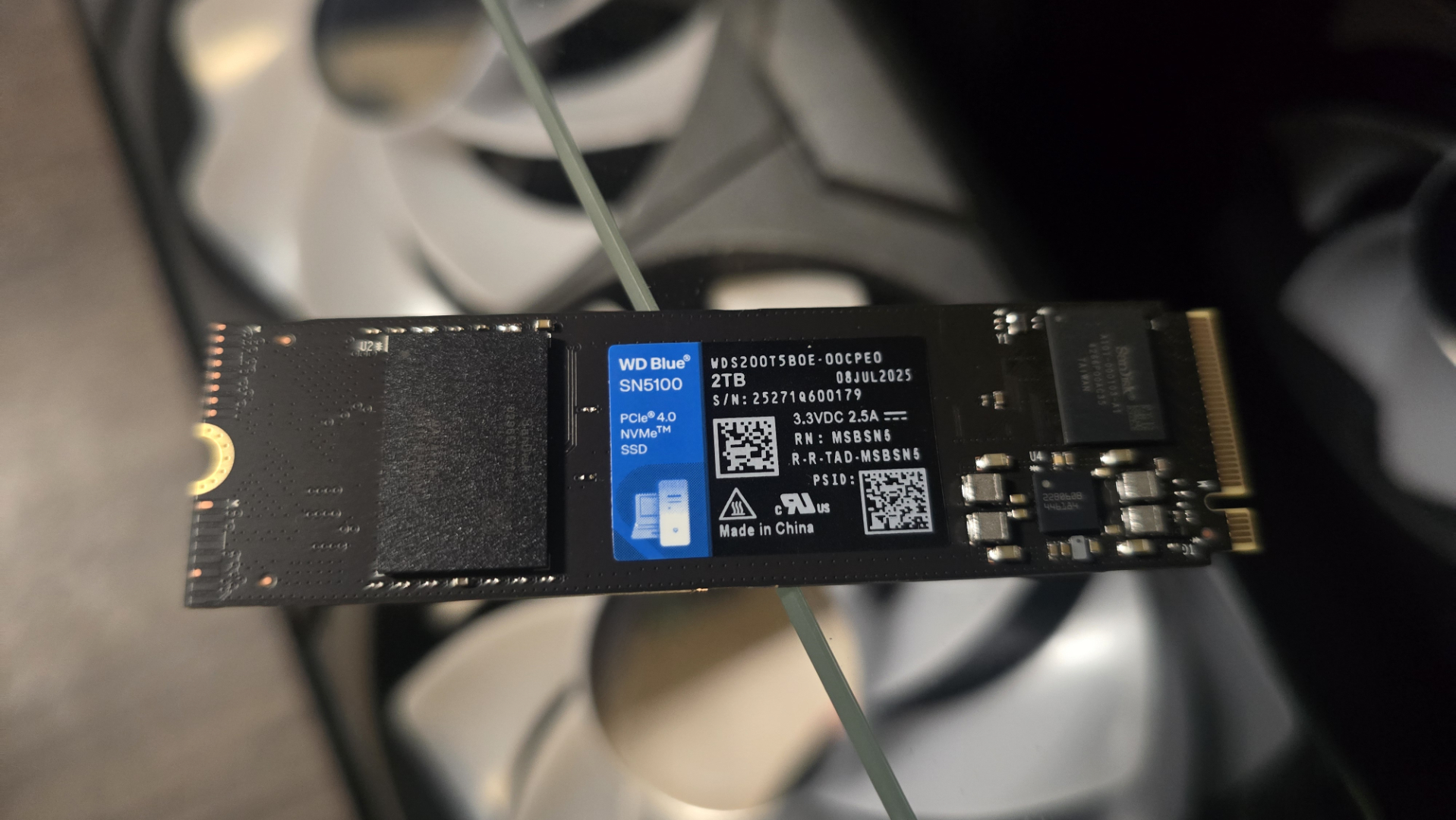
Of course, this is all being driven by the insatiable demand for storage capacity of the AI industry. So, cost probably isn’t much of a limiting factor, for now.
Still, we’re looking at roughly three times the density of existing NAND flash memory and the possibility of cramming frankly ludicrous quantities of storage into a very small space. If the AI bubble ever does go pop, there will presumably be an awful lot of flash memory looking for customers, and a golden age of comically cheap but incredibly large SSDs could follow.
The catch is that we’d all have to suffer whatever broader negative consequences came with the AI boom coming to an abrupt end. So, there’s no easy way out of the current chip crisis.
Right now, storage for PCs is expensive but not completely bananas, what with a typical 2 TB M.2 drive coming in around $250 on our SSD deals page. But it is at least good to see that the march of technology carries on. If the economics of it all ever normalise, there will be some pretty cool stuff to buy.