
Sim racing may finally have broken its glass ceiling; or rather, the plasterboard ceiling of the basements that used to house every car nerd’s Logitech wheel-and-pedals setup. If the rest of the family once found the hobby slightly embarrassing, those days appear to be ending.
The proof: thousands of car enthusiasts, motorsports fanatics, and sim techies of all ages and backgrounds gathered in Charlotte, NC this past weekend for the first-ever US-based SimRacing Expo. The expo—inaugurated at the infamous Nürburgring racetrack in Rhineland-Palatinate, Germany, in 2014—has traced the meteoric rise of the sim racing industry.
The 2026 SimRacing Expo hosted dozens of vendors from the hardware and software sides of the hobby: Fanatec, Thrustmaster, iRacing, NASCAR, Red Bull. Even the auto racing equipment manufacturer Sabelt showed up in full force.
While industry leaders spoke on the ever-growing market and unstoppable advance of haptic-feedback technology, kids drove their favorite cars on sim setups, the fanciest of which cost more than a down payment on a house.
Simulation racing takes motorsports video games ranging from the arcadey Forza Horizon to the hyperrealistic iRacing and applies the physical hardware of cars—a steering wheel, a pedal box, sometimes a manual shifter, and occasionally, tens of thousands of dollars worth of “force feedback” technology with motors built into actual racecar seats to provide games with an ever-improving facsimile of the experience of driving a car in the real world. You can even buy a rig used by F1 drivers for $12 million, if you’re the kind of person who wants to spend more on a gaming setup than on an actual Enzo Ferrari.
Since the mid 2010s, sim racing has grown into a global phenomenon from a niche, expensive, and highly inaccessible hobby reserved for the most dedicated motorsport nerds. While those absurdly expensive rigs clearly still exist, a part-time enthusiast can now buy a decent, lightly used starter wheel-and-pedals combo for barely more than the price of a Switch 2 Pro Controller.
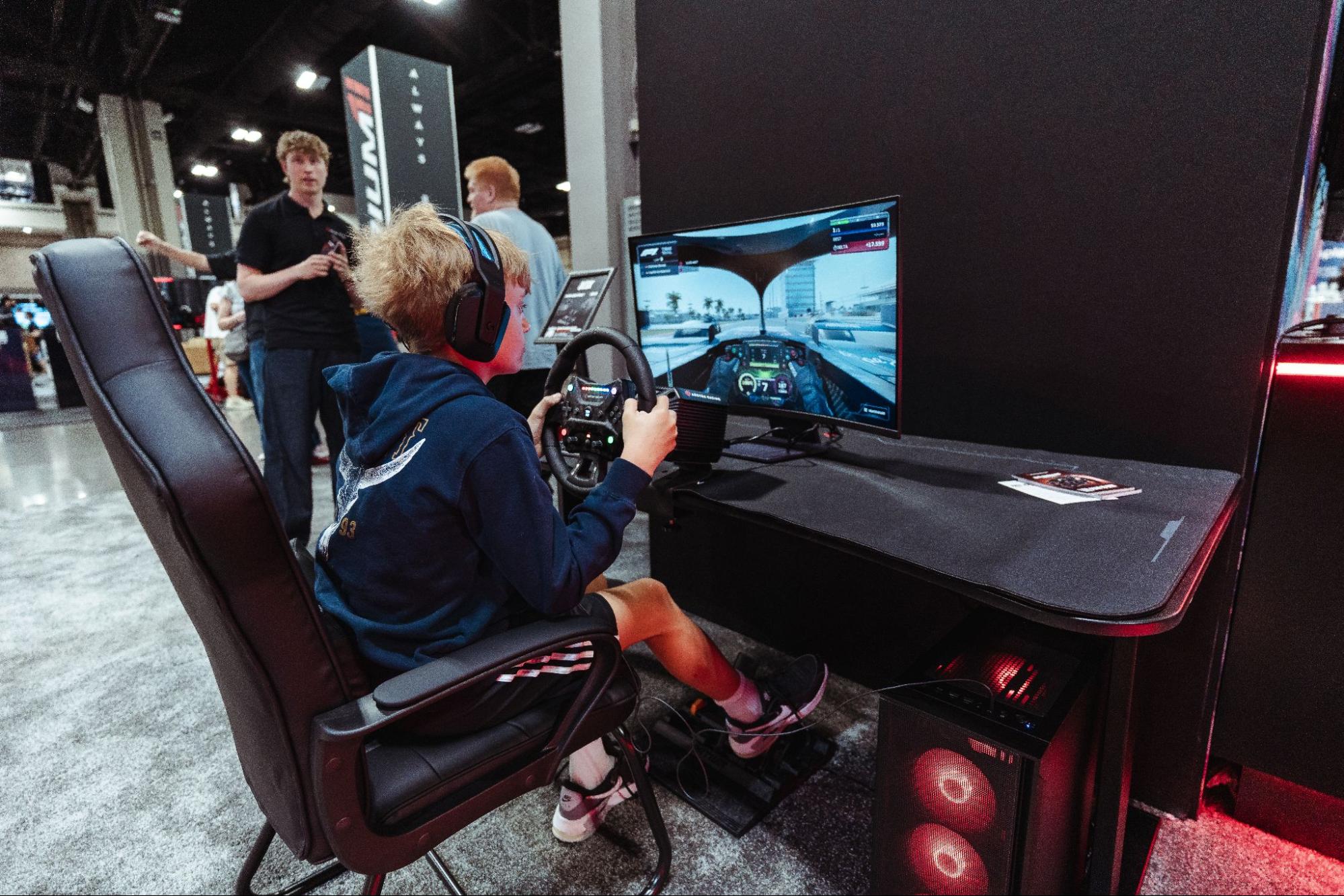
Thanks to the recent explosion in Formula 1 interest, there are now (tragically) hip “F1 Arcades”—which are basically nightclubs with sim rigs—in cities across the US, the UK, and Spain, with “more than 30 locations globally” planned by 2028. It may now be genuinely cool to sim race. Case in point: I went on a date to the F1 Arcade (her idea!) in Boston’s hyper-trendy Seaport District on a frigid January night, and the wait for a pair of seats was so long that we bailed and went to a mini golf nightclub instead (did I mention trendy?).
It’s not surprising that SimRacing Expo is only now landing on US shores. Outside of NASCAR and IndyCar, motorsports have only ever had a niche foothold in the US market. Which is fine—we don’t need to have everything here—but I imagine industry leaders felt a bit pained at missing out on the world’s most lucrative market.
I spoke with expo communications manager and sim/real racing veteran Danny Giusa on the group’s first stateside affair. He attributes sim racing’s growth to a few factors.
One is the takeover of F1 by an American company (Liberty Media Company), and the associated Netflix documentary Drive to Survive that got everyone and their grandparents into the sport a few years ago. And, of course, 2025’s blockbuster F1 movie with Brad Pitt.
I was racing in the virtual Le Mans against Charles Leclerc, which was actually crazy.
Danny Giusa on the pandemic’s effect on racing
Even more impactful, though, was something else that happened a few years ago: the global pandemic, which Giusa identified as perhaps the single most important factor in the popularization of this once highly specialized hobby.
That’s in part because, during the pandemic, most professional racing drivers took up sim racing out of necessity. Giusa reflected, “I was racing in the virtual Le Mans against Charles Leclerc, which was actually crazy.”
“If you think about that, we both sat down at our home and raced digitally, 1000 miles away,” he continued. “That helped a lot, because the younger audience was going over to livestream platforms, picking up from their favorite racing driver that they’re doing at-home racing by themselves.”
In an age of massive accessibility issues across all sports—how many different subscriptions do you need just to watch the NBA or the Premier League?—participating directly in the Twitch chat of your favorite motorsports superstar was a revolution.
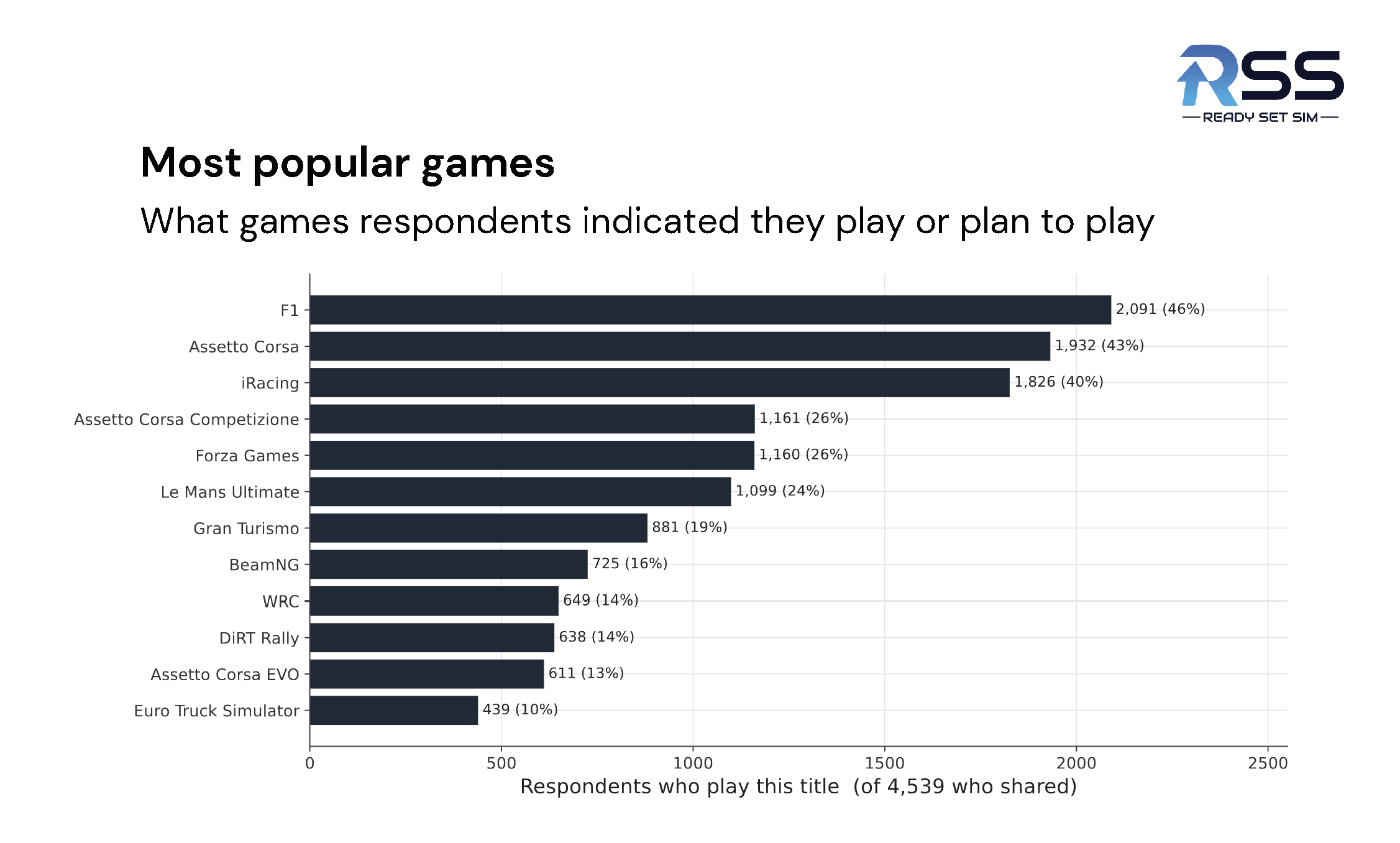
I also asked Giusa about growth opportunities for the industry. After all, there are plenty of enthusiasts with more interest in the culture of cars—or, per the stats below, transnational shipping logistics vis a vis Euro Truck Simulator—than in motorsports.
And the story of the sim industry may just be beginning in trucking games, automotive sandboxes like BeamNG, and more. Giusa argued: “FIA also shows now, with the investment into the FIA Rally Global eSports Championship, that there is a market to unlock”. Great news for us off-the-tarmac enthusiasts.