
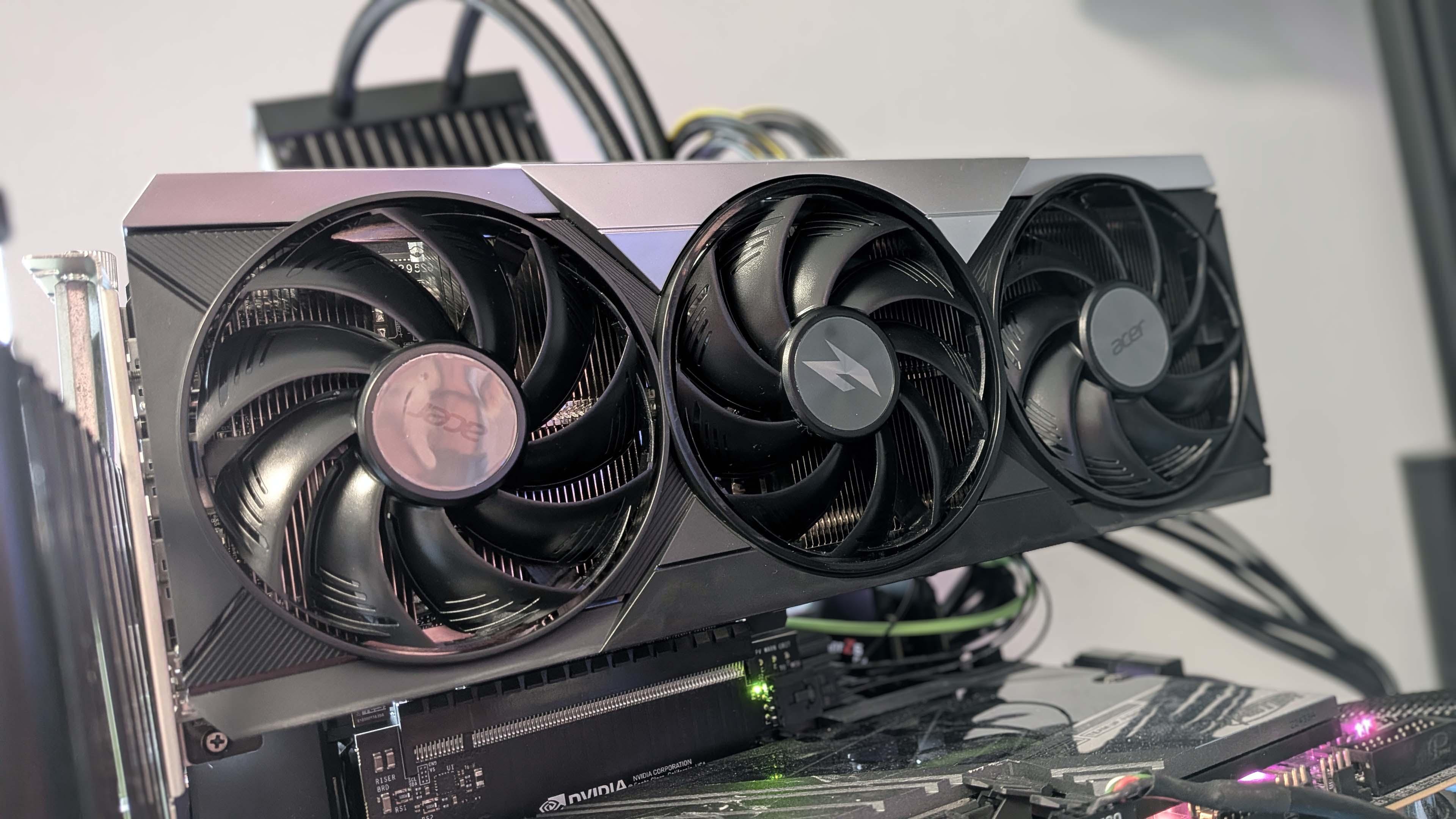
The AMD RX 9070 GRE is probably the most 2026 graphics card any GPU company could release this year. With the possible exception of Nvidia digging down the back of the sofa again and releasing another RTX 3060. The RX 9070 GRE was previously a China-exclusive card and represents a dumbing down of the Navi 48 GPU with less of that expensive ol’ VRAM. But the most damning aspect is the fact AMD has given this weaker card a global release at the same starting price as the beefier RX 9070.
I get the rationale—because of memory and silicon constraints, graphics card prices are all higher than they were when this card originally launched in China—but still, releasing a weaker GPU at the same initial MSRP as another card, which has a more fully functional version of the same chip, is never going to feel good. It’s becoming a common phrase for me, but this is just another damning indictment of the state of PC gaming hardware in 2026.
This is a card very much released for right now, giving AMD more options for its Navi 48 silicon (especially for chips that don’t make the grade for full RX 9070/XT cards) without needing to offer the full 16 GB monty. And it is priced for right now, too, with Nvidia’s RTX 5070 available at $600 and the RTX 5060 Ti 16 GB at $550. AMD is laser-focused on those two GeForce cards, but clearly also doesn’t want to completely torpedo the RX 9070 by pricing it fully $100 lower at $499.
It is still an impressive card in its own right, getting mighty close to the RTX 5070 at stock speeds and regularly beating it with a simple, pain-free undervolt. So, while I’m not necessarily loving the optics of it being priced at the same MSRP as the unquestionably better RX 9070, it’s the $550 card I would recommend right now, with the $50 delta between them being just enough. But if retailers lose their collective minds and regularly price it at the same level as the cheapest RX 9070 cards—which could absolutely happen, too—the RX 9070 GRE’s value-proposition entirely evaporates.
✅ You can find it at or below MSRP: The RX 9070 GRE rapidly loses relevance as soon as it strays above its $549 price tag. With the superior RX 9070 costing $600 right now, there isn’t a lot of wiggle room for retailers or manufacturers.
✅ You’re happy tweaking: The extra level of performance you can extract from the RX 9070 GRE with some easy undervolting is tangible, and levels up the card.
❌ You can find the RX 9070 for the same price: With 16 GB of faster VRAM and a more powerful version of the Navi 48 GPU, the straight RX 9070 is easily the better card.
❌ You want compute power, too: The RDNA 4 architecture just doesn’t have the same general compute performance as equivalent Nvidia GPUs. If you’re rendering or hoping for a GenAI card, this is not the way.
| Product | Features () | Performance () | Thermals () | Sound () | Value () | Software () |
|---|---|---|---|---|---|---|
| RX 9070 GRE (Acer Nitro) | 3.5 | 4 | 4.5 | 4.5 | 3 | 4 |

AMD Radeon RX 9070 GRE features
|
RX 9070 GRE |
RX 9070 |
RTX 5070 |
|
|---|---|---|---|
|
GPU |
Navi 48 |
Navi 48 |
GB205-300 |
|
Shaders |
3072 |
3584 |
6144 |
|
Lithography |
TSMC N4P |
TSMC N4P |
TSMC 4N |
|
Transistors (B) |
53.9 |
53.9 |
31.1 |
|
Die size (mm²) |
356.5 |
356.5 |
263 |
|
Memory size (GB) |
12 |
16 |
12 |
|
Memory type |
GDDR6 |
GDDR6 |
GDDR7 |
|
Memory bus |
192 |
256 |
192 |
|
TDP (W) |
220 |
220 |
250 |
|
MSRP (US$) |
$449 |
$549 |
$549 |
Sporting the same Navi 48 GPU as both the RX 9070 and the RX 9070 XT, the GRE is obviously cut from the same silicon. Andy covered the RDNA 4 architecture in more depth in his tech dive, and I added some extra notes in my original RX 9070 XT review, too. The chip at the heart of this GRE, however, has lost another eight compute units (CUs) compared with the next card up, which in turn had lost eight CUs compared with the top-end RX 9070 XT. That means you’re getting 3072 shaders, making it over 500 and 1000 shaders behind its other Navi 48 brethren respectively.
That theoretically allows AMD to use GPUs that may not have been able to run either 56 or 64 CUs at full speed to create another graphics card, and still get almost the same amount of cash for it, too. All it has to do is fuse off those errant, potentially dysfunctional CUs (too much to hope that it’s a soft-block, potentially circumvented by some ingenious vBIOS hacks) and ship that GPU out as an RX 9070 GRE.
With 12 GB of GDDR6, as opposed to the 16 GB used by the other Navi 48 cards, and slower memory at that, AMD is also able to save on the manufacturing costs of the RX 9070 GRE. Which is vital right now given the skyrocketing pricing of memory, whether server, system, or video memory.
Like the other RDNA 4 GPUs, the RX 9070 GRE benefits from a drastically improved ray tracing engine, which means that these latest AMD cards are able to better deal with the rigours of that fancy lighting feature than any other Radeon GPU of times past. They’re far closer to how Nvidia has been building and running its RT Cores, and that means they no longer lag so far behind GeForce cards in terms of ray traced gaming performance.
The other big feature of RDNA 4 is the support for FSR 4, AMD’s most up to date, machine-learning powered upscaling engine. When it was first introduced it represented a step change in the Radeon upscaler, making FSR far closer to the image fidelity and stability that Nvidia’s similar DLSS feature offers. But it wasn’t built into a lot of games at the beginning, though that is starting to change, and will only grow as time moves on. Though it is notable that FSR support is still a secondary concern for many games developers, despite AMD’s reports of how straightforward it is to implement.
Right now it is only available for RDNA 4 cards, but AMD is finally committing to opening support to RDNA 3 and later RDNA 2 GPUs.
Nipped and tucked, but RDNA 4 still delivers
| Product | Features () |
|---|---|
| RX 9070 GRE (Acer Nitro) | 3.5 |
AMD Radeon RX 9070 GRE performance
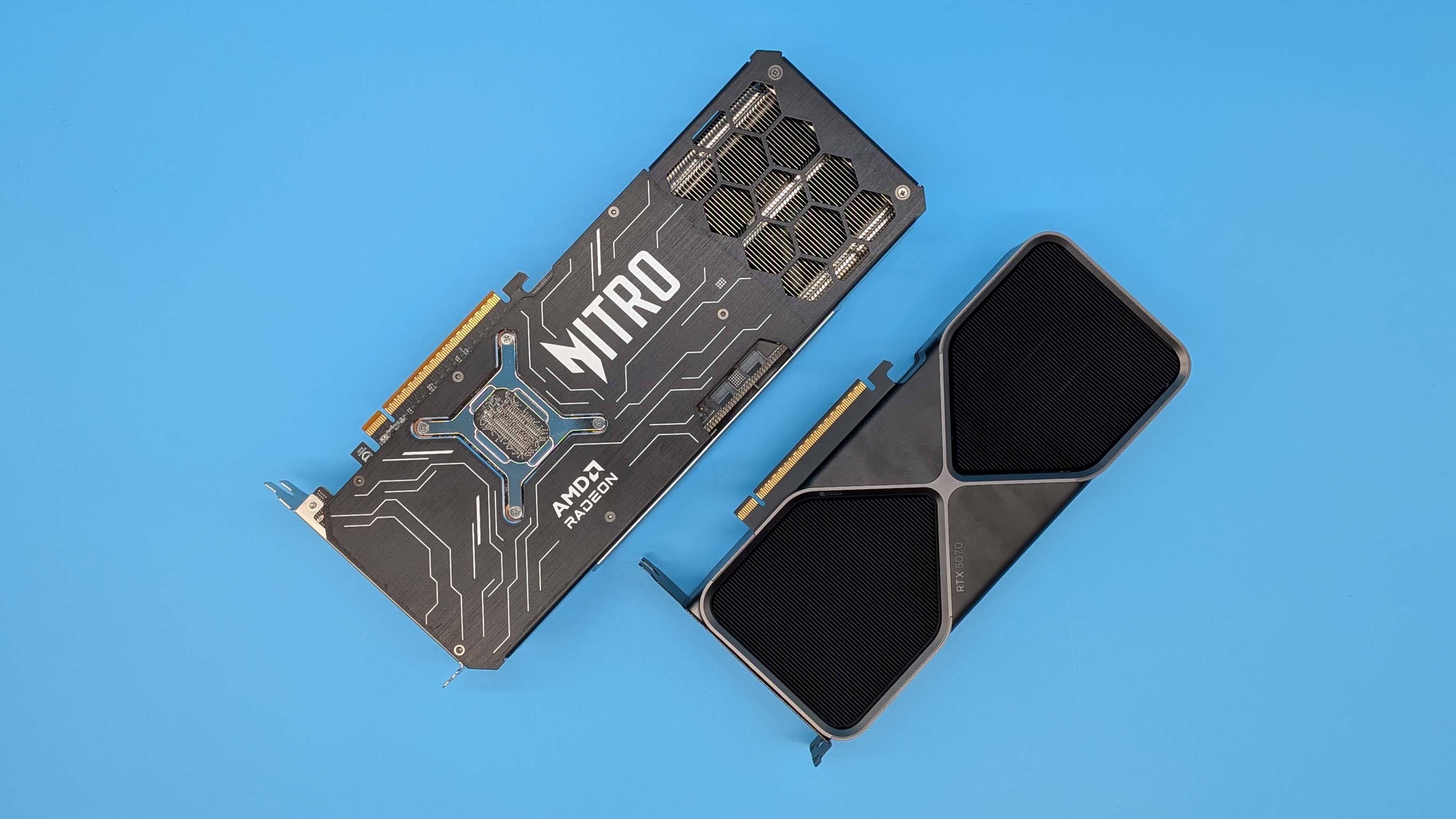
While AMD’s pricing of the RX 9070 GRE should point us towards the equivalently priced RTX 5060 Ti 16 GB, for me it’s the performance delta between the GRE and the straight RX 9070, and the delta between it and the RTX 5070, which are more interesting.
The Navi 48 GPU at its heart ought to be able to best an RTX 5060 Ti’s GB206 GPU, which is getting on for half the size and with fewer than half the transistors inside it. I don’t care that we’re talking about 12 GB vs 16 GB in terms of memory, the RTX 5060 Ti with its 128-bit memory bus shows what a weak mid-range card it is at this price by comparison.
And so it is, at every level you’re looking at around 15 – 20 fps dropped between the parity priced AMD and Nvidia cards. There is no contest.
1080p gaming performance
Avg FPS
1% Low FPS
| Product | Value |
|---|---|
| RX 9070 GRE | 12 GB | 90 Avg FPS, 78 1% Low FPS |
| RX 9070 | 16 GB | 103 Avg FPS, 89 1% Low FPS |
| RTX 5070 | 12 GB | 95 Avg FPS, 82 1% Low FPS |
| RTX 5060 Ti | 16 GB | 75 Avg FPS, 65 1% Low FPS |
| RX 9060 XT | 16 GB | 73 Avg FPS, 63 1% Low FPS |
Avg FPS
1% Low FPS
| Product | Value |
|---|---|
| RX 9070 GRE | 12 GB | 63 Avg FPS, 52 1% Low FPS |
| RX 9070 | 16 GB | 70 Avg FPS, 58 1% Low FPS |
| RTX 5070 | 12 GB | 72 Avg FPS, 56 1% Low FPS |
| RTX 5060 Ti | 16 GB | 51 Avg FPS, 41 1% Low FPS |
| RX 9060 XT | 16 GB | 49 Avg FPS, 39 1% Low FPS |
Avg FPS
1% Low FPS
| Product | Value |
|---|---|
| RX 9070 GRE | 12 GB | 123 Avg FPS, 89 1% Low FPS |
| RX 9070 | 16 GB | 138 Avg FPS, 108 1% Low FPS |
| RTX 5070 | 12 GB | 123 Avg FPS, 96 1% Low FPS |
| RTX 5060 Ti | 16 GB | 90 Avg FPS, 71 1% Low FPS |
| RX 9060 XT | 16 GB | 95 Avg FPS, 61 1% Low FPS |
Avg FPS
1% Low FPS
| Product | Value |
|---|---|
| RX 9070 GRE | 12 GB | 123 Avg FPS, 65 1% Low FPS |
| RX 9070 | 16 GB | 125 Avg FPS, 62 1% Low FPS |
| RTX 5070 | 12 GB | 125 Avg FPS, 64 1% Low FPS |
| RTX 5060 Ti | 16 GB | 117 Avg FPS, 65 1% Low FPS |
| RX 9060 XT | 16 GB | 106 Avg FPS, 65 1% Low FPS |
Avg FPS
1% Low FPS
| Product | Value |
|---|---|
| RX 9070 GRE | 12 GB | 124 Avg FPS, 80 1% Low FPS |
| RX 9070 | 16 GB | 143 Avg FPS, 76 1% Low FPS |
| RTX 5070 | 12 GB | 139 Avg FPS, 88 1% Low FPS |
| RTX 5060 Ti | 16 GB | 98 Avg FPS, 42 1% Low FPS |
| RX 9060 XT | 16 GB | 96 Avg FPS, 42 1% Low FPS |
Avg FPS
1% Low FPS
| Product | Value |
|---|---|
| RX 9070 GRE | 12 GB | 92 Avg FPS, 49 1% Low FPS |
| RX 9070 | 16 GB | 106 Avg FPS, 74 1% Low FPS |
| RTX 5070 | 12 GB | 92 Avg FPS, 57 1% Low FPS |
| RTX 5060 Ti | 16 GB | 75 Avg FPS, 41 1% Low FPS |
| RX 9060 XT | 16 GB | 73 Avg FPS, 37 1% Low FPS |
Avg FPS
1% Low FPS
| Product | Value |
|---|---|
| RX 9070 GRE | 12 GB | 102 Avg FPS, 46 1% Low FPS |
| RX 9070 | 16 GB | 112 Avg FPS, 41 1% Low FPS |
| RTX 5070 | 12 GB | 104 Avg FPS, 53 1% Low FPS |
| RTX 5060 Ti | 16 GB | 83 Avg FPS, 54 1% Low FPS |
| RX 9060 XT | 16 GB | 94 Avg FPS, 72 1% Low FPS |
1440p gaming performance
Avg FPS
1% Low FPS
| Product | Value |
|---|---|
| RX 9070 GRE | 12 GB | 62 Avg FPS, 55 1% Low FPS |
| RX 9070 | 16 GB | 73 Avg FPS, 64 1% Low FPS |
| RTX 5070 | 12 GB | 68 Avg FPS, 60 1% Low FPS |
| RTX 5060 Ti | 16 GB | 51 Avg FPS, 45 1% Low FPS |
| RX 9060 XT | 16 GB | 48 Avg FPS, 44 1% Low FPS |
Avg FPS
1% Low FPS
| Product | Value |
|---|---|
| RX 9070 GRE | 12 GB | 38 Avg FPS, 23 1% Low FPS |
| RX 9070 | 16 GB | 43 Avg FPS, 36 1% Low FPS |
| RTX 5070 | 12 GB | 45 Avg FPS, 36 1% Low FPS |
| RTX 5060 Ti | 16 GB | 32 Avg FPS, 26 1% Low FPS |
| RX 9060 XT | 16 GB | 30 Avg FPS, 24 1% Low FPS |
Avg FPS
1% Low FPS
| Product | Value |
|---|---|
| RX 9070 GRE | 12 GB | 81 Avg FPS, 52 1% Low FPS |
| RX 9070 | 16 GB | 90 Avg FPS, 67 1% Low FPS |
| RTX 5070 | 12 GB | 78 Avg FPS, 60 1% Low FPS |
| RTX 5060 Ti | 16 GB | 56 Avg FPS, 45 1% Low FPS |
| RX 9060 XT | 16 GB | 60 Avg FPS, 46 1% Low FPS |
Avg FPS
1% Low FPS
| Product | Value |
|---|---|
| RX 9070 GRE | 12 GB | 101 Avg FPS, 61 1% Low FPS |
| RX 9070 | 16 GB | 104 Avg FPS, 62 1% Low FPS |
| RTX 5070 | 12 GB | 112 Avg FPS, 64 1% Low FPS |
| RTX 5060 Ti | 16 GB | 97 Avg FPS, 64 1% Low FPS |
| RX 9060 XT | 16 GB | 86 Avg FPS, 65 1% Low FPS |
Avg FPS
1% Low FPS
| Product | Value |
|---|---|
| RX 9070 GRE | 12 GB | 92 Avg FPS, 63 1% Low FPS |
| RX 9070 | 16 GB | 107 Avg FPS, 74 1% Low FPS |
| RTX 5070 | 12 GB | 100 Avg FPS, 68 1% Low FPS |
| RTX 5060 Ti | 16 GB | 72 Avg FPS, 34 1% Low FPS |
| RX 9060 XT | 16 GB | 71 Avg FPS, 34 1% Low FPS |
Avg FPS
1% Low FPS
| Product | Value |
|---|---|
| RX 9070 GRE | 12 GB | 61 Avg FPS, 22 1% Low FPS |
| RX 9070 | 16 GB | 74 Avg FPS, 53 1% Low FPS |
| RTX 5070 | 12 GB | 64 Avg FPS, 42 1% Low FPS |
| RTX 5060 Ti | 16 GB | 51 Avg FPS, 32 1% Low FPS |
| RX 9060 XT | 16 GB | 49 Avg FPS, 35 1% Low FPS |
Avg FPS
1% Low FPS
| Product | Value |
|---|---|
| RX 9070 GRE | 12 GB | 82 Avg FPS, 51 1% Low FPS |
| RX 9070 | 16 GB | 96 Avg FPS, 43 1% Low FPS |
| RTX 5070 | 12 GB | 81 Avg FPS, 53 1% Low FPS |
| RTX 5060 Ti | 16 GB | 60 Avg FPS, 44 1% Low FPS |
| RX 9060 XT | 16 GB | 62 Avg FPS, 45 1% Low FPS |
4K gaming performance
Avg FPS
1% Low FPS
| Product | Value |
|---|---|
| RX 9070 GRE | 12 GB | 33 Avg FPS, 30 1% Low FPS |
| RX 9070 | 16 GB | 40 Avg FPS, 30 1% Low FPS |
| RTX 5070 | 12 GB | 37 Avg FPS, 30 1% Low FPS |
| RTX 5060 Ti | 16 GB | 28 Avg FPS, 25 1% Low FPS |
| RX 9060 XT | 16 GB | 25 Avg FPS, 22 1% Low FPS |
Avg FPS
1% Low FPS
| Product | Value |
|---|---|
| RX 9070 GRE | 12 GB | 10 Avg FPS, 5 1% Low FPS |
| RX 9070 | 16 GB | 20 Avg FPS, 17 1% Low FPS |
| RTX 5070 | 12 GB | 21 Avg FPS, 17 1% Low FPS |
| RTX 5060 Ti | 16 GB | 15 Avg FPS, 12 1% Low FPS |
| RX 9060 XT | 16 GB | 14 Avg FPS, 11 1% Low FPS |
Avg FPS
1% Low FPS
| Product | Value |
|---|---|
| RX 9070 GRE | 12 GB | 33 Avg FPS, 23 1% Low FPS |
| RX 9070 | 16 GB | 44 Avg FPS, 32 1% Low FPS |
| RTX 5070 | 12 GB | 39 Avg FPS, 30 1% Low FPS |
| RTX 5060 Ti | 16 GB | 27 Avg FPS, 21 1% Low FPS |
| RX 9060 XT | 16 GB | 30 Avg FPS, 22 1% Low FPS |
Avg FPS
1% Low FPS
| Product | Value |
|---|---|
| RX 9070 GRE | 12 GB | 63 Avg FPS, 50 1% Low FPS |
| RX 9070 | 16 GB | 72 Avg FPS, 56 1% Low FPS |
| RTX 5070 | 12 GB | 79 Avg FPS, 55 1% Low FPS |
| RTX 5060 Ti | 16 GB | 58 Avg FPS, 50 1% Low FPS |
| RX 9060 XT | 16 GB | 46 Avg FPS, 41 1% Low FPS |
Avg FPS
1% Low FPS
| Product | Value |
|---|---|
| RX 9070 GRE | 12 GB | 52 Avg FPS, 35 1% Low FPS |
| RX 9070 | 16 GB | 62 Avg FPS, 47 1% Low FPS |
| RTX 5070 | 12 GB | 57 Avg FPS, 44 1% Low FPS |
| RTX 5060 Ti | 16 GB | 42 Avg FPS, 20 1% Low FPS |
| RX 9060 XT | 16 GB | 41 Avg FPS, 21 1% Low FPS |
Avg FPS
1% Low FPS
| Product | Value |
|---|---|
| RX 9070 GRE | 12 GB | 26 Avg FPS, 10 1% Low FPS |
| RX 9070 | 16 GB | 39 Avg FPS, 24 1% Low FPS |
| RTX 5070 | 12 GB | 35 Avg FPS, 24 1% Low FPS |
| RTX 5060 Ti | 16 GB | 27 Avg FPS, 18 1% Low FPS |
| RX 9060 XT | 16 GB | 25 Avg FPS, 19 1% Low FPS |
Avg FPS
1% Low FPS
| Product | Value |
|---|---|
| RX 9070 GRE | 12 GB | 42 Avg FPS, 29 1% Low FPS |
| RX 9070 | 16 GB | 52 Avg FPS, 36 1% Low FPS |
| RTX 5070 | 12 GB | 44 Avg FPS, 30 1% Low FPS |
| RTX 5060 Ti | 16 GB | 33 Avg FPS, 22 1% Low FPS |
| RX 9060 XT | 16 GB | 30 Avg FPS, 20 1% Low FPS |
But the pricier RTX 5070 and RX 9070 are interesting in just how close they are in performance terms to the RX 9070 GRE. Against the RTX 5070 the two cards are not far off being on a level, trading blows across parts of our benchmarking suite. On the whole, though you’d have to say the Nvidia card more consistently leads the GRE overall, but there’s surprisingly little in it, certainly not enough that you’d actually feel it in most games. It is clear, however, that the 3584 core Navi 48 chip inside the straight RX 9070—with its 16 GB VRAM quotient and 256-bit memory bus—is absolutely the better option.
Upscaled gaming performance
Avg FPS
1% Low FPS
| Product | Value |
|---|---|
| RX 9070 GRE | 12 GB | 95 Avg FPS, 82 1% Low FPS |
| RX 9070 | 16 GB | 111 Avg FPS, 96 1% Low FPS |
| RTX 5070 | 12 GB | 107 Avg FPS, 81 1% Low FPS |
| RTX 5060 Ti | 16 GB | 86 Avg FPS, 72 1% Low FPS |
| RX 9060 XT | 16 GB | 78 Avg FPS, 69 1% Low FPS |
Avg FPS
1% Low FPS
| Product | Value |
|---|---|
| RX 9070 GRE | 12 GB | 130 Avg FPS, 78 1% Low FPS |
| RX 9070 | 16 GB | 149 Avg FPS, 102 1% Low FPS |
| RTX 5070 | 12 GB | 122 Avg FPS, 97 1% Low FPS |
| RTX 5060 Ti | 16 GB | 96 Avg FPS, 79 1% Low FPS |
| RX 9060 XT | 16 GB | 102 Avg FPS, 73 1% Low FPS |
Avg FPS
1% Low FPS
| Product | Value |
|---|---|
| RX 9070 GRE | 12 GB | 249 Avg FPS, 122 1% Low FPS |
| RX 9070 | 16 GB | 261 Avg FPS, 114 1% Low FPS |
| RTX 5070 | 12 GB | 176 Avg FPS, 113 1% Low FPS |
| RTX 5060 Ti | 16 GB | 136 Avg FPS, 89 1% Low FPS |
| RX 9060 XT | 16 GB | 190 Avg FPS, 113 1% Low FPS |
Avg FPS
1% Low FPS
| Product | Value |
|---|---|
| RX 9070 GRE | 12 GB | 115 Avg FPS, 63 1% Low FPS |
| RX 9070 | 16 GB | 123 Avg FPS, 64 1% Low FPS |
| RTX 5070 | 12 GB | 127 Avg FPS, 63 1% Low FPS |
| RTX 5060 Ti | 16 GB | 118 Avg FPS, 63 1% Low FPS |
| RX 9060 XT | 16 GB | 110 Avg FPS, 62 1% Low FPS |
Avg FPS
1% Low FPS
| Product | Value |
|---|---|
| RX 9070 GRE | 12 GB | 164 Avg FPS, 60 1% Low FPS |
| RX 9070 | 16 GB | 197 Avg FPS, 90 1% Low FPS |
| RTX 5070 | 12 GB | 144 Avg FPS, 65 1% Low FPS |
| RTX 5060 Ti | 16 GB | 115 Avg FPS, 41 1% Low FPS |
| RX 9060 XT | 16 GB | 135 Avg FPS, 59 1% Low FPS |
Though the GRE is still not far off, and if the price gap between either the RX 9070 or RTX 5070 increases then the GRE will become a more tempting option. At MSRP vs. current pricing of the RX 9070 specifically, with the GRE you’re getting roughly 86% of the performance, but you are paying around 92% of the price.
At the higher resolutions the GRE notably struggles against the other two cards, though if you’re aiming specifically for 4K gaming with anything in the $600 range you are 100% relying on some heavy upscaling. At 1440p though it still shines.
Undervolting performance
Avg FPS
1% Low FPS
| Product | Value |
|---|---|
| RX 9070 GRE | Undervolted | -130mV | 2700 Mem | 69 Avg FPS, 42 1% Low FPS |
| RX 9070 GRE | Stock | 62 Avg FPS, 55 1% Low FPS |
| RX 9070 | Stock | 73 Avg FPS, 64 1% Low FPS |
| RTX 5070 | Stock | 68 Avg FPS, 60 1% Low FPS |
Avg FPS
1% Low FPS
| Product | Value |
|---|---|
| RX 9070 GRE | Undervolted | -130mV | 2700 Mem | 103 Avg FPS, 89 1% Low FPS |
| RX 9070 GRE | Stock | 95 Avg FPS, 82 1% Low FPS |
| RX 9070 | Stock | 111 Avg FPS, 96 1% Low FPS |
| RTX 5070 | Stock | 107 Avg FPS, 81 1% Low FPS |
Avg FPS
1% Low FPS
| Product | Value |
|---|---|
| RX 9070 GRE | Undervolted | -130mV | 2700 Mem | 44 Avg FPS, 34 1% Low FPS |
| RX 9070 GRE | Stock | 38 Avg FPS, 23 1% Low FPS |
| RX 9070 | Stock | 43 Avg FPS, 36 1% Low FPS |
| RTX 5070 | Stock | 45 Avg FPS, 36 1% Low FPS |
Avg FPS
1% Low FPS
| Product | Value |
|---|---|
| RX 9070 GRE | Undervolted | -130mV | 2700 Mem | 145 Avg FPS, 73 1% Low FPS |
| RX 9070 GRE | Stock | 130 Avg FPS, 78 1% Low FPS |
| RX 9070 | Stock | 149 Avg FPS, 102 1% Low FPS |
| RTX 5070 | Stock | 122 Avg FPS, 97 1% Low FPS |
Avg FPS
1% Low FPS
| Product | Value |
|---|---|
| RX 9070 GRE | Undervolted | -130mV | 2700 Mem | 89 Avg FPS, 49 1% Low FPS |
| RX 9070 GRE | Stock | 81 Avg FPS, 52 1% Low FPS |
| RX 9070 | Stock | 90 Avg FPS, 67 1% Low FPS |
| RTX 5070 | Stock | 78 Avg FPS, 60 1% Low FPS |
Avg FPS
1% Low FPS
| Product | Value |
|---|---|
| RX 9070 GRE | Undervolted | -130mV | 2700 Mem | 262 Avg FPS, 126 1% Low FPS |
| RX 9070 GRE | Stock | 249 Avg FPS, 122 1% Low FPS |
| RX 9070 | Stock | 261 Avg FPS, 114 1% Low FPS |
| RTX 5070 | Stock | 176 Avg FPS, 113 1% Low FPS |
Avg FPS
1% Low FPS
| Product | Value |
|---|---|
| RX 9070 GRE | Undervolted | -130mV | 2700 Mem | 103 Avg FPS, 63 1% Low FPS |
| RX 9070 GRE | Stock | 101 Avg FPS, 61 1% Low FPS |
| RX 9070 | Stock | 104 Avg FPS, 62 1% Low FPS |
| RTX 5070 | Stock | 112 Avg FPS, 64 1% Low FPS |
Avg FPS
1% Low FPS
| Product | Value |
|---|---|
| RX 9070 GRE | Undervolted | -130mV | 2700 Mem | 118 Avg FPS, 64 1% Low FPS |
| RX 9070 GRE | Stock | 115 Avg FPS, 63 1% Low FPS |
| RX 9070 | Stock | 123 Avg FPS, 64 1% Low FPS |
| RTX 5070 | Stock | 127 Avg FPS, 63 1% Low FPS |
Avg FPS
1% Low FPS
| Product | Value |
|---|---|
| RX 9070 GRE | Undervolted | -130mV | 2700 Mem | 101 Avg FPS, 68 1% Low FPS |
| RX 9070 GRE | Stock | 92 Avg FPS, 63 1% Low FPS |
| RX 9070 | Stock | 107 Avg FPS, 74 1% Low FPS |
| RTX 5070 | Stock | 100 Avg FPS, 68 1% Low FPS |
Avg FPS
1% Low FPS
| Product | Value |
|---|---|
| RX 9070 GRE | Undervolted | -130mV | 2700 Mem | 65 Avg FPS, 35 1% Low FPS |
| RX 9070 GRE | Stock | 61 Avg FPS, 22 1% Low FPS |
| RX 9070 | Stock | 74 Avg FPS, 53 1% Low FPS |
| RTX 5070 | Stock | 64 Avg FPS, 42 1% Low FPS |
Avg FPS
1% Low FPS
| Product | Value |
|---|---|
| RX 9070 GRE | Undervolted | -130mV | 2700 Mem | 183 Avg FPS, 69 1% Low FPS |
| RX 9070 GRE | Stock | 164 Avg FPS, 60 1% Low FPS |
| RX 9070 | Stock | 197 Avg FPS, 90 1% Low FPS |
| RTX 5070 | Stock | 144 Avg FPS, 65 1% Low FPS |
Avg FPS
1% Low FPS
| Product | Value |
|---|---|
| RX 9070 GRE | Undervolted | -130mV | 2700 Mem | 91 Avg FPS, 48 1% Low FPS |
| RX 9070 GRE | Stock | 82 Avg FPS, 51 1% Low FPS |
| RX 9070 | Stock | 96 Avg FPS, 43 1% Low FPS |
| RTX 5070 | Stock | 81 Avg FPS, 53 1% Low FPS |
The pricing maths start to make more sense when you factor in the level of performance headroom built into this card, however. With a little oh-so-simple undervolt I was able to push the RX 9070 GRE with a few percentage points of the performance of the RX 9070. And with the GPU consistently topping the 3 GHz mark, you’re looking at generally a performance lead over the RTX 5070, too.
I still find the performance headroom of Navi 48 GPUs surprising, and while AMD’s lower order RX 9000-series cards don’t have as consistent a level of overclocking/undervolting performance to them, every Navi 48-powered card I’ve tested is happy to let you pull back its core voltage in exchange for giving up a whole lot more clock speed and around 10% extra frame rate performance in games.
Undervolt and watch it fly
| Product | Performance () |
|---|---|
| RX 9070 GRE (Acer Nitro) | 4 |
AMD Radeon RX 9070 GRE thermals
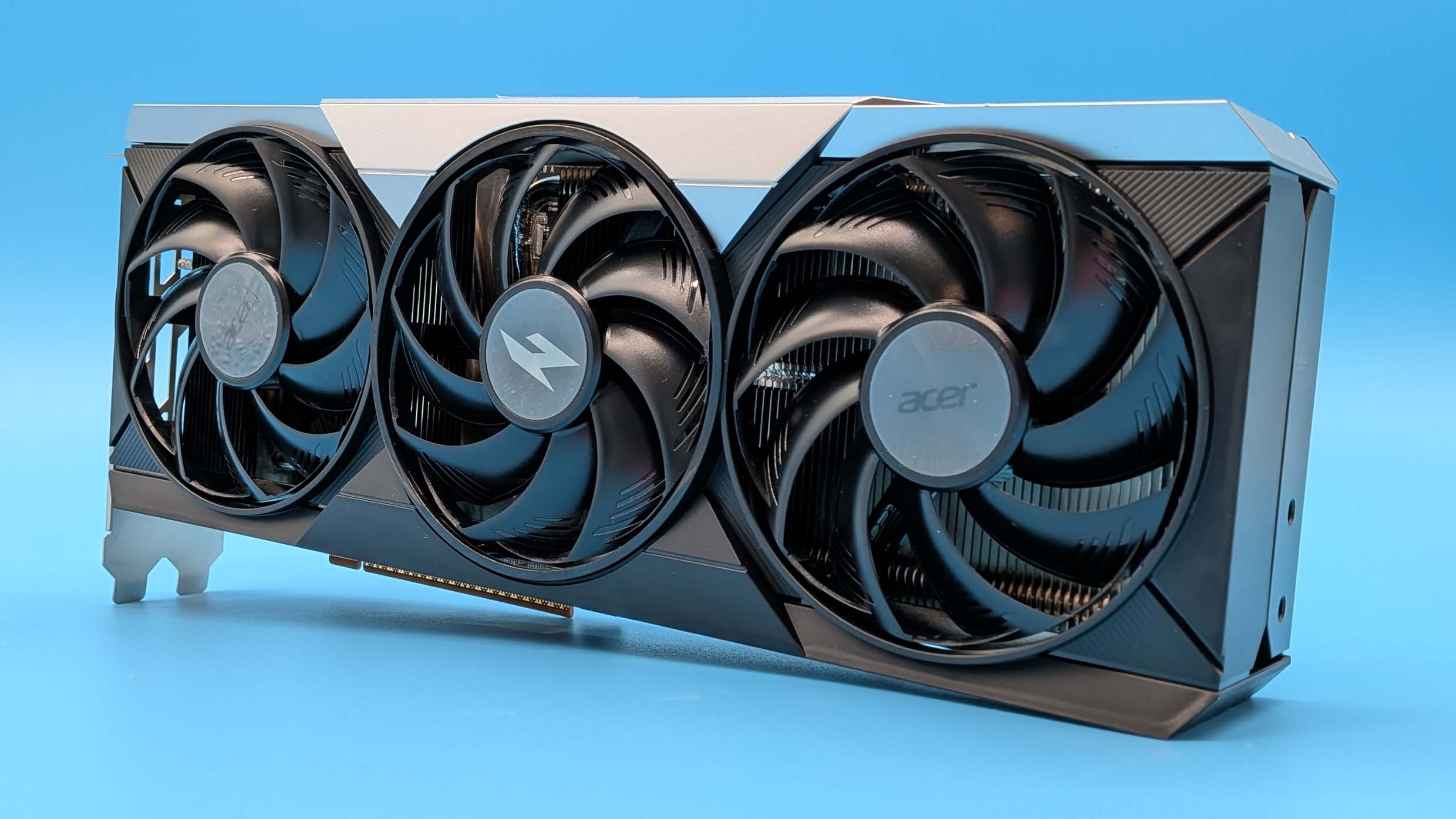
It’s probably no surprise that a mid-range graphics card sporting a triple fan cooling array actually trends to the pretty chill, but that’s where we’re at with at least the Acer Nitro RX 9070 GRE I’ve been testing. There are no Made by AMD (MBA) cards for this generation, so all RDNA 4 GPUs are clothed in their manufacturer’s cooling shrouds, and you’re likely to be getting arrays designed for beefier cards slapped onto the RX 9070 GRE.
System performance
Peak temperature (°C)
Average temperature (°C)
| Product | Value |
|---|---|
| RX 9070 GRE | 12 GB | 62 Peak temperature (°C), 59 Average temperature (°C) |
| RX 9070 | 16 GB | 57 Peak temperature (°C), 55 Average temperature (°C) |
| RTX 5070 | 12 GB | 79 Peak temperature (°C), 76 Average temperature (°C) |
| RTX 5060 Ti | 16 GB | 67 Peak temperature (°C), 65 Average temperature (°C) |
| RX 9060 XT | 16 GB | 57 Peak temperature (°C), 48 Average temperature (°C) |
| Product | Value |
|---|---|
| RX 9070 GRE | 12 GB | 2674 |
| RX 9070 | 16 GB | 2349 |
| RTX 5070 | 12 GB | 2693 |
| RTX 5060 Ti | 16 GB | 2687 |
| RX 9060 XT | 16 GB | 2849 |
Peak power (watts)
Average power (watts)
| Product | Value |
|---|---|
| RX 9070 GRE | 12 GB | 287 Peak power (watts), 244 Average power (watts) |
| RX 9070 | 16 GB | 270 Peak power (watts), 248 Average power (watts) |
| RTX 5070 | 12 GB | 284 Peak power (watts), 251 Average power (watts) |
| RTX 5060 Ti | 16 GB | 207 Peak power (watts), 182 Average power (watts) |
| RX 9060 XT | 16 GB | 182 Peak power (watts), 146 Average power (watts) |
4K frames per J
1080p frame per J
| Product | Value |
|---|---|
| RX 9070 GRE | 12 GB | 0.22 4K frames per J, 0.53 1080p frame per J |
| RX 9070 | 16 GB | 0.26 4K frames per J, 0.6 1080p frame per J |
| RTX 5070 | 12 GB | 0.24 4K frames per J, 0.61 1080p frame per J |
| RTX 5060 Ti | 16 GB | 0.23 4K frames per J, 0.62 1080p frame per J |
| RX 9060 XT | 16 GB | N/A |
From what I can tell, without having the cards cheek-by-jowl, this Acer GRE is using the exact same Frostblade 4.0 cooler as its RX 9070 XT stablemate, and I’ve tested at a solid ~60°C when under load. That makes it cooler than the similarly triple-fanned Palit RTX 5060 Ti we’ve tested, and waaaaaay cooler than the Founders Edition RTX 5070.
And that’s true whether you indulge in undervolting or not. I actually found it running a teensy bit more frosty when I’d pulled back the power, even though the GPU is generally running at over 300 MHz faster than at stock levels.
Chillers built for better GPUs means cool GPUs
| Product | Thermals () |
|---|---|
| RX 9070 GRE (Acer Nitro) | 4.5 |
AMD Radeon RX 9070 GRE sound
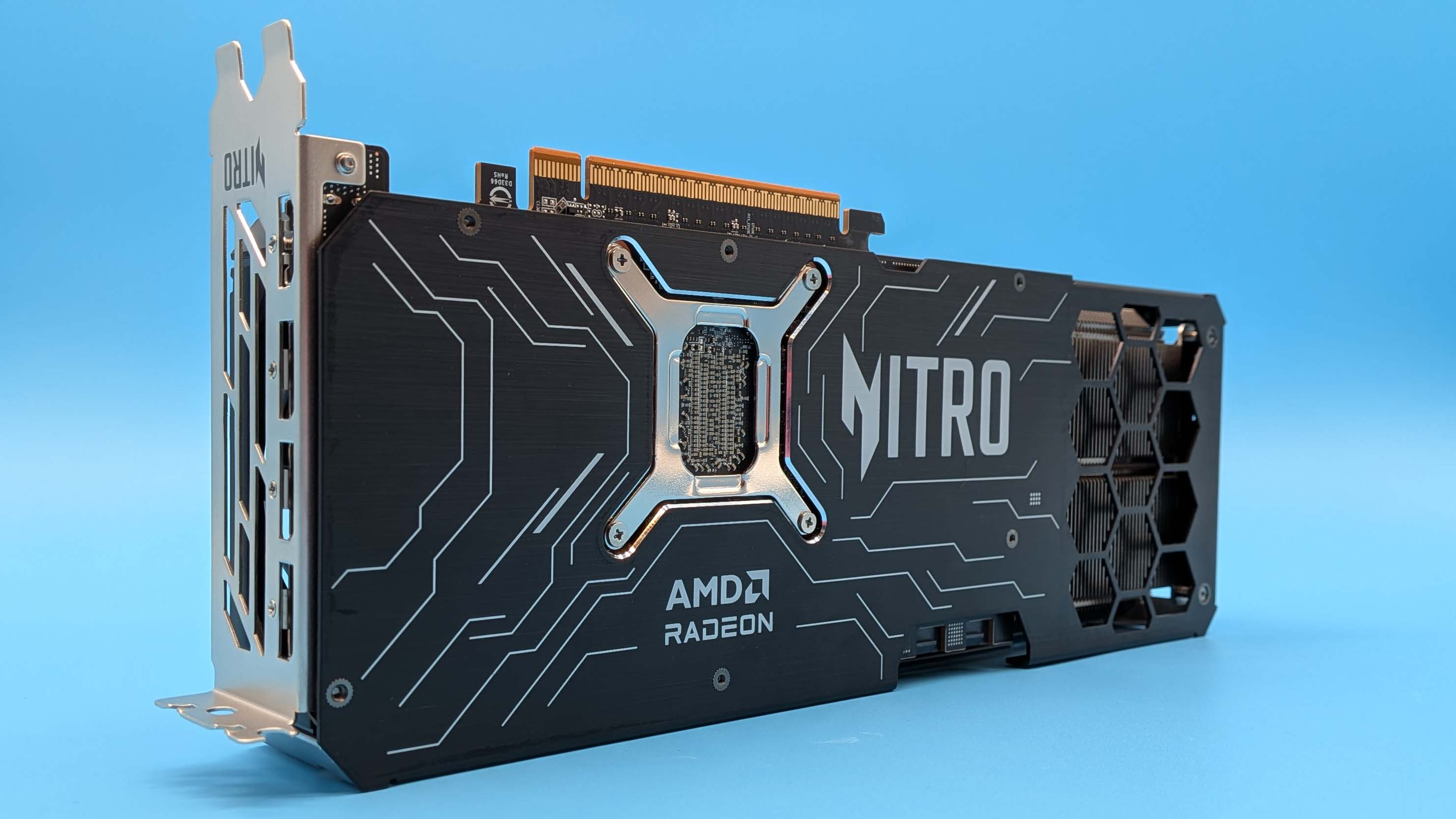
I have found only the tiniest smattering of coil whine. That’s something I regularly listen out for with AMD GPUs, and in this generation with Nvidia cards, too. But, with the RX 9070 GRE I’ve been testing, I’m only detecting the very occasional electrical fizz when the frame rate in a settings screen spikes to ludicrous levels—in games I never heard the power componentry sing its siren song.
The actual fan noise is blessedly relaxed, too. The GPU may be running cool, but it’s not because Acer has tuned those three fans to run at turbine settings. Even under sustained load, and even with the card sitting in an open test rig right next to me, the fan noise never got to a distracting level at all.
It will sound different in a closed PC case, though there should also be moving air around and/or across the GPU to help shift that hot air, too.
Cool also means quiet
| Product | Sound () |
|---|---|
| RX 9070 GRE (Acer Nitro) | 4.5 |
AMD Radeon RX 9070 GRE value
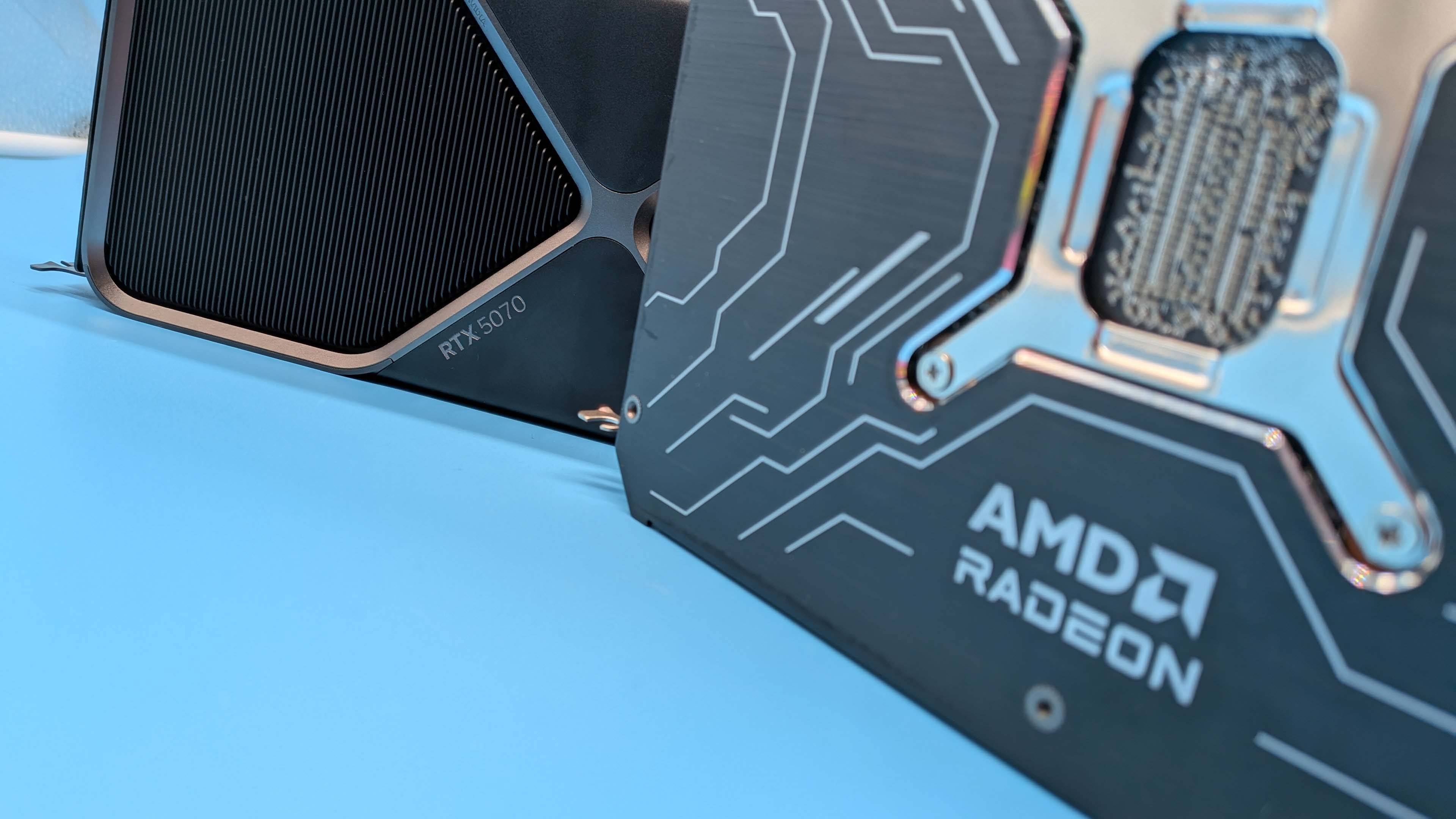
This is what’s going to make or break the AMD RX 9070 GRE: its true value once released into the wild. That goes beyond just the initial MSRP quoted by AMD, and has everything to do with what the retailers and manufacturers end up charging PC gamers in the real world. This is the issue we had around the other Navi 48-powered graphics cards, where we were given MSRP numbers that melted away scant hours after the cards launched.
It’s potentially harder for that to happen in the current environment. With the RX 9070 GRE given a $549 starting price, and the RX 9070 currently available for $600, there isn’t a lot of wiggle room for perfidious retailers to spike the price unnecessarily. As soon as you get start to eat into that $50 price delta the smart money will surely switch to the faster 16 GB card.
But, while the GPU market has plateaued in terms of pricing over the past few months—albeit at disappointingly higher levels than the tail end of 2025—that’s no guarantee the current status quo will be preserved. There have been a few rumblings recently that the prices of AMD cards are going to get bumped in the near future, putting them back alongside their Nvidia competitors, and if that happens then the GRE’s $549-$600 price tag might look ever more tantalising.
I will reiterate that the notion of value is a tough one here, considering that its $549 price tag is the same as the RX 9070, but then I think we’ve all had to readjust our pricing perceptions in the face of the RAMpocalypse and its fallout. Time will tell how well the RX 9070 GRE is able to hold to its MSRP. History would tell us that it’s not going to be easy.
The value prop could evaporate quickly
| Product | Value () |
|---|---|
| RX 9070 GRE (Acer Nitro) | 3 |
AMD Radeon RX 9070 GRE software
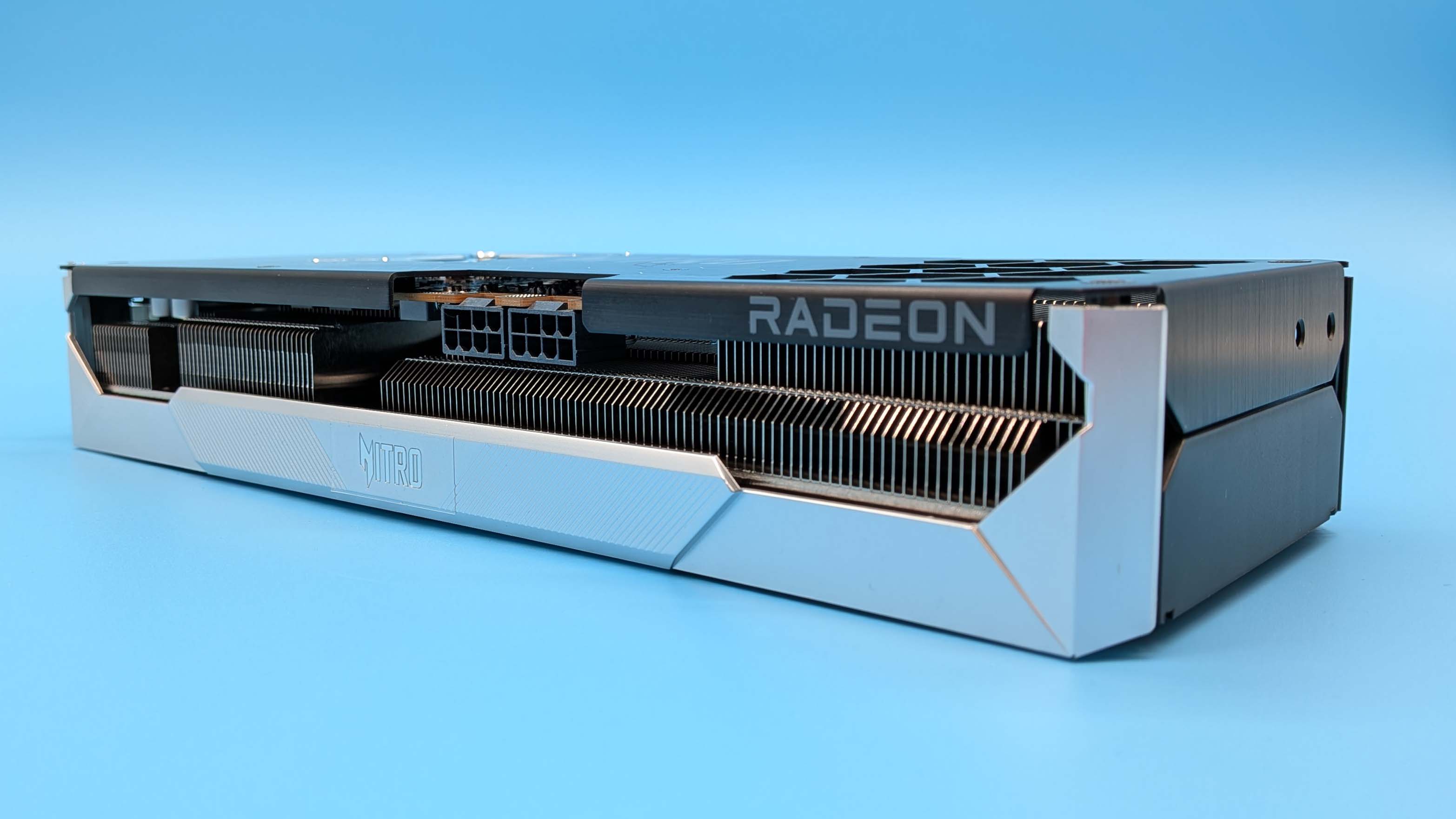
Acer has its own Intelligent Space application you can use in conjunction with your Nitro card that will offer up some AI tools you can use with your hardware and potentially suggest performance tweaks, but if I’m honest I really wouldn’t bother. AMD’s own Adrenalin software is good enough to do all the GPU tweaking you could want.
And hey, if you want some AI shenanigans you can also download a 34 GB AMD AI Bundle along with your drivers. If you want to do some local AI things, you’re getting tools such as ComfyUI, Ollama, and LM Studio. They’re good ways to get the most out of your local hardware in an AI sense if you want to get away from the token drains of cloud AI.
But let’s go back to Adrenalin, because AMD’s driver software is way better than the old days, though is not without its quirks. I still get frustrated by the fact the Adrenalin software’s shortcuts have a tendency to tread all over existing app’s own shortcuts, such as Photoshop and Google Docs, and that the UI isn’t the most intuitive to navigate. But it’s still functional, and when it comes to tweaking your GPU I’ve been more than happy to do all of my undervolting with the RX 9070 GRE via Adrenalin alone.
You’re also getting a good data overlay in the Adrenalin software, which you can enable via those troubling shortcuts or inside the software itself. That allows you to see exactly what’s going on with your CPU and GPU to help you troubleshoot any issues you feel you might be having with your system.
Adrenalin is ace now, and so is FSR4
| Product | Software () |
|---|---|
| RX 9070 GRE (Acer Nitro) | 4 |