
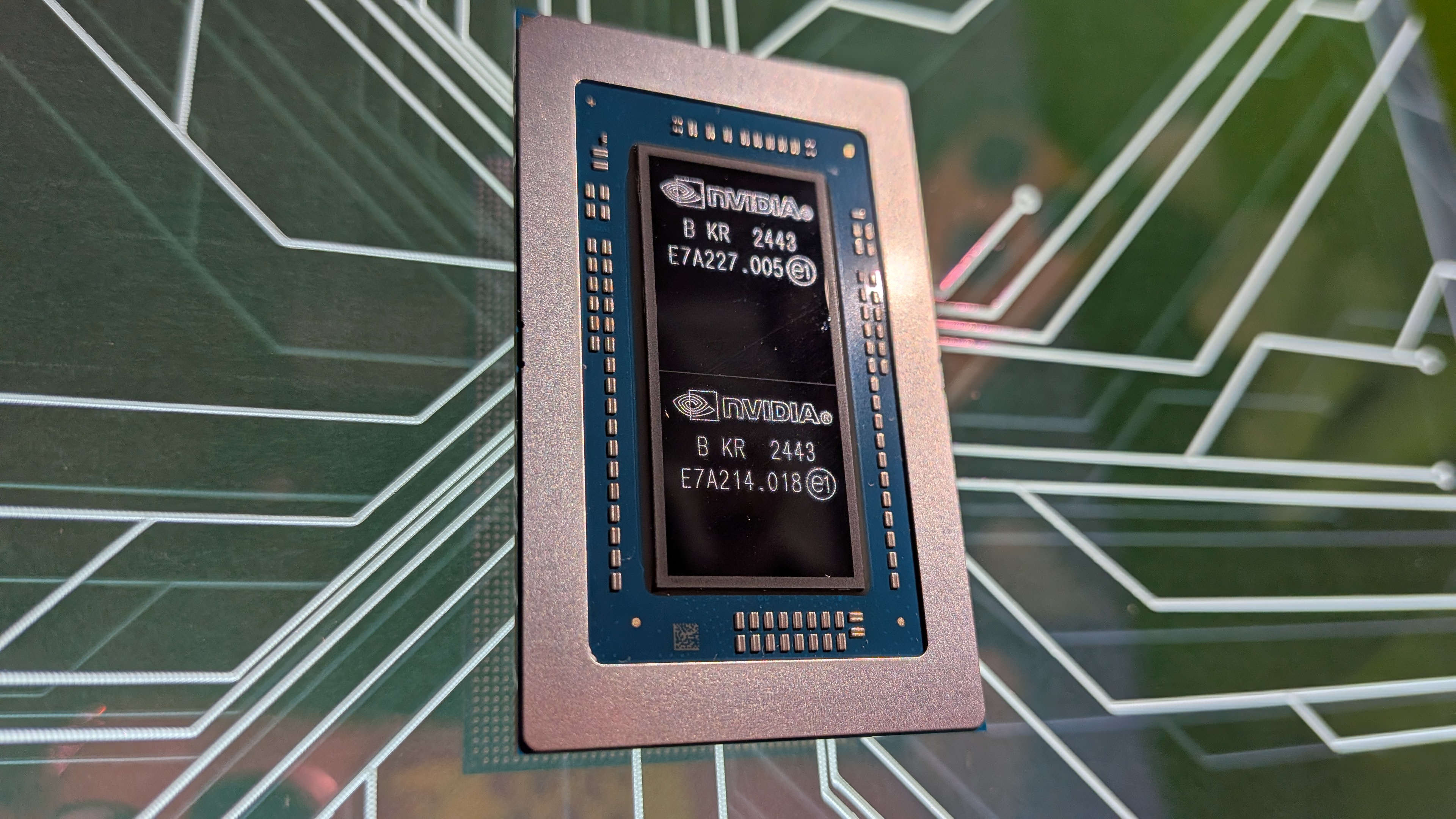
Never one to be short of hyperbole, at a press Q&A with the Nvidia CEO of course talk of the new RTX Spark SoC was on the menu. The Nvidia RTX Spark (AKA N1X) is a chip built in partnership with MediaTek, combining a custom Arm core (though quite how custom it is, I’m not sure) with an Nvidia RTX Blackwell GPU core. Connected via a super-quick NVLink connection and sharing a pool of LPDDR5x unified memory, the SoC is one of the most exciting things to come out of Computex this year, and Jen-Hsun says it is “100% awesome”.
While it is absolutely being aimed at gamers in some form—though probably not in its peak, 128 GB guise—it is also being introduced as the hardware necessary to make your laptop less of a tool and more of an R2D2, a robot assistant. But even though it is being designed to make the AI the UI, it is still just using Windows.
The platform has been designed with Microsoft with Windows-on-Arm very much at the forefront of what Nvidia’s doing, but that’s still just a very standard Windows operating system. So maybe that itself doesn’t make it feel immediately like a transformative moment.
Which is why someone asked the Nvidia CEO if maybe there should be a fundamental change in the UI, or even the OS itself, to encourage people to think about using these RTX Spark devices in different ways.
“The good news is that this PC is 100% awesome at everything everybody expect the PC to do,” says Huang. “And it can do more.
“So you can go to that journey at your own pace. I think if we were too abrupt in changing either the UX, too abrupt in changing maybe even the name and its positioning, maybe the people who believe they still need a PC might have a harder time on that journey.”
And it is going to be quite the journey, because as Jen-Hsun notes: “N1X has N2X and we’ve got N3X already planned.” We’ve seen the roadmap, and with an RTX Spark Vera Rubin and RTX Spark Rosa Feynman on the way in 2028 and 2030 respectively there’s a long way to go on that journey.