
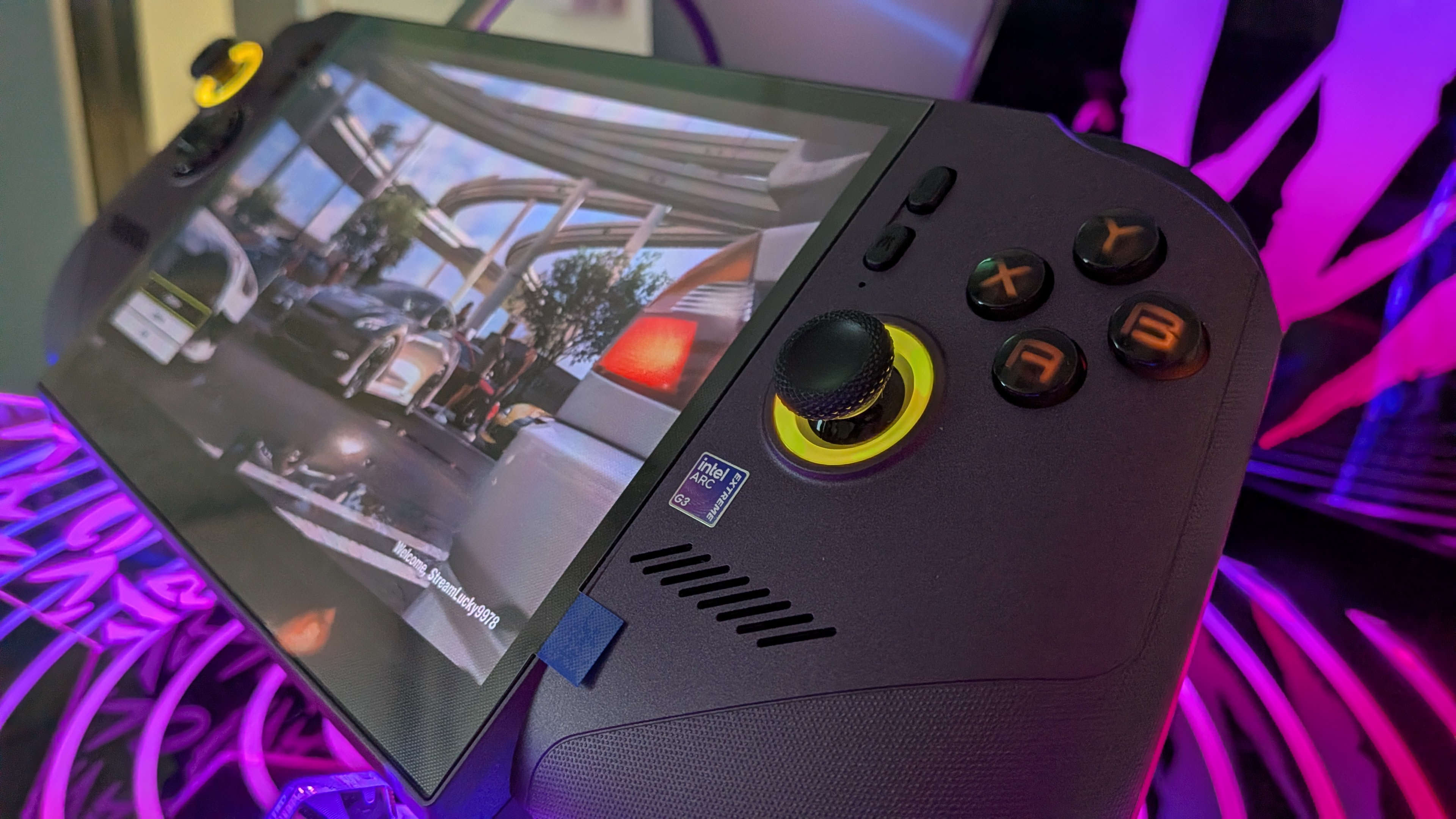
Intel is struggling to supply laptops CPUs built using its latest 18A silicon production node, according to a new report. That basically means the Panther Lake CPU, which forms the basis of its new handheld chip the Arc G3, and the budget-priced Wild Cat Lake chip. But it may not be the 18A node itself that is the problem.
Instead, a combination of factors, some out of Intel’s control, are said to be in play. The report comes from Tim Culpan, a technology journalist based in Taipei, Taiwan.
He has been speaking to numerous industry contacts at Computex 2026, including representatives of three of the six largest laptop PC manufacturers. And a common narrative has emerged.
“I spoke with people at three of the world’s top-six laptop brands, and they all gave the same feedback: supply is tight,” Culpan says.
“The chipmaker is struggling with delivery of the laptop chips and has been unable to provide clarity on when the shortage would ease, according to people I’ve spoken to at major PC brands, smaller laptop makers, and system assemblers,” Culpan added.
Culpan says that Alex Katouzian, Intel’s general manager of Client Computing and Physical AI, told him that there are “some” shortages of the chips but that Intel is “overcoming” them. However, the reasons are not necessarily that Intel has any problems with its 18A node.
Instead, Culpan says the supply chain and most notably TSMC may be at least part of the explanation. As he points out, Intel’s Panther Lake CPUs have CPU tiles built on the in-house 18A node. But the I/O tile is made by TSMC.
Culpan claims Intel’s relationship with TSMC may be “under strain” and that “TSMC’s capacity is notoriously tight right now, and Intel is unlikely to be high on the priority list.”
Another part of the puzzle is Intel’s new server chip Clearwater Forest, branded as Xeon 6+. It, too, is built on Intel’s 18A node. Culpan says PC makers suspect that Intel is prioritising 18A capacity for Clearwater Forest over lower-margin laptop CPUs.
At the Computex press conference, Culpan asked Intel’s data centre boss Kevork Kechichian how 18A capacity is allocated. “It’s complicated,” Kechichian said enigmatically, “it’s not an easy thing.”
Of course, Intel’s Nova Lake desktop CPUs are due out towards the end of this year and will add further competition for 18A capacity. So, if 18A really is being hogged by those server chips, that’s yet more bad news for we poor PC gamers.