


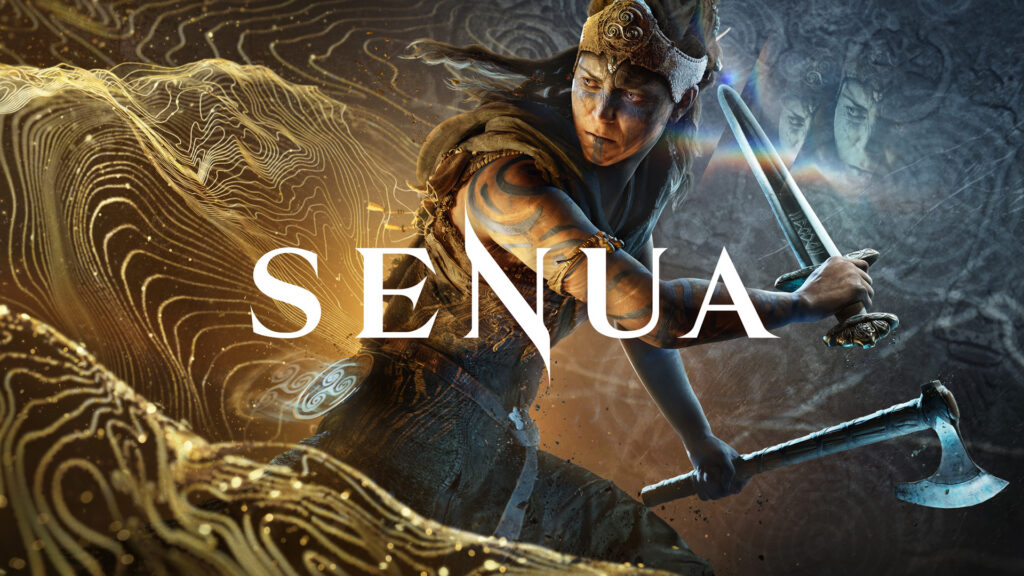
The original Hellblade famously ended with the line, “There are more stories to tell.” Senua feels like Ninja Theory has expanded that to a philosophy of, “There are new kinds of games to make.”
After its world premiere during XBOX Games Showcase 2026, one thing is clear – Senua may feature a returning heroine, and follow on from the story of Senua’s Saga: Hellblade II, but this is a very different kind of game.
It’s a full-on action-adventure, building on what has made Senua’s journey special so far, but expanding the scope of combat, adding more puzzle-solving, and introducing a freedom of exploration – taking this acclaimed, award-winning series to new heights.
But we couldn’t leave you with just a few minutes of trailer footage to pore over – I spoke to Ninja Theory Studio Head, Dom Matthews about how this unexpected new project began, how it’s bringing the whole studio together for the first time in over a decade, how all of these new systems work, why this isn’t called ‘Hellblade III’, and more. Read on for the answers to Senua’s biggest questions.
Let’s start with the basics – this looks like a whole new kind of game from the previous Senua-starring titles. How would you describe it?
Dom Matthews: This is an out-and-out action-adventure game. It’s a bold new step for Senua, as a character, into the action-adventure space. Really, what that means is taking the heart and soul of what Hellblade has meant – in terms of intimate storytelling, high production values and being a journey that’s full of intent – but being additive to that in a way that gives players more agency and a lot more gameplay.
This is really about giving Hellblade fans what they’ve been asking for, while meeting action-adventure players’ expectations – and the way that manifests is in broader gameplay, more combat depth, and an interconnected world.
The title feels telling – why is this simply Senua and not “Hellblade III”?
The title of just Senua really reflects that this is something fresh and new and different. It is a different style of game. I think Hellblade I and Hellblade II had an intention that we delivered on – but this is a different intention. I think of it as being additive – we’re taking all of that goodness and adding the types of things that people expect from a premium action-adventure game.
Is part of that idea of adding to what you already have about satisfying players who thought Hellblade II lacked traditional gameplay?
For me, it’s about two groups: There are people who loved that game – how can they love it even more? And there’s people who felt it didn’t quite land in the way that we hoped – why not?
I did spend a lot of time looking at what players said – you know, user reviews and reading forums – and understanding what people loved and what they’d like more of. And the resounding feedback there, frankly, was that people loved the presentation, the story, the tone and the atmosphere that we achieved, but they’d just love to be able to engage with Senua at a deeper level, with more gameplay, with more agency, right?
And the great thing is, I look at that and go, ‘Cool. Well, we’ve got a team of people here that can really excel at doing that. Let’s go meet them at their expectations.’
It’s a big shift for the series, and for Ninja Theory – how did you arrive here?
Matthews: We released Senua’s Saga: Hellblade II in May 2024, and that was a project on which we developed a lot of new technology, we transitioned to Unreal 5, moved to a new studio building. So we went through a lot of change and had a lot of big obstacles to overcome on that project. By the time we’d got to the end of that project, I felt like, ‘Awesome, now we are set up to really go and do our very best work.’
So part of that was bringing the entire team together to focus on one project. It’s the first time we’ve done that for over 12 years, since the development of DmC: Devil May Cry. It’s bringing that team together, looking at the technology and the opportunity we had and saying, ‘OK, what game do we want to go and make?’
The studio has a big history in the action-adventure space. Is this game about going back to your roots in some way?
I think about it slightly differently. It’s not a combat-action game – people shouldn’t expect that this is like two-thirds combat. We’re really thinking about it as being a fairly even split between combat, traversal, and puzzle solving. The way I think about it is really about studio potential, looking at our expertise and allowing the team to go and do their best work in this game – and so much of that experience comes from the likes of DmC, Enslaved, and Heavenly Sword as well as the Hellblades.
We had smaller teams working on the last two Hellblade games – Hellblade I in particular was a team of about 25 people. So this is about taking those 85 people that we have now, which is still a comparatively small team, and building out that experience. We can do more with combat, more with traversal, more with puzzles, and blend all of that gameplay into one. We have that opportunity with all of the talent now available to do so.
And with the fact that we have the entire team working on this game, I suspect some people might ask what’s happened to Project Mara [a previously announced horror title] – I took the decision to not work on that any further. These decisions are never easy, but I did so to take the opportunity to have all of the talent and expertise in the studio, all 85 creatives, working together to realize the potential of what Senua can be.
So let’s talk about that combat, as it’s really the key part of the trailer. How does it work on a big picture level?
The Hellblade games’ combat has been about feeling visceral, with a weight to it. It feels really meaningful, and we’re retaining all of that – but we’re expanding it. The key phrase for us has been ‘tactical choice’. So as a player, you can go into fights and you have options as to how you approach that fight, how you engage in that fight, even whether you want to take on those enemies in the first place. Even in today’s trailer, you see Senua choosing to stealthily sneak up on enemies so not to alert the others, as opposed to wildly running into the fight – which you could also choose to do. This is the type of choice we’re excited for players to have fun with.
Tangibly what that means is that Senua is now fighting multiple enemies at once, there’s verticality, there are environmental elements that she can use to her advantage. Senua has a far broader and deeper combat set, including multiple special Focus Abilities that she can use in traversal and in combat. And there are also a lot more cool weapons you see in the trailer: long axe, short axe, dual wielding of weapons, having the ability to throw weapons. It’s all about taking Senua’s combat and liberating it, so players can really express themselves a lot more through the options that are available to them.
The other super-cool element is that we’re adding the fantastical boss fights, which we allude to that at the end of the trailer. That’s something that people can expect – we’re really going to town on cool boss fights…
As you mention, Senua’s sword is far from the only thing she’s wielding in the trailer – how do weapons work in your game?
You can acquire other weapons from enemies or find them in the world. Some of them you can holster and take them with, you others you can’t –you can grab a short axe from an enemy, take it with you or, as you see in the trailer, use it as a ranged weapon to take out an enemy at distance. It’s more about acquiring weapons and using them in the moment if you choose to.
So for example, there’s a combat space, a hive of enemies. Let’s say you’ve got four in total – three at ground level, and one that’s high up. You spot an axe at the other side of the fight – maybe you want to sneak around the other side, pick that axe up, take out the guy that’s high up, stop him throwing a ranged attack at you and then take out the other guys. Or you just pile in, take out the guys, pick up the axe and then fight the guys on the ground, whatever you want to do. We’re really opening up the options for players.
And in terms of dual-wielding weapons, which we also show in the trailer, Senua has a primary sword and then she can pick up these other weapons as well, and you can dual wield with almost all of them. One of the things I love to do in the game is pick up a flaming torch off an enemy and then smashing them around the face with it.
And how are you layering in the special abilities you talked about?
Throughout the journey, Senua develops beliefs and understandings, and that gives her the ability to change her reality. That manifests in Focus Abilities that the player can use as and when they wish, across traversal, puzzle solving and combat.
One of the things that you see in the trailer is her ability to shatter reality. She can do that to unlock spaces in the world, but you can also use it within combat – particularly when there’s multiple enemies in the same space – to really do some of that crowd control, buy some time, push some enemies back.
You mentioned this game having an interconnected world – how does it work?
In terms of the map, it’s about twice the size of what we had in Hellblade II, so it’s a bigger game. There’s going to be more game there for people to play, and it’s a single map.
It’s still a linear story, but what we’ve done is really open the world out. Through the course of the story you will you go back to familiar places, but we’re giving the player that opportunity to spend time in these spaces, explore – and we’re going to make that exploration rewarding for players. To be clear though, this isn’t an open world game – it is a linear story told through a map built of interconnected locations
Some players will want to stick to the story, but we also recognize there’s a lot of players that just want to spend time in the world, which we love as well. We want to make a game where players can spend time in Senua’s world, exploring and understanding the spaces.
In terms of rewarding players for exploring, are there secrets to find in these areas?
Yeah, absolutely. I really love the stuff where we’re asking players to be perceptive. I want players to be able to play this game and to be on the lookout for what they might be able to uncover in the world.
So, for example, there might be something that just seems inconsequential in the beginning of the game – such as a tree, a slightly unusually shaped tree. Later on in the game, Senua develops a new belief around that tree. That tree then develops a special power that Senua can utilize to access a new part of the world.
This whole experience is one that is seen through the lens of Senua’s experiences of psychosis – and, through our learnings from those in the mental health community, something central to that experience. We’re inviting players to jump in and believe in the world in the same way that Senua does. I think the experience that creates for a player is one where you’re rewarded for being perceptive.
And you’ve also mentioned improved traversal – tell us about how you get around this world.
I think what players are going to find when they play the game is much freer and snappier traversal, with increased movement speed. Just like choice in combat, we’re giving players more of an option – if they want to move through the world at a slower pace, they can, if they want to go a quicker pace, they can as well.
Players are going to be vaulting, climbing, and jumping a lot more than they have in the Hellblade games, and they’re going to find a lot more verticality, spaces that exist over a number of different levels.
We’re making a combination of a broad traversal moveset combined with her special Focus Abilities. And of course, what Senua is known for is her ability to focus and see the world differently, which allows her to open up spaces and then move through them in interesting ways.
We’ve talked a lot about gameplay, but what’s the story here? Where and when is this game set?
Matthews: Well, we can say that this game takes place after the events of both Hellblade I and Hellblade II – and it’s set in Purgatory. It’s Senua’s vision of purgatory, which is a vision of her childhood homeland. So in one sense she’s returning home.
She’s trapped between life and death on a quest to reach the afterlife and be reunited with the ones that she’s loved and lost. Her belief is that by healing the wounds of her life, she can find the peace that is the key that unlocks the gate to the afterlife.
What I think is important to say is that if you are a Hellblade fan, if you’ve played Senua’s story so far, then great. In Senua, you’re going to see characters, themes and parts of the story that are going to be familiar to you. But really, this is a game that welcomes in new players as well – it’s all very much presented in a way that, if you haven’t been there, then you’re fully going to understand and get what’s happening in this title. Our ambition is that this is a story the Hellblade fans are going to love, but is welcoming to new fans too, who will love it just as much.
One of the key parts of this trailer is the recurring motif of that wave of gold, seemingly trying to subsume Senua. Can you say more about that imagery?
What the gold really represents in the game is this insidious but beautiful force that threatens not just to erode and erase everything Senua believes in, but also is what she is at risk of becoming. I don’t want to give too much away at this point, but it’s safe to say it’s a key theme.
You released Hellblade II in 2024, and Senua is out next year – that’s a pretty short turnaround for a major new game these days. Was that your aim?
Yeah, 100% – it’s very deliberate. And it’s not about rushing something out the door – we would never do that – but we want to ship games. Players want to play games, so we want to get on with it. We have the pipelines, we have the technology, we have the team and we had a very clear vision as to what we wanted to build, and that gets you a long way to just get on and execute it.
We shipped Hellblade II in May 2024, and by September 2024, we were making this game. People took a good break, but before everyone took a break, I said, ‘This is what we’re going to do. This is the plan.’ We’ve got an awful lot of work to do, but it just feels great to be shipping games.
All of the love and care that people expect from our games is at the heart of this project. Having the entire studio pouring their talent and expertise into the game is a big part of what allows us to create with the same quality – but at a bigger and deeper scale.
Is this the plan going forward – giving people more Ninja Theory, more often?
Yeah, I think so. I want to give games the right amount of time but the best thing, as a team, is getting the craft and the creativity out to players and seeing that response. There is also a relationship between the time it takes and, frankly, the development costs but I think by keeping the timeframe right for the game that you’re making allows you to take creative risks. You’re operating within a box that allows you to continue doing different things, taking creative risks, doing things differently – I think fans appreciate that, and it’s very much part of the DNA of who we are.
Senua arrives in 2027, available on XBOX Series X|S, XBOX on PC, cloud, and included with Game Pass. Play it on both console and PC at no additional cost with XBOX Play Anywhere. Also available on Steam and PlayStation 5.
The post Senua: Answering the Big Questions About Ninja Theory’s Unexpected New Action-Adventure appeared first on XBOX Wire.