

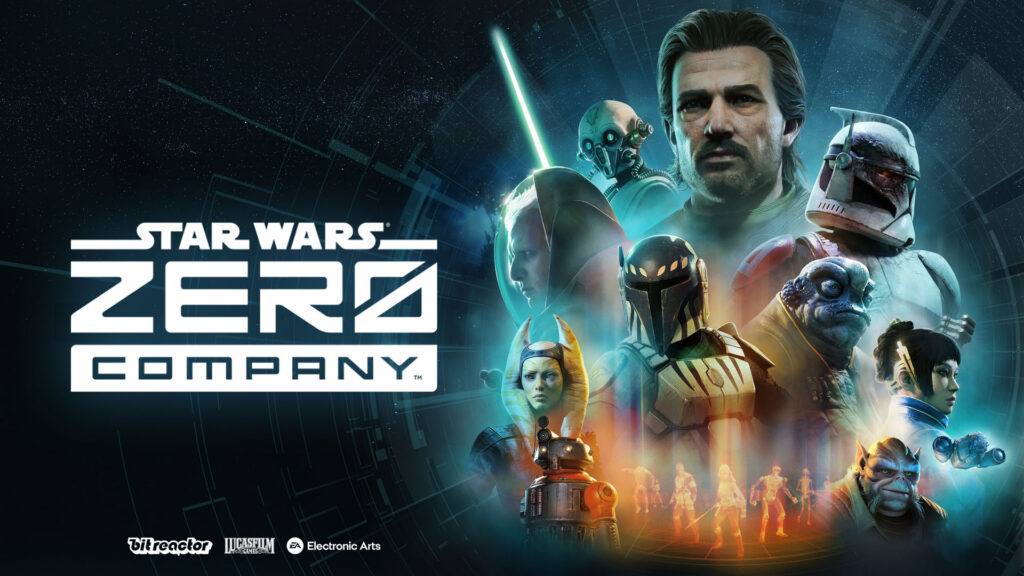
“A Star Wars turn-based tactics game” is a pitch as obvious as it is exciting. Of course, and really—how have we not gotten here sooner? It’s also hard to imagine a better studio to bring that game to us than Bit Reactor, which was recently founded by a core group of former Firaxis (XCOM, Marvel’s Midnight Suns) developers.
I was thrilled to speak with Greg Foertsch, Creative Director and CEO, and James Brawley, Lead Designer, about the tactical side of Star Wars Zero Company, Bit Reactor’s upcoming debut.
In Star Wars Zero Company, you run the eponymous company of mercenaries during the Clone Wars. Early previews have described it as a hybrid of Mass-Effect-style RPG storytelling and third-person exploration with XCOM-style turn-based tactical battles. Like Shepherd, you customize the appearance and class specialization for your own version of protagonist Hawks at the start of the game. You then fill out your roster with a combination of authored characters created by the developers, as well as any number of your own original creations. As with the XCOM series, the threat of party members permanently dying in difficult battles looms, which I’d imagine will have even greater emotional stakes in the context of a more narrative-focused game.
Foertsch was an original member of the Firaxis art department, and Brawley worked there for 8 years as a Level Designer and Technical Designer. Both, notably, worked on XCOM: Enemy Unknown, XCOM 2, its expansion War of the Chosen, and Marvel’s Midnight Suns, and so have had a direct hand in shaping the modern tactics genre. I’ve adored their previous work, and was eager to hear about how they intend to build on it and take the genre forward once again.
When building the tactical gameplay of Star Wars Zero Company, what were the core principles or lessons from your previous, foundational work in the genre that you wanted to carry forward?
Foertsch: I think, looking at the genre, we believe a lot in its ability to tell stories, and connect with players, and immerse them in ways that we’ve been trying to push forward for multiple projects. We’ve got a core group of people, about 20 of the team, that have worked on strategy games, which was pretty deliberate with how we stacked the team. And then we really wanted a big group of people that didn’t have that background to give us insight, right? We didn’t want to keep just retreading our own ideas. And so we’ve got a really diverse group of developers with different backgrounds from God of War and Elder Scrolls Online and all sorts of stuff. We’ve got this nucleus of people that know some of the pitfalls, and also some of the places where we want to push forward. I am always trying to erase the last thing I did: I wanna move forward. My background being in art, it’s like ‘I did a painting yesterday, I don’t know what we’re doing today.’ And so it’s been a pretty fun ride from that perspective, and James can talk a little bit more about the specific design stuff.
Brawley: We spent a lot of time rolling around through different mechanics, different concepts, and, you know, we landed on something pretty close to the general genotype of these games, but that has its own unique features to it as well. A lot of that stuff carries over from the previous titles, things like how we structure missions, how we structure encounters, how we apply pressure to the player during the tactical gameplay, but at the root of this particular genotype of tactics games is the fact that the enemy units present a puzzle every turn that you get to think through – with a big canvas of possibilities and actions and figuring out who does what and in what order – in order to orchestrate the results of each turn. I think that’s where the reward and the depth in these games really emerges effectively.
Conversely, with this chance at a clean slate, was there anything you were happy to leave behind or do differently?
Foertsch: It’s really trying to push narrative, married with visuals, married with gameplay, with no sacrifices that people have come to expect for strategy games. That was something that we really tried to push on and emphasize with this game. Star Wars is very narrative-driven, which helps us push that as well. It just marries up really nicely. And so, at the end of the day, we’re all trying to make sure that if you love strategy games, you’re not sacrificing something. You can have all that stuff. Like, we don’t have latency issues, because we’re not a twitch-based game, and we’re not online. It’s a single player experience. We should be able to tell better stories. They should look better, and they should be more immersive.
How has Star Wars inspired the design of the tactical gameplay? Are there any particular moments or feelings from the franchise that you have tried to reproduce through gameplay systems?
Foertsch: Star Wars, at its best, is about relationships and found families. If you watch “Rebels,” you’ve got Rex and Kanan, a Jedi and a clone after Order 66, hating each other, but then overcoming that. That was a theme that we wanted to tie into, and it just naturally fit with what we wanted to do from a mechanical perspective.
Brawley: It was pretty clear early on that we wanted to be able to work in some kind of mechanic to help characters bond with one another. Building their relationships should help you, the player, feel like you are not just building a company or a team—you are building friendships between these characters. You are building relationships that matters and would then map into the gameplay in some kind of beneficial way, that would deepen it a little bit.
Can you tell us more about the bond system and how it works?
Brawley: Basically, every character on your roster has a tracked relationship with every other character on the roster. The more you have those characters do things together, the stronger that relationship grows. Now, those relationships can start in the negative in some cases. We certainly have some of our authored characters that start with negative relationships with specific other characters. But as you send them on missions together, completing those missions will increase the bond relationships between each of those characters, as well as certain actions in combat. Using support actions in combat will boost the relationship between those two characters. So, I have my medic heal my soldier, for example, and that relationship is going to improve. Or we have a system for shot assists, where you can call people in to assist on attacks and boost the relationship as well. Additionally, there’s some actions you can take on the strategy side of the game that will also positively affect those relationships when you assign the characters to work together.
How about the different classes in Zero Company and their respective roles in combat – how do they fit together?
Brawley: We refer to it as our specialization system, and each character in the game begins with one specialization. Certain characters begin with specific specializations, but for the most part, we’ll allow you the freedom to change that even on the authored characters, with a couple of exceptions, characters whose identities are very, very strongly connected to their specializations. There are eight general specializations in the game (Assault, Heavy, Sharpshooter, Scoundrel, Soldier, Gunslinger, Scout, and Medic) and each provide a slightly different role in combat.
For example, we have the assault, who is meant for mobility and close-range combat. You’re meant to get into flanking positions, and there’s a suite of abilities to reinforce that. And we have a sharpshooter whose role is to hang back and take high precision shots and score critical hits from long range. Or the medic, who’s a support class intended to heal and buff his teammates. When you get midway through the game, you’ll be permitted to select a secondary specialization for each character, so you can create a two-point permutation that creates a lot of possibilities for how you can build your characters and combine those abilities to pursue specific builds.
Does your protagonist character play a special tactical role on the battlefield as well, or do they share the same general specializations?
Brawley: They slot into those specializations. Each character also has a talent specialization, which generally carries one or two abilities. So your main character, Hawks, has a unique talent that provides an ability that carries over no matter what your specialization selection is, but in the intro of the game, you’ll be permitted to not only customize Hawks’ appearance, but also select their starting specialization and starting weapon.
How do tactics rely not just on individually powerful characters and abilities, but the synergies between them?
Brawley: There are definitely some synergies that emerge. Take the medic, who has an ability called combat stim that provides a temporary buff to a teammate, which includes increased damage and health. So, combining that with a gunslinger who takes a lot of single shots, you can output a lot of extra damage, for example. We have a number of those synergies that exist across the classes. Another great example is the scoundrel specialization, which has an ability to identify weakness, and flags a target to take a critical hit on the next attack. So, you can combine that very effectively with the sharpshooter class.
How much flexibility is there both in composing your team and in building individual characters over time?
Brawley: Well, each character has their talent specialization. For some characters it’s fixed and cannot be changed; for the custom operators that you generate on your own, there is a pool of different talents that you can select from. They have a weapon specialization, (our four primary weapon specializations are the pistol, the rifle, the long arm, and the repeater). You select your primary tactical specialization, and then in the middle of the game, you can select that secondary.
So, you have four points that combine to create a kit for each operator on your squad, and get four operators on your team. It gives you a pretty wide slate of possibilities for how to compose your team. It also makes it very easy and comfortable to rotate one character out and rotate another character in without disrupting the play for the rest of the team in a particularly severe way.
Tell us more about the Advantage Points system and how having a shared resource pool for special abilities across your squad affects gameplay.
Brawley: Advantage is a shared resource that, during gameplay, you earn by damaging enemies. Each time one of your operators damages an enemy, it adds a point of advantage to the whole squad. Many of the squad’s special abilities consume advantage instead of action points. So, they don’t count against your normal action limit. They’re basically an extra action that that character can take. And many of the most powerful attacks in the game rely on and consume the advantage resource. But that also means if I want my soldier to fire a rocket, it will consume the advantage that I might use to have my medic use morale boost to provide regeneration to the team, for example. This is another interesting level of decision making.
I also like the system because it provides momentum in combat. You can’t just open with all your powerful moves and just, like, shoot rockets all over the place and annihilate everything you’re facing. You need to do a little bit of tactical action to build up to those.
How are you introducing enemies and objectives that push the player to break out of the traditionally safe overwatch crawl strategy commonly found in tactics games, and how have you designed encounters to encourage different play patterns in Zero Company?
Brawley: We have a variety of different map structures, some of which where you have close-range combats, where it is sometimes a better strategy to find good positions and counteract the enemy attacks. We also have some maps that are longer, where you need to move through the map in order to complete an objective, and so you have to think about how to advance and deal with the enemy at the same time.
The structure of our maps is also different from XCOM in a couple of key ways. One is that we don’t use Fog of War, so you know where all the enemies are. In XCOM, a lot of people felt incentivized to use that overwatch strategy because they didn’t know where enemies were going to be or when enemies could walk out. So, that change makes that overwatch strategy a little less appealing. Our overwatch is also not omnidirectional: you place a cone in the combat space and when enemies enter or act within that cone, you will counterattack them.
Is there anything you’re particularly excited for players to experience?
Brawley: One of the things that really excites me about this game is that it’s the first Star Wars game where I can make a whole team of characters and make them mine. I can create eight, 10, 15 stories to comprise my squad. I can build my own Astromech. I can make my own scoundrel, I can make my own Star Wars sniper. There’s just a wondrous playground here to explore possibilities and put characters together. We give you the authored characters to hook you into some of the very specific fantasies, like a Mandalorian or a Jedi. You can customize them if you wish. You can bring in your own characters. I can make my family members and make them work together with these characters. I think that that’s something that a lot of people are truly going to appreciate, and our customization is excellent.
Foertsch: One of the big things we wanted when we started early to make sure that the game felt like the things I did in tactical really continued into the strategy. Those relationships and decisions carry over, and vice versa. They’re not these two separate halves that don’t really touch. And so I think that not only does the gameplay marry, but the narrative marries, and, like, the characters you’re interacting with in the story also go out on the missions, and they can die, and it changes the experience. And so, while everybody has a canon result, your journey and all the stuff that happens in the middle is different than mine, and every time you play it, it could be different based on the relationships you build and the characters you decide to grow, the specializations you choose. What I’m probably the happiest about is that every level connects holistically. Again, whether it’s the story, whether it’s the visuals, whether it’s the gameplay, the strategy versus the tactics, it all kind of just works as a unit.
Star Wars Zero Company arrives on XBOX Series X|S on August 27.
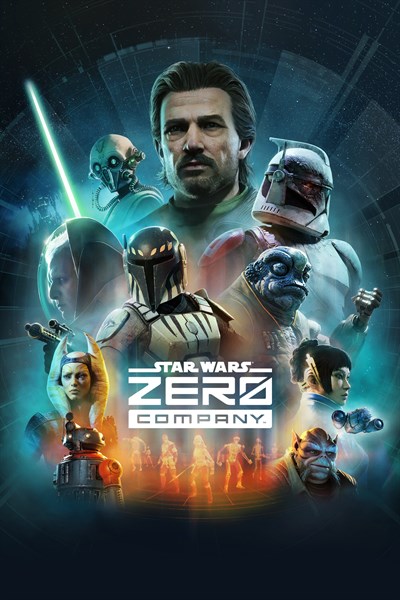
STAR WARS Zero Company
Electronic Arts
, a single-player turn-based tactics game set in the twilight of the Clone Wars.
You will step into the shoes of Hawks, a former Republic officer who leads Zero Company as they are recruited for an operation that pits them against an emerging threat that will consume the galaxy if left unchecked.
Lead the Clone Wars’ Most Cunning Operatives
Command the galaxy’s finest in tactical operations, investigations and other heart-pounding missions through a cinematic original story.
Choose Your Path to Victory
Strategize and adapt at both your base of operations and an ever-shifting battlefield to make every move count – the outcomes of your decisions make each playthrough different.
Engage in Tactical Star Wars Combat
Deploy a team of operatives composed of a variety of archetypes ranging from scoundrels to astromechs, or even a Jedi, choosing from an arsenal of tactical abilities to outmaneuver and defeat your foes.
Forge Deep Bonds with your Squad
Improve your squad’s skills as you deploy them on missions, where they learn to work together and unlock new combat synergies that could be the difference between victory and defeat.
Personalize Your Fight
Customize Hawks’ combat specialization and appearance, then fill out your team with original and custom-made Star Wars characters, tailoring their appearances, loadouts, and abilities to fit your playstyle.
*Conditions and restrictions apply. See https://www.ea.com/games/starwars/zero-company/disclaimers for details.
Lucasfilm, STAR WARS and related properties are trademarks and/or copyrights, in the United States and other countries, of Lucasfilm Ltd. and/or its affiliates. © & TM 2026 Lucasfilm Ltd. All rights reserved.
The post Star Wars Zero Company: How Some of the Greatest Minds in Tactics Games are Pushing the Genre, Again appeared first on XBOX Wire.