
Fable: How We Built the Living Population
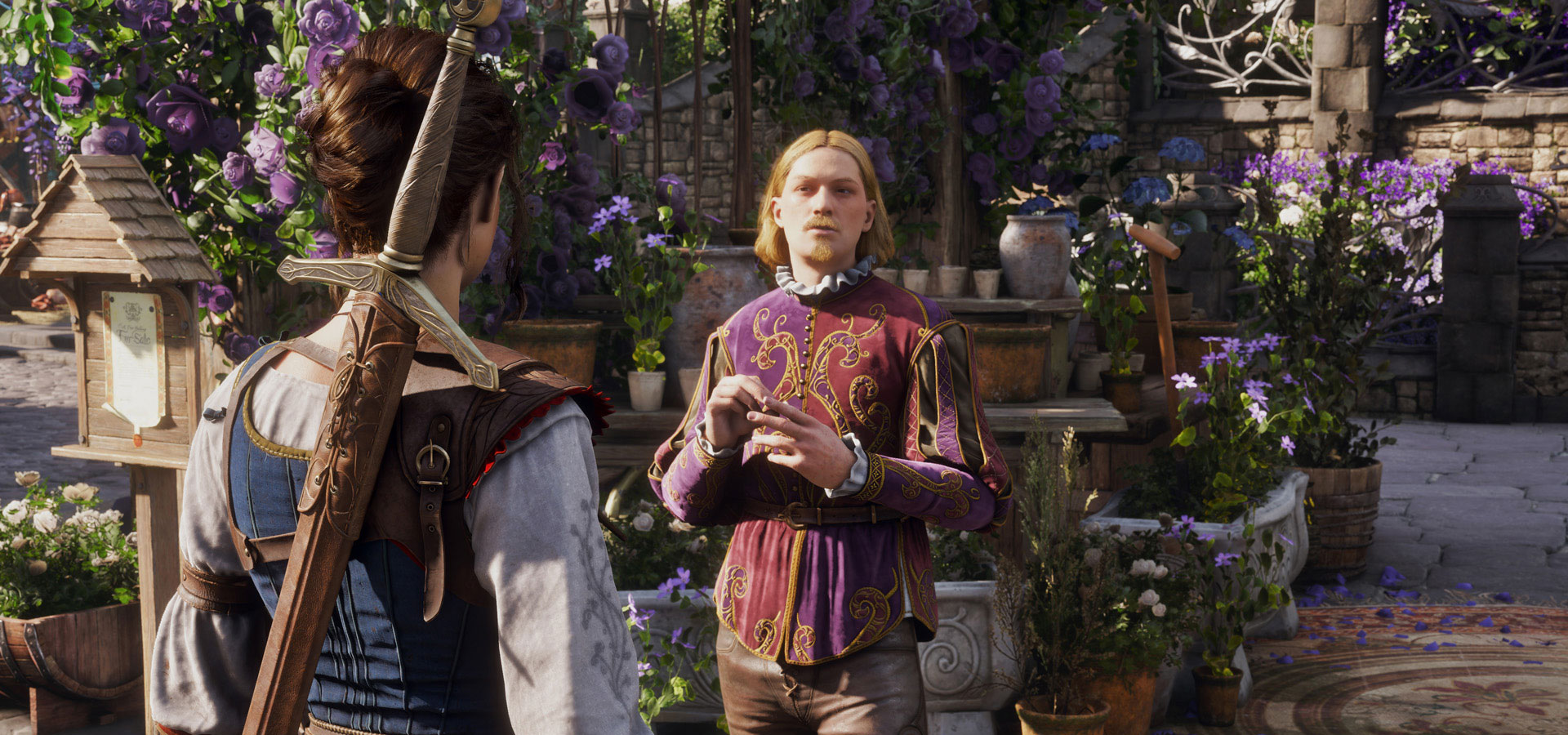
The Living Population sits at the heart of Fable – it’s our way of referring to the 1,000+ NPCs who bring Albion to life. Each one has a personality and a life that moves along, whether you’re there to see it or not. Your Hero can interact with every single one of them, making friends, enemies, employees, spouses or… corpses.
At XBOX Games Showcase, the Playground Games team have been showing attendees a presentation of the Living Population system in action – which you can watch for yourself here – but we also wanted to speak a little more about how this huge, reactive, hilarious system came together, and why Fable was the perfect place to make that happen.
From our very first ideas, to some of the unexpected ways it can affect the wider game, to answering some of the biggest questions you’ve had for us, here’s everything you need to know about Fable’s Living Population.
Where It All Began
This all began by thinking deeply about what we loved from the original Fable games. Something that stood out to us was how much fun interacting with Albion’s population was, and we knew from the start that we needed a system that would make Fable feel truly alive.
We didn’t want our NPCs to be window dressing, existing only to give a feeling of a bustling space. We wanted ours to be individuals, people that you can interact with. Maybe you find one that takes your fancy, and build a relationship with them. Or maybe you want to really piss them off, or even kill them. Making characters that you want to interact with, however you want to interact with them – that was the starting point.
And it kind of snowballed from there. We started having conversations about things like NPC schedules and the time of day. If you’ve got realistic people, they need to behave realistically – and that means they probably need somewhere to live and a bed to sleep in. It means they need to have things to do during the day, like jobs and hobbies. And if they have jobs, where do they work? And if they don’t have jobs, can they afford to do things like going to the pub? We very quickly had a massive list of all the things that we wanted to achieve.
Hand-Crafting The Living Population
We originally thought we could create a procedural tool to generate all of the NPCs we needed for the world, because creating them by hand would have been an enormous amount of work. But, it quickly became obvious that in order to make our NPCs feel believable, procedural generation wouldn’t work. The NPCs the tool generated felt random and incoherent. As so often happens, we realised we wanted to control every detail of every NPC in our game. So, we made the (slightly crazy) decision to design each and every NPC by hand.
In a visual sense, all of our characters are built from modular pieces. We have hundreds of these and our artists can then pick from this vast “wardrobe” of asset pieces, with variations based on where the NPCs live in the world and the type of person they are – be that a noble, a commoner, or a ruffian. Then we have their voices – all of our NPCs are fully voiced. We cast around 100 actors to voice our Living Population alone.
But the truly manual work comes in building their personalities. Every NPC has a Trait (a description of their personality shown to the player), a place to live, a job, a schedule, and more. All of this work was done by the Game Design team – we wanted to have that level of control to make sure that we could create believable characters.
For example, you may have a snooty nobleperson that lives in a manor house and looks a certain way. When you look at an NPC, all these different pieces combined should tell a story that you should be able to pick up on quite quickly to let you get a feel for them.
One of the things that helped me realize we were on the right track was when other developers would come up to me and say something like, “What happened to Helen? She looks completely different, and she’s moved home!”
As soon as that happened, I realized, “OK, people are starting to get attached to NPCs, even while they’re just testing them.” They were already building those relationships with them and they didn’t even know it. I think that was when I realised that all the work we were doing was having the right effect.
Going in, I don’t think we knew how hard it would be to get this right – there’s been real blood, sweat and tears to get us here – but I’m glad we took this route. I think what we’ve ended up with is something that feels like an interactive people toybox.
The ‘People Toybox’
Playing with that toybox is where this all comes to life, of course. When you first see an NPC in the world, the game will show you their name, their role in the world and their Trait – that short identifier for the kind of personality they have, which informs a lot about them.
So it might be something like, ‘Bob the Bartender, a kind-hearted commoner’. And from that, you can already infer the type of person that they are and how they might react to you and the Reputations that you’ve earned. That will affect their opinion of you: they can like or dislike you, they can fear you, they can even fancy you. That in turn might inform how you want to interact with them.
When you speak to an NPC, we bring up the social panel on the side of the screen, which tells you more information about them. It will show you why they feel that way about you, usually based on your Reputations in their settlement. And because you can have up to six Reputations active in any settlement at any one time, these can interact with each other.
Our NPCs are complicated individuals, so it might be the combination of your reputations that result in them liking you or disliking you. For example, someone who thinks I’m silly for being a chicken chaser might change their tune when I become a rich entrepreneur.
You can become a part of their lives in other ways too. You could buy their house and become their landlord, or buy a shop and become their employer. You could do both of those, and control their wages and their rent. But this cuts both ways – someone might refuse to work for me because they don’t like my actions or reputation, and if nobody wants to work for me, then the shop never opens and I don’t get any income. Or, if I don’t pay them enough to afford their rent, they’ll have to move out of their home and I won’t have them as tenants anymore.
And beyond all of this, we also have a system that’s effectively “NPC memory”. For example, if you give someone a job, that might change how they feel about you. If I give a beggar a large sum of money, they will remember that I’ve made them wealthier and effectively changed their life as a result. And if I happened to kill their spouse… well, they’re probably going to hold a grudge against me for that too.
And because all of these things are variables that the player can change, an NPC can change as a result. And that’s ongoing – you could theoretically tinker with your own Living Population forever.
It’s all about creating a truly reactive system – we want to reward players for playing around with it, in whatever way they choose. You can give a gift to an NPC purely to see how they’ll react – that could be through a funny voice line or earning some points to a reputation that you didn’t expect. And sometimes it’s just because, as a player, you think “I want to see what happens.” What if I gave this basket of rotting fruit to a snobby noble? You’ll get a reaction.
Love and Death
There are two related questions we’ve seen a lot of since we announced the Living Population: “Can you romance every NPC in the game?” and “Can you kill every NPC in the game?” So I thought I could answer both.
You can have a romantic relationship with every adult NPC in the game – you can date them, you can marry them, have children, live with them – so the answer to the first question is yes… but not necessarily all at the same time.
Because our NPCs have a disposition towards the player based on the actions they’ve taken or the reputations they’ve earned, some NPCs may hate you for the same reasons another will fancy you. And, of course, you will inevitably break up some households in order to begin a relationship or move in with someone, which will then affect how the other people involved feel about you. These aren’t unrecoverable situations. It’s obviously easier to start a relationship with an NPC that fancies you, but if you’d like to start a relationship with an NPC that absolutely hates you, then there are various actions you can take to change their opinion of you.
As for the second question, again, all adult NPCs can be killed – and if you kill an NPC, they are gone, they are removed from the world. You can, if you so wish, kill every person in a settlement, and it will stay empty for some time – but we do have a system in place that will gradually repopulate settlements over time.
This is actually something we discussed a lot – how destructive do we want to let the player be? One school of thought is ‘if the player’s done it, they should live with their consequences’. But if your consequences mean that a settlement is essentially locked to you as a result? That’s cool and interesting to start with, but at some point that probably becomes annoying. So, we found a balance between consequences feeling permanent, while also not letting the player get into a state where they can’t recover their game without restarting.
This also ties into another system we have: Settlement Traits. When you ride into a settlement or you look at it on the map, it has the name of the location – so Silverbrook, for example – and it will show the current reputations you have active in that settlement. There will also be a sentence to describe the settlement. Your interactions in that settlement – in this case, killing a bunch of NPCs – will result in the settlement being described as “An underpopulated farming town.”
Choices and Consequences
Speaking of reflecting those actions back, the Living Population ties into the wider game in other ways. One major way is through your quests. I alluded to it with Settlement Traits, but your choices in quests can impact a settlement quite dramatically. We’ve talked before about how your choice to spare or kill Dave the Giant (played by Richard Ayoade) can not only change the world itself, but affect the people living in Silverbrook.
Leaving a massive corpse on the horizon actually works as a temporary tourist hotspot, affecting the lives of those living there! It’ll also have an impact on house prices – maybe because of the tourists, or maybe because of the giant corpse sprawled across the landscape, which you have to imagine will smell pretty bad after a while. It will also change the Settlement Trait – so that sentence can change to say something along the lines of, “Famous for its giant corpse”.
But the Living Population can also affect your game in return.
For example, if you marry multiple NPCs in a settlement, you might get blackmailed by someone who knows your secret. Depending on the choices that you make in this encounter, this can have a dramatic effect on your relationships with one or both partners.
The point of difference from most games is that the choices you make through even these little encounters will earn you reputation points, which then feed back into the wider system. So even seemingly innocuous side interactions that you have with NPCs can then impact other systems and cause a ripple effect across the wider game.
Friends, Foes, and Everything in Between
I think we were in a lucky position making this game, in that we’ve always said that this is Playground’s Fable – we’re not making a sequel to Lionhead’s games. But we also knew that there are elements within those that are key to what makes Fable “Fable”.
Having a reactive NPC population is definitely one of them, and building the Living Population gave us the opportunity to look at the things those games did and see how we could take them further. That’s very apparent in our morality system, and the way Albion’s inhabitants perceive your actions through their own lens.
What does that mean? And what does that feel like as a player? If I’m interacting with different characters and somebody doesn’t like me, what do I have to do to change that? How does that change how I play the game?
This is how you’ll build an extraordinary life in Fable. It’s all about shades of grey – it’s not us or the game telling you what is good and what is bad. With the Living Population, it’s the NPCs themselves judging your actions.
Fable arrives February 23, 2027, with early access for the Premium Edition beginning February 18. It will be available on XBOX Series X|S, XBOX on PC, cloud, and included with Game Pass. Play it on both console and PC at no additional cost with XBOX Play Anywhere.
Fable Premium Edition
Xbox Game Studios
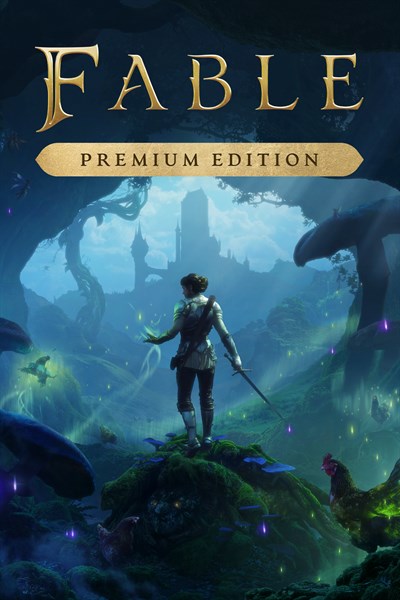
Fable Premium Edition includes the full game with Early Access, letting you play up to 5 days before launch, and Premium Edition Content Pack (featuring Splendid Armour, Bastard Armour, and in-game gifts), Fable Digital Artbook & Soundtrack, and the Fable: Order of the Hero expansion coming post-launch.
Become the Hero you want to be in an immersive open-world action RPG where each choice shapes your journey, reputation is everything, and fairytale endings are never guaranteed.
A NEW BEGINNING FOR A LEGENDARY FRANCHISE
Fable returns in a stunning reboot of a beloved franchise. As the first Hero in a generation, explore a living Albion filled with peculiar characters, dark humour, and chickens… lots of chickens. This isn’t just nostalgia — it’s a new beginning set in a beautifully vibrant open world.
BE THE HERO YOU WANT TO BE
Customize your Hero’s appearance and wield powerful weapons as you weave melee, ranged, and magical combat. Take on bandits, beasts, and creatures — including brand-new enemies and fan-favorites like Hobbes, Balverines, and Trolls. Your power grows right alongside your reputation.
BUILD AN EXTRAORDINARY LIFE
Beyond all the combat lies a living world where you can carve your own identity. Get filthy rich as a landlord or blacksmith, romance a villager (or three), have a bunch of kids, and watch as your reputation precedes you. Being a Hero is a bit like being a celebrity… if celebrities carried swords and occasionally battled giant fire-breathing chickens.
YOUR CHOICES CHANGE THE WORLD
In Albion, a Hero’s reputation is everything. Your noble deeds and questionable decisions affect your relationship with each villager and can even shape the world around you. Whose opinion matters most? The choice is yours… and so are the consequences. It’s up to you to decide what it means to be a Hero.
Fairytale Ending Not Guaranteed.
*Pre-order offer ends at official game launch date. Limit 1 per person/account.

Fable
Xbox Game Studios
A NEW BEGINNING FOR A LEGENDARY FRANCHISE
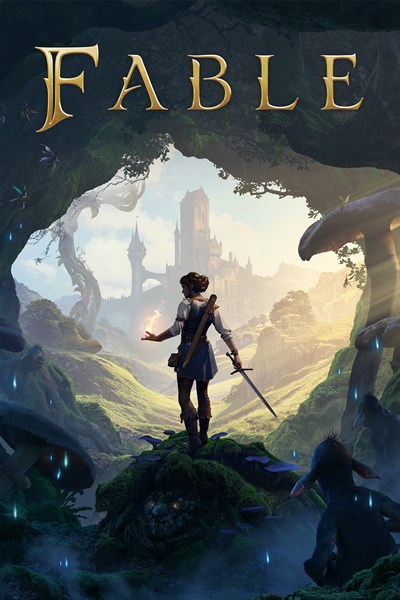
Fable returns in a stunning reboot of a beloved franchise. As the first Hero in a generation, explore a living Albion filled with peculiar characters, dark humour, and chickens… lots of chickens. This isn’t just nostalgia — it’s a new beginning set in a beautifully vibrant open world.
BE THE HERO YOU WANT TO BE
Customize your Hero’s appearance and wield powerful weapons as you weave melee, ranged, and magical combat. Take on bandits, beasts, and creatures — including brand-new enemies and fan-favorites like Hobbes, Balverines, and Trolls. Your power grows right alongside your reputation.
BUILD AN EXTRAORDINARY LIFE
Beyond all the combat lies a living world where you can carve your own identity. Get filthy rich as a landlord or blacksmith, romance a villager (or three), have a bunch of kids, and watch as your reputation precedes you. Being a Hero is a bit like being a celebrity… if celebrities carried swords and occasionally battled giant fire-breathing chickens.
YOUR CHOICES CHANGE THE WORLD
In Albion, a Hero’s reputation is everything. Your noble deeds and questionable decisions affect your relationship with each villager and can even shape the world around you. Whose opinion matters most? The choice is yours… and so are the consequences. It’s up to you to decide what it means to be a Hero.
Fairytale Ending Not Guaranteed.
The post Fable: How We Built the Living Population appeared first on XBOX Wire.