


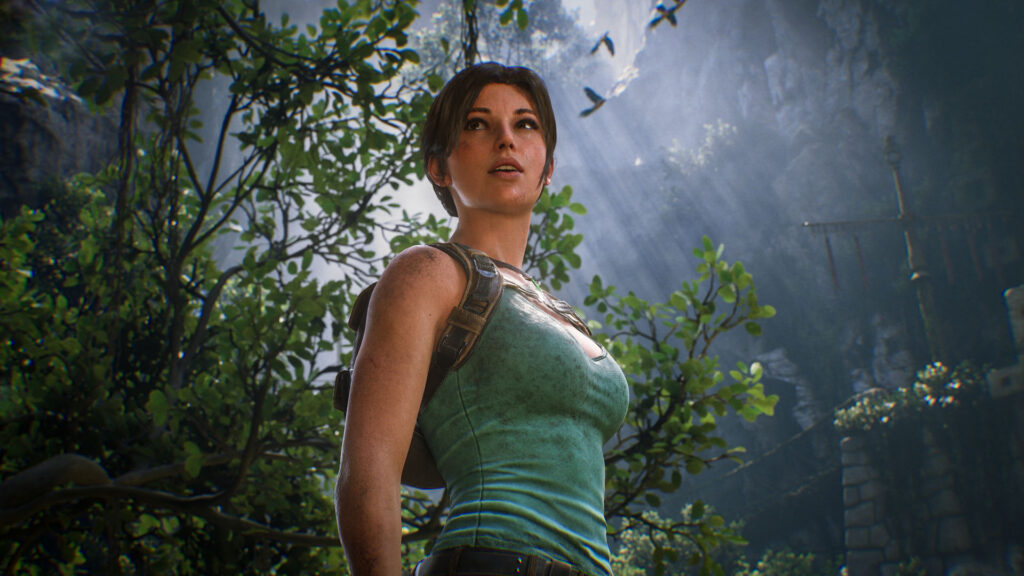
A full decade before Nathan Drake, Lara Croft was the original face of cinematic action-adventure gaming, making her debut in Tomb Raider (1996). I was 10 at the time, and remember being blown away by the (at the time) revolutionary 3D graphics. The Tomb Raider series has always pushed at the boundaries of what’s visually possible in games, which makes it a perfect candidate for remakes as technology improves over the years. There’s already been one remake of the original with Tomb Raider: Anniversary (2007), but now a full 30 years on from the original, it’s once again time for Lara to return to where she started – and show off how far she’s come.
Tomb Raider: Legacy of Atlantis is an upcoming “reimagining” of the original Tomb Raider, developed in collaboration between Flying Wild Hog (Shadow Warrior) and Crystal Dynamics, who are best known for the “Survivor Trilogy” (Tomb Raider (2013), Rise of the Tomb Raider (2015), and Shadow of the Tomb Raider (2018), which served as an origin story prequel to the original game. Legacy of Atlantis picks up and continues that Lara’s journey, but also with a new actor (Alix Wilton Regan) and a new, more vibrant style all its own.
At Summer Game Fest: Play Days this past weekend, I got to play a brief demo of the game’s early levels in Peru’s Lost Valley. First, I did a bit of classic tomb raiding, solving puzzles in jungle ruins in an attempt to enter the Tomb of Qualopec. Like in previous versions, this involved finding and arranging several large gears, hidden around the environment (alongside various other optional secrets and collectibles). Unlike previous versions, the environment was far more organic, detailed, and beautiful.
“Lush” is the first word that comes to mind to capture how Legacy of Atlantis looks. This was especially apparent in the transition to the next section, shown in recent trailers, where Lara emerges through a waterfall to a gorgeous vista of the Lost Valley before diving into a pool of water. As was in fashion at the time, the Survivor trilogy was acclaimed for its gritty realism, offering a darker and more grounded take on Tomb Raider than we’d ever seen before. Legacy of Atlantis retains that realism in terms of visual fidelity, but turns up the vibrance. Everything is a little more saturated, a little bigger, a little more dramatic. It doesn’t go so far as to feel stylized or exaggerated, but it’s full technicolor realism, and it looks great.
That sense of pizzazz also showed itself in the action, when in the next section Lara whipped out her classic dual pistols to battle dinosaurs. After building up a Focus meter, Lara can leap into bullet time, slowing time down to a crawl as she dramatically flips through the air and unloads her pistols at superhuman speed, making Swiss cheese out of any velociraptors caught in her crosshair. After the Survivor trilogy’s more grounded and realistic focus on combat, Lara’s bullet-time finesse is a fun and stylish way to integrate her signature acrobatics from earlier entries, heightening the experience.
The velociraptors and T-Rex also newly have feathers this time around, which is both a cool glow-up and better in line with current paleontology. They’re indicative of the whole project of Legacy of Atlantis – the underlying bones are the same, but now we simply know more, and can make it cooler.
After the demo, I also interviewed three of its lead creatives: Jeff Adams, Experience Director, Crystal Dynamics; Raul Siqueira Game Director, Crystal Dynamics; and Arek Tomaszewski, Art Director, Flying Wild Hog. We discussed coming full circle with the Tomb Raider series and returning to its origins with 30 years of knowledge and technology to leverage, and what separates this game and this Lara from both the original and the Survivor trilogy.
With this being the second remake of the original Tomb Raider, how much do you feel you need to be faithful to the original vs. how free are you to play and invent?
Adams: We’re clearly fans of the originals, and we want to make sure that it is a resonant experience for people. I want them to be able to see the clear, tentpole connecting points that they remember from those adventures, but at the same time, we also don’t want to be pigeonholed by them. We want to be able to have the opportunity to say, ‘hey, this would be a place where we can take this to make it feel it’s more appropriate for a modern audience’ and also helps us tell the story that we want to tell.
Siqueira: I think, just to add to that, the word that we’ve been using a lot, both internally and externally, is we reference it as a reimagining, because we want to make sure that people understand this isn’t just the same game, but we just made the graphics better. We are trying to bring a lot of new blood and new things into it. Obviously, we’re being respectful, and then that line between what the original and Anniversary did versus the new stuff that we’re doing, that is kind of where we find a good ground. So “reimagining,” to us, just means: how do we take the feelings and the ideas of the original and preserve it and present it in a way that is fit for a modern audience.
Tomaszewski: The T-Rex boss fight is a good example of it. So, from the T-Rex design itself, we try to be very respectful and keep it as it was in the original one, but we’re adding the red feathers, which obviously adds a new quality to it. And then the combat itself is basically an original one was very simple: just shoot and run. Here, we try to make a new, cinematic experience and expand on what the original was.
Adams: Yeah, go back and play Anniversary. You’ll see glimmers of the past existing there, but it’s not been presented like this before.
Now that there have been 30 years of subsequent Tomb Raiders since the original, what are some ideas from later games that you’ve been excited to reintegrate back into this new take?
Siqueira: We looked at a lot of different things. I think the Survivor trilogy, being the closest touch point for us, served as a good entry for us to look at, like, the core three that we talk about in Tomb Raider, which is puzzles, traversal, combat. Obviously, Survivor had a heavier focus on combat. We made it a little bit more complex. There’s a lot of depth to it. Arek was kind of touching on this in his previous answer, but we wanted combat in Legacy of Atlantis to not be just point-and-shoot, but we also didn’t want people to think that this is a combat game – we wanted to find the right amount of depth to put into it.
So, we introduce things like the Focus Mode, which you played, which is, like, our currency of combat. Basically, dealing damage and taking damage fills the meter, and you spend it to go into bullet time, or a slowed-down mode. That, to us, was a really cool way of merging the two, because, in the original, Lara used to do a lot more acrobatics – very different than Survivor, which is more grounded. So, we decided we absolutely need to have acrobatics, but from a game perspective, how does that work, right? Like, if you’re taking longer times to perform a jump or a dodge, you’re just more vulnerable. You’re exposed to taking damage. So, we figured out that when you push the button and slow down time, you get a cool move that celebrates Lara’s personality and traversal, and it also gives you an opportunity to deal more damage, and then just celebrate it.
So, there’s lots of little things like that where we look at Survivor, look at Angel of Darkness, look at all of the games before. What did they do that we like, what did the original do, and how do we combine the two of them together?
Tomb Raider has obviously always been on the cutting edge of 3D gaming visuals from the very beginning. Is there anything you’re particularly excited that you’ve been able to achieve in this one that was not possible for previous iterations?
Tomaszewski: Tomb Raider was always setting the bar for visuals very high. When you played the Survivor series, it was amazing. The original one, if you played it, it was like, what’s going on? Why is it 3D? How can you move in all those directions? So, we are trying to be believable to what the original was, visually from the color palette, and we want to recreate the feeling of amazingness of the environment. But it also gives us an opportunity because the Survivorseries was very gritty. It was very realistic, in a way – in the movement, in a color palette, in what Lara could do. Here, we can recreate it with more freedom and add more flavor to it. But obviously, we’re trying to build the world in a beautiful way and just create this feeling of discovery of a place that hasn’t been discovered. And at this point, with the Unreal Engine, we can just do so much to make a beautiful world.
As a new take on an iconic character, what separates your version of Lara from previous versions?
Adams: Alix. It’s very direct, but it’s true. We’ll write things down on the page and we’ll be very proud of ourselves. Like, ‘yeah, that’s great – that’s gonna be awesome,’ and we’ll mock it up. And then we take it into the booth, and we’ll put it onto the stage, and Alix comes along and she transforms it. She brings the classic cool of Lara back, and she brings it real human expression. So, there’s layers. I hate to use the onion analogy, but there’s layers to the way she performs Lara, and that’s situational. And so, it’s gonna be really fun to see how people respond to her when she’s in the moment of dealing with others, versus those moments where a little bit more of that humanity comes through. But the way that she pulls it off, I mean, it’s truly watching a craftsman at work. It’s a really amazing thing to see.
Siqueira: That’s true. We also have the privilege of doing Survivor trilogy, knowing that that is the past, and Legacy of Atlantis is the present. It gives us a really good opportunity to make sure that everything that we did prior is represented, or that it makes sense in the nuances of the character is written and portrayed. We want you to know that this is the Lara that went through the Survivor era, grew up, and became who she is in Legacy of Atlantis. Adams: Yeah, all that stuff counts. It absolutely counts. But she’s not beholden to Survivor here. That’s not where we’re finding her right now – that’s in her past, but it is real
What are you most excited for players to discover when they get their hands on it?
Tomaszewski: (all laughing) I have 16 things, at least, that I cannot tell you about. They will be excited about discovering those things, because of the way we were excited to creating them. We’re all Tomb Raider fans, given this opportunity to recreate those worlds and add our flavor and we have been super respectful to the fans and what they expect. There are a lot of little things they would find and be excited about. But there’s also massive pieces of environments and combat and story that will get them excited. Come back in few months.
Siqueira: Ask that question again in February.Yeah, I think the Easter eggs are definitely just a warm feeling in the heart – making them, placing them in the game, and then we are just all really waiting for everyone to see them and see how much love and passion went into them.
Me personally – we were just talking about this – but I am excited that dual pistols are back. We didn’t get a chance to really bring that to a modern era in the Survivor trilogy. So, finding our voice in how do we bring dual pistols in a way that it’s fun, balanced, and it feels awesome in combat? It’s one of the things that I am most proud of, and I’m really excited for players to get their hands on.
Adams: When we released our first trailer, we were watching a lot of reaction videos, obviously, and I think seeing the reaction to just those small little fragments of the game, makes me really look forward to actually seeing that once the whole thing comes out. But for me personally, the part that I’m most excited about is just those little moments that people experience while they’re moving through the world where they’ll stop and they’ll feel like, ‘wait a minute, this actually feels really like I’m out there.’ And it really would put them into Lara’s boots, unlike any way we’ve been able to do before because world looks great and she moves so well.
Tomb Raider: Legacy of Atlantis comes to XBOX Series X|S on February 12, 2027, and is available for pre-order now.
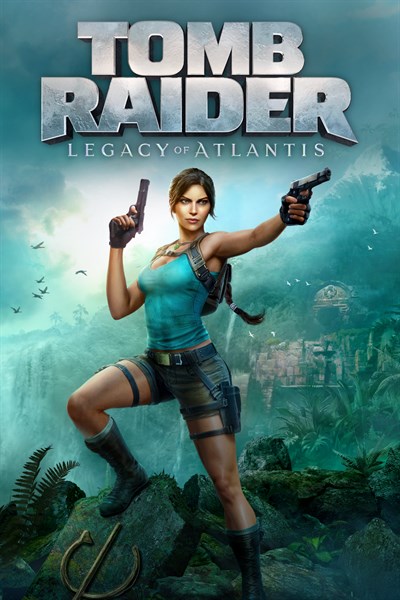
Tomb Raider: Legacy of Atlantis
Amazon Game Studios
As Lara Croft, harness your wits and athleticism to explore exotic locations lost to time—from the jungles of Peru to the ancient ruins of Greece, the deserts of Egypt, and a mysterious Mediterranean island shrouded in myth. Traverse treacherous landscapes, solve deadly contraptions, and face lethal predators as you hunt for the scattered pieces of the Scion, an artifact of immeasurable power.
Whether you’re a veteran raider or new to Lara’s world, Tomb Raider: Legacy of Atlantis delivers jaw-dropping visuals powered by Unreal Engine 5, modern game design, and new surprises, while honoring the spirit and atmosphere of Lara Croft’s debut adventure.
The post How Tomb Raider: Legacy of Atlantis Reimagines the Past Into a Vibrant Future appeared first on XBOX Wire.