
Two months ago, Asus announced the ROG Equalizer, a power cable for certain Nvidia RTX graphics cards designed to banish the fear of melting connectors once and for all. Well, perhaps not completely so, because it seems we now have the first case of a melted ROG Equalizer cable.
As posted on ChipHell and reported by Uniko’s Hardware on X (via Videocardz), there’s admittedly very little information to go on, other than a crystal-clear picture of a seriously fried connector at the end of an Asus ROG Equalizer cable. Three of the six power pins look properly scorched, with one showing a considerable degree of melting in the plastic housing.
😭😭😭😭😭😭asus rog equalizer (17a)chiphellhttps://t.co/rMR9DWWQmh pic.twitter.com/anh2M3Mgr4June 12, 2026
However, there’s no indication as to what PSU and graphics card this cable was plugged into, nor the circumstances as to how the melty-melty all came about, so the one thing we can’t do right now is point our fingers at Asus and go ‘Ha! Your cable is rubbish!’ Well, we can, but we just can’t use this solitary picture as evidence for such a judgment.
If you’re unaware of what all the hoohar is about Nvidia’s 12VHPWR (and the subsequent 12V-2×6 design update) connector, let me give you a quick explainer. In order to have its graphics card use gopping great globs of power but also not require lots of big connectors on the card’s PCB, Nvidia designed a compact system to be used instead of the traditional 8-pin PCIe system.
A precursor to 12VHPWR first appeared on certain RTX 30-series cards, such as the RTX 3090 Ti and 3060 Ti Founders Editions. This design just comprised twelve power pins (six +12V, six ground), but the iteration of the design that was approved by PCI-SIG and adopted into the PCIe specifications also housed four more pins for sensing.
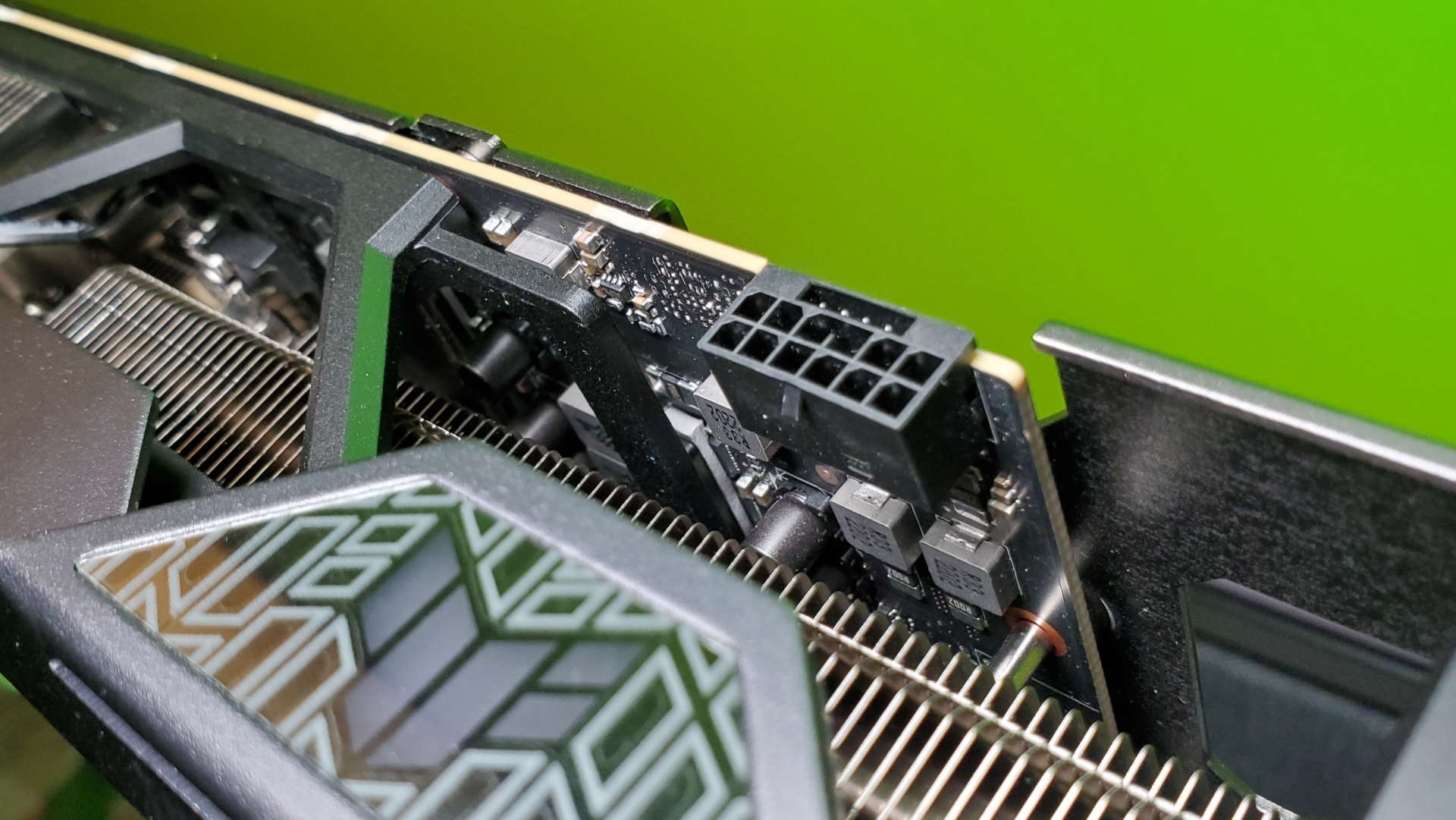
That format first showed up on Nvidia’s RTX 40-series, and almost immediately, reports of melting connectors appeared from owners of GeForce RTX 4090 cards. So much so that it resulted in a class action lawsuit against Nvidia being filed in 2022.
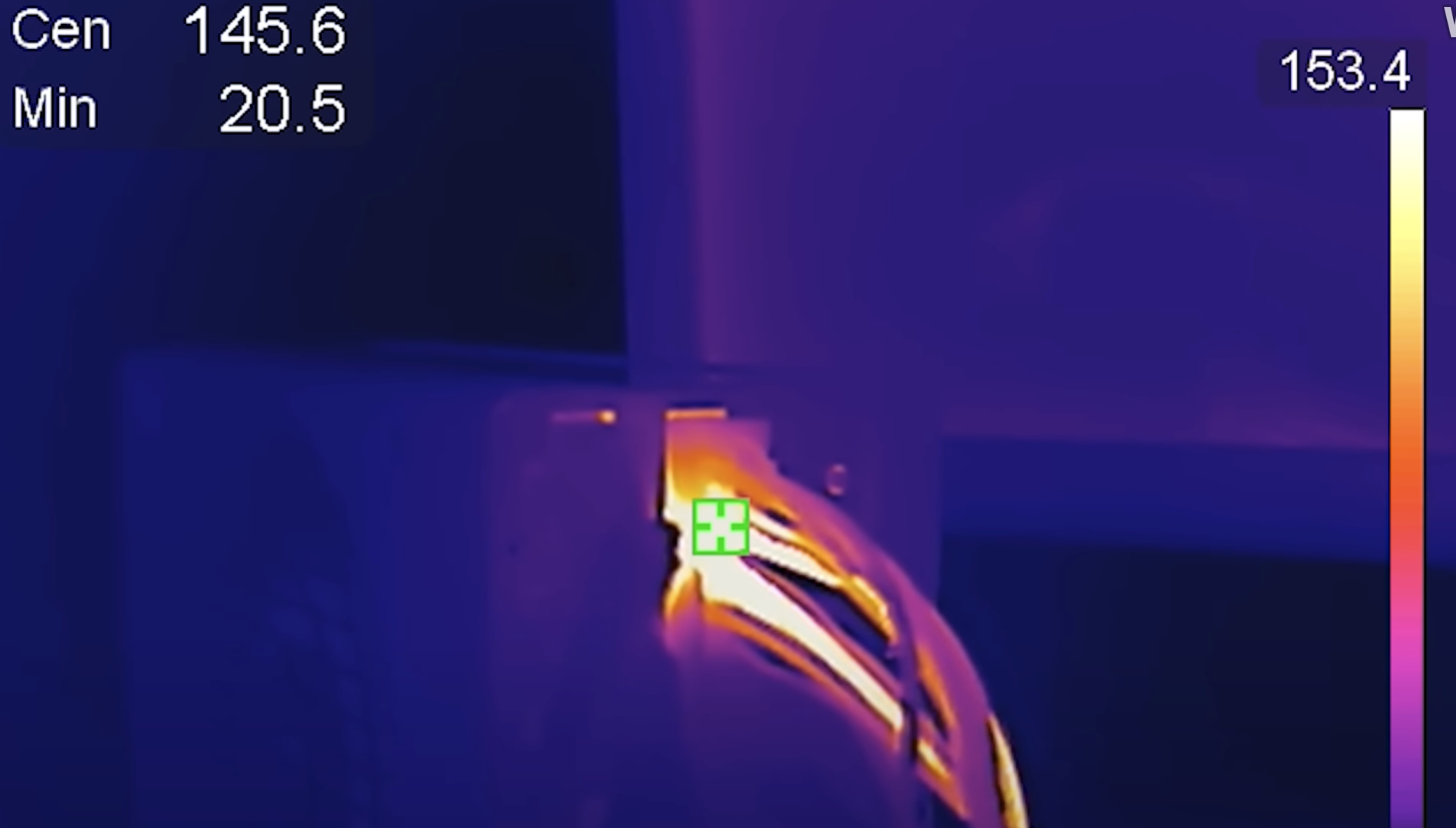
The problem is quite simple. A full load, an RTX 4090 can use up to 450 W of power, but distributed across six pins, each one only has to deal with 6.25 A of current. However, should one pin fail in some way, or the graphics card draw more current in one or two pins than the others, the resulting load imbalance can push the current over the 12VHPWR’s design rating of 8.33 A per pin.
Fast forward to today, and we now have a power supply market replete with all kinds of ‘solutions’ to the connector melting problem. Even the minor redesign, called 12V-2×6, did little to prevent the problem from occurring. Der8auer’s detailed analysis of the Asus ROG Equalizer cable shows that while it’s a decent enough product, it doesn’t really offer much in the way of protection against the problem.
With RTX 5090 graphics cards now costing more than $4,000 in the US, you’d think there would be a far more concerted effort to banish meltygate once and for all. Part of the reason as to why we haven’t seen a permanent solution yet is that the fact not every 4090 or 5090 owner has suffered from a melting connector.
The exact number of casualties is probably impossible to determine, but since graphics card vendors, as well as Nvidia, put money aside each year to cover warranty claims, the only way that they would really sit up and pay attention is if the total cost of all the replacements for damaged cards consistently exceeded the pot of money for claims.
We probably can’t rely on hardware vendors coming up with a permanent solution, either. It’s unlikely that Nvidia will abandon 12V-2×6 in favour of a completely new design, and having active load balancing on graphics cards will eat into a vendor’s profit margins (though they’re hardly small sums of money when it comes to the RTX 5090).
This particular instance of a melted ROG Equalizer cable could be entirely user error or even a clickbait thing, just to get a bit of attention, but since Asus’ design has no means to actively prevent one pin from supplying too much current, this will almost certainly not be the only case we’ll see, genuine or otherwise.
If you do have a very high-power RTX card with a 12VHPWR/12V-2×6 connector, here’s my advice for keeping it as melt-free as possible:
- Try to use a PSU that has a native 12VHPWR socket and cable: this won’t guarantee perfect safety, but it removes the multiple points of failure you can get with adapter cables.
- Don’t keep removing the cable to check that it’s okay: Power cables aren’t designed to be repeatedly unplugged and jammed back in, and doing so can weaken the connections, leading to smaller contact patches and thus higher temperatures.
- Explore undervolting your graphics card: You can just drop the maximum power limit for your RTX GPU in the Nvidia app, but you’re better off following a detailed guide on how to lower your GPU’s voltage across its range of clock speeds. If it all works as intended, you should get a graphics card that not only uses less power but is also cooler and, in some cases, able to clock higher.
Until we have graphics cards and/or power supply units that actively monitor the current draw on each pin, and dynamically prevent it from exceeding a set limit as standard, the melting connectors are still going to be a thing that will hit the headlines from time to time. Just like this one.