
Amidst a sea of other companies’ AI-related tech, Noctua graced us with some new, bona fide PC hardware at this year’s Computex. In addition to a particularly exciting pumpless liquid cooler, the company also unveiled its first regular AIO cooler in collaboration with Asetek. And as of today, it’s now available to buy.
It’s called the NL-LC1 and is based on the Asetek Emma V2 platform. The fans are, of course, Noctua’s, but in addition to this, the beige-and-brown company has created a pump cover that’s designed to absorb noise and keep things nice and quiet. As someone with an occasionally rather noisy AIO pump, I can definitely imagine the benefit.
Available now! With first-class cooling performance, superb quietness of operation and industry-leading reliability, our new NL-LC1 series brings classic Noctua virtues to the world of all-in-one liquid cooling: https://t.co/9KJREnY3rC pic.twitter.com/4wKynuHe0NJune 16, 2026
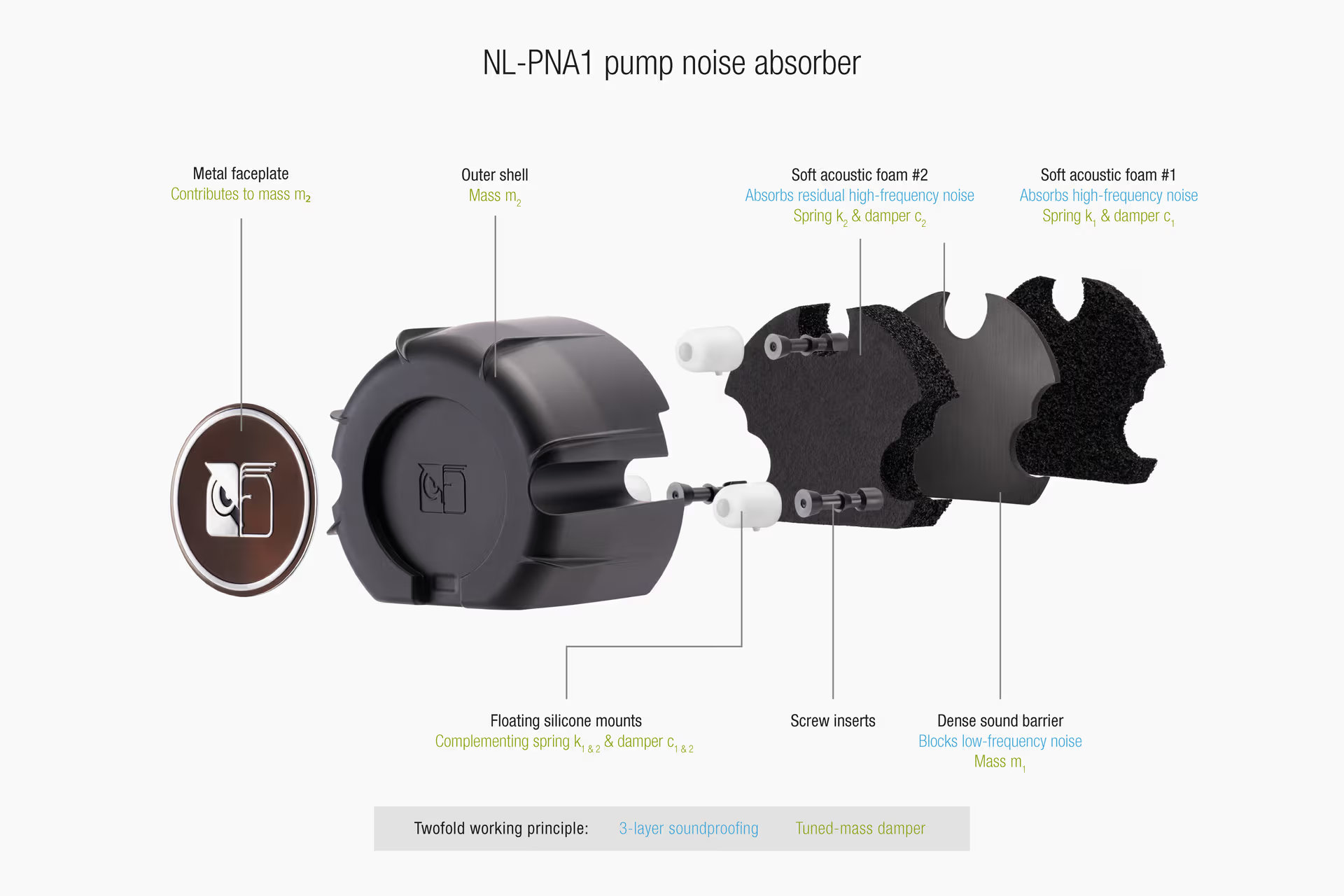
“Leveraging a three-layer acoustic soundproofing structure and the tuned-mass damper effect, the NL-PNA1 reduces both air-borne noise and structure-borne vibrations, which can yield significant improvements in pump acoustics.”
Sounds complicated, but looking at the diagram, it just looks like a lot of very specifically tailored foam. Noctua is a dab hand at spending a ton of time tailoring things to get acoustics just right, so I don’t doubt they’ve done the job here, though we’ll have to see and hear it in person to be sure (TechPowerUp is pretty impressed with it, but we’ll have our own first-hand thoughts up on the cooler before long).
This pump cover comes with a magnetically attaching metal faceplate by default, but that can be swapped with a mini fan (sold separately) if more cooling is required.
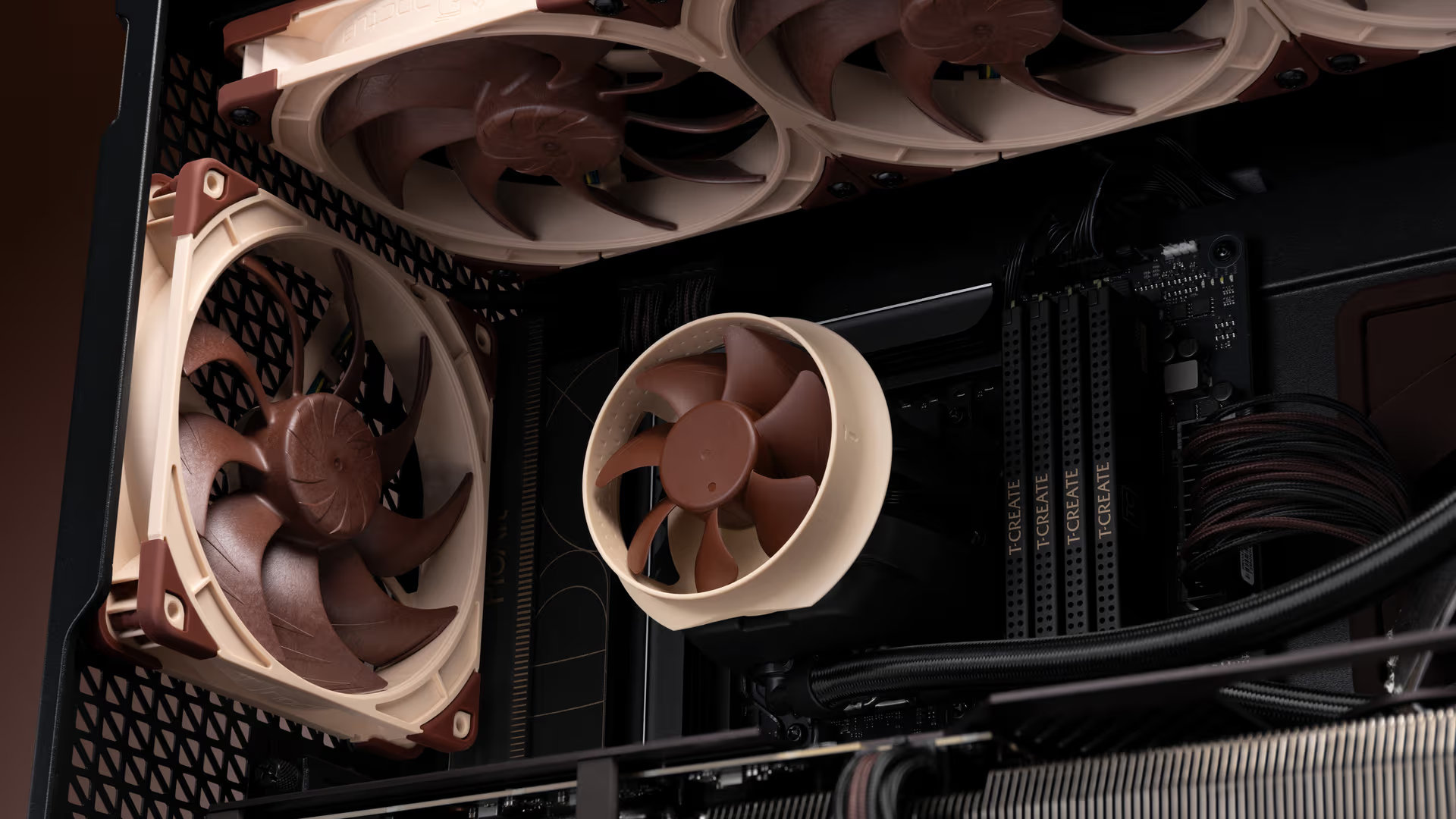
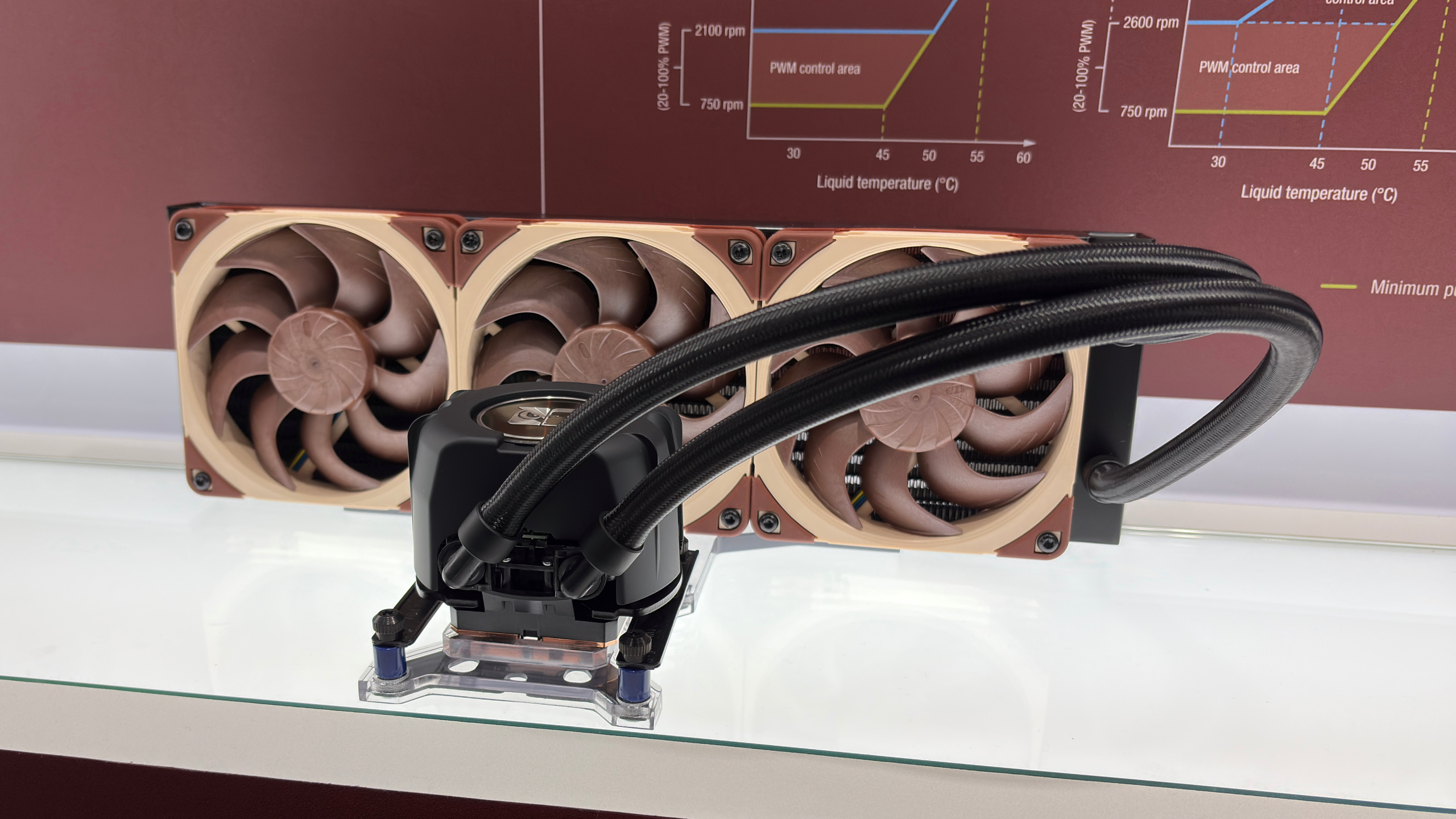
The radiator fans are the NF-A12x25 G2 and NF-A14x25 G2. The former is, we reckon, the best PC fan on the market, so you won’t hear any complaints here. It outperforms all other fans we’ve tested in balancing stellar airflow with low noise levels.
When combined with the AIO, these fans apparently “utilise a speed-offset to avoid undesirable harmonics phenomena such as periodic humming or vibration build-up due to beat frequencies.”
So, what’s the downside? Well, the 360 mm version costs $250, the 240 mm one costs $220, and if you need a 420 mm version, that will cost you $280.
Those are some very steep prices, even compared to some other high-end AIOs like the Be Quiet! Light Loop. Let’s just hope those quietening design choices really are as effective as we’d hope.