
Over the last few months, Framework has been doing a pretty good job of keeping RAM prices for its modular laptops/mainboards/desktops from climbing too high as a result of the global memory shortage, though storage hasn’t fared quite so well. And now, RAM unfortunately isn’t faring so well, either.
The company explains in its monthly memory and storage pricing update that its memory module supplier has raised its prices substantially. And unfortunately it’s to the extent that Framework isn’t going to be able to eat the extra cost.
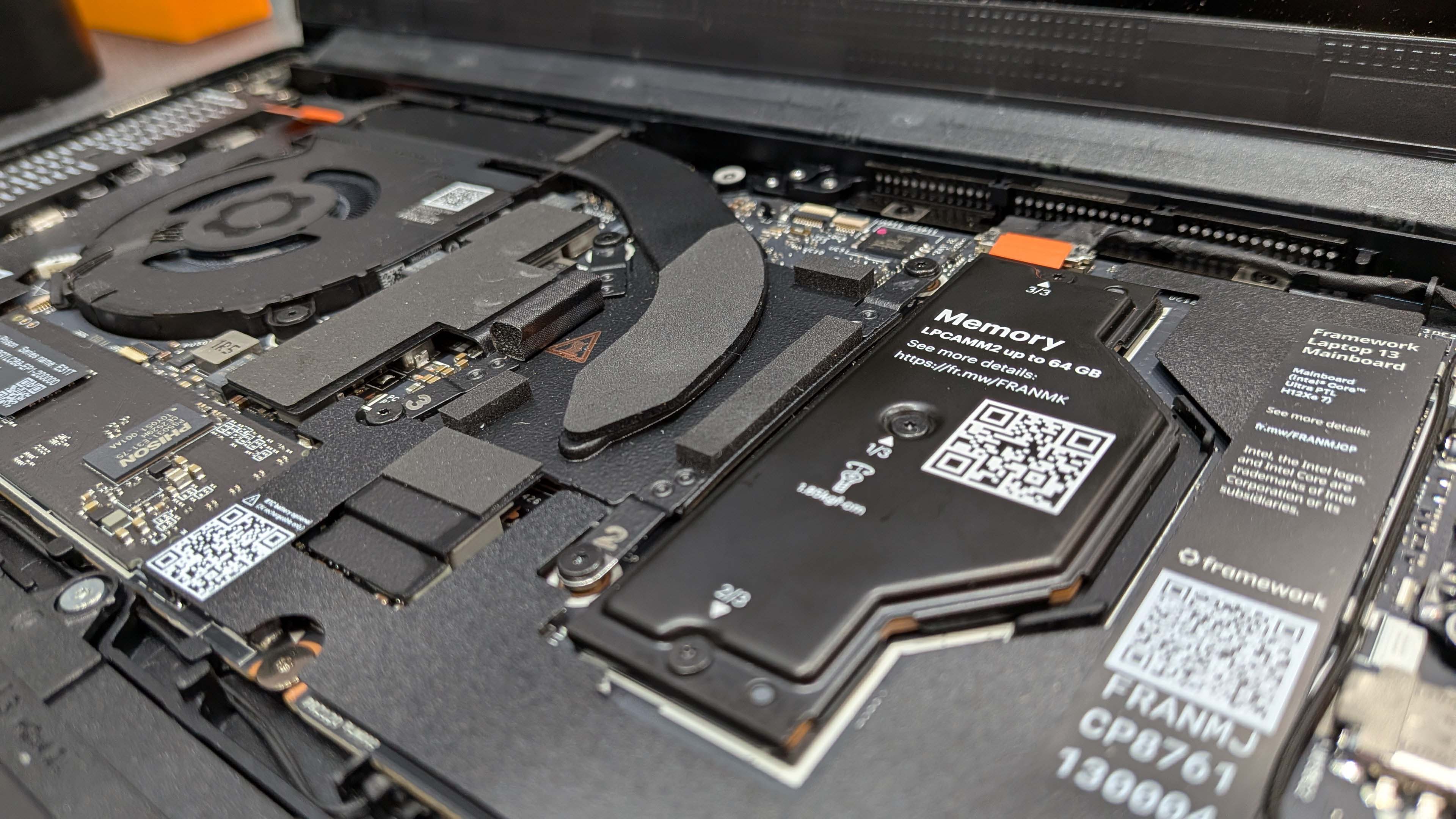
“We recently received a cost update from our LPCAMM2 supplier that goes far beyond anything we had predicted and anything we’re able to absorb without placing our ability to operate at real financial risk. Rather than the low-to-mid double digit percentage increase we had forecast from Q2 to Q3 on LPCAMM2 costs, we received prices that are more than double that of the prior inventory we had brought in.”
Framework’s explanation for what it’s having to change given this is a little confusing, but essentially it looks like all remaining 64 GB module stock the company has will cover already-existing laptop and mainboard pre-orders using these modules, but when that runs out the order config has been changed to use a 32 GB module at original pricing.
Ditto for pre-orders configured with 32 GB modules: these will be fulfilled as much as stock permits but some will be re-configured to use a 16 GB module at original pricing.
There have been some other changes, such as bringing down costs on 48 GB DDR5 modules and reducing pricing, but on the other hand, costs rising for 16 GB capacity and prices increasing respectively.
“The same dynamic is playing out on storage modules. We’ve been able to reduce pricing of SN850X 8TB and SN7100 1TB, while needing to increase pricing on SN850X 1TB and SN7100 4TB.”
Existing pre-order prices will be honored even if prices have now increased, however, and if prices have been reduced for something since an existing pre-order, those pre-orders will see their prices automatically reduced.
We’ve published the latest set of updates around pricing. We have a major and unfortunate update around LPCAMM2 pricing and available, alongside a few smaller increases and decreases on other memory and storage: https://t.co/x7Lzp5vx34 https://t.co/PQEKH9AgyGJuly 22, 2026
In other words, it sounds like Framework is doing everything it can to prevent negative impact to existing pre-orders. But a relatively small device manufacturer such as Framework is likely to be one of the more vulnerable companies in the face of ever-higher memory costs. It doesn’t have the buying power the likes of Lenovo or Dell can call on, and also cannot swallow those extra costs, either.
Setting aside the unfortunate pricing changes, let’s appreciate for a moment how useful it is to have Framework provide these updates, from an industry-watching perspective. It’s a great way to keep an eye on how the global memory shortage is actually affecting customers for consumer devices. Even if that story is a little depressing.
I’m just holding out for companies to start making use of Chinese memory, which seems to be blooming right now. Though perhaps having hopes for lower prices because of that is just the naive optimist in me.