

MSI has just announced the Pro Max OLED 271UPJW12, and if you aren’t a monitor wizard who can make sense of all those numbers, that’s a new 27-inch 4K inkjet-printed OLED monitor.
If you are unfamiliar with what that means, inkjet printing is a cheaper process than the traditional deposition process used by LG and Samsung. LG and Samsung produce almost every OLED screen for PC monitors right now, but TCL, the producers of this MSI panel, have been looking to burst into the market for some time.
The new MSI panel offers a 120 Hz refresh rate, up to 1,000 nits peak brightness, and an optimised RGB stripe subpixel layout that MSI claims “closely resembles the uniform RGB structure of traditional LCDs.” This should eliminate colour fringing and enhance image clarity, and is something we’ve seen arrive on LG and Samsung-made OLED panels only recently.
As you might be able to guess from the 120 Hz refresh rate and ‘Pro’ moniker, this MSI panel is not traditionally intended for gaming. We don’t yet have the response rate, but it’s an OLED, so it’s likely to be good. Yet the focus on colour precision over speed implies a use case for professionals. The monitor offers “99% of the DCI-P3 wide color gamut with an exceptional Delta E ≤ 2 accuracy.”
In a way, this new monitor for MSI will be a good testing ground for what more OLEDs could look like in the future. If inkjet-printed screens get a foothold in the market, it could make for some more budget options, and a third option away from the duopoly of Samsung and LG.
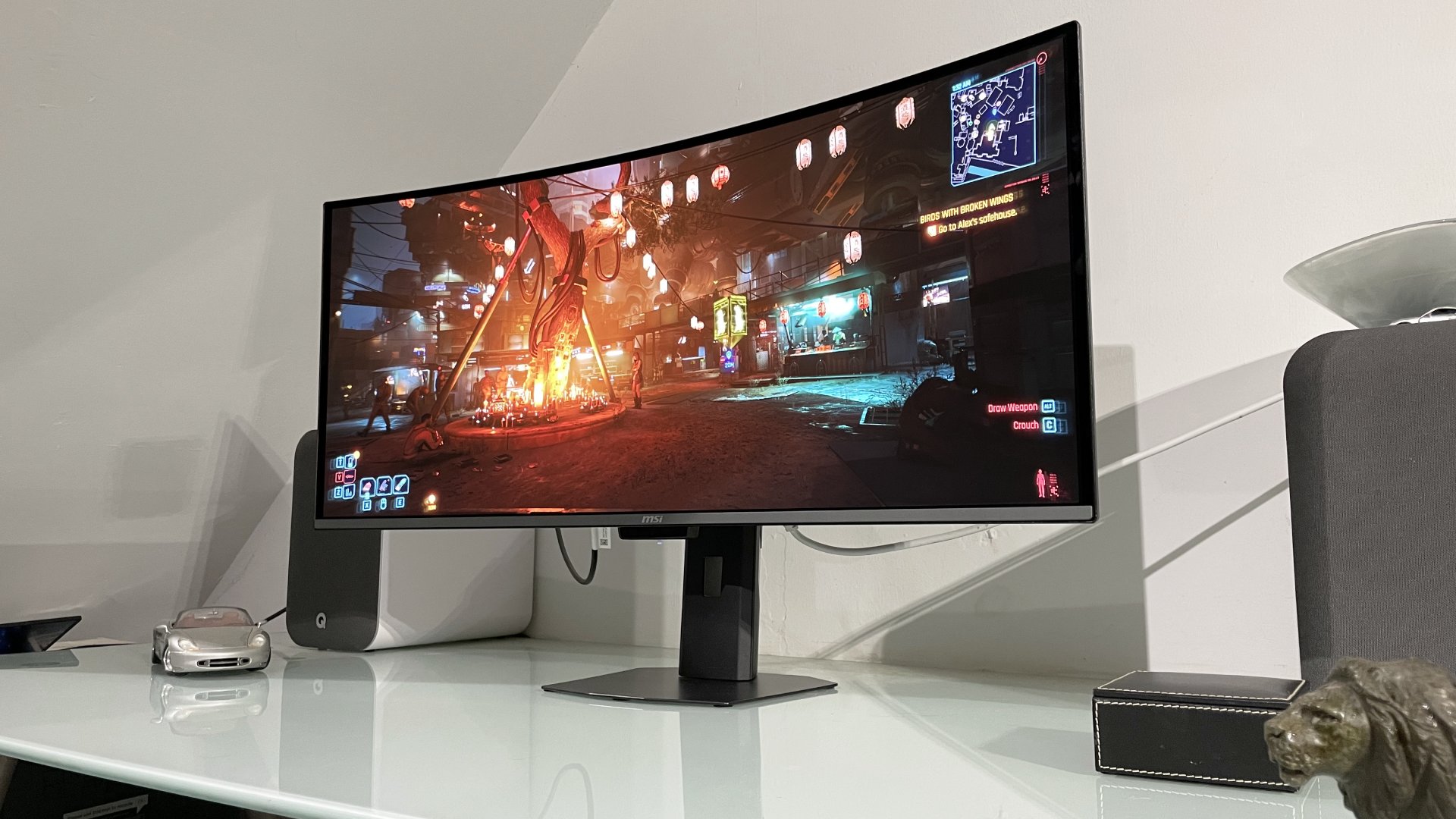
Unfortunately, though, we are missing the two most pertinent bits of information about this monitor. We don’t know when it’s supposed to release or what pricing will look like. The MSI Pro Max 271UPXW12G, which appears to be the QD-OLED counterpart to the inkjet monitor, seems to sit around the $700 mark. If it can cut away substantially at that price, then the swap to inkjet will be well worth it.
Still, as it’s an early model for inkjet tech, I’m not expecting too big of a price cut. And non-inkjet OLED monitors are becoming more and more budget-friendly. I check over our roundup of the best cheap gaming monitors every week, and regularly spot OLED panels around the $300-$400 price point.
Even Alienware put out a $350 OLED gaming monitor as recently as this year, so here’s hoping OLED only gets more competitive in the pricing arena.