
“But why?” That’s the question I kept asking myself as I played through a few skirmishes of Game of Thrones: War for Westeros, an RTS based on HBO’s TV show. It’s a competent, workmanlike creation that nonetheless fails to capture any of what made the show and the books that inspired it such a phenomenon.
It just feels so ill-timed, too. It’s not due out until 2027, but Game of Thrones concluded in 2019, with a final season that even GoT defenders such as myself had to acknowledge was a bit of a dud. These days, HBO is busy with its prequels: the plodding but still entertaining House of the Dragon, and the delightful, brisk A Knight of the Seven Kingdoms.
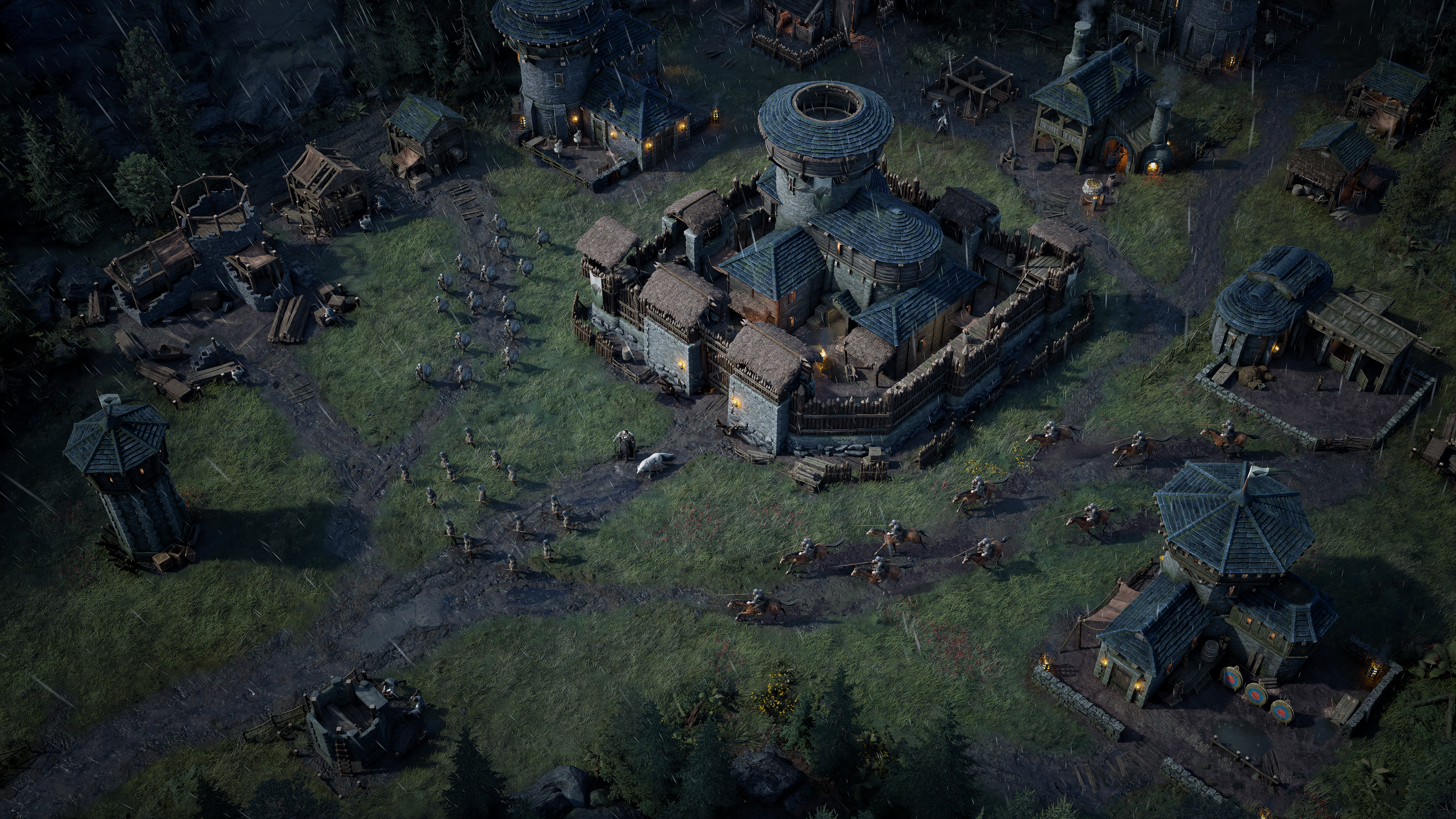
Instead of giving us something new, or even current, War for Westeros returns us to the fight for the Iron Throne. You can command a tiny Kit Harrington, listen to narration from Charles Dance, or enjoy a rendition of The Rains of Castamere while you build another mine. These touchpoints are too recent to engender feelings of nostalgia, but not recent enough that they elicit much excitement.
Now, don’t get me wrong. GoT provided us with some of the greatest battles to ever grace our TVs. Even as the story went off the rails, the muddy brawls were a sight to behold. There’s plenty for an RTS to take advantage of—but this style of RTS fails to play to the strengths of the source material.
GoT’s gargantuan pitched battles call to mind the epic scale of Total War—it’s no surprise that there are several GoT Total War mods. War for Westeros, meanwhile, has been fashioned in the mould of Age of Empires, or its fantasy cousin, The Battle for Middle-earth 2.
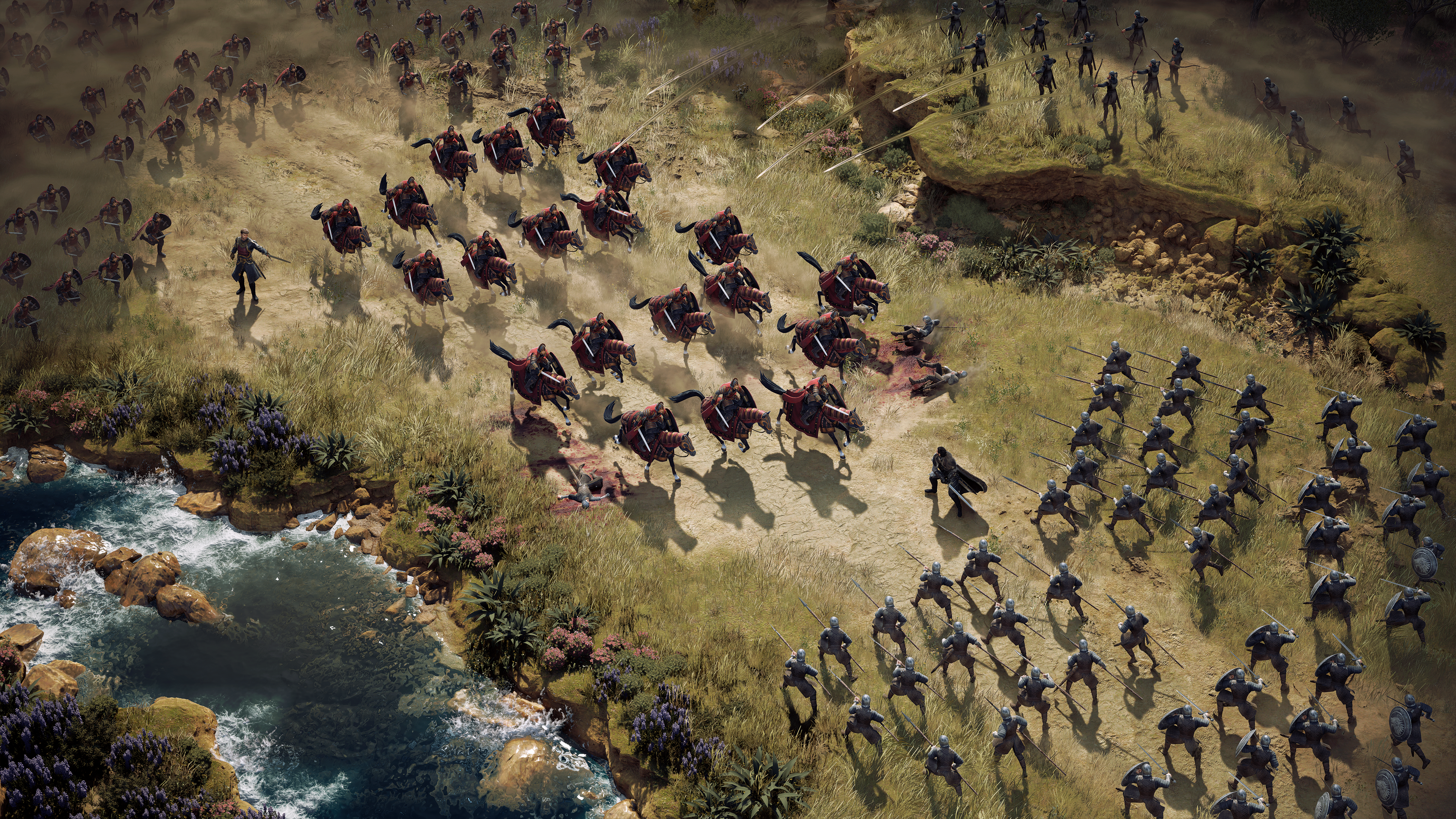
You plonk down buildings that generate resources, which you can spend at other buildings that spit out troops or let you research upgrades, and then you send your army to capture territory or boldly torch your opponent’s HQ. You can build fortifications and siege engines, but most of your conflicts will be between generic soldiers, sometimes led by heroes drawn from the show’s roster of important folk.
It’s fine, I guess. There are certainly worse GoT games—most of them on mobile. But War for Westeros is so straightforward and plain that I probably would have had more fun with something uniquely awful. A bawdy brothel management game with Littlefinger, perhaps?
Where Age of Empires had a multitude of bespoke civilisations to play around with, and The Battle for Middle-earth 2 was full of exotic fare like giants and goblins and horrible spiders, War for Westeros is simply full of dudes. Squads of spearmen, squads of swordsmen, slightly smaller squads of elite Night’s Watch warriors.
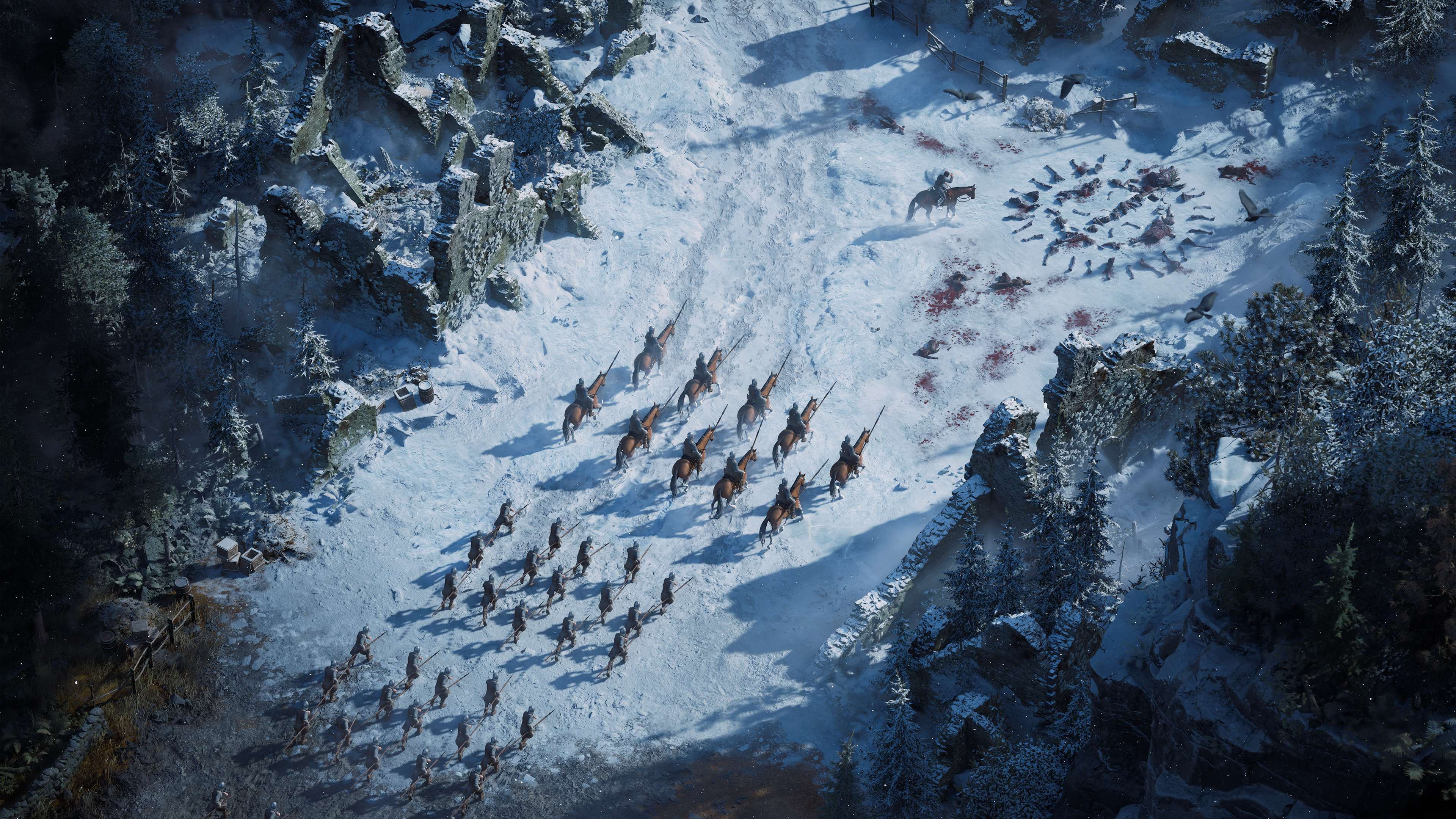
The full game will feature four factions, but I was only given access to arguably the dullest: the Starks and Lannisters. No dragon-loving Targaryens or hordes of the undead for me. Of the two, the Starks are the most conventional, though they can field direwolves, as well as troops drawn from the Night’s Watch and the Free Folk. The Lannisters, meanwhile, are more economy-focused, featuring quirks like a debt mechanic that allows you to quickly fund expansion.
So there’s some asymmetry, but that’s par for the course. And at least where the Starks and Lannisters are concerned, the asymmetry is broad rather than exciting. It’s hard to get pumped about one faction needing to spend a wee bit more gold to recruit their slightly better swordsmen.
OK, maybe I’m being unfair. There are more substantial differences than that. Like being able to recruit both Stark heroes’ fluffy pets, which bumps the available heroes up to four (with a fifth locked in the preview build). That’s double the Lannisters’ roster. There are some more unique units, faction-specific upgrades and special mechanics—but they all fell a bit flat for me. It’s all just very, very dry.
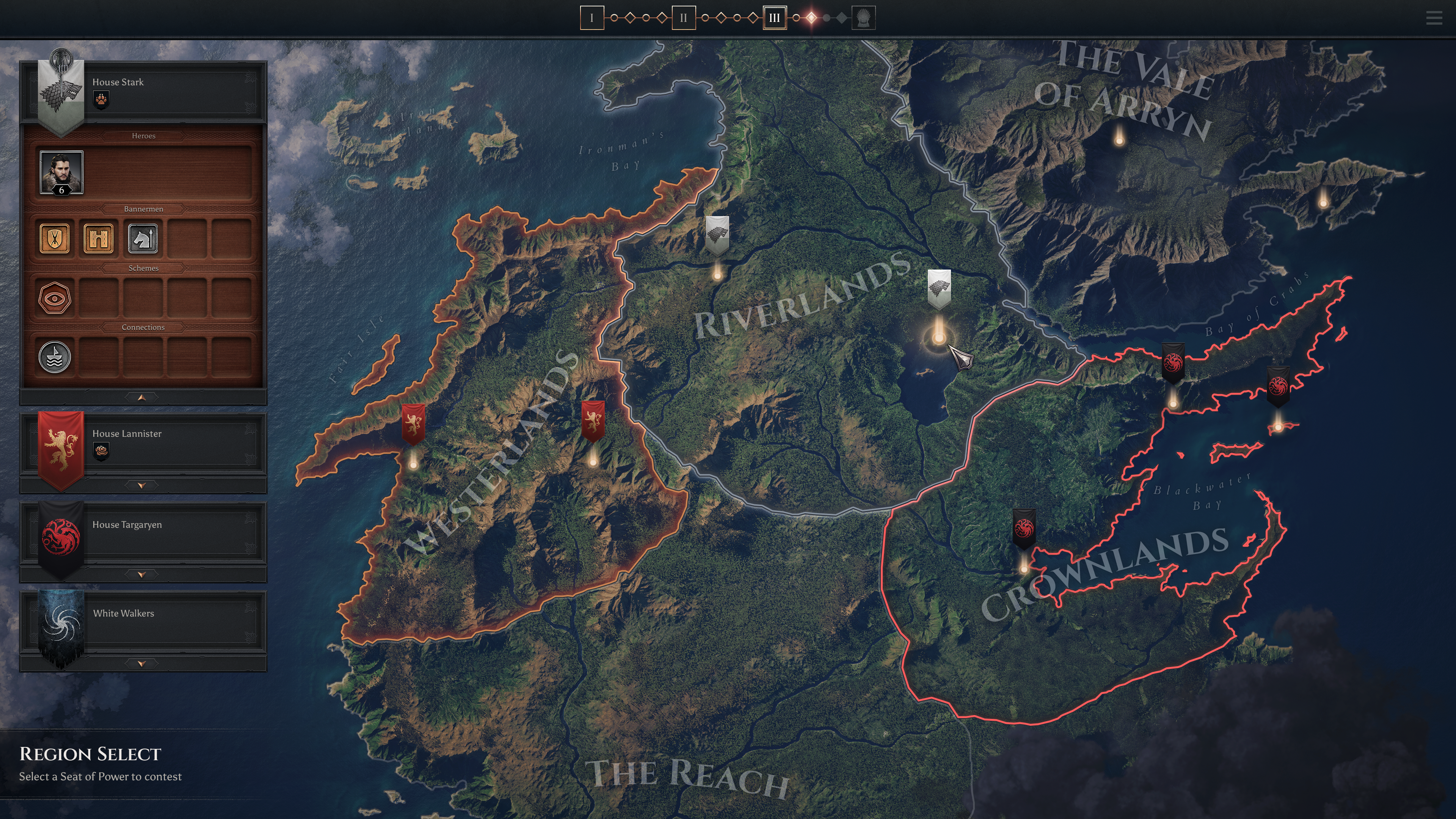
The nature of this type of RTS means that it’s never going to give you memorable fights like the Battle of the Bastards or titanic Total War-style clashes, but after a few upgrades you can field some pretty meaty armies and get some big, messy scrums going. The rather plain aesthetic does mean that they aren’t always the easiest to read, however, or particularly engaging to watch. That said, I am a fan of the physicality of the cavalry charges, which send any infantry units that get in the way flying.
The big problem is the lack of an obvious hook. This is an extremely conventional RTS, and while the genre isn’t especially healthy at the moment, there are still plenty of alternatives. If you’re in the market for something fairly traditional, Age of Empires 4, Age of Mythology: Retold or Tempest Rising have a lot more going for them.
The GoT skin is simply not enough to carry it, and there was little that felt uniquely GoT about the skirmishes I played. Perhaps the campaign will inject some much-needed flavour into the proceedings? The more exotic Targaryen and Night King factions might spice things up a bit, too. But so far, it’s just very safe and predictable.