

This week I’ve been: Testing a new mouse that I am enjoying greatly but cannot yet speak about 🤐
Welcome to your daily dose of doomcore, and no, I don’t mean that peculiar genre of music. I mean the state of the PC gaming market. Not to be too much of a negative Nelly but things are not looking great out there.
You probably didn’t need me to tell you that, but given I’ve been keeping my eye on the best deals for gaming PCs every week (minus holidays) for the past couple of years, I thought I’d share with you some more specific, cheerfully glum context. You’re welcome.
Let’s take a nice trip down memory lane to check out a couple of the deals I spotted for gaming PCs around this time last year.
Here we are: In an assortment I highlighted last September, an RTX 5060 Ti rig for just $1,000. Today, the cheapest we see any just-about-decent RTX 5060 Ti gaming PC retailing for, is about $1,200—this AVGPC Max for $1,209 at Newegg, for instance.
But that’s not even half of it, because you’ll notice the RAM in that $1,200 rig is DDR4, not DDR5. And if it wasn’t DDR4, you could almost certainly expect such an RTX 5060 Ti rig to have just a single 16 GB stick of DDR5 in single-channel mode.
How about at the higher end? Well, there’s this RTX 5070 Ti gaming PC I also highlighted last September. That was $1,900 for the whole package: RTX 5070 Ti, Ryzen 7 7800X3D, 32 GB of DDR5 RAM, and even a full 2 TB of storage. Y’know, back when we could recommend 2 TB of storage as a baseline for mid-range and higher rigs, while keeping a straight face.
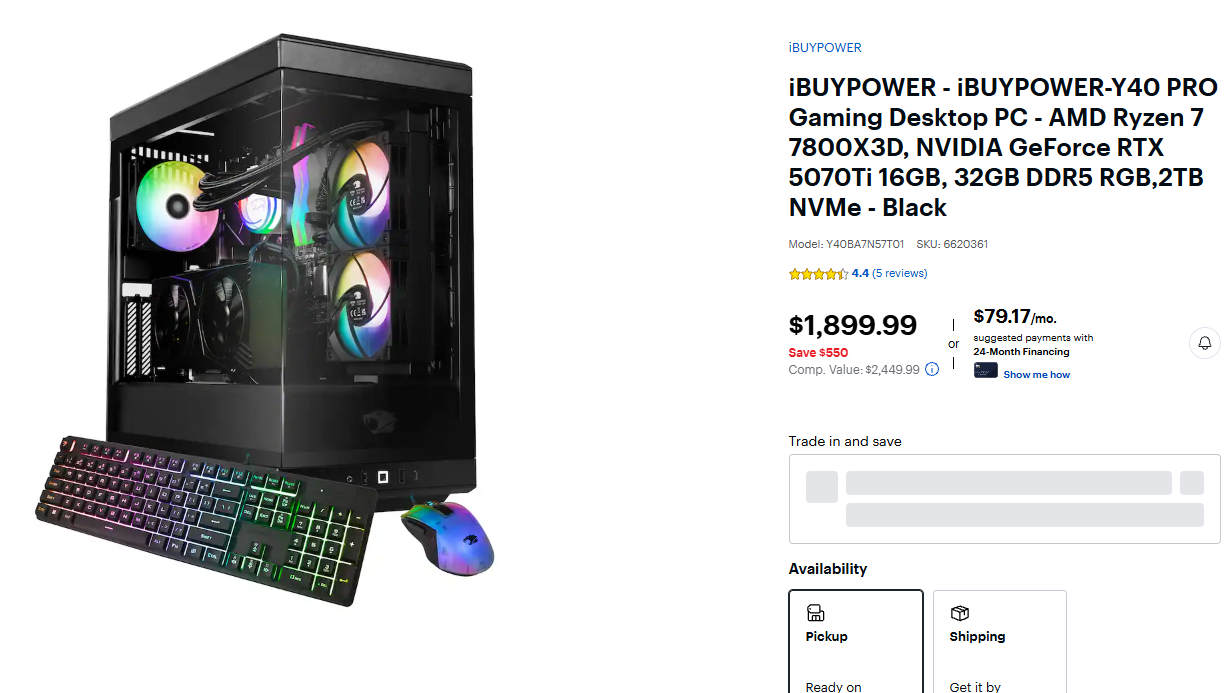
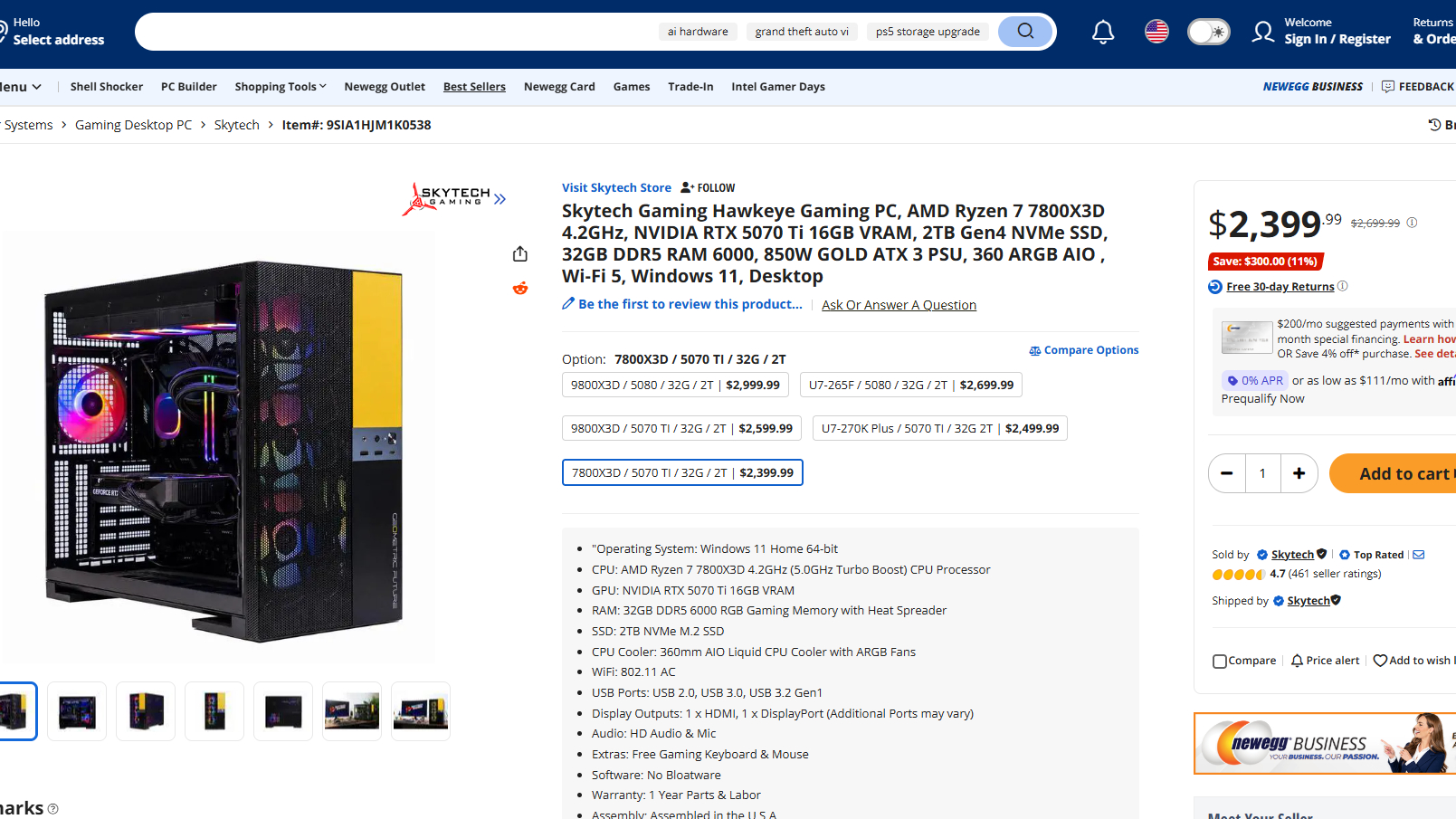
And now? I think you know the deal. I actually struggle to find RTX 5070 Ti gaming PCs worth highlighting anymore—the GPU seems to be more lightly stocked than others. Currently, I’ve got a PC with the same base specs listed (on sale!) on our deals hub for $2,400 at Newegg. If you’re okay opting for an RX 9070 XT instead, you can lower that to $2,099 at Walmart, which does net you a more recent X3D chip—our favourite, in fact—but you’re also sacrificing 1 TB of storage.
More generally, I can tell you that after looking at gaming PC deals week-in, week-out for the past couple of years, pretty much every last bastion of hope for reasonable prices has now slipped away.
For quite a while and even until very recently, RX 9070 XT PCs held on to lower price tags while Nvidia PCs slipped out of stock, presumably because pre-shortage stocks were lasting longer as fewer AMD PCs tend to be scooped up by PC gamers than Nvidia ones. But recently I’ve noticed even the best deals on those seem to have slipped away. On the rare occasion there is one for a decent sub-$2,000 price, you’re very lucky if it has more than 16 GB of RAM and 1 TB of storage.
The lower end of the market is particularly dire. Before the memory crisis, there was quite an abundance of RTX 5060 gaming PCs going on sale for under $1,000, sometimes actually for well under this. This one I highlighted last October, for instance, cost just $749. It seemed to come with just a single 16 GB stick of DDR5 memory, but these days you’re looking at almost $1,000 for the same thing, and that’s if you’re lucky (even deals like that are getting quite rare).
Lowest price per GPU
We’ve been measuring the lowest available price of each current-gen GPU since August 14, 2025.
050010001500200020 Week40 Week050010001500200020 Week40 Week
| Timestamp (Week) | Nvidia RTX 5080 (Price, $) | Nvidia RTX 5070 Ti (Price, $) | Nvidia RTX 5070 (Price, $) | Nvidia RTX 5060 Ti 16 GB (Price, $) | Nvidia RTX 5060 Ti 8 GB (Price, $) | Nvidia RTX 5060 (Price, $) | Nvidia RTX 5050 (Price, $) | AMD RX 9070 XT (Price, $) | AMD RX 9070 (Price, $) | AMD Radeon RX 9070 GRE (Price, $) | AMD RX 9060 XT 16 GB (Price, $) | AMD RX 9060 XT 8 GB (Price, $) | Intel Arc B580 (Price, $) | Intel Arc B570 (Price, $) |
|---|---|---|---|---|---|---|---|---|---|---|---|---|---|---|
| 1 | 1100 | 780 | 550 | 430 | 368 | 300 | 250 | 700 | 600 | N/A | 370 | 280 | 260 | 230 |
| 2 | 1099 | 750 | 550 | 430 | 340 | 300 | 250 | 700 | 600 | N/A | 370 | 270 | 260 | 230 |
| 3 | 1000 | 750 | 524 | 430 | 370 | 291 | 250 | 700 | 550 | N/A | 370 | 280 | 250 | 230 |
| 4 | 1000 | 750 | 546 | 430 | 345 | 296 | 250 | 695 | 550 | N/A | 370 | 280 | 250 | 230 |
| 5 | 1000 | 749 | 481 | 430 | 340 | 300 | 250 | 670 | 600 | N/A | 350 | 270 | 250 | 230 |
| 6 | 929 | 749 | 499 | 379 | 340 | 289 | 240 | 670 | 600 | N/A | 350 | 270 | 250 | 230 |
| 7 | 999 | 750 | 520 | 430 | 350 | 299 | 240 | 650 | 550 | N/A | 350 | 270 | 250 | 230 |
| 8 | 980 | 749 | 500 | 430 | 342 | 299 | 250 | 650 | 550 | N/A | 350 | 270 | 250 | 200 |
| 9 | 999 | 750 | 500 | 430 | 323 | 299 | 250 | 650 | 560 | N/A | 350 | 270 | 250 | 220 |
| 10 | 989 | 730 | 480 | 430 | 340 | 299 | 250 | 600 | 550 | N/A | 360 | 270 | 250 | 210 |
| 11 | 990 | 699 | 489 | 400 | 320 | 280 | 230 | 600 | 550 | N/A | 340 | 250 | 250 | 200 |
| 12 | 989 | 730 | 500 | 400 | 320 | 279 | 220 | 600 | 530 | N/A | 350 | 275 | 250 | 200 |
| 13 | 1000 | 750 | 527 | 420 | 342 | 279 | 220 | 600 | 530 | N/A | 350 | 280 | 250 | 200 |
| 14 | 1000 | 750 | 540 | 420 | 313 | 279 | 220 | 600 | 530 | N/A | 370 | 280 | 250 | 202 |
| 15 | 1000 | 749 | 499 | 430 | 350 | 279 | 200 | 600 | 530 | N/A | 380 | 288 | 240 | 202 |
| 16 | 1100 | 750 | 499 | 430 | 350 | 270 | 200 | 620 | 530 | N/A | 380 | 288 | 240 | 202 |
| 17 | 1230 | 750 | 549 | 430 | 330 | 260 | 235 | 660 | 580 | N/A | 390 | 310 | 250 | 200 |
| 18 | 1268 | 829 | 540 | 450 | 330 | 290 | 240 | 700 | 580 | N/A | 390 | 310 | 250 | 200 |
| 19 | 1380 | 899 | 549 | 450 | 330 | 299 | 240 | 720 | 580 | N/A | 400 | 310 | 260 | 200 |
| 20 | 1350 | 1000 | 620 | 520 | 330 | 299 | 240 | 720 | 600 | N/A | 440 | 310 | 290 | 200 |
| 21 | 1365 | 950 | 620 | 520 | 351 | 299 | 260 | 730 | 590 | N/A | 440 | 350 | 290 | 250 |
| 22 | 1365 | 950 | 620 | 520 | 360 | 299 | 260 | 730 | 630 | N/A | 400 | 346 | 300 | 250 |
| 23 | 1290 | 950 | 630 | 520 | 360 | 340 | 260 | 730 | 630 | N/A | 440 | 346 | 300 | 250 |
| 24 | 1290 | 950 | 625 | 520 | 360 | 340 | 260 | 730 | 620 | N/A | 440 | 346 | 300 | 250 |
| 25 | 1250 | 950 | 630 | 550 | 360 | 349 | 260 | 730 | 610 | N/A | 440 | 346 | 300 | 250 |
| 26 | 1260 | 950 | 604 | 550 | 360 | 349 | 290 | 730 | 610 | N/A | 440 | 340 | 300 | 250 |
| 27 | 1290 | 950 | 640 | 570 | 360 | 349 | 290 | 730 | 630 | N/A | 440 | 340 | 300 | 250 |
| 28 | 1250 | 900 | 630 | 515 | 390 | 349 | 290 | 720 | 620 | N/A | 440 | 346 | 290 | 250 |
| 29 | 1290 | 990 | 636 | 500 | 390 | 349 | 290 | 710 | 620 | N/A | 449 | 350 | 290 | 250 |
| 30 | 1290 | 990 | 630 | 500 | 390 | 330 | 290 | 710 | 620 | N/A | 440 | 350 | 290 | 260 |
| 31 | 1290 | 990 | 599 | 500 | 380 | 330 | 290 | 670 | 620 | N/A | 440 | 350 | 290 | 260 |
| 32 | 1290 | 990 | 599 | 515 | 380 | 310 | 290 | 710 | 620 | N/A | 430 | 360 | 290 | 260 |
| 33 | 1290 | 980 | 599 | 490 | 400 | 349 | 290 | 710 | 600 | N/A | 430 | 360 | 290 | 260 |
| 34 | 1270 | 980 | 599 | 550 | 380 | 349 | 290 | 710 | 620 | N/A | 440 | 360 | 290 | 260 |
| 35 | 1290 | 900 | 599 | 550 | 380 | 350 | 290 | 700 | 600 | N/A | 430 | 360 | 304 | 260 |
| 36 | 1250 | 980 | 599 | 550 | 370 | 340 | 290 | 700 | 600 | 550 | 440 | 360 | 300 | 260 |
| 37 | 1250 | 980 | 599 | 570 | 370 | 340 | 290 | 700 | 600 | 550 | 440 | 350 | 304 | 250 |
| 38 | 1250 | 980 | 599 | 570 | 370 | 340 | 290 | 700 | 600 | 550 | 440 | 350 | 304 | 250 |
| 39 | 1250 | 920 | 599 | 570 | 330 | 340 | 290 | 700 | 600 | 500 | 400 | 360 | 298 | 250 |
| 40 | 1250 | 955 | 599 | 565 | 330 | 340 | 290 | 700 | 600 | 500 | 430 | 360 | 291 | 260 |
| 41 | 1250 | 900 | 560 | 560 | 330 | 339 | 290 | 700 | 600 | 500 | 430 | 360 | 290 | 250 |
| 42 | 1250 | 950 | 550 | 570 | 380 | 350 | 290 | 690 | 635 | 550 | 450 | 360 | 290 | 260 |
| 43 | 1290 | 1030 | 755 | 650 | 420 | 359 | 299 | 720 | 650 | 500 | 470 | 370 | 310 | 260 |
| 44 | 1479 | 1088 | 763 | 780 | 420 | N/A | 299 | 720 | 650 | 500 | 470 | 400 | 310 | 260 |
| 45 | 1550 | 1150 | 800 | 773 | 389 | 359 | 299 | 730 | 630 | 530 | 460 | 360 | 310 | 260 |

There is no area of the gaming PC market that isn’t now feeling the impact of the global memory shortage. That much I am now certain of. Pre-shortage stocks seem to have run thoroughly dry and system builders and manufacturers are having to up their prices to keep up with ever-increasing memory and storage costs. Not to mention climbing GPU costs (which do themselves, after all, contain memory).
The thing is, people are still going to want to buy gaming PCs. Which means that apart from the most budget-constrained people who will be priced out of the market completely, prospective PC gamers are unfortunately going to have to start adjusting their pricing expectations.
I often witness the sentiment that gaming PC deals these days—say, $1,500 for a decent RTX 5070 gaming PC, or $1,200 for a decent RTX 5060 Ti one—are not good ones. And obviously this is true considering the historical market. But those are unfortunately ‘good’ deals given the market today. It sucks, but it is the reality of the market right now.
And there doesn’t seem to be a lick of difference we can make, at least not while the AI boom rages on and continues to hoard computing silicon in its servers. Happy 2026, everyone.