
Weird Weekend is our regular Saturday column where we celebrate PC gaming oddities: peculiar games, strange bits of trivia, forgotten history. Pop back every weekend to find out what Jeremy, Josh and Rick have become obsessed with this time, whether it’s the canon height of Thief’s Garrett or that time someone in the Vatican pirated Football Manager.
For most of PC gaming history, there were three states of PC game—your regular old video game, expansions/DLC, and mods. But for a brief period in the 1990s, there was a fourth state, the level pack—collections of levels for the early first-person shooters like Duke Nukem 3D and Quake.
These level packs were sold on shelves as boxed products just like their video game counterparts. But they occupied a far more amorphous position between the other three states of PC gaming. In form and structure, they were similar to expansions, and are sometimes bundled into the same category. The Master Levels for Doom 2, for example, are regarded as an official expansion to that game.
Others, however, were marketed as “Official Mission Packs,” like Quake’s additional episodes Scourge of Armagon and Dissolution of Eternity. On top of these were unofficial mission packs, like those published by Wizardworks for Duke Nukem 3D.
Some of these level packs played small but important roles in FPS history, acting as the primordial soup from which some of the genre’s latter-day designers emerged. But they also represented a digital Wild West, varying greatly in both quality and legality, and it all ultimately ended in tears.
The best of these mission packs were generally created by sanctioned third-party developers like Sunstorm Interactive. Specialists in Duke Nukem 3D level packs, Sunstorm were responsible for Duke Caribbean: Life’s A Beach, Duke It Out in DC and Duke Xtreme—three of the most well-regarded level packs for 3D Realms’ 1996 FPS.
It was at studios like Sunstorm where many of the second generation of FPS level designers would cut their teeth. One such designer was Charlie Wiederhold, a college kid who was obsessed with making maps for games like Rise of the Triad and Duke 3D, who would go on to work on games like Duke Nukem Forever, Borderlands, and Call of Duty: Modern Warfare 2.
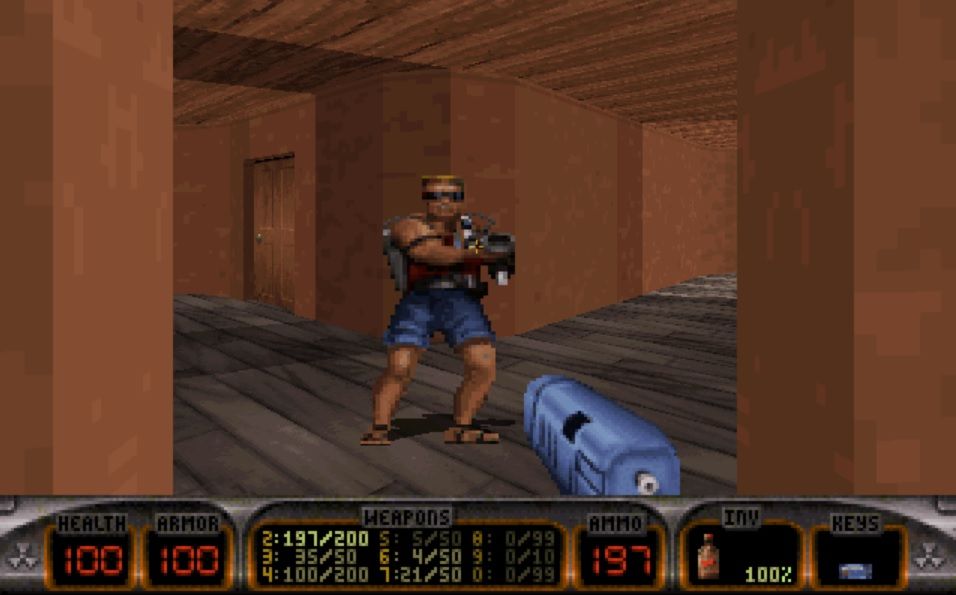
Wiederhold was recruited by Sunstorm after designing a level for a LAN tournament he was involved with called the Duke Nukem 3D Rodeo Shootout, which was attended by the likes of Randy Pitchford and Richard ‘Levelord’ Gray. In fact, there is an archived Usenet post on Google Groups written by Wiederhold advertising the tournament: “I got hired by Sunstorm to write an installer for the Duke addon pack that they were making,” Wiederhold recalls. “I got the chance to do one of the levels for Duke It Out in DC, and [combined with] the installer, I looked around and thought ‘why am I still going to college?'”
Most of the levels for Duke It Out in DC and Duke Caribbean were built by Wiederhold and just one other designer, Robert Travis. And it wasn’t just Duke mission packs they built together. They also worked on Wanton Destruction for Shadow Warrior, Cryptic Passage for Blood, and the beautifully named Suckin’ Grits on Route 66 for Redneck Rampage.
All these level packs were released in the space of two years, with Sunstorm rattling them out as quickly as they could make them. “It was very Wild West back then,” Wiederhold says. “There was no structure to the industry yet. It felt like it was forging into new territory,”
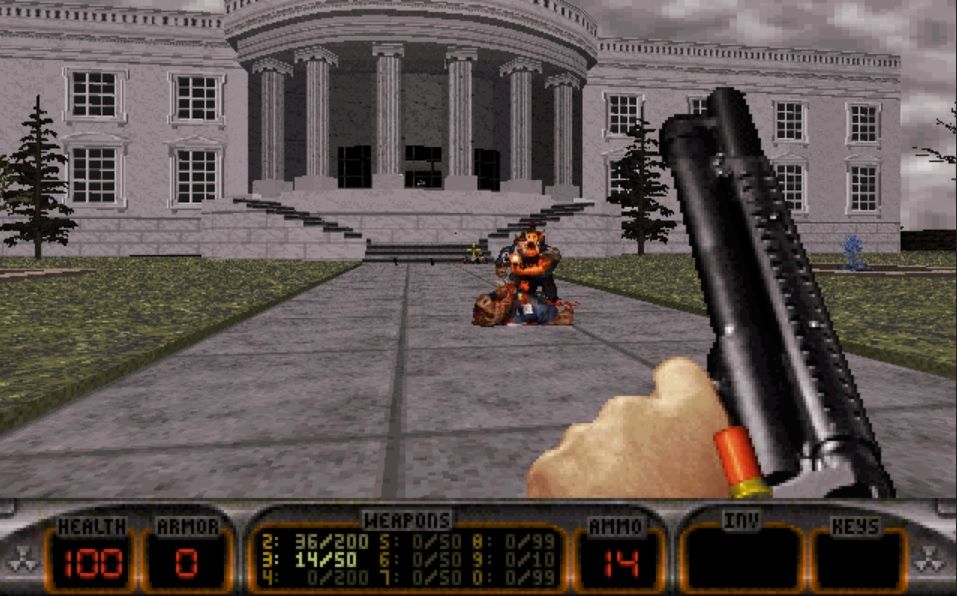
But this didn’t matter to Wiederhold. Getting paid to build these levels for his favourite shooters was his dream job: “It was definitely some of the most fun [I’d had] as a 20-21 year old, just dreaming about making this stuff,” he says. “I[‘d] put my headphones on, listen to soundtracks and make levels.”
A big part of the reason why Sunstorm could put out so many mission packs for Duke and other Build Engine games was because the tech had far superior mapping tools than earlier shooters like Doom and Rise of the Triad:
“With Doom, from what I understand, at the time you actually had to save the level and go into the game to see your level fully 3D, whereas Duke 3D, you could actually be flying around in it, so you could see the sprites that you’re placing,” Wiederhold says. He also points out that 3D Realms had actually “written some documentation. That was a big thing. The 3D Realms guys actually provided a little bit of documentation on how to use it.”
While Sunstorm was one of several developers trying to capitalise on the new FPS craze, for Wiederhold, mapping was about more than just cashing in. The FPS was evolving at lightning speed, and Wiederhold wanted to make what small contribution he could to that. “For Duke, I was always trying to push some technical boundary. Like really test all the elements of it. But the only reason I could do that in a sane way was because I could go in and see it. If I’m doing some sort of sector over sector thing or some other crazy effect, I could see it there in the editor.”
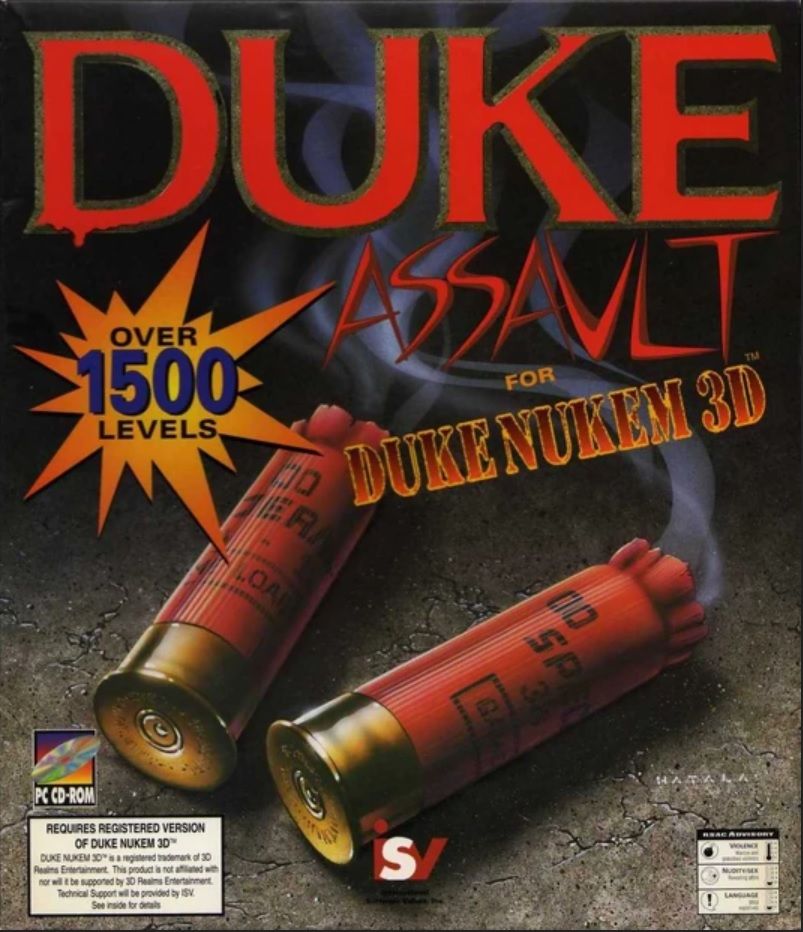
Not every level pack creator was so scrupulous, however. Alongside Sunstorm’s creations, Wizardworks also published numerous level packs of dubious quality. One of these was Duke Assault, which essentially scraped over 1,500 user-made Duke Nukem 3D levels from the Internet and bundled them into the box. No attempt was made to curate these levels, so the pack included many maps that were either unfinished maps from first-time designers, or “troll” maps that would kill the player upon spawning.
Alongside low-grade efforts like Duke Assault, Duke Nukem received dozens of mission packs that were boxed and sold on shelves despite being completely unauthorised. The most infamous of these was the Nuke It series. Like Duke Assault, the Nuke It series were shovelware expansion packs developed by Micro Star Software filled with player-created levels.
Uncertain of its legal standing, Micro Star filed for a declaratory judgement that it had not committed copyright infringement. Duke Nukem 3D’s publisher FormGen counter-sued, claiming that the maps found in Nuke It constituted derivative works of Duke Nukem 3D. In 1998, the court found in FormGen’s favour.
The ruling made Micro Star v. FormGen a landmark case in US copyright law, as it ultimately determined that video game mods count as derivative works, and constitute a copyright violation if made without the holder’s consent. While most game developers wisely tolerate and see the benefits of supporting the modding community, those mods exist at the grace of those companies.
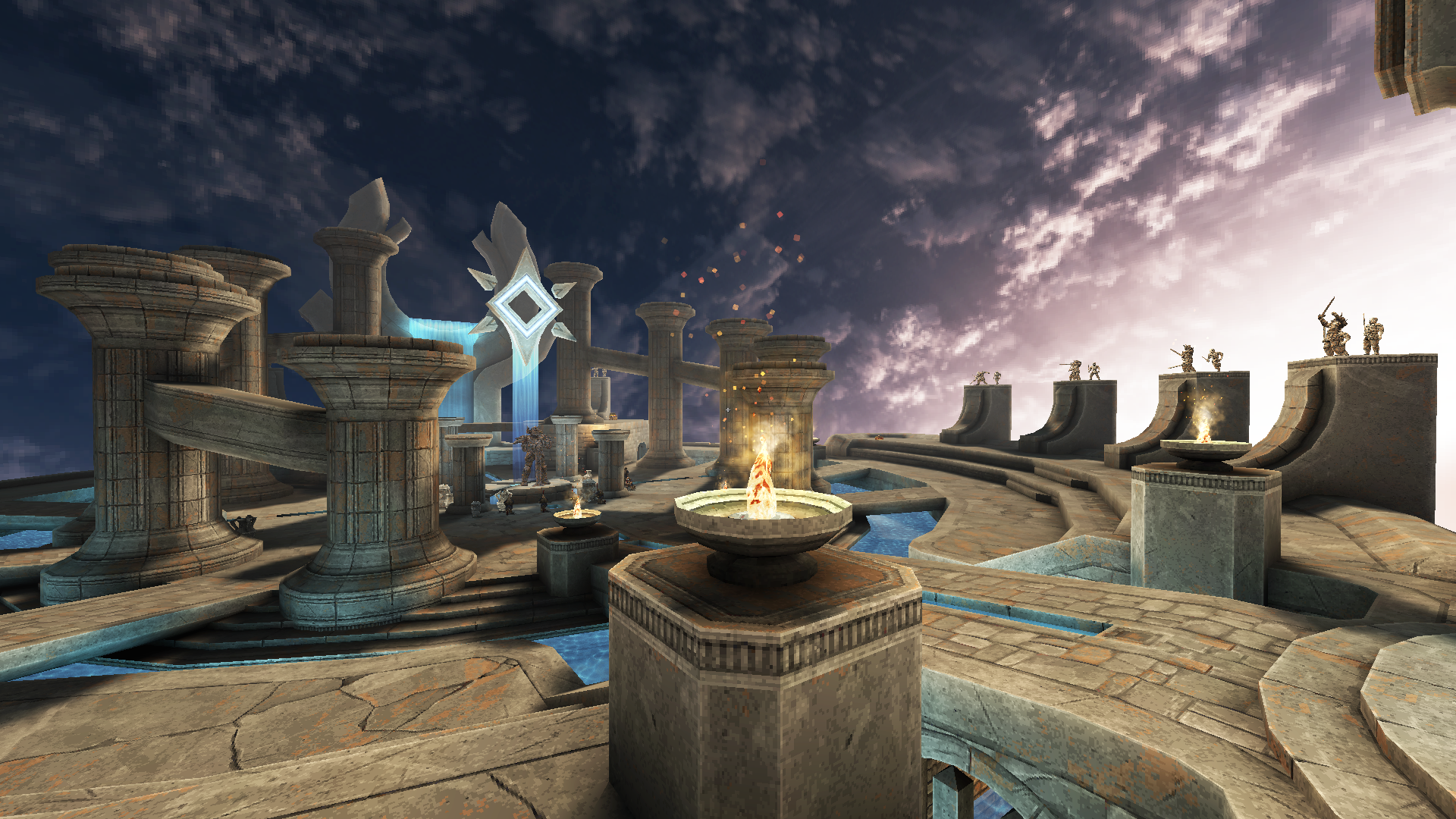
Following Micro Star v. Formgen, unregulated FPS mission packs quickly died out. Third-party addons for PC games became formalised as either official expansions or unofficial mods, But the enthusiasm for expanding the FPS classics of the ’90s lived on, and today the mapping scene for many hallmark shooters is arguably better than it has ever been. From unofficial masterpieces like Arcane Dimensions, to official new epidoes like Quake’s Dawn of the Machine, these spellbinding addons derive from the exact same desires that drove Wiederhold to push the Build engine to its limits thirty years ago.