
I’ve long been a proponent of high refresh rates for competitive FPS gaming, though there are diminishing returns the higher up you go. So it’s been an absolute joy to see the direction OLED panels have been heading of late, with high refresh rates and low prices. Now there’s even more good news, as TCL is going to be launching some 700 Hz OLED panels based on cost-effective tech.
That’s according to Omdia (via Videocardz), which explains, “TCL China Star’s new Gen 8.6 IJP OLED fab is scheduled to begin production in 2028, with plans for larger panels, including 32-inch and 34-inch sizes and refresh rate offerings of up to 700 Hz. The facility is projected to make TCL China Star the first company to mass-produce IJP OLED monitor panels at Gen 8.6 fab.”
To be clear, we’ve already seen 700+ Hz OLED monitors. We’ve even seen some that don’t rely on dropping down to 720p, such as a WOLED from Asus that hits 720 Hz at 1080p in a 24.5-inch form factor.
We should also note that it doesn’t seem like Omdia is saying the new 700 Hz TCL monitors will be 32-inch or 34-inch ones—those could be different offerings.
So what’s new? Well, mostly that three-letter acronym: IJP. It stands for “ink jet printing” and is a way of making OLED panels that should be less costly.
Essentially, regular OLED production involves material being wasted because it relies on some evaporated OLED materials going through a mask (stencil), but a lot of the evaporated materials don’t go through and are lost. IJP, on the other hand, prints the OLED materials directly on the substrate, meaning there should be much less wastage.
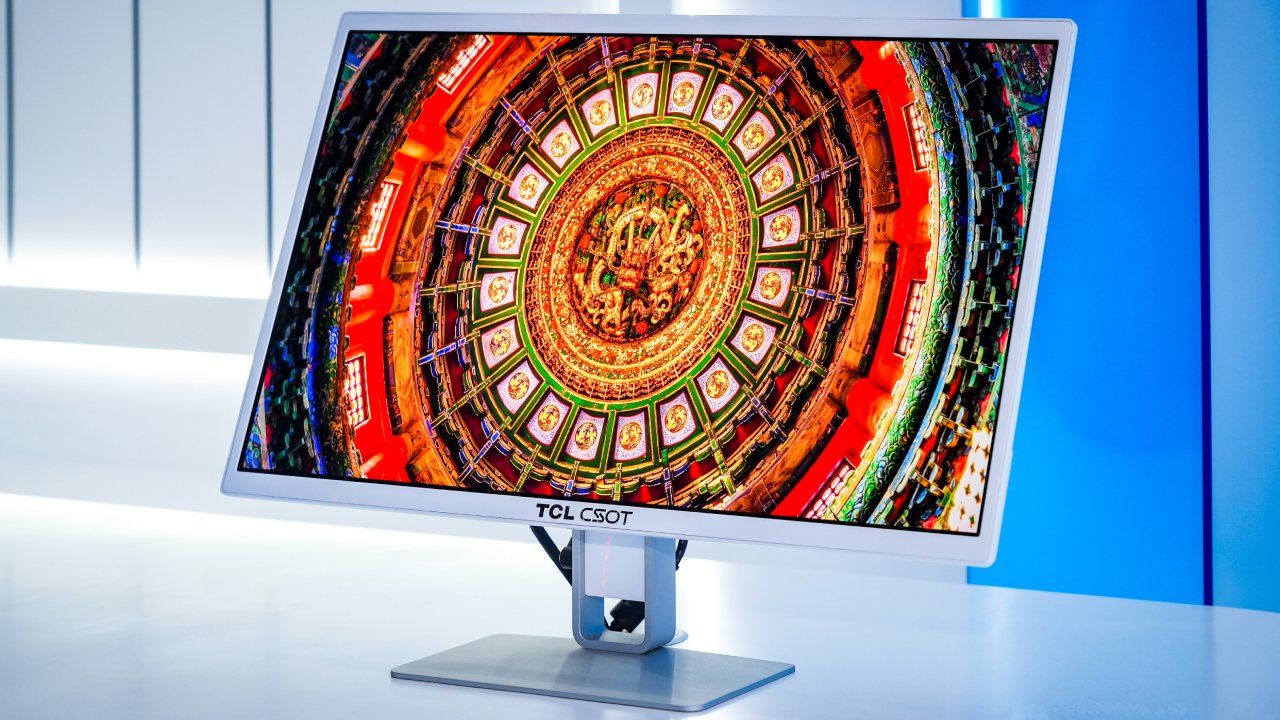
The result, of course, should mean more cost-effective production. For consumers like you and I, that should mean cheaper panels. It might also mean better colour volume at higher brightness, if previous claims about inkjet tech are anything to go by.
Which is good news, considering the aforementioned 720 Hz Asus panel is set to cost $1,099. OLED monitors in general have gotten quite cheap, when they’re not gigantic top-end panels or ultra-high refresh rate ones, which explains why they’re being snatched off the proverbial shelves.
It’ll be great if we see that price trend follow the ultra-high refresh rate segment, too. Fingers crossed for TCL, then, even if we do have to wait until 2028 for production to start.