

This week both AMD and Nvidia have announced partnerships with Meta, securing both collabs and billions of dollars. All three companies are heavily invested in AI, and these deals are only more fuel for the fire.
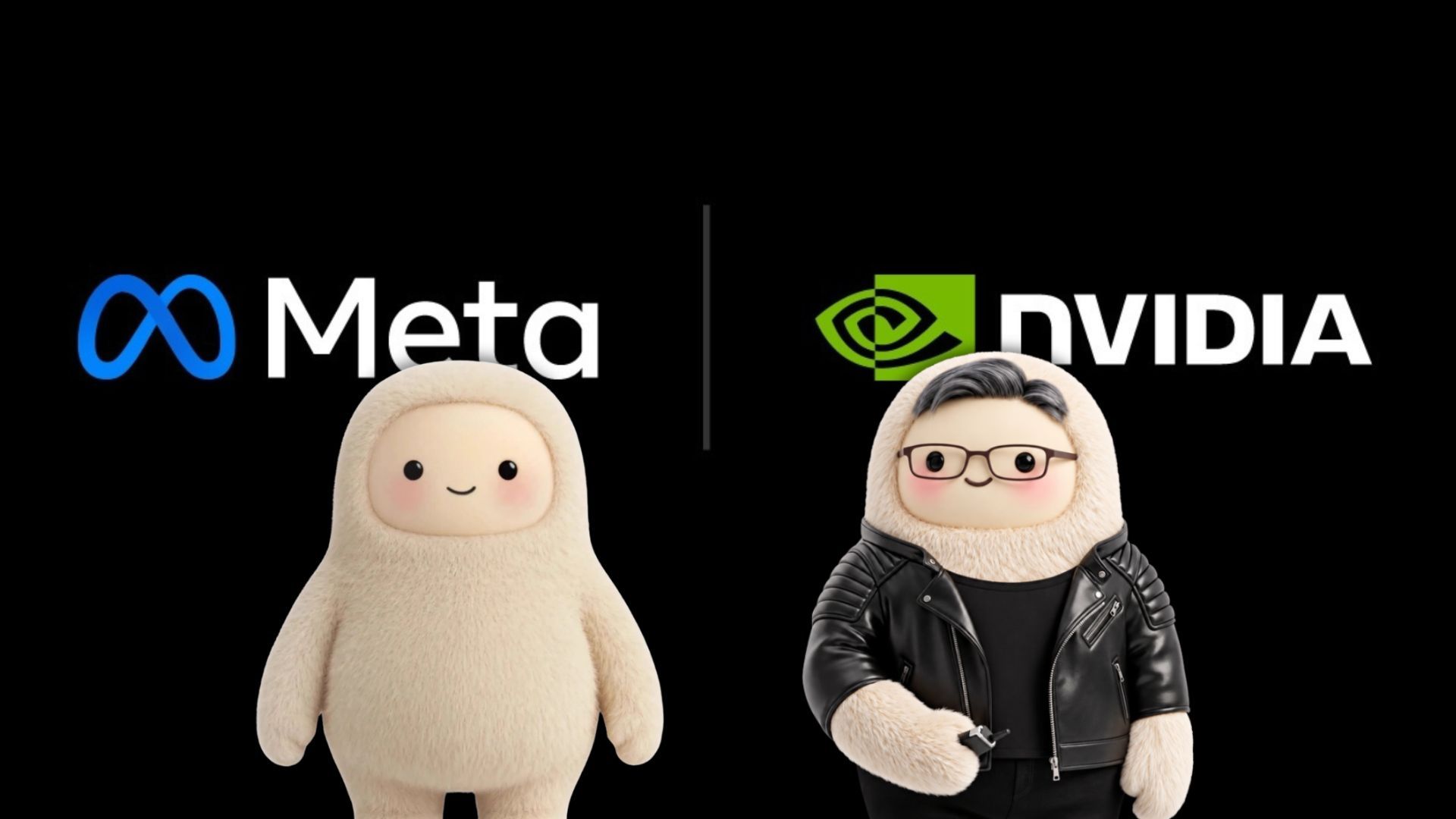
Nvidia just announced its deal with Meta to “expand their partnership on Muse and the Muse family of models”, and Meta, in turn, will expand Vera Rubin and Vera CPU deployment, as well as deploy Nvidia’s Spectrum X Ethernet networking and BlueField-4 DPUs. Though Meta was probably buying all that stuff anyways, right?
Nvidia also said it was “considering other technological collaborations, including Nvidia OpenShell Reference Architecture to strengthen agency security and Nvidia Sentry for monitoring, structured, unstructured and graph data processing.”
Importantly, Nvidia is also investing $3 billion into Meta. Money that may go elsewhere in Meta under a wholly different account book, but ultimately, Meta is spending a large amount of money on AI hardware from Nvidia. You see what’s happening here? Both companies are spending big with one another.
One day after this announcement, AMD too declared its partnership with Meta, saying that it would be collaborating on CPU, GPU, networking, systems, and software for Meta’s AI infrastructure. AMD also announced that its Helio rackscale solution would be powering Meta’s “leading frontier models and services” and that AMD is the “compute engine of choice for Muse and AMD technologies provide Day-0 support for leading Meta models”.
To top this off, AMD is investing $1 billion in Meta.
In total, that’s $4 billion from both companies into Meta, with Meta announcing how it would be spending its money on each respective company.
AI is huge for all three companies, with Nvidia becoming the world’s first $5 trillion company thanks to the technology, and all three companies will want to perpetuate the growth of AI for that reason.
The AI bubble hasn’t burst yet, but it did see a $1 trillion decline just a few weeks ago, and the Chinese AI market lost trillions just this week. One could read further investment as a way to keep the bubble floating for a while longer, or just one in a line of many steps from all three companies to get a foot in the door once the AI boom settles. A bubble popping could help gamers eventually get lower-priced memory, but so much of the world’s economy is wrapped up in it that it’s hard to say just how wide the reverberations would be, for these three companies or the rest of the world. It won’t be good.
The Wall Street Journal argues AI is “becoming the biggest economic bet in US history”. It shows AI spending is significantly bigger, as a percentage of annual infrastructure spending, than telecom and fiber, highways, electric, railroads, and even canals way back in the 1800s. One has to wonder what would happen if that investment suddenly lost its value.
And even now, the negative impacts of AI is hitting gamers with the memory crisis, where AI is sucking up so much memory that the average gamer has to pay more and more for less capacious memory. And it doesn’t just stop at memory. Graphics cards and SSDs have only gotten worse in the pricing department over the last year, and as long as the AI buildout continues, and memory struggles to keep up, that’s unlikely to change soon.