

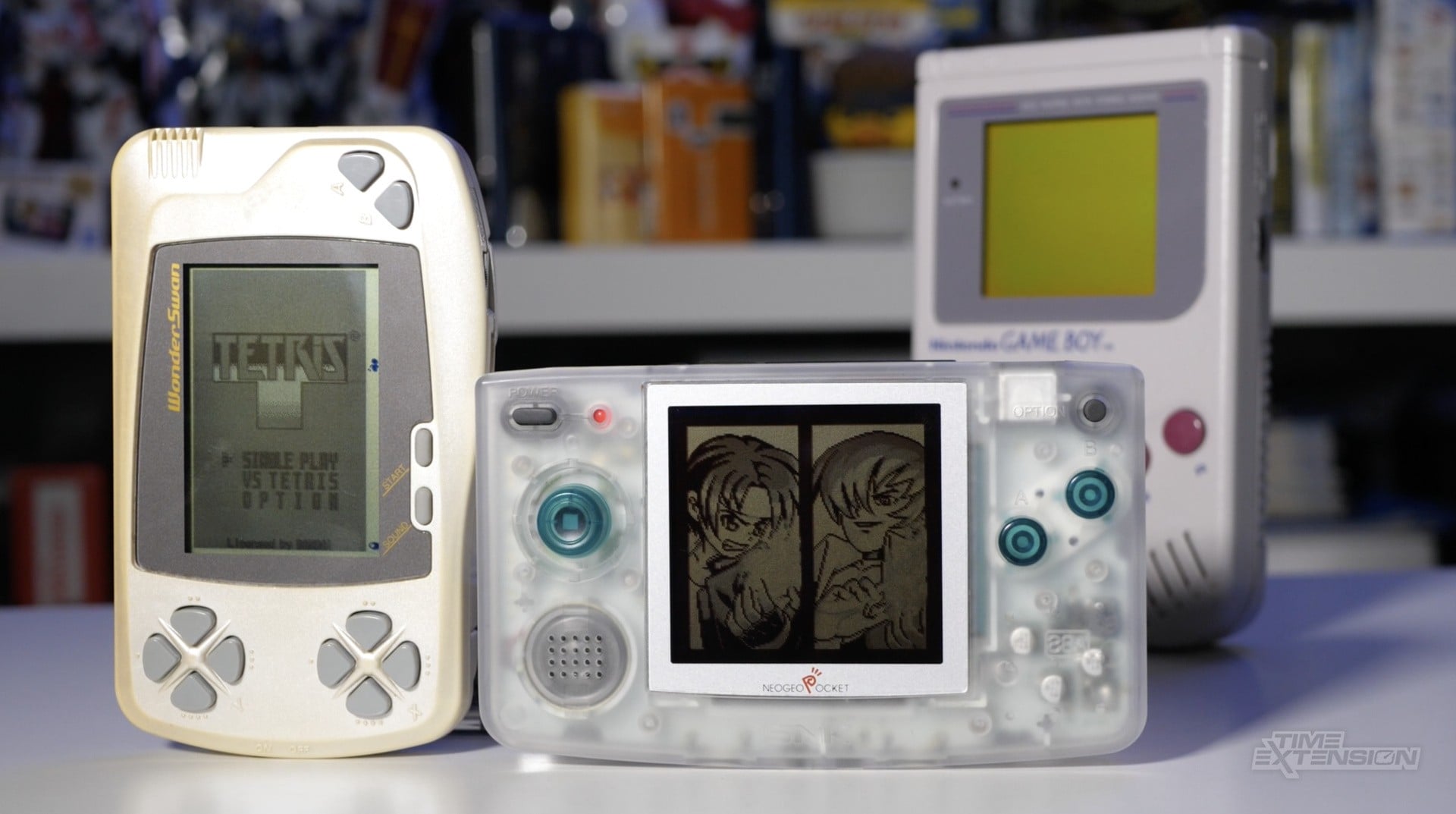
Monochrome madness.
The Nintendo Game Boy was a commercial smash hit practically from the moment it hit store shelves. With its portable design, wide range of amazing games and modest battery demands, it would go on to sell millions of units across the globe – and enjoy an unnaturally long lifespan, thanks, in part, to the phenomenon that is Pokémon, which made its debut on the handheld in 1996, almost a decade after the Game Boy initially launched.
Nintendo didn’t have the market to itself, of course; it was challenged in the very early stages of the Game Boy’s existence by the likes of Atari, Sega and NEC – all of which unwisely assumed that superior technology would win the handheld gaming market. They were all incorrect; backlit colour displays were a massive power drain at the time, massively limiting the portability of the Lynx, Game Gear and TurboExpress/PC Engine GT – and their commercial potential.
Read the full article on timeextension.com
Monochrome madness.
The Nintendo Game Boy was a commercial smash hit practically from the moment it hit store shelves. With its portable design, wide range of amazing games and modest battery demands, it would go on to sell millions of units across the globe – and enjoy an unnaturally long lifespan, thanks, in part, to the phenomenon that is Pokémon, which made its debut on the handheld in 1996, almost a decade after the Game Boy initially launched.
Nintendo didn’t have the market to itself, of course; it was challenged in the very early stages of the Game Boy’s existence by the likes of Atari, Sega and NEC – all of which unwisely assumed that superior technology would win the handheld gaming market. They were all incorrect; backlit colour displays were a massive power drain at the time, massively limiting the portability of the Lynx, Game Gear and TurboExpress/PC Engine GT – and their commercial potential.
Read the full article on timeextension.com