
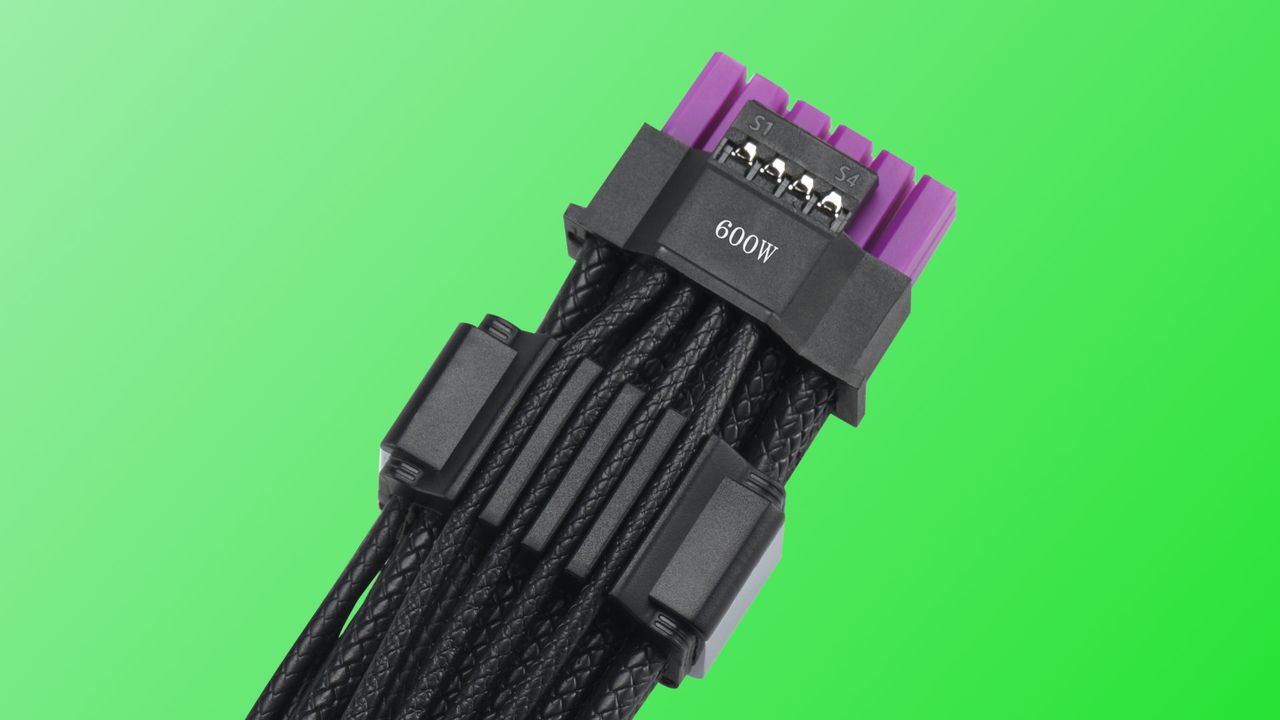
Melty graphics cards—that’s something we’ve heard far too much of in recent years. Though the answer today is not replacing the problem connector, but selling you fancy cables and power supplies that hope to provide peace of mind. One of many in recent months is the ROG Equalizer, but initial tests into its efficacy are inconclusive.
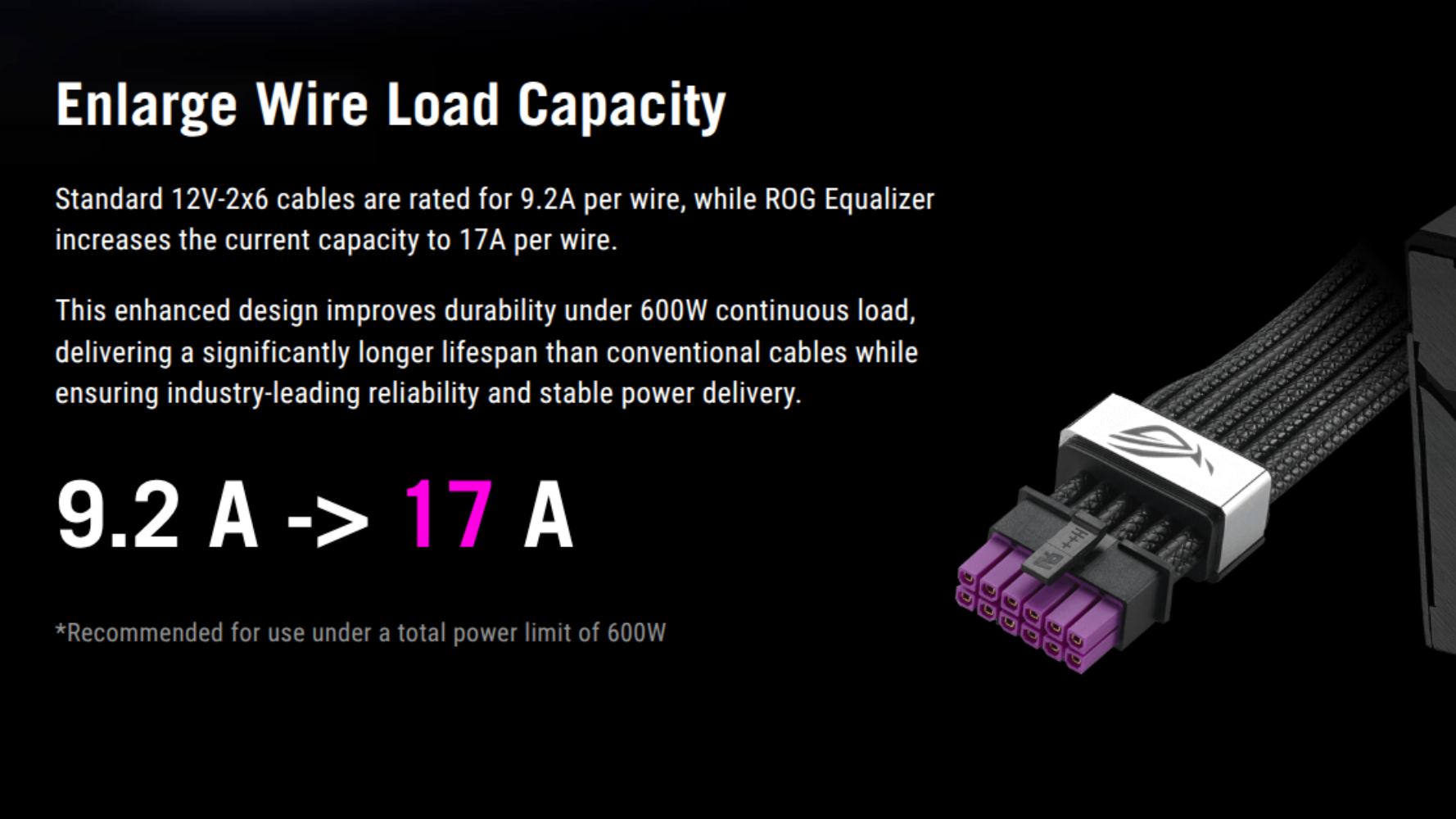
Asus makes some big claims with the Equalizer. It says the cable can handle a higher amperage than a standard 12V-2×6 or 12VHPWR cable, at 17 A compared to 9.2 A, and that the load will be better balanced across each pin. There are no active components in the cable, though, which means it’s not a match for something like the Ampinel that will monitor and balance load across connections. Yet Asus says higher quality components can help to reduce abnormal load and cable temperatures.
Bundled with ROG Thor III and ROG Strix Platinum Series power supplies, and available for purchase separately, the Equalizer is compatible with many third-party power supplies. In theory, that means you could grab one for your PC for a little more peace of mind.
Der8auer has tested three Equalizer cables using the Thermal Grizzly Wireview. These tests show the cable with a more considerable current imbalance than two of the other cables tested, the deleyCON and Asus Thor 12VHPWR cables, but lower than a faulty Seasonic PX-2200 cable.
Der8auer notes the largest delta between recorded current on each of the six power pins (12 in total, the other six are ground) was 0.7 A for the deleyCON, 0.6 A for the Thor, 5.6 A for the Seasonic, and between 2 and 3.6 A for the Equalizer.
For the most part, the six pins in the Equalizer do not exceed what the Ampinel would consider a maximum current value of 9.2 A. Except one—Pin 1 on one of the cables reached 9.8 A and triggered a warning on the Wireview in Der8auer’s testing.
Der8auer suggests that the bridge, the metal component that joins the pins close to the connector on the GPU side, may not be a benefit to balancing as one might hope.
“It’s just giving us a completely different scenario,” Der8auer says. He notes that it’s not worse, just different, as the Equalizer’s bridge should prevent damage being applied to both the GPU and PSU side of the cable in the event of a major malfunction.
Asus reportedly expects the higher current imbalance per pin, and the cable’s increased rating to 17 amps ensures everything should remain in spec regardless. That’s where things get tricky—it’s tough to say whether the cable will comfortably handle 17 amps or if it’s immune to melting as a result. That should be overkill for a GPU.
But there are a lot of things that should be okay. Your graphics card’s power connector should be able to handle the power required by the graphics card. It should also be easy to use and not cause issues with an improper connection or imbalance. You should be able to buy a graphics card and not feel the need for a smart power supply or accessory with checks and balances to keep it from melting, too.