
What is it? Branching narrative horror in which your actions have widespread consequences
Release date May 12, 2026
Expect to pay $50/£40
Developer Supermassive Games
Publisher Supermassive Games
Reviewed on RTX 3070, Core AMD Ryzen 5 5600G, 16GB RAM
Multiplayer Yes
Steam Deck TBC
Link Steam
What a mess. An innocent man is dead on the ground, my crew are all looking at me like I’ve lost my mind, and worst of all, I’ve just ruined my ‘survivor’ run. Everyone was yelling that this guy was an alien, and in a game about shapeshifting aliens you can forgive me for thinking he was, indeed, a shapeshifting alien who needed killing—that probably won’t hold up in court, though. But there’s no need to dwell on trivial mistakes like summary execution. Not in Directive 8020. We can run this back, and this time, I’ll look cool, collected, and very smart by not shooting the man everyone was calling an alien.
I thought the most exciting and refreshing aspect of Directive 8020, a decade on from developer Supermassive Games’ Until Dawn, would be its shift to sci-fi. As a fan of Alien: Isolation and John Carpenter’s The Thing it seemed to be my exact lane of horror. But to my surprise, what sets Directive 8020 apart is its new Turning Point system, which allows you to rewind pivotal moments and erase your mistakes.
It seems counter-intuitive given that so much of the tension in Supermassive Games’ interactive narratives has always come from the finality of the decisions you make. You live and die by your choices, whether they be successes or failures. Directive 8020 takes a sledgehammer to that idea with the Turning Point system. It shouldn’t work. But it does.
All aboard

This is largely thanks to Directive 8020’s premise, location, and characters which make using Turning Points a must for more than just achievement hunters. I had an insatiable need to know more about the story and what would happen to my beloved crew if my decision making was just slightly off kilter.
It all starts aboard the spaceship Cassiopeia with a group of scientists venturing to the exoplanet Tau Ceti f. Driven to the edge of our known universe by a dying Earth and decaying Mars, these scientists are to pave the way for the next intergalactic colony. This can and does, of course, go disastrously wrong—thanks to said shapeshifting alien that bought me a one way ticket to prison. The story’s gory twists and complex characters both warrant further exploration (or panicked undoing) using Turning Points.
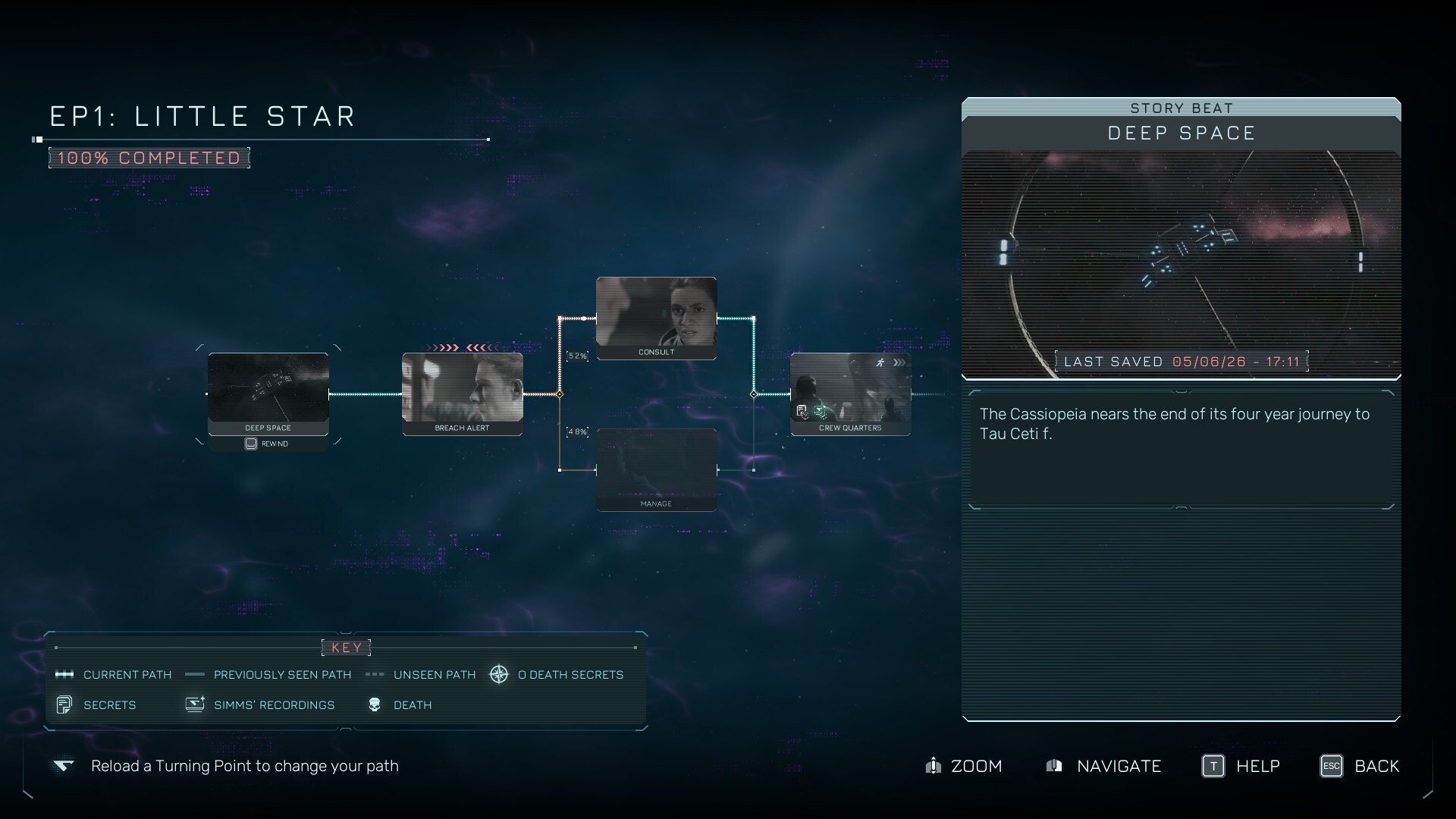
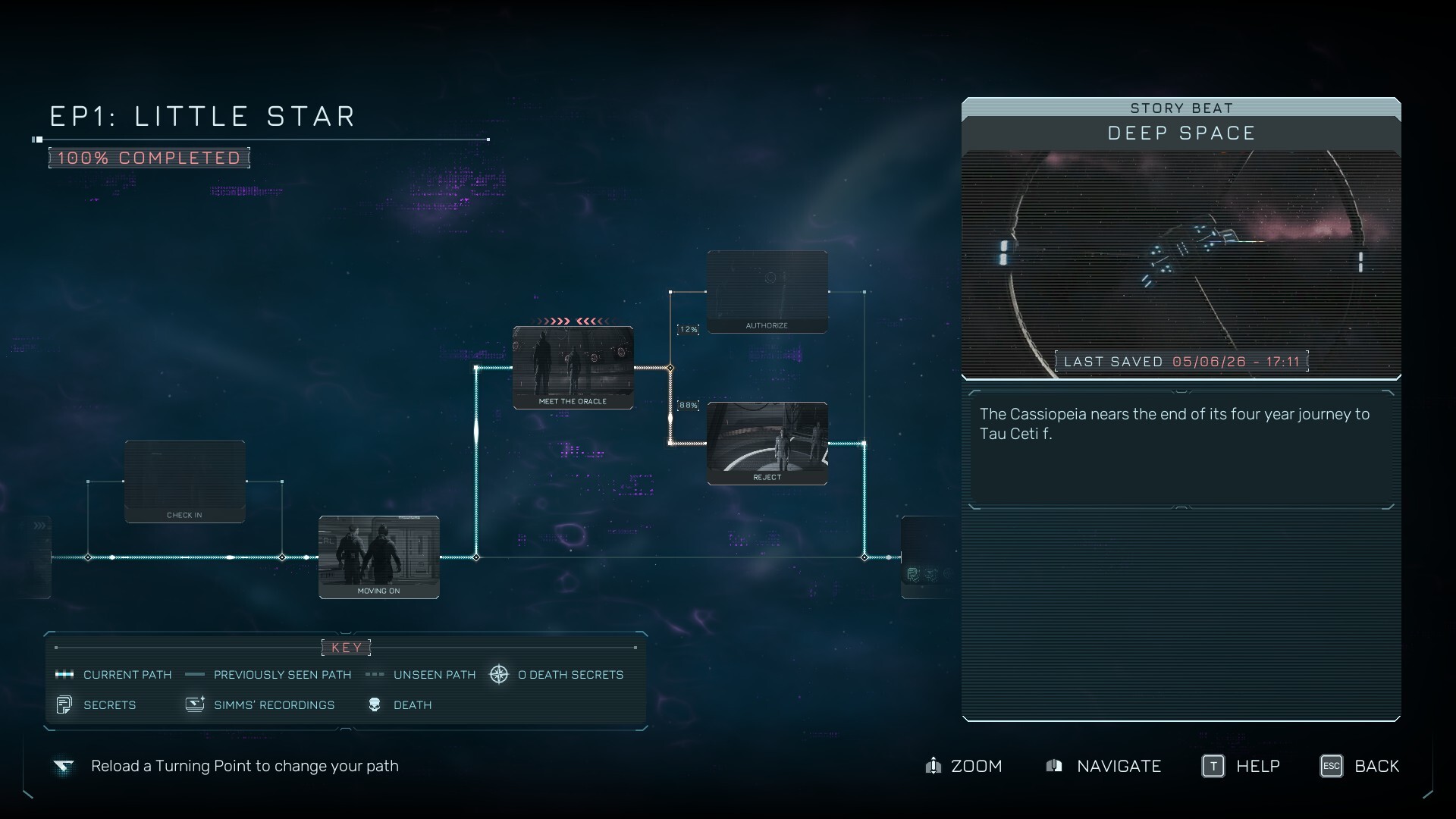
I completed three full runs, with the last one seeing me hop around to every eventuality in what I’m now calling my ‘anything goes’ run. In all that time I came to appreciate the story and characters to the fullest by filling in gaps with extra notes scattered around the ship, many of which I didn’t find or fully understand in my first playthrough. Particularly poignant was how Pari Simms, one of the sleep scientists, haunted the narrative through every run, via video diaries hidden in the deepest corners of the Cassiopeia.
Pilot protagonist Brianna Young and medical officer Samantha Cooper also stood out, with each one’s story getting better every time I used Turning Points. At first Cooper comes across as a light-hearted yet professional medical officer who clearly cares about her crew. Standard doctor stuff. But she just kept putting herself in harm’s way, or volunteering for certain death missions, and it took me until my second playthrough to find out what had happened on Jessop Station, a place I’d only heard allusions to for the first few hours.
It wasn’t until a subsequent runthrough which I properly learnt of the reactor meltdown at Jessop Station which triggered an inferno blaze that engulfed everyone—Cooper was the sole survivor, leaving her with severe trauma and survivor’s guilt. That shred of information completely changed the way I saw her recklessness.
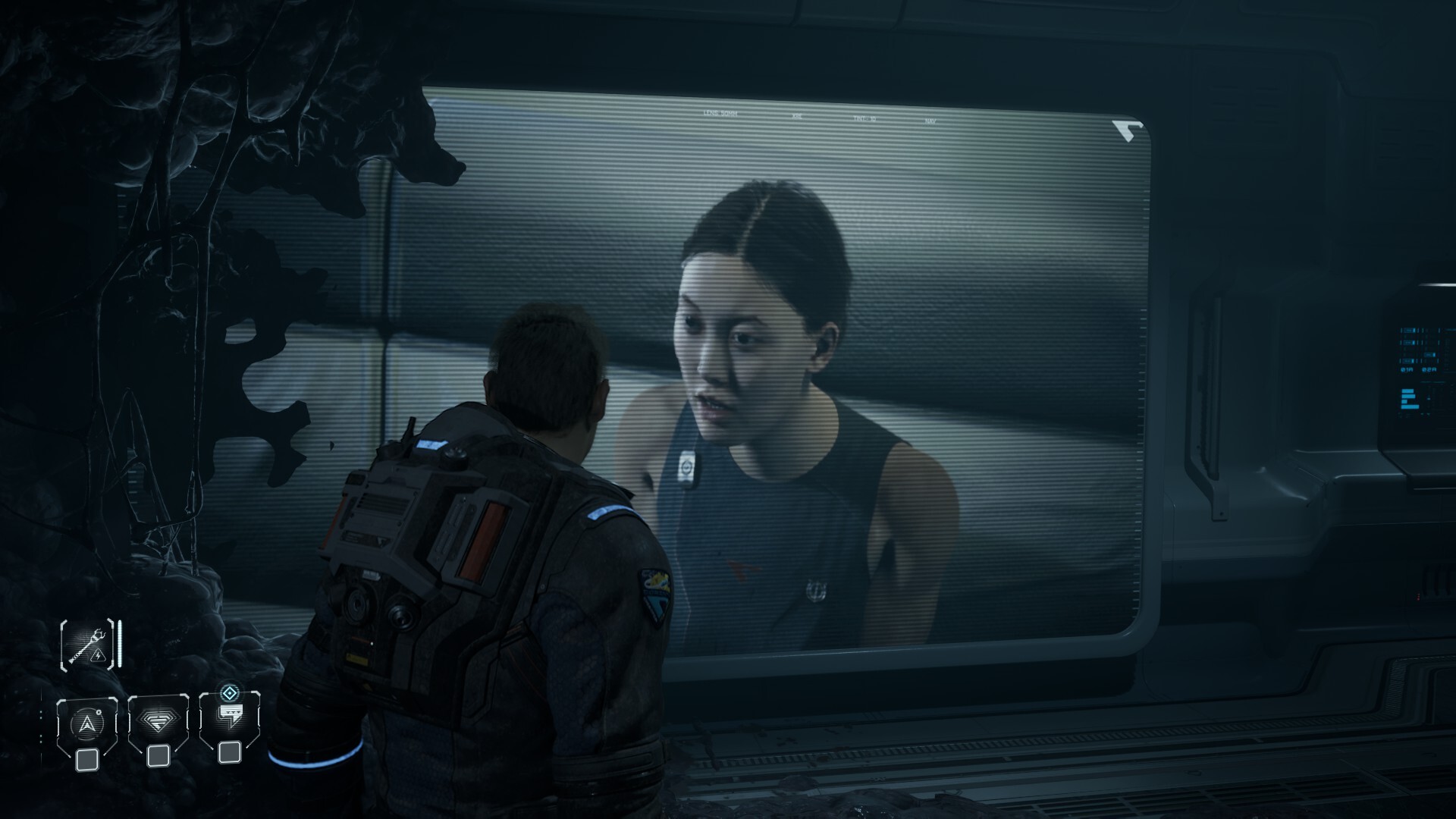
Aside from gathering every shred of information because I’m just that nosey, the simpler reason to use the Turning Points system is because you want everyone to survive. Directive 8020 works hard to justify this gamer instinct with video recordings left to family members yearning for home cooking and inside jokes and quips shared amongst the crew. Every character feels and acts like a real person, and my affinity for them only grew with each new drop of information.
But I decided to first play Directive 8020 in survivor mode, which forbade ever undoing a decision. Sitting with each horrible outcome supplied the dread and tension that I’m used to when trying to keep everyone alive in a Supermassive game, and to no one’s surprise I absolutely botched it—I’m talking game-ending levels of fucked it up.
After the bloody mess that was my first run, my next step was enabling Turning Points to ensure everyone survived, avoiding every poor decision, missed QTE, and painful death scene. That’s an experience you could get in any other narrative horror game by following a guide. But it’s really the in-between where Turning Points shines.
Anything Goes
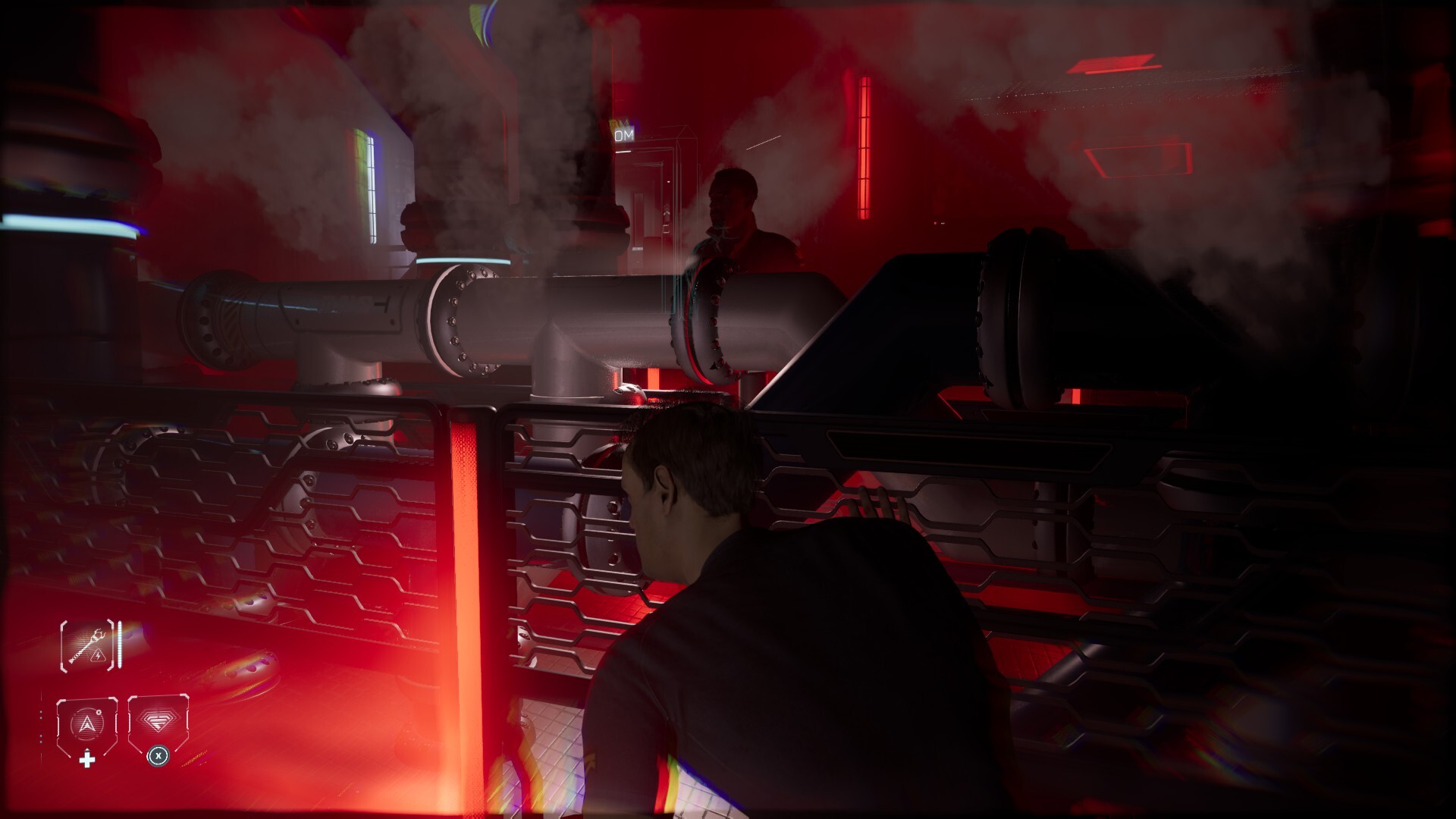
All that was left was an ‘anything goes’ run where I sought to unlock every extra scene that was still left blank. From this point Directive 8020 shifted from survival horror to a bloody and somewhat confusing puzzle. It’s not uncommon to restart a game to get a specific valued outcome, but the best part about Turning Points is that you can experience everything the game has to offer without starting from scratch (although some outcomes warrant early redos).
It makes for some of the best body horror I’ve seen in a game for quite some time.
I meticulously worked through each story thread for each episode, I experienced every scene in the first episode and found that the most key decisions happened midway through the game, so I often found myself restarting from episode 5 to see what new gory detail I could unlock.
Alongside allowing you to jump to and from different decisions and outcomes Turning Points also displays what conditions you need to unlock certain scenes, meaning you can easily go back to the crucial point and play on from there.
I used Turning Points to change characters’ personalities, from playful to professional, to unlock new endings by tweaking the conditions needed beforehand, and experience all the goriest death scenes, of course.

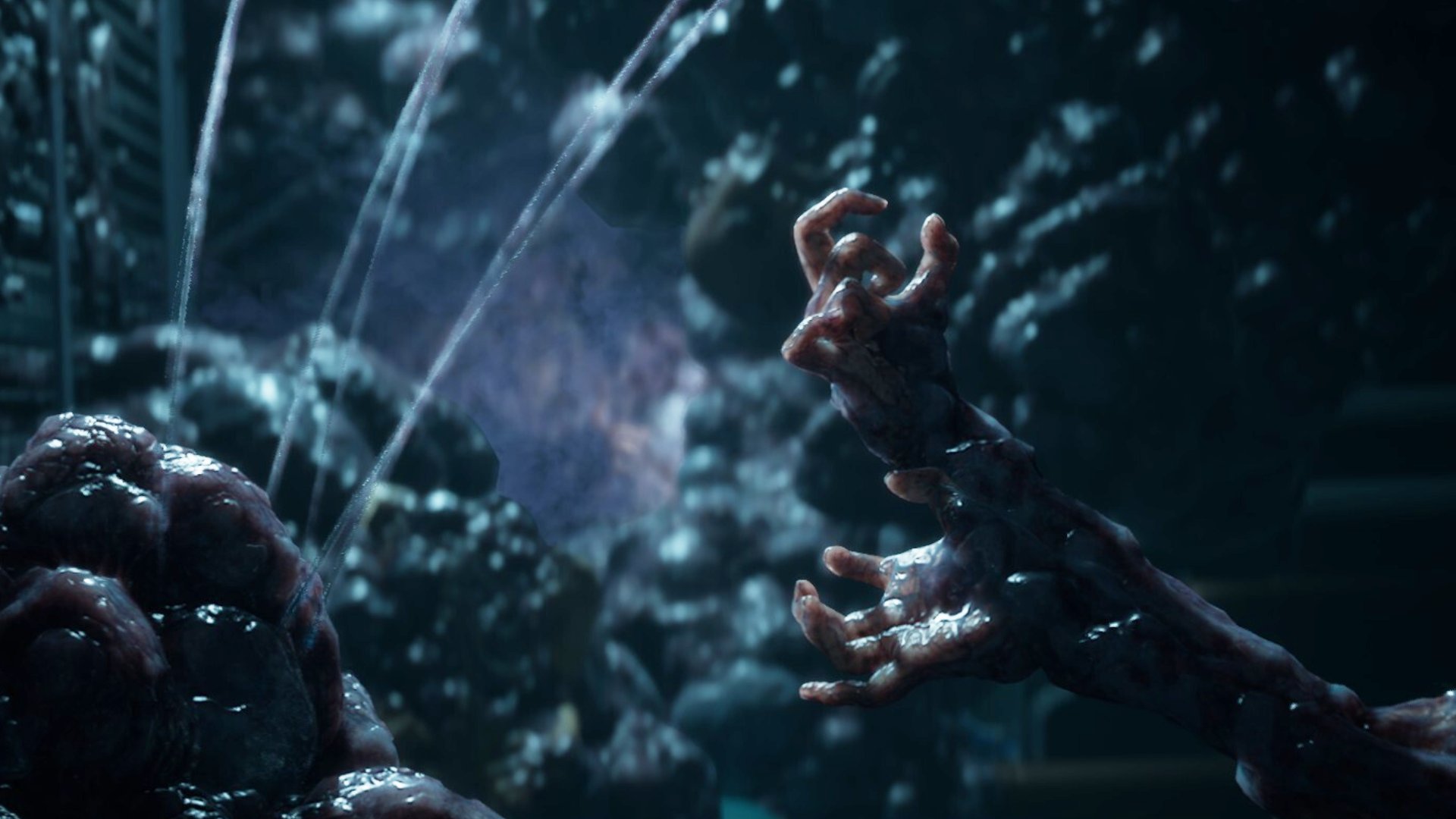

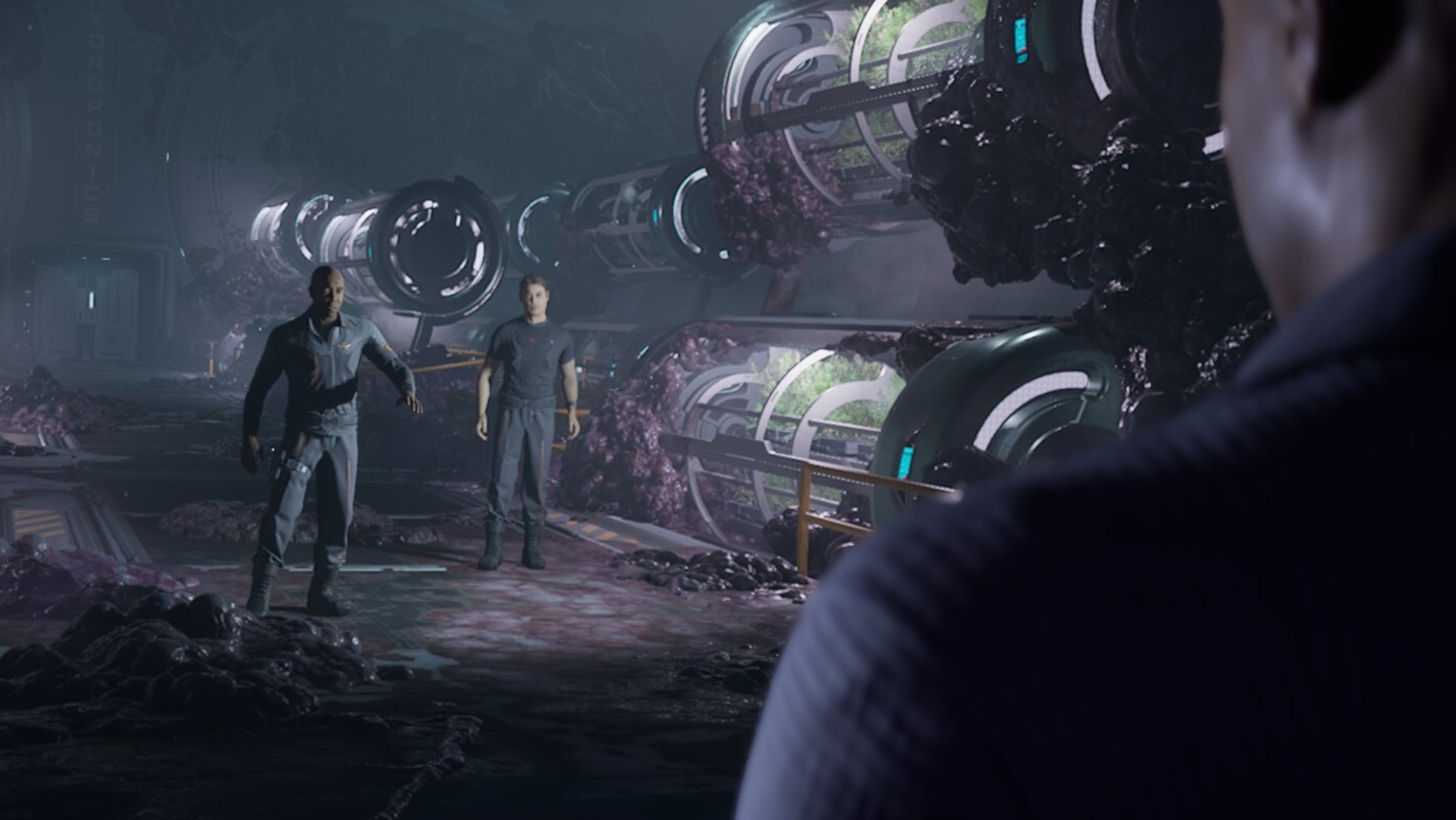
I was not disappointed: there are 44 death scenes in Directive 8020, and some of them are so disgusting I had to cover my screen with one hand. As time goes on, The Entity (the shapeshifting alien which had caused me so much grief) realises it doesn’t need to infiltrate the group to kill them. The lifeform spreads through the ship, engulfing it in tendrils, flesh, teeth, bones, eyeballs, basically any biological matter you can think of. And it is yucky.
It makes for some of the best body horror I’ve seen in a game for quite some time, even though I played most of the game on medium graphics. The Entity’s fleshy boils still look absolutely sickening when you turn the settings down to low.
It certainly makes my shortlist for best sci-fi killer: Taking inspiration from John Carpenter’s The Thing sets a pretty high bar, and the idea of ‘crew goes to space, meets alien, alien hunts them’ is hardly original. But neither ends up rendering Directive 8020 rote thanks to Supermassive’s decision mechanics and savvy twists.
The good ending

I have been quietly hoping that Directive 8020 would be great for quite some time now. After a slew of Dark Pictures games that failed to hit the mark for me, I’ve been waiting for Supermassive to deliver on a game that’s utterly captivating from start to finish. After playing it for over 20 hours, finishing multiple endings, and killing the crew in all sorts of morbid ways, I’m really happy to see that hope manifest into reality.
It’s clear that Directive 8020 is built atop the promising but uneven Dark Pictures Anthology games Supermassive has worked on for the past decade. But it takes a bold step in the right direction with the Turning Point mechanic, and a confident leap into the cold vacuum of space.