
What is it? A three-hour nostalgia trip through ’90s suburbia, following a charmingly delinquent trio in their coming-of-age.
Expect to pay $20/£16
Developer Beethoven and Dinosaur
Publisher Annapurna Interactive
Reviewed on NVIDIA GeForce RTX 3060, AMD Ryzen 7 5800 8-Core Processor, 16GB RAM, Force MP600 SSD
Multiplayer? No
Link Official site
“Mixtape is a good movie.” That’s the only thought I had rattling around in my head as I—and this is part of the problem—played Mixtape.
This isn’t an issue for me because I’m some understimulated capital-g gamer that needs a constant feed of dopamine to feel something, but because I think our medium can, broadly speaking, do more interesting things with itself.
Published by Annapurna Interactive and developed by Beethoven & Dinosaur, Mixtape is a ’90s nostalgia trip that sees you playing music enthusiast and imminent high school graduate Stacy Rockford, who is friends with the emotionally centered chill dude Van Slater and Cassandra Morino, who herself languishes under the thumb of a deeply strict cop dad.
It’s a coming-of-age teen drama set to a superb soundtrack that’s delivered diegetically via Stacy, who’ll look to the camera and dispense charming Anderson-esque dialogues looping us into the tracks themselves. Stacy curated this mixtape for a perfect last day—she’s going to New York to pursue her dreams, leaving Slater and Cass in the lurch because they had a roadtrip planned. Bummer.
I’m only harsh on Mixtape, because what it does well is deeply distracted by its need to make me push buttons sometimes. Removed from its context as a videogame, Mixtape is an absolutely gorgeous, darling passion project. It’s sharply-written, and by the end of its swift three-hour runtime, I found myself deeply charmed by Stacy and her trio of misfits.
Tuning in
Mixtape dodges the “Life is Strange” issue of trying to make them all sound appropriately youth-like with effusive slang. Like most teenagers, Stacy and her crew are far smarter than the adults around them give them credit for—they have deep conversations about the existential horrors of entering the big, bad world. They’re good kids, about as messy and as reckless as you’re meant to be.
Meet the cast of Mixtape
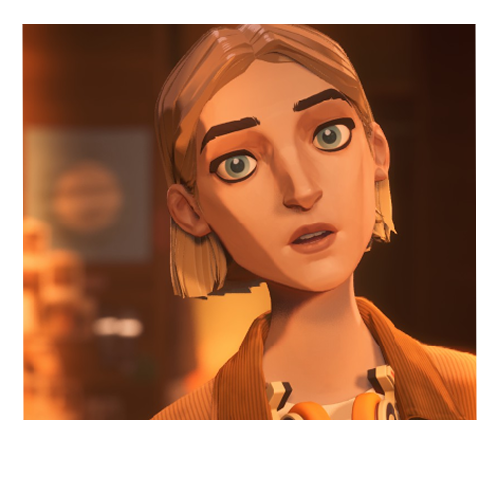
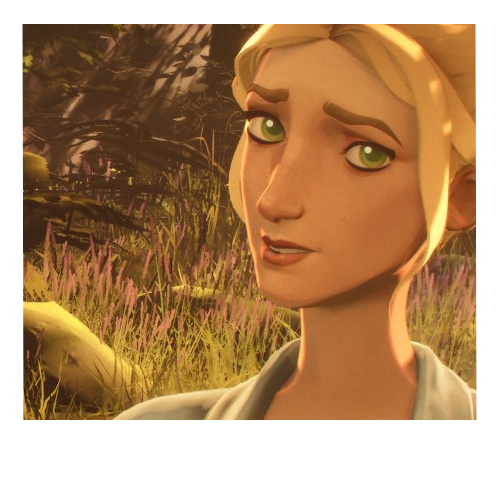
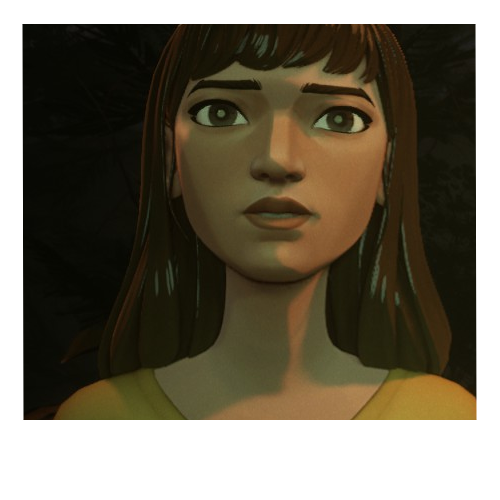
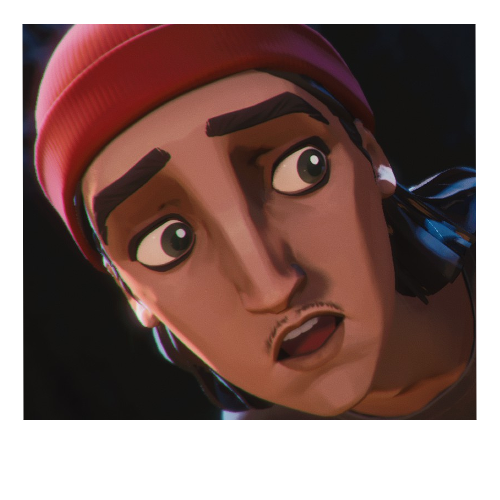
This vision of a ’90s nostalgia bath really takes off in segments where the fabric of reality frays, and we see the world through a teenager’s imagination. A betrayal from a friend sends you into a drifting fugue state where you float lazily through a monochrome world until you’re curled up in your bed; a romp around an abandoned theme park comes to life as you talk nonsense on the back of a stegosaurus witnessing the end of the dinosaurs; a sports stadium erupts with phantom crowds as you find out the girl you’ve got a crush on is really good at softball.
The onset of nostalgia is a great touch, too. Young Rockford is constantly drifting off into charming vignette flashbacks, pre-empting the post high school malaise that’s normally meant to hit in your mid 20s. You can tell that Mixtape was made with an enduring and burning love of the ’90s, of the messiness of adolescence, of the impermanence of youth.
But I need to stick to my guns here and say that I don’t think it’s a particularly notable videogame—not because there wasn’t enough action to keep my little thumbs sore and my number-go-up brain motivated, but because Mixtape only occasionally uses the medium itself to its advantage.
Unharmonized
Disconnected from any nostalgia for the 90s, Mixtape is a gorgeous coming-of-age story that’s interrupted by a series of minigames and walkabout sections.
There are a few stand-outs that I think work perfectly to sell a feeling—like a disgusting tongue-slathering session that properly reflects the biological awkwardness of teenage kissing—but most of the time you’re either skating with rudimentary controls that drag on just a little too long, or walking around and interacting with stuff.
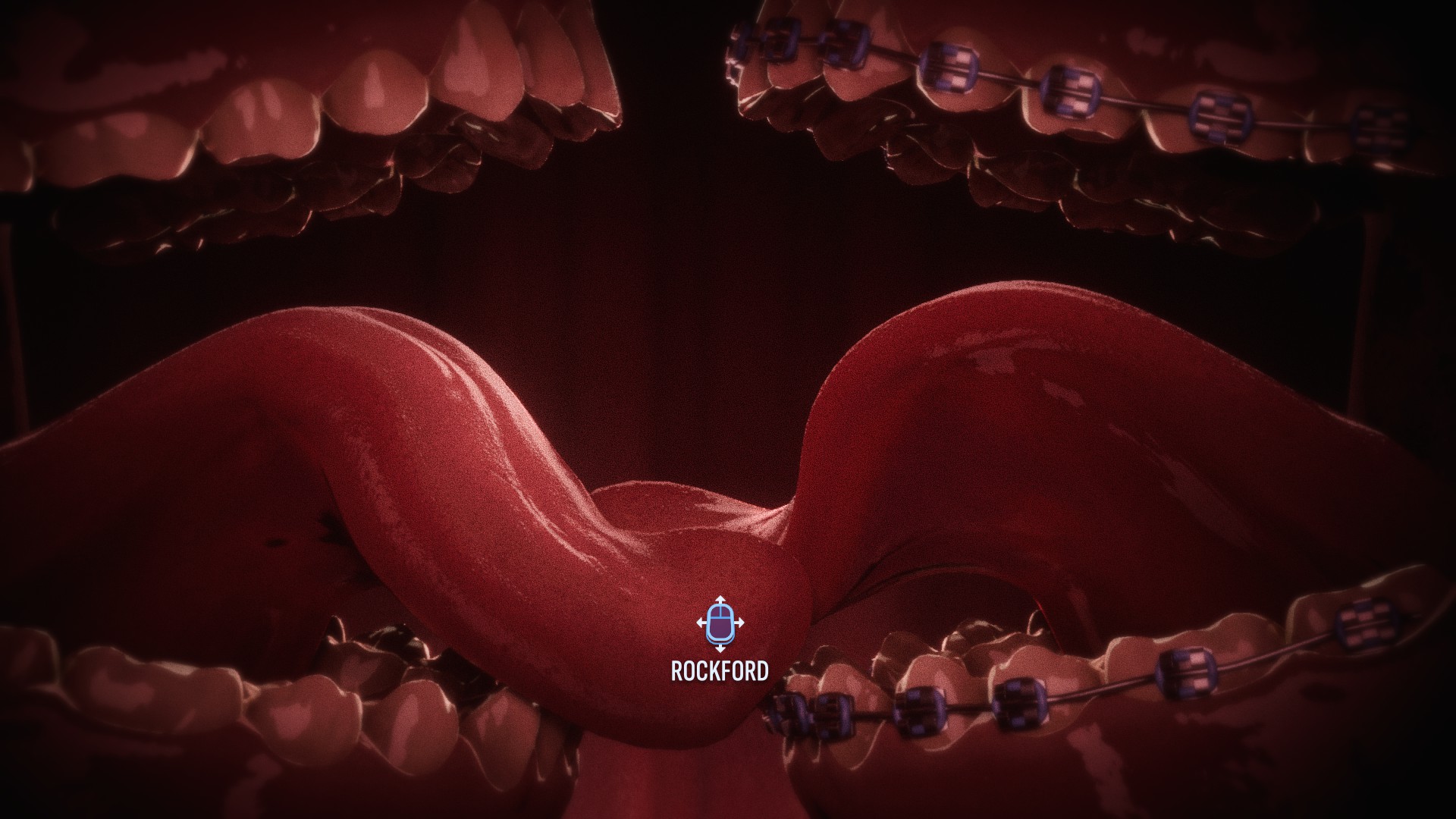
My problem isn’t that these mechanical interludes aren’t exciting enough, rather, I think Mixtape is only passingly interested in the power that interactivity can bring to stories. I didn’t need this game to give me a high score and a skill tree, or even to offer me multiple choices—I needed its interactivity to draw me in as much as the writing, direction, and soundtrack did.
In a three-hour runtime, I can think of exactly two moments in which I felt like the inclusion of my hands had actually pulled me deeper into the story. One of them was that kissing scene, the other happens right at the end as Rockford starts a new chapter of her life.
That’s not a very good batting average, and (speaking of), sometimes these mandatory minigames yanked me right out of the narrative. I kept messing up the softball minigame, which was meant to drive home how good Cass is at a sport she doesn’t even really care about—a key establishing beat of her character, completely spoiled by my fumbling.
And while it’s enjoyable to, say, see just how many parade floats you can bump into during Rockford’s heartbreak scene, or stumble through entire racks of movies in a drunken fugue state as Slater, the impulse to do so isn’t really an indication that I’m being absorbed by the narrative as much as it is a chance for me to muck around with a physics engine.
Sometimes, Mixtape gets it right, but repeats the same trick enough times that it horseshoes back around to getting it wrong: There are a few teen spirit flying sessions that are absolutely gorgeous and capture the feeling of liberation at first glance, but by the second time you’re put in one, you realise it’s on rails which… isn’t how freedom works.
See you tomorrow
I point this out not as a blithe little gotcha, but because it’s indicative of Mixtape’s entire issue: Mixtape fights with its existence as a videogame more than it benefits from it. I kept thinking to myself ‘Man, I would probably be more invested in this if I could just sit back and take it all in.’
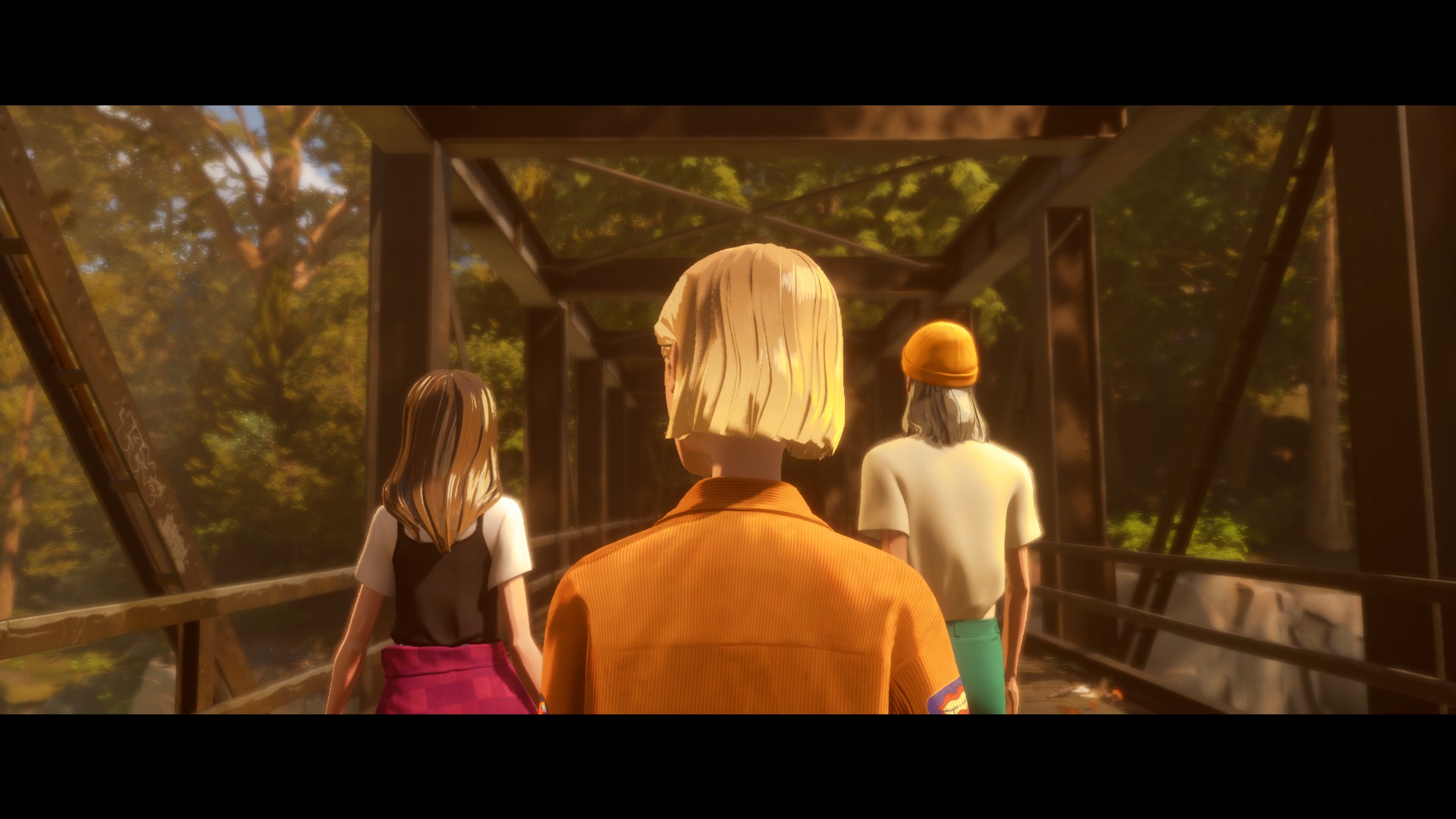
Instead, Mixtape interrupts itself to invite you to see how much destruction you can wreak while moving a sofa, or to skim a rock, or to meticulously sweep leaves out of a painted video-gamey circle on the ground.
Rockford is obsessed with perfectly matching music to the moment, and for Mixtape to be an all-timer, it needed to do the same with its mechanical interludes—to be as clever as its script or visual direction is at a design level. A few standout moments isn’t gonna cut it, you need to play hit after hit.
I am by no means rallying against the concept of a “walking simulator”, or even a game where interactivity is minimal—What Remains of Edith Finch is a good counter-example. The cannery uses the monotony of repeatedly beheading fish, juxtaposes it with an increasingly-detailed adventure that bleeds into the foreground. You’re forced to do both, right up until the fantasy world completely consumes the real.
A few standout moments isn’t gonna cut it, you need to play hit after hit.”
It justifies the inclusion of those game mechanics by using them to drive home a story. But there’s no cannery moment in Mixtape, no masterstroke that suddenly makes the fact I’m pushing buttons feel contributive.
If you want a dose of liquid ’90s nostalgia with excellent character writing, sharp direction, a killer soundtrack, and a charming sense of wonder? Mixtape is three hours of exactly that. But it’s not going to change the way you think about videogames, and it hasn’t left me feeling like my input served any real purpose or helped reel me into the (otherwise very lovely) story it was telling.
In another b-side universe, there’s a version of Mixtape where every moment of interactivity is built to pull you into a specific feeling, not just a scant handful. Maybe tomorrow someone’ll nail it, just not today.