
“My son always says I look like a supervillain,” James Ohlen says, laughing as he puffs his daily cigar on his porch in Austin, Texas, smoke twirling around his face.
“It’s one of the many bad habits that I picked up when I was doing the job. I always told everybody I should never be the head of a studio because it’ll kill me. And it nearly killed me. It was six years of nearly killing me.”
Ohlen—a BioWare veteran who was the lead designer on Baldur’s Gate 2, Knights of the Old Republic, and other beloved games before leaving in 2018—is describing his recent surprise departure from Archetype Entertainment, the studio he co-founded in 2019.
When he left Archetype he hinted at burnout in an X post. Now, he tells me that being both the head of the studio and the creative lead on its debut game, the sci-fi RPG Exodus, was simply too much. “I was running on fumes, and it was hurting my health, and my personal life, and everything. I just needed to step away,” he says.
“As a creative you care about everything so much, and then as the head of the studio, you have to be cutting the baby in half all the time, and having people attack your vision constantly. I definitely wouldn’t put myself in that situation again; that’s not a healthy place to be.”
He’s “slowly recovering” and building what he light-heartedly calls his “book empire”. He’s upbeat during our conversation, laughing hard and often as he recalls what were clearly difficult times, but he says he’ll need more time before he’s ready to make games again.

It’s not his first career break. He says that he didn’t give himself enough time to “completely recover” after leaving BioWare in 2018 and that towards the end of his tenure there, overseeing MMO Star Wars: The Old Republic, he felt like a “highly paid, completely useless person”.
And he also describes, for the first time, the moment that marked the “beginning of the end” for him at BioWare—when EA’s board crushed his plan for rebooting the MMO as Star Wars: The New Republic.
That’s the last time I truly loved my job.
James Ohlen
Ohlen joined BioWare in 1996, a year after its founding, and was lead designer on both Baldur’s Gate 1 and 2. Crunch wasn’t mandatory but Ohlen felt that as the creative lead he should work the hardest. “I lived in this apartment complex for more than a year, and I can’t even remember my room or anything, because I would just go there, sleep, and then wake up and go straight [to work],” he says.
But 100-hour weeks didn’t feel grueling, he says. In a small team he made big decisions, but was also directly writing and scripting in a way he wouldn’t get to on later, bigger projects. “That’s the last time I was truly in love with my job,” he says.
He came out “looking like a cave troll”—but also calling himself a successful videogame designer.
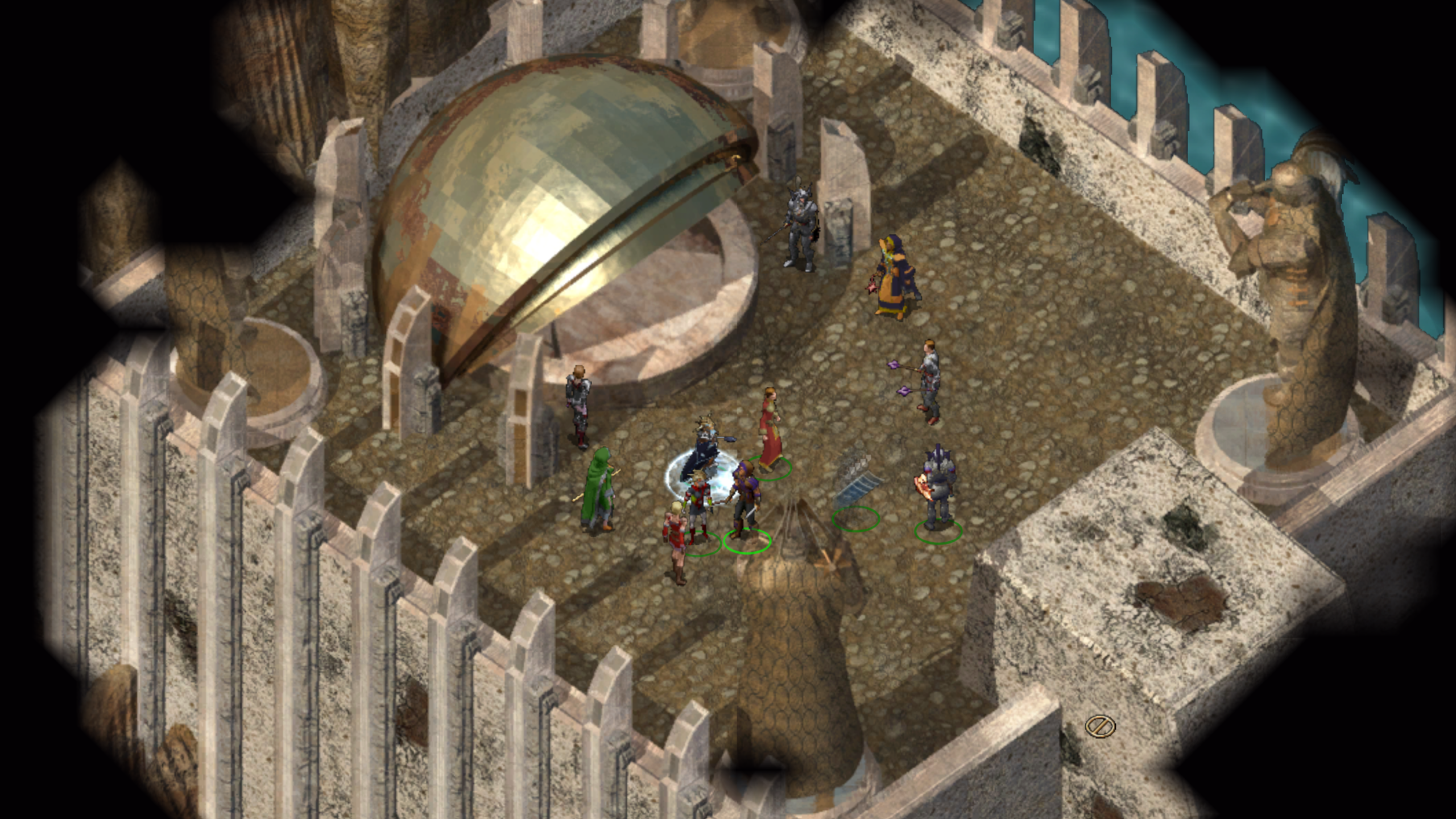
As BioWare grew he oversaw more and more people as lead designer on Neverwinter Nights, Star Wars: Knights of the Old Republic and then Dragon Age: Origins. “On Baldur’s Gate, I was writing and scripting, I could do it all. But on Knights of the Old Republic, I had several technical designers that were much better with tools. So I was more divorced from the hands-on stuff.”
The biggest change, however, arrived with The Old Republic. Halfway through development on Dragon Age: Origins, BioWare founders Ray Muzyka and Greg Zeschuk called Ohlen to their office and asked whether he could oversee a new studio making MMOs in Austin. “And I was like, ‘I hate massive multiplayer games. But all right, I’ll do it.’
“It took me a day, I talked to my wife and said, ‘It’ll be an adventure, we’ll only be there for a year.’ I’m still here. Maybe I should have known better.”
He accepted the challenge and stuck at it partly out of loyalty to Muzyka and Zeschuk, he says—he felt it was his “duty” to do as good a job as possible.
Suddenly he was overseeing a “never-ending” project made by hundreds of people where his main role was empowering others and making sure “big ego designers … didn’t kill each other”. It would become the most expensive video game ever made, with costs running into the hundreds of millions.
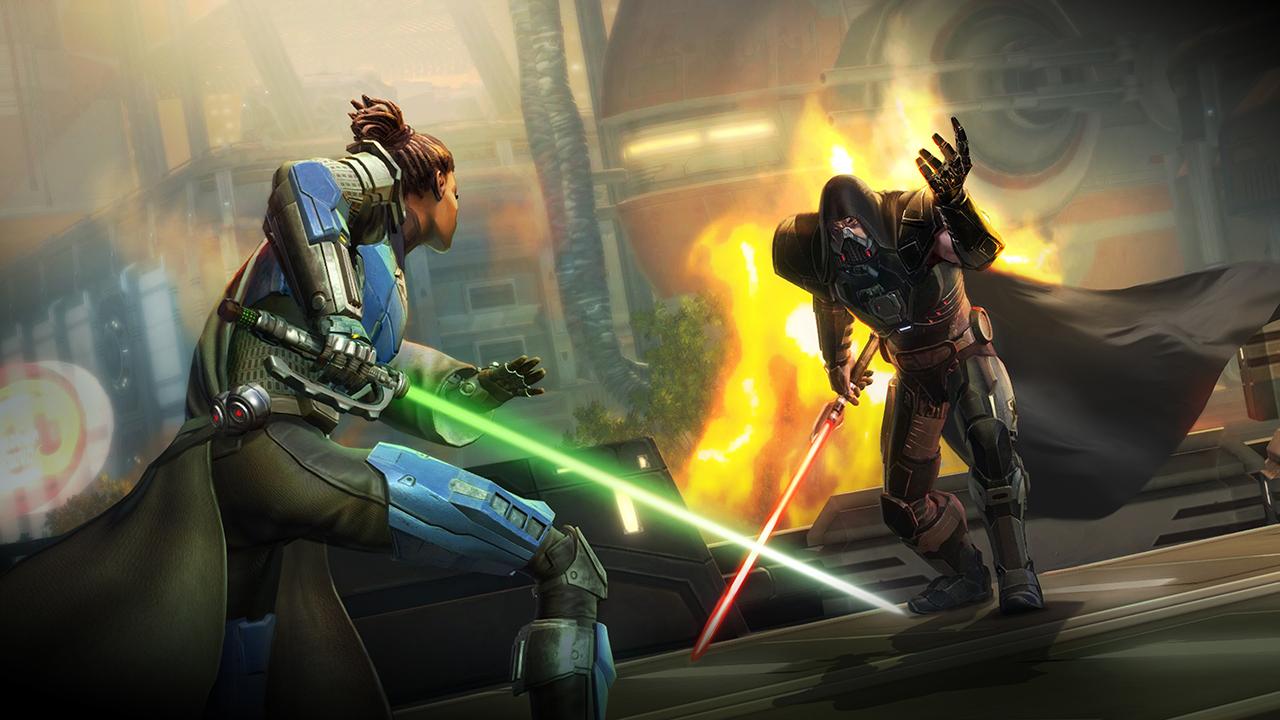
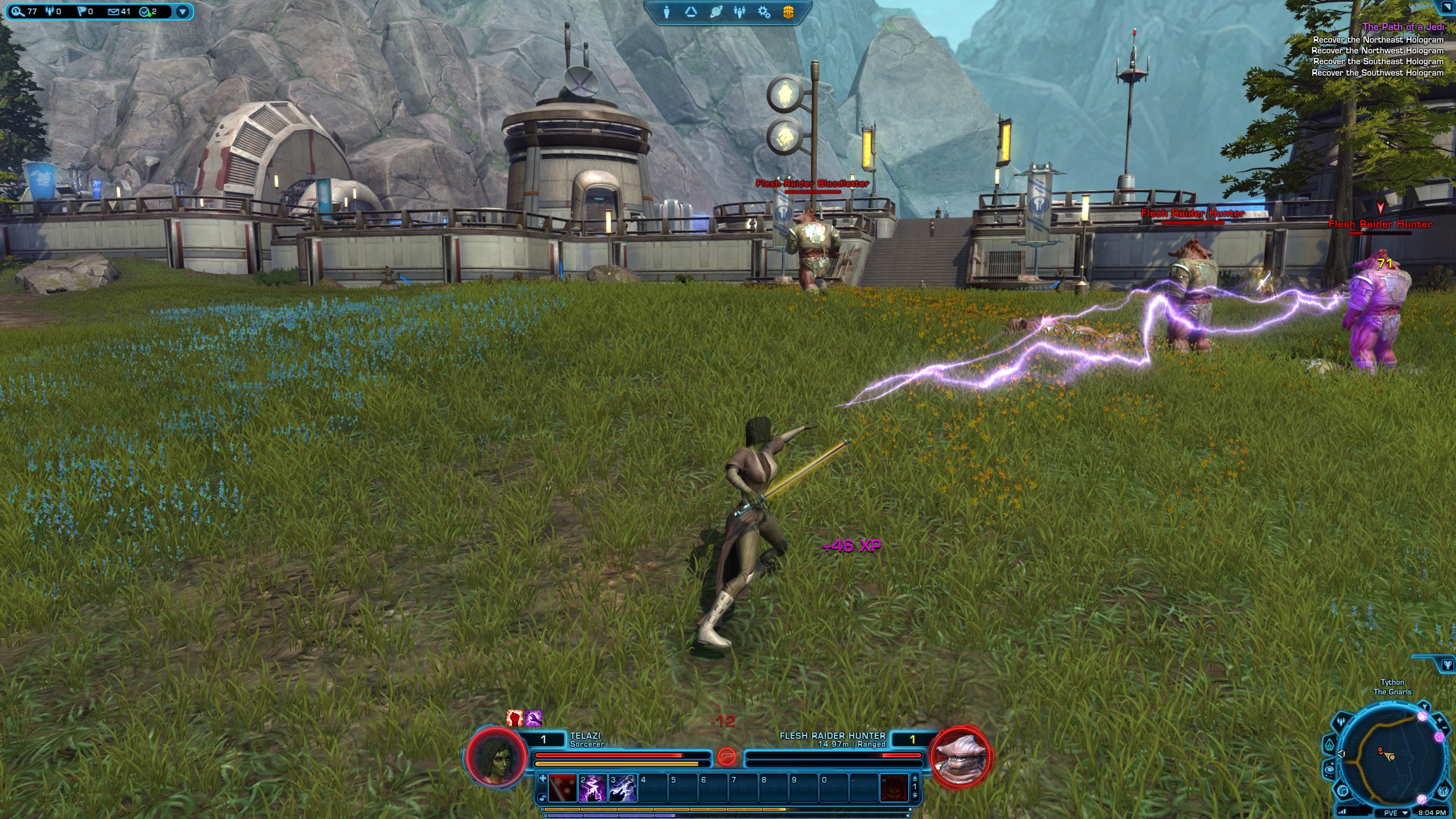
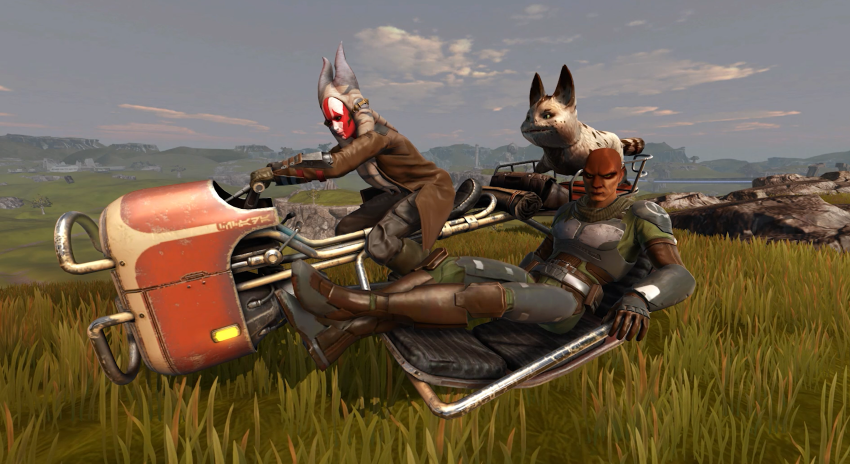
He’s spoken before about his regret at making an MMO akin to World of Warcraft in space, rather than his original vision of an online Knights of the Old Republic. At launch it was a sprawling, diluted 200 hours including eight origin storylines—a 60-hour game with fewer, focused narratives would’ve landed cleaner and felt more distinctive, he says.
“I’m just not someone who can manage hundreds and hundreds of people to go in a different direction … everyone wants to build WoW in space, and it’s my job to say no, we’re making [something different], and I wasn’t able to do that.”
Not for lack of trying: around 2015 he brewed a plan for a complete reboot. It would be called Star Wars: The New Republic. He spent roughly six months compiling a basic design document, powerpoints explaining the game, and a mock-up trailer from Blur Studio, the visual effects company. “It was the chance to do Knights of the Old Republic online, it was a chance to [put right] everything I’d said that we’d messed up.”
He convinced LucasFilm president Kathleen Kennedy and met several times with Dave Filoni, a director at LucasFilm including on Star Wars: The Clone Wars animated series. “He was like, ‘if you set it a couple hundred years before the fall of the Republic, we can have a tie in.’
“I remember I got super excited because the big challenge was [EA exec] Patrick Söderlund, who I think is great but hates Star Wars: The Old Republic. And I convinced him … it was one of the greatest accomplishments of my career,” he says.
His joy soon withered.
“We were going to be able to have a Star Wars: The New Republic, until the board of directors of EA, who all remembered the launch of Star Wars: The Old Republic, and remembered spending $300 million,” he says, laughing again. “They’re like, ‘Why the fuck are we gonna spend a bunch more?'”
The big challenge was Patrick Söderlund.
James Ohlen
There was no debate, no chance to plead his case, just a big, fat no.
He understood the rationale but it was “discouraging”, he says, and made him realise that “at some point, I’m probably just going to have to get out of here”.
“That was the beginning of the end for me … The only way you get through life is by having empathy for everybody, including people that are causing you pain. I was thinking of it through the lens of EA. And I’m like, there’s no way I’m ever going to win in this. It just doesn’t make sense to empower someone like me. If I was there, I wouldn’t.
“So I gotta get out. This is just not for me.”
It wasn’t the only thing nudging him towards the door.
He doesn’t criticise EA—he says it was no worse than any big, corporate bureaucracy, and that it wanted BioWare to succeed—but he says the departures of BioWare founders Muzyka and Zeschuk in 2012 removed the “giant shit shields” protecting him and other developers. He realised then that “I wasn’t gonna make singleplayer RPGs ever again”.
Towards the end of his time at BioWare he began to feel powerless, unable to enact change, “like I literally provide no value anymore”.
“I would tell people, I’m actually a highly paid, completely useless person. It’s just that everyone thinks that I’m super useful because of my reputation. No one seems to be able to tell, except me. There’s research that shows that when you just feel like you’re not accomplishing anything, it’s actually the biggest thing to bring about burnout,” he says.
“My wife was like, ‘But you could have ridden it out. Don’t lots of execs do that?’ And I’m like, ‘I know, but they’re not creatives. They enjoy the politics, and I don’t blame them. But that’s not what I like.”
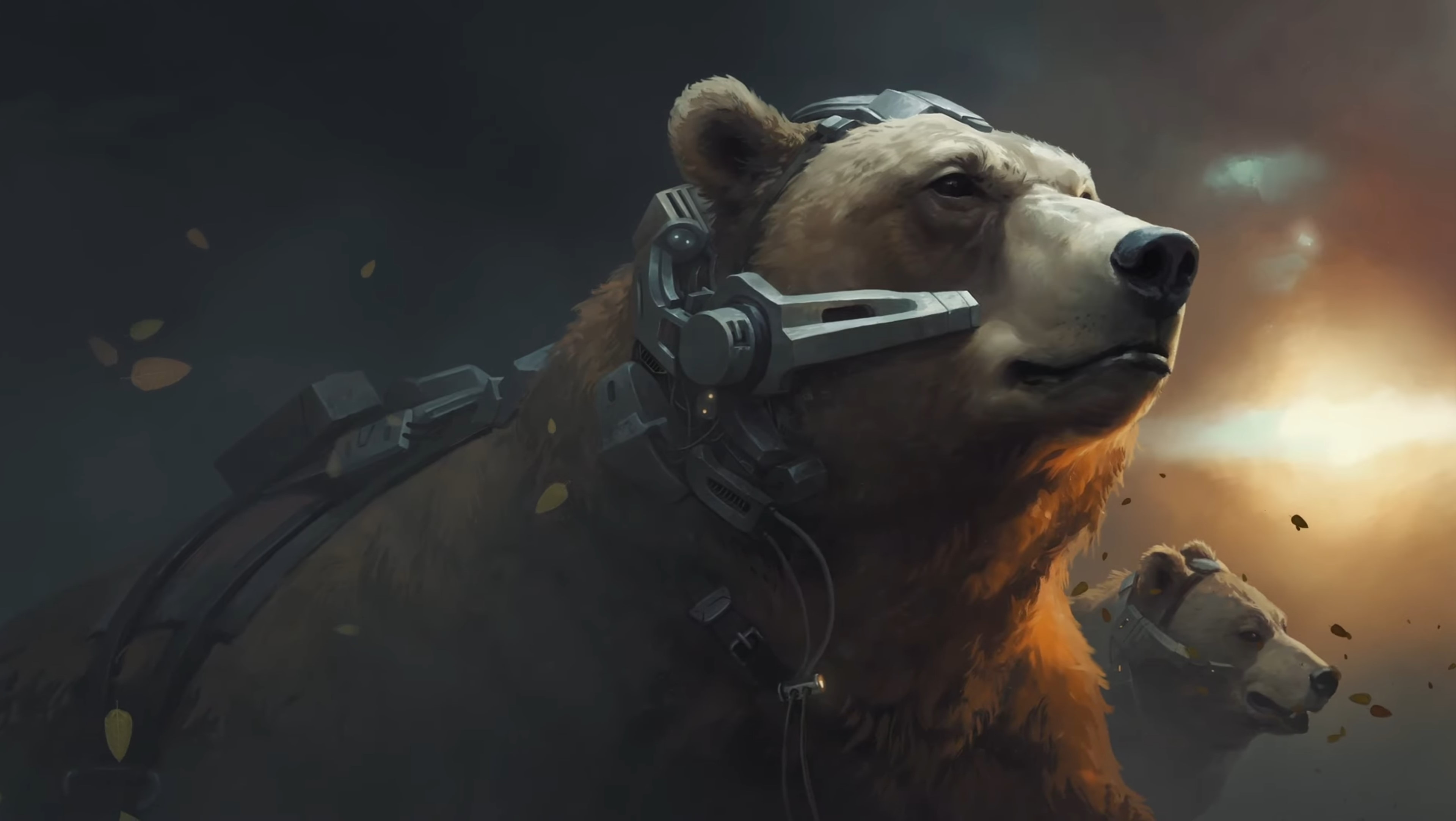
When he launched Archetype Entertainment in 2019 as a subsidiary of Wizards of the Coast, itself part of Hasbro, he was hiring developers from AAA teams and paying good salaries, so he always knew he was making a large game.
“Maybe I fooled myself,” he says. “I fooled myself that I wouldn’t be dying inside. But yeah, it was just too much.”
I fooled myself that I wouldn’t be dying inside.
James Ohlen
As the studio head he was “dealing with people, creatives, dealing with artists, and engineers, and writers, and producers, and the publisher, and everything,” he says. Simultaneously he was creative director on Exodus, itself an ambitious, big-budget RPG.
“You’re trying to manage all sorts of different personalities, and people, and groups, and organisations, and then there’s the pressure cooker of being on a big budget title.”
One painful example was the contract negotiations with the author Peter Hamitlon, who Ohlen greatly admires (Hamilton is consulting on Exodus and has also written the expanded universe novel Exodus: The Archimedes Engine). Discussions that should’ve taken months stretched into a year. “That nearly killed me,” Ohlen says.
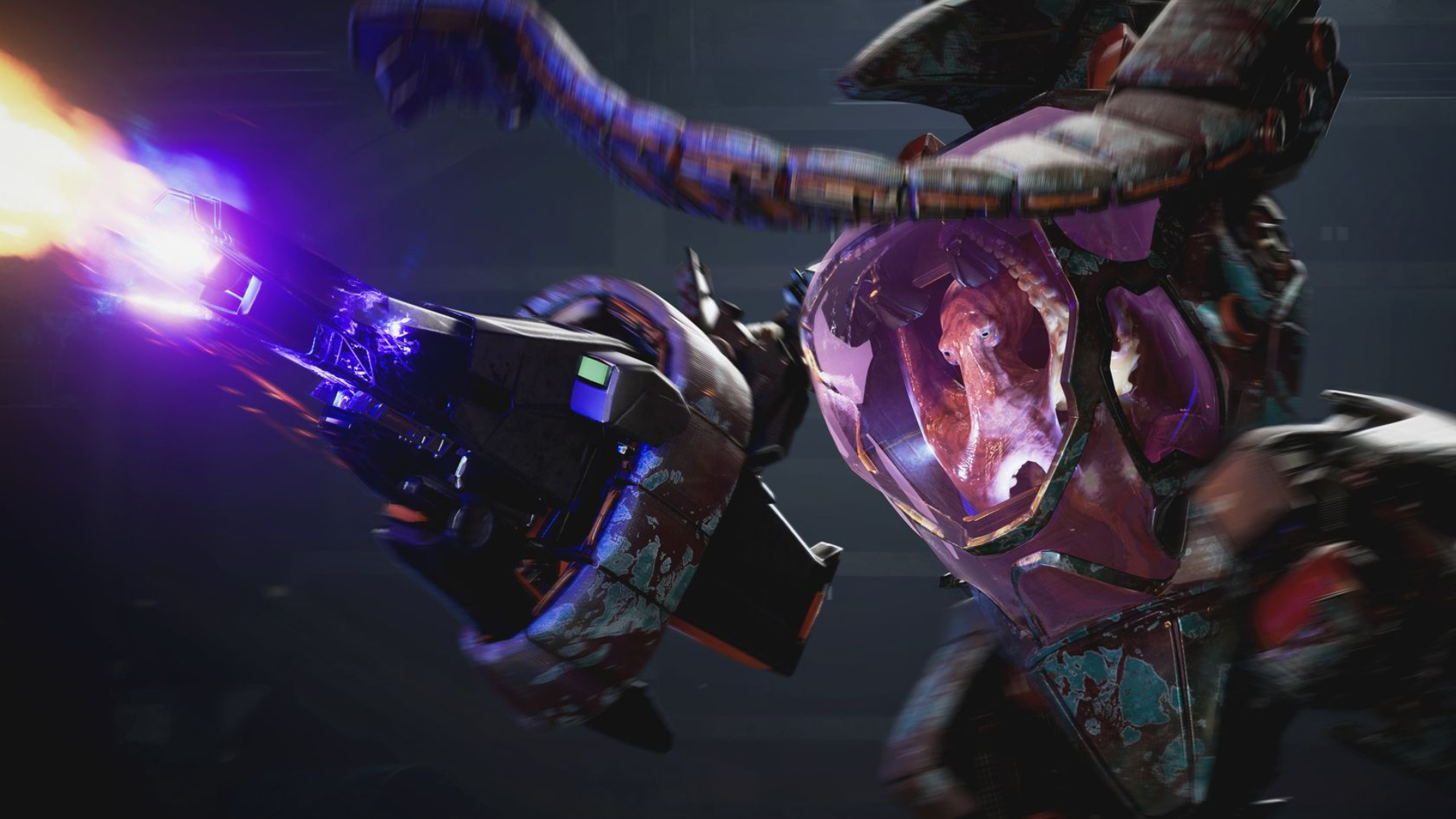
It ended up with “three different groups all trying to negotiate a contract, and [only] one of them seemed to want to get it to the finish line. I was taking calls at like, 11:00 pm.”
He pauses, then laughs. “When it finally got it signed, of course my team said: ‘Well, why do we have to use Peter Hamilton’s stuff?’ I’m like, ‘I’m gonna kill you all!'”
He says he also failed to hire an “hotshot executive producer” who could be his own personal “shit shield”, in the way Muzyka and Zeschuk had been at BioWare. Hasbro, like EA, is a large company, that Ohlen sometimes struggled to navigate: he even felt compelled to text CEO Chris Cocks from time to time to push things through.
“It was one of the only ways I could get things done sometimes—it’s not because people were being deliberately bad, it was just, you know, ‘I have lots of things on my plate. Why am I gonna do this thing?'”
Ultimately, he’s concluded that he’s simply not like “all the people I know that have headed up studios because they love it, and I hate it,” and he’s vowed to “listen to my old self when it comes to knowing my limitations.”
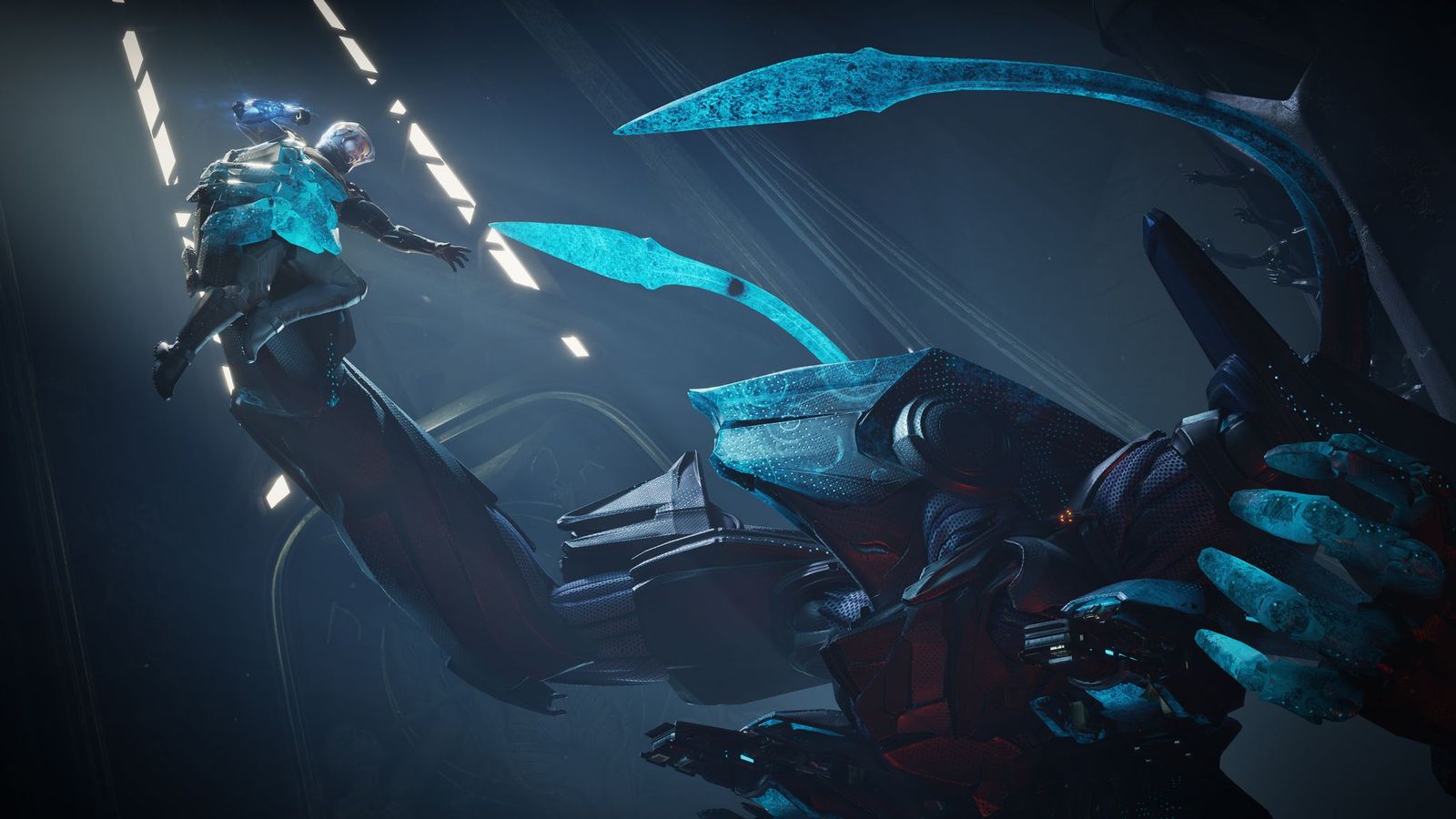
His focus this year is on a trio of RPG adventure books published by Arcanum Worlds, a venture he co-founded with Jesse Sky, the former BioWare creative director who helped establish Archetype Entertainment and is now the creative director on Exodus (one of the reasons he could leave Archetype was that he had “good people” like Sky to hand over to, he says). He’s also in final edits for The Stygian Passage, a 280-page adventure book.
His eyes light up discussing these projects—I count at least nine that he’s working on—but it’s also clear that at least some part of him yearns to return to games.
He says, at various points, that his books “might be a jumping off point for videogames”; that he knows “young hot shot” developers he’d love to work with; and that he’s received multiple job offers. “I’m actually quite open with them, you don’t probably want me right now,” he says.
“But that’ll change. I’m sure I’ll get bamboozled into starting another videogame studio—and all the pain that comes with it.”
2026 games: All the upcoming games
Best PC games: Our all-time favorites
Free PC games: Freebie fest
Best FPS games: Finest gunplay
Best RPGs: Grand adventures
Best co-op games: Better together