
AI doesn’t have the best rep. Being the thing responsible for the memory crisis is certainly not great, but concerns over copyright, the environment, and human creativity only make things worse. That’s why it’s a little bit satisfying to watch a crowd of university graduates respond negatively when they’re told it is the future.
As spotted by 404Media, Gloria Caulfield, the vice president of strategic alliances at private equity-funded development company Tavistock, recently took to the stage at the University of Central Florida. There, she said, “Let’s face it, change can be daunting. The rise of artificial intelligence is the next industrial revolution.”
the tech world has genuinely not grappled with how many peopledespise them and what they make pic.twitter.com/t2VIuYEjLWMay 11, 2026
This statement was initially met by a brief silence, followed by a loud boo from the crowd. Caulfield responded by turning around, looking at others on the stage, followed by saying, “What happened?”, seemingly surprised by the response.
After acknowledging that she “struck a chord”, Caulfield continued on. “Only a few years ago, AI was not a factor in our lives.” As you might imagine, this acknowledgement was met with a rousing cheer, which seems to have puzzled the speaker just as much as the boos did.
What makes this clip so interesting is how different the crowd is from the speaker. Being in favour of AI isn’t a particularly strange position. After all, OpenAI claims ChatGPT has more than 900 million weekly active users, with 50 million being subscribers.
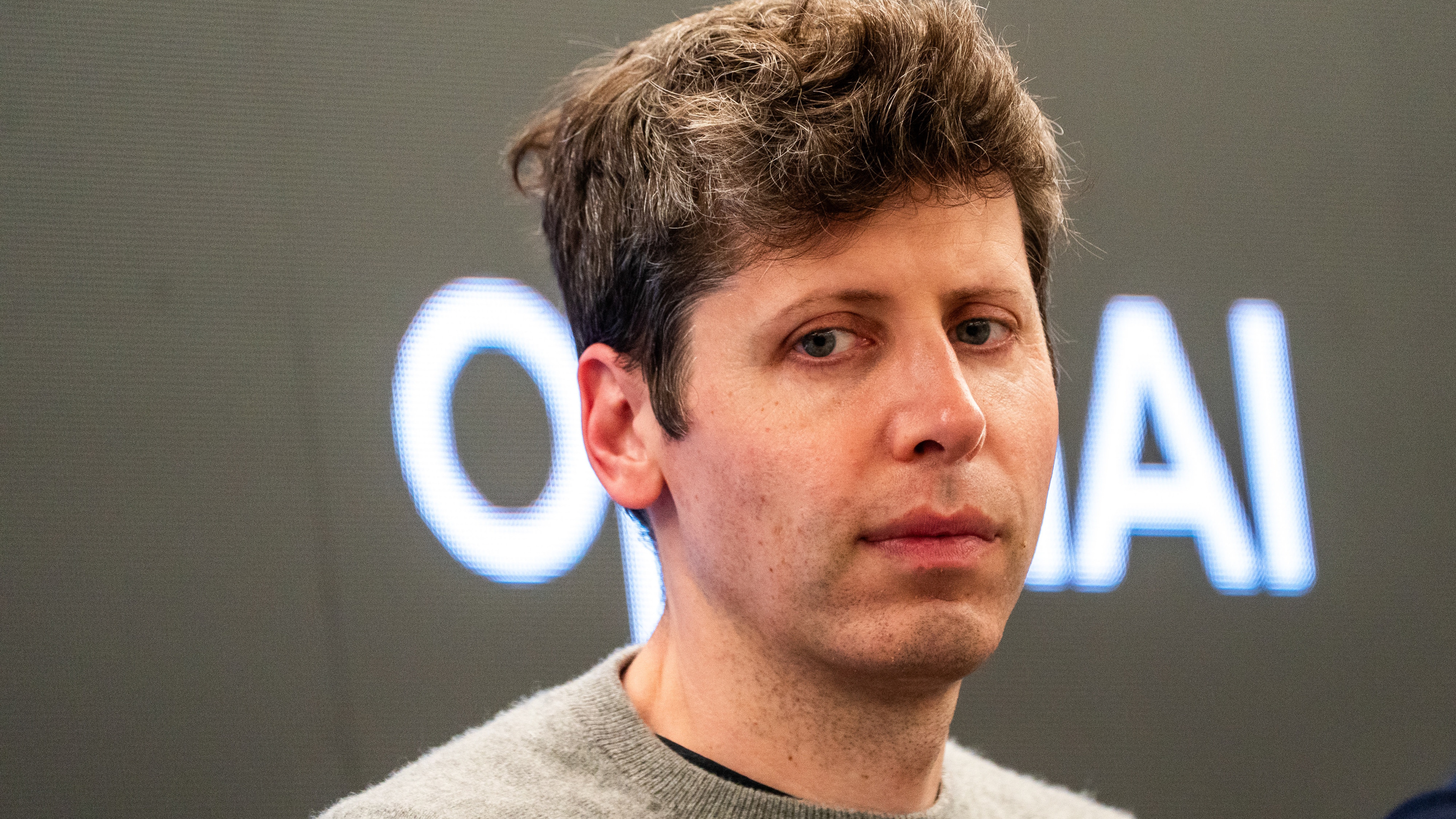
And it’s true that AI is having a major impact. There are hundreds of billions of dollars caught up in the technology, from the likes of investment involving OpenAI, Anthropic, and Microsoft. How people react to that news is anyone’s guess, but it’s true that it has come forward to the centre of the world’s stage over the last few years.
In fact, even the specific statement isn’t particularly unique. Late last year, Nvidia head Jensen Huang argued the UK needs to take advantage of the explosion of AI. He said, “just as the last industrial revolution, the reason why it came about was because you needed it. And so the industrial revolution that started here in the UK came out of need. You need it now, too.”
But, alas, Huang is someone who has a lot to gain from the mainstream adoption of AI. Nvidia is the world’s first $5 trillion company because of the technology, and the US has even recently approved the sale of Nvidia’s H200 AI chips to China, which, if it goes through, is sure to positively impact the company.
I’m sure that not only are many of these soon-to-be university graduates worried about AI’s impacts on the environment and economy, but also how it might affect their jobs the second they actually graduate.
Perhaps it feels a tad in poor taste to wax lyrical about its benefits to a crowd who is likely anxious about where it all might go next.