
Thermal Grizzly has some products in the works that will make any custom loop aficionado salivate. Though there’s one that stood out to me while visiting its Computex 2026 booth: an experimental direct-die block with diamonds under the cover.
“So this block includes a diamond, industrial diamond, which is like exactly like what you see here,” Sasha Robey, Senior Marketing Manager at Thermal Grizzly, says as she gestures to the two incredibly thin diamond sheets on display “To put it on the block, we have to put a special metal coating on it, because otherwise liquid metal won’t stick to it.”
The block sits directly atop of the CPU silicon—hence the name, direct-die. The model on display at Thermal Grizzly’s booth is designed for an AM5 processor, and one with two CCDs, so ideally a Ryzen 9 9950X. Though you do have to delid a processor to get down to the silicon, which can be a precarious business.
You can see on the inside of the block where each chip will sit: the IO chip is cooled by lapped metal, but above the two CCDs sit the two razor-thin CVD diamond inserts.
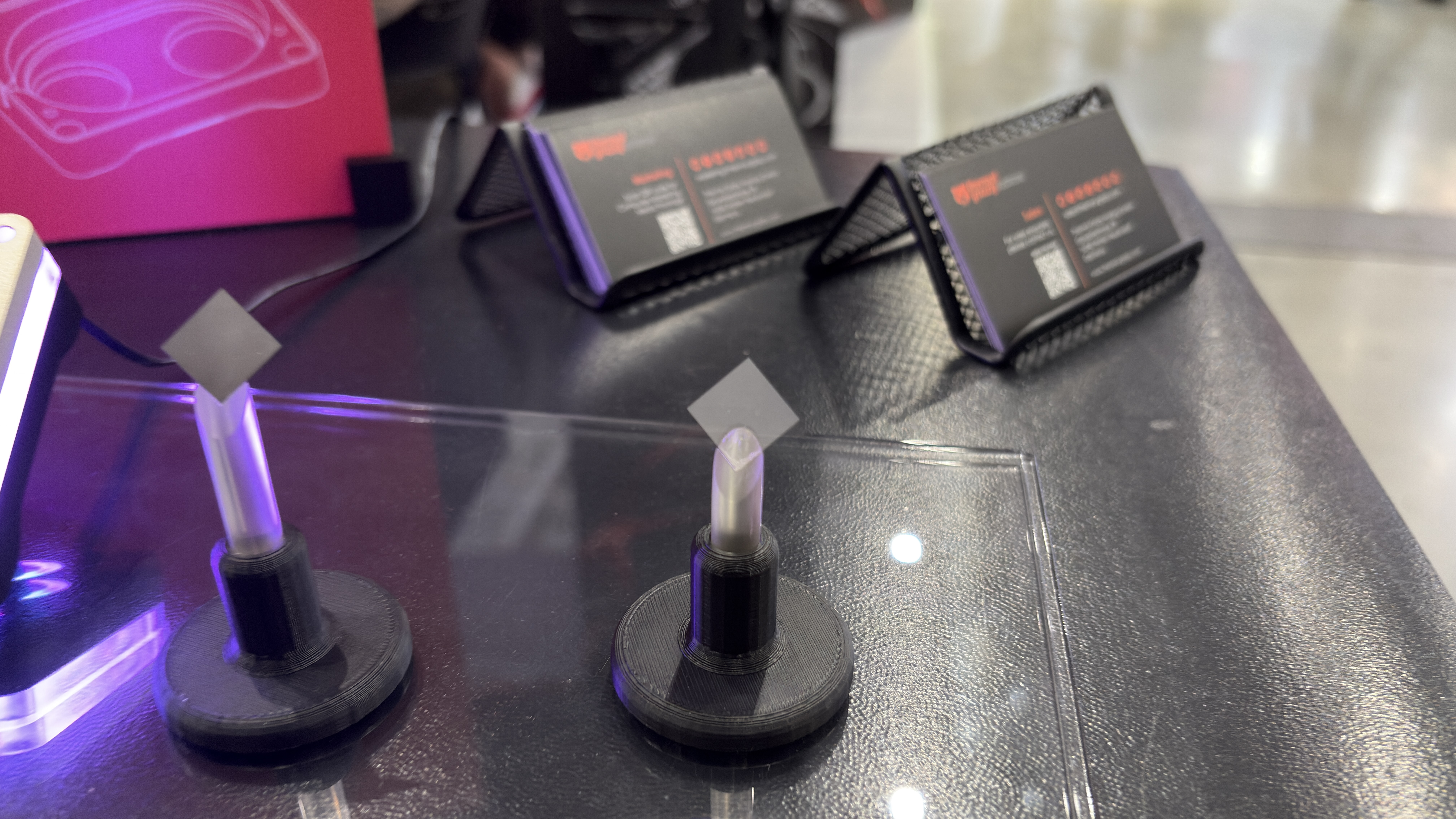
CVD stands for Chemical Vapor Deposition. The end product is what, in regular parlance, would be called a lab-grown diamond. Though it’s just as real as any other diamond. Thermal Grizzly is then using a very thin sheet of this diamond for its thermal benefits.
“The thermal conductivity is three or four times better than normal blocks the industry is using,” Robey says.
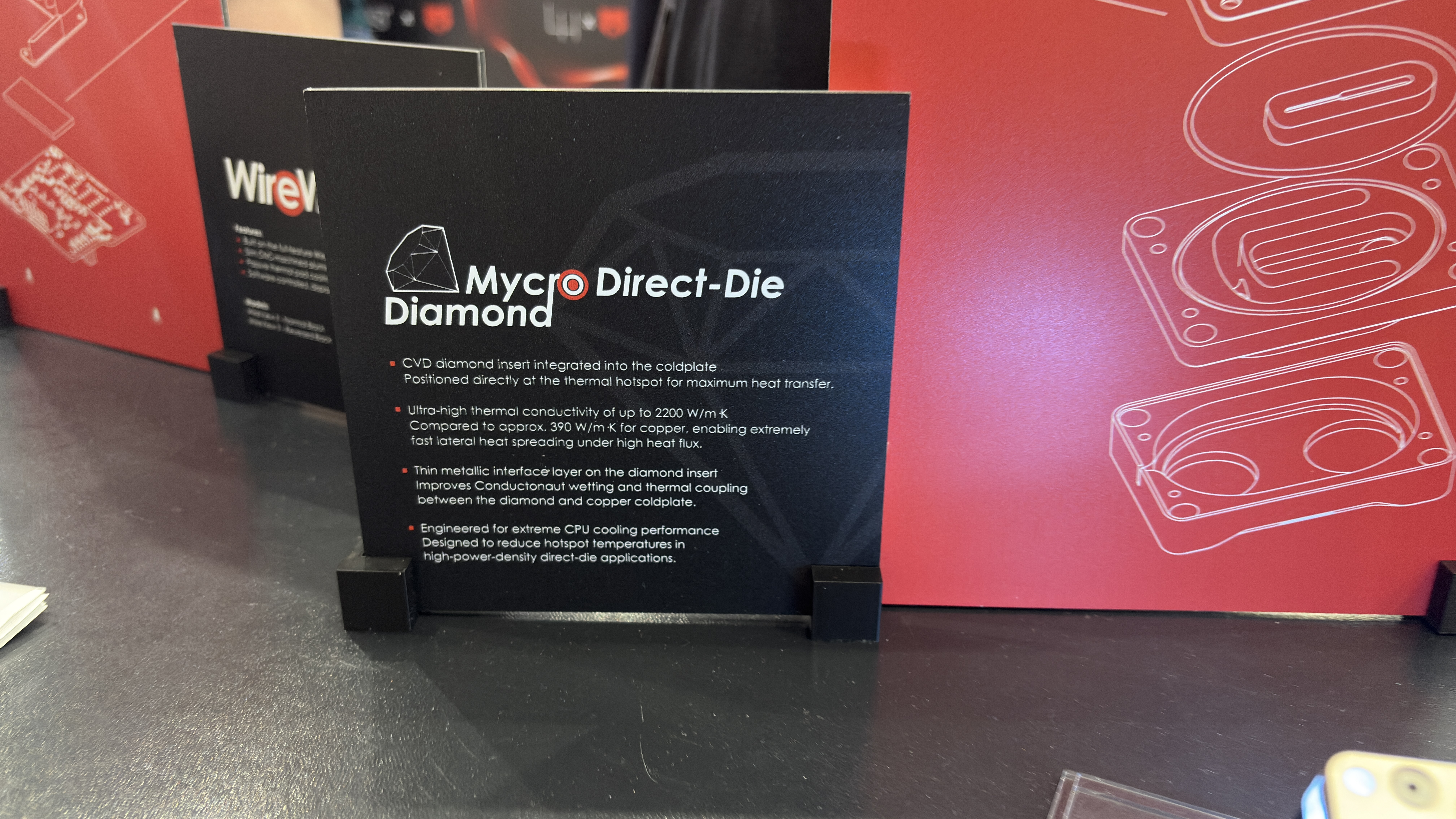
Thermal Grizzly notes that the thermal conductivity of copper, which is often used for these applications, including the rest of Thermal Grizzly’s direct-die block, is approximately 390 W/mK. This diamond is up to 2200 W/mK.
Though Robey is quick to point out this is a personal project, experimental as heck, and unlikely to make it to market because Thermal Grizzly understands the price tag may be a bit of a shock. Each diamond insert costs around €500 and I’m given a very rough estimate for the total cost of the block: €1500 or more.
“I think this will never make it to the market, but yeah, an interesting example of what is possible.”
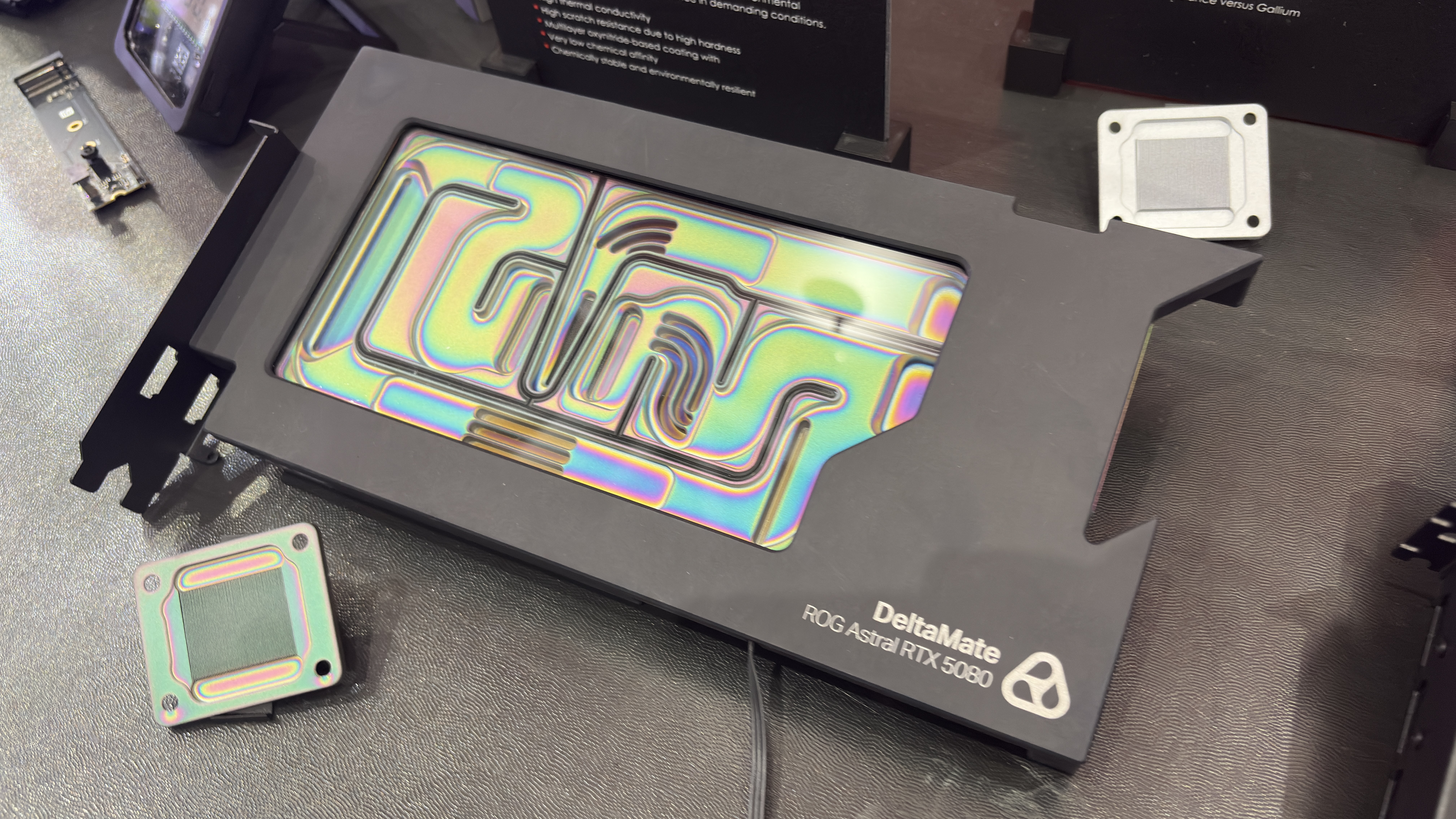
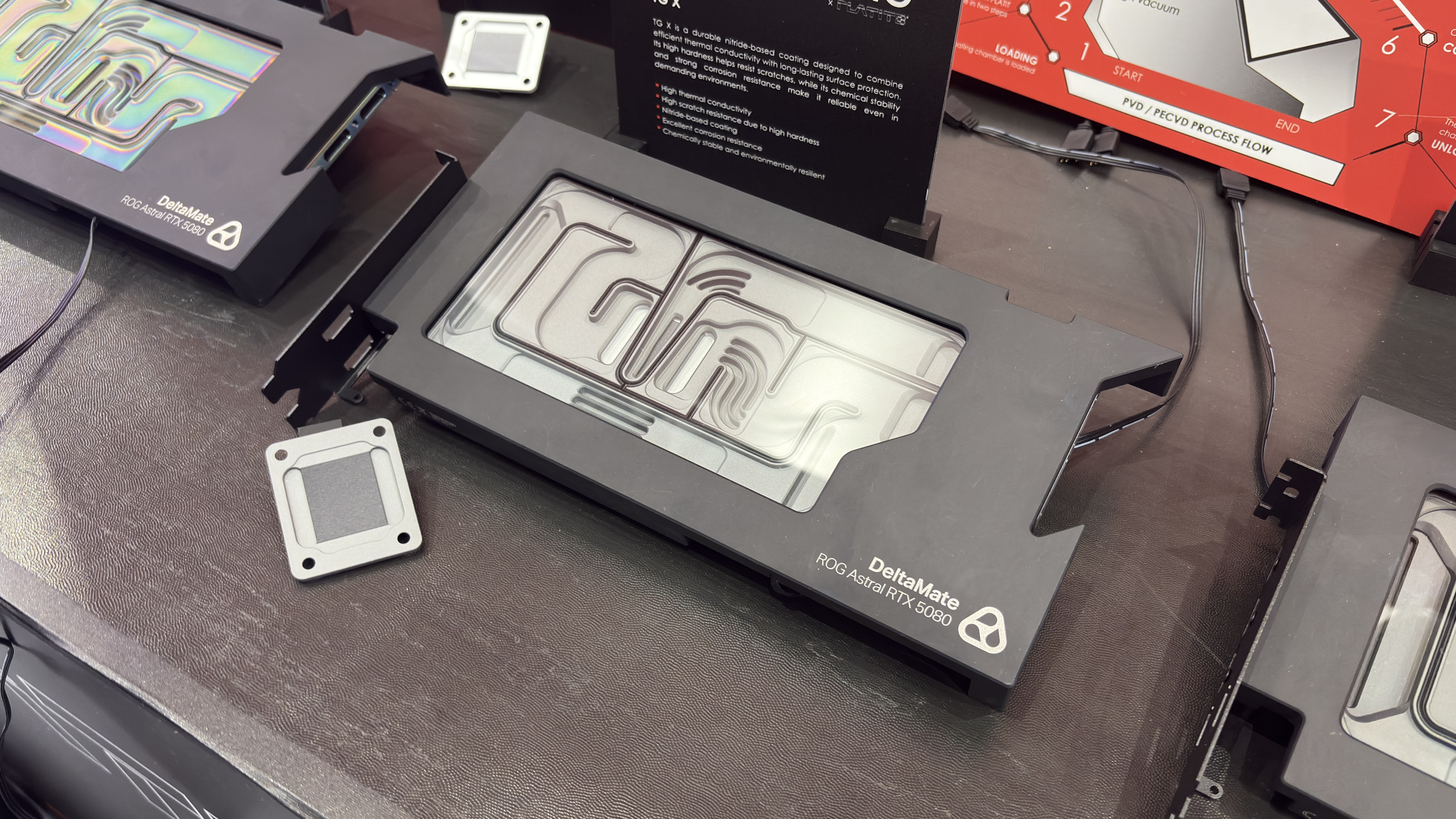
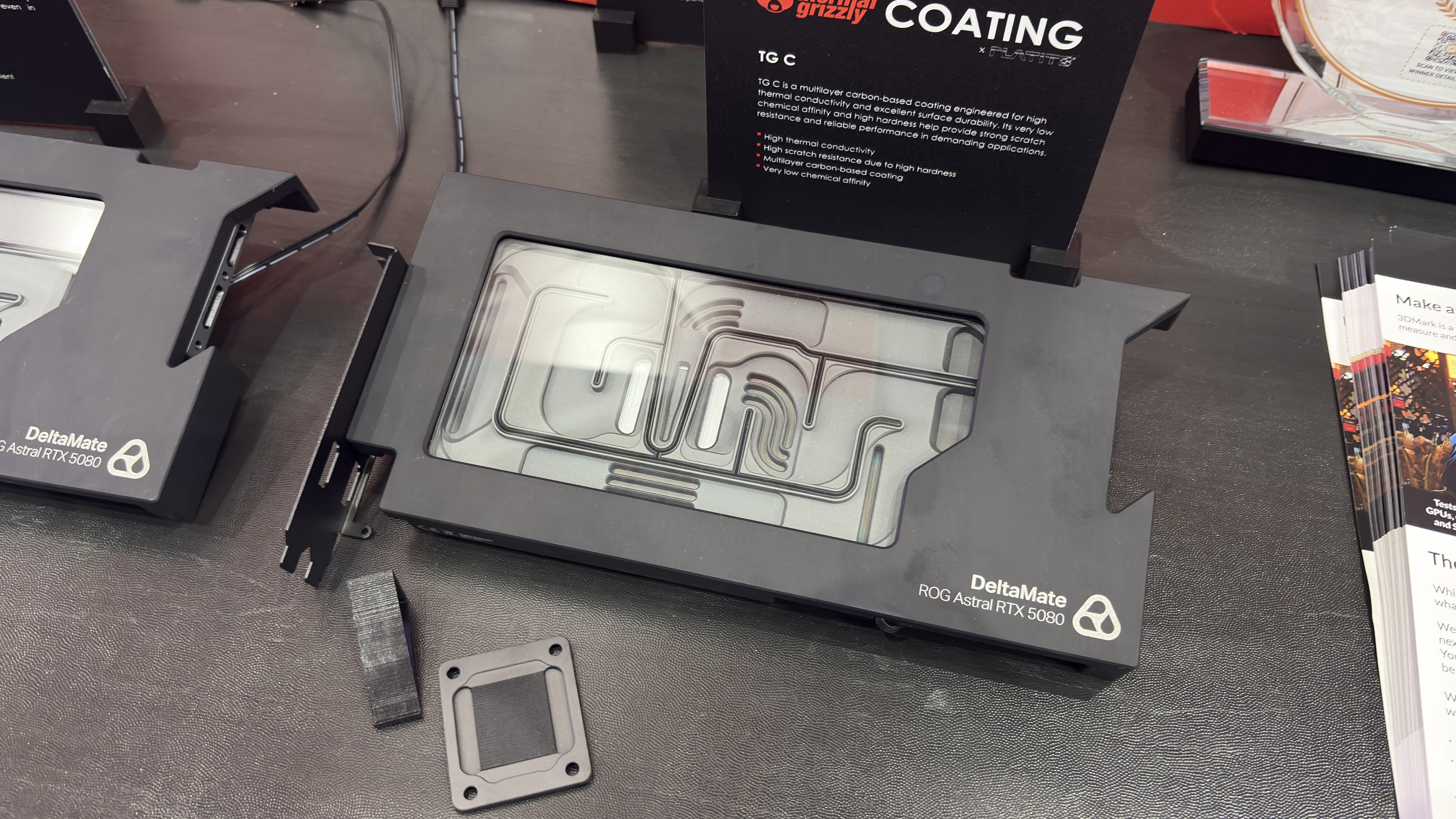
What is eventually coming to market are these gorgeous new coatings for Thermal Grizzly’s non-diamond CPU and GPU blocks. It’s joined forces with Swiss company Platit to test out a range of new coatings, including a carbon-based option (light gray), a nitride-based option (dark grey), and a oxynitride-based coating (rainbow).
“We’re exploring different types of coatings, so that we could potentially move away from nickel-plating, because it’s not great because of corrosion,” Robey says. “Plus for us it means when we have to ship blocks out for nickel plating, we wait four weeks or more sometimes to get products back. So we would really like to internalise this process to also be able to do it.”
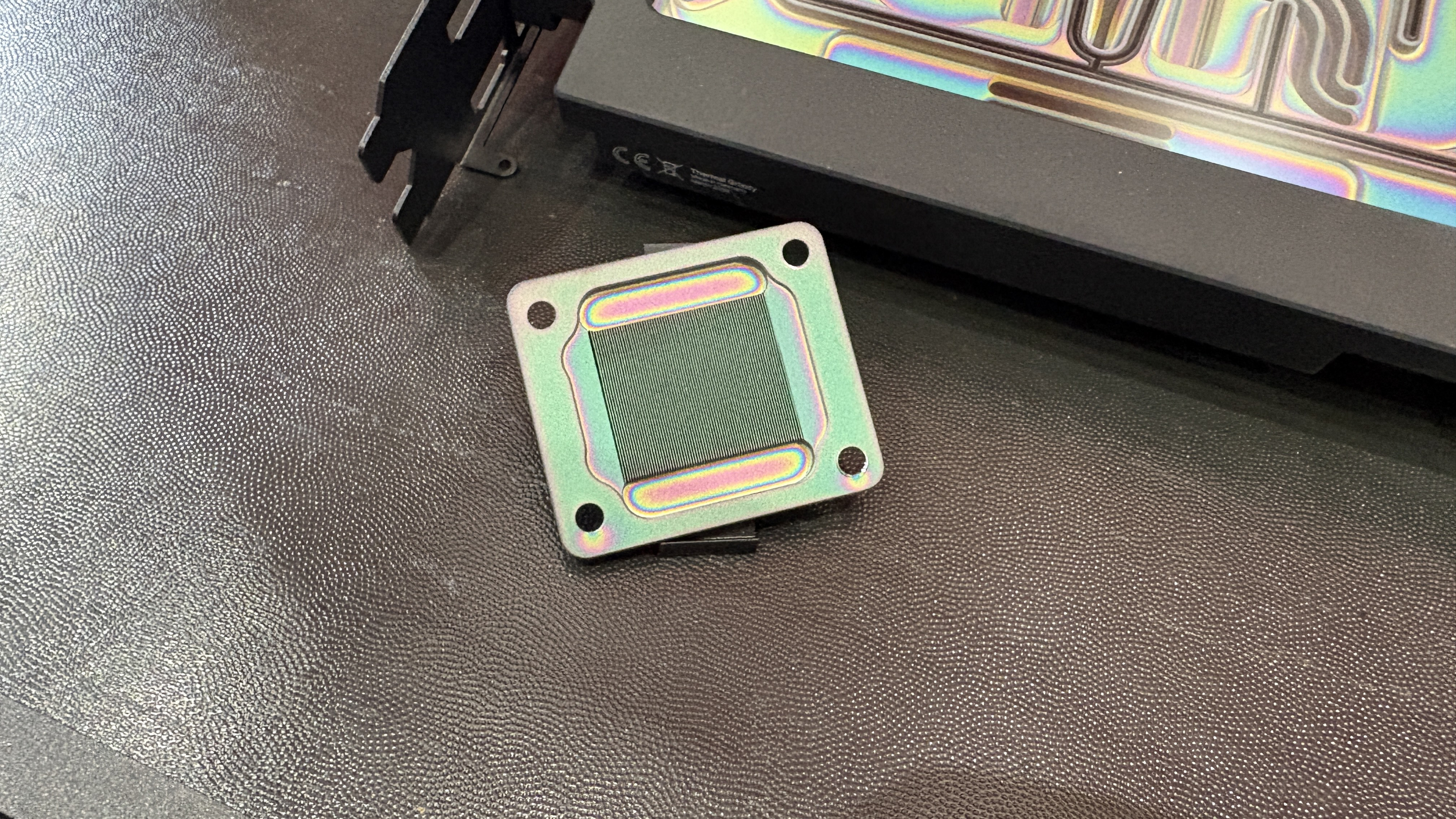
TG O is by far the best-looking up close, with a rainbow patina that sorta stole the spotlight from the rest for me. It looks superb on the CPU block too.
“Everybody likes the rainbow one,” Robey says, “and it looks like rainbow because it’s so thin that the light reflects in a way that we see rainbow.”
Thermal Grizzly hasn’t yet decided which options it’s going to go for or if it’ll just offer a few as customisation options.