
Weird Weekend is our regular Saturday feature where we celebrate PC gaming oddities: peculiar games, strange bits of trivia, forgotten history. Pop back every weekend to find out what Jeremy, Josh and Rick have become obsessed with this time, whether it’s the canon height of Thief’s Garrett or that time someone in the Vatican pirated Football Manager.
As you’ve probably heard multiple times by now, Marathon is a thoroughly excellent game. Bungie brings all its FPS experience to bear on the inexplicably popular extraction shooter genre, delivering a game that lures you in with its unique aesthetic and then socks you in the jaw with nuanced class-based combat. It has fantastic shooting, an intriguing story and, as you delve deeper into the game, some outstanding map designs.
In short, I like Marathon a lot. But I would trade it instantly for another game about grouchy dwarves blowing up zombies with Molotov cocktails.
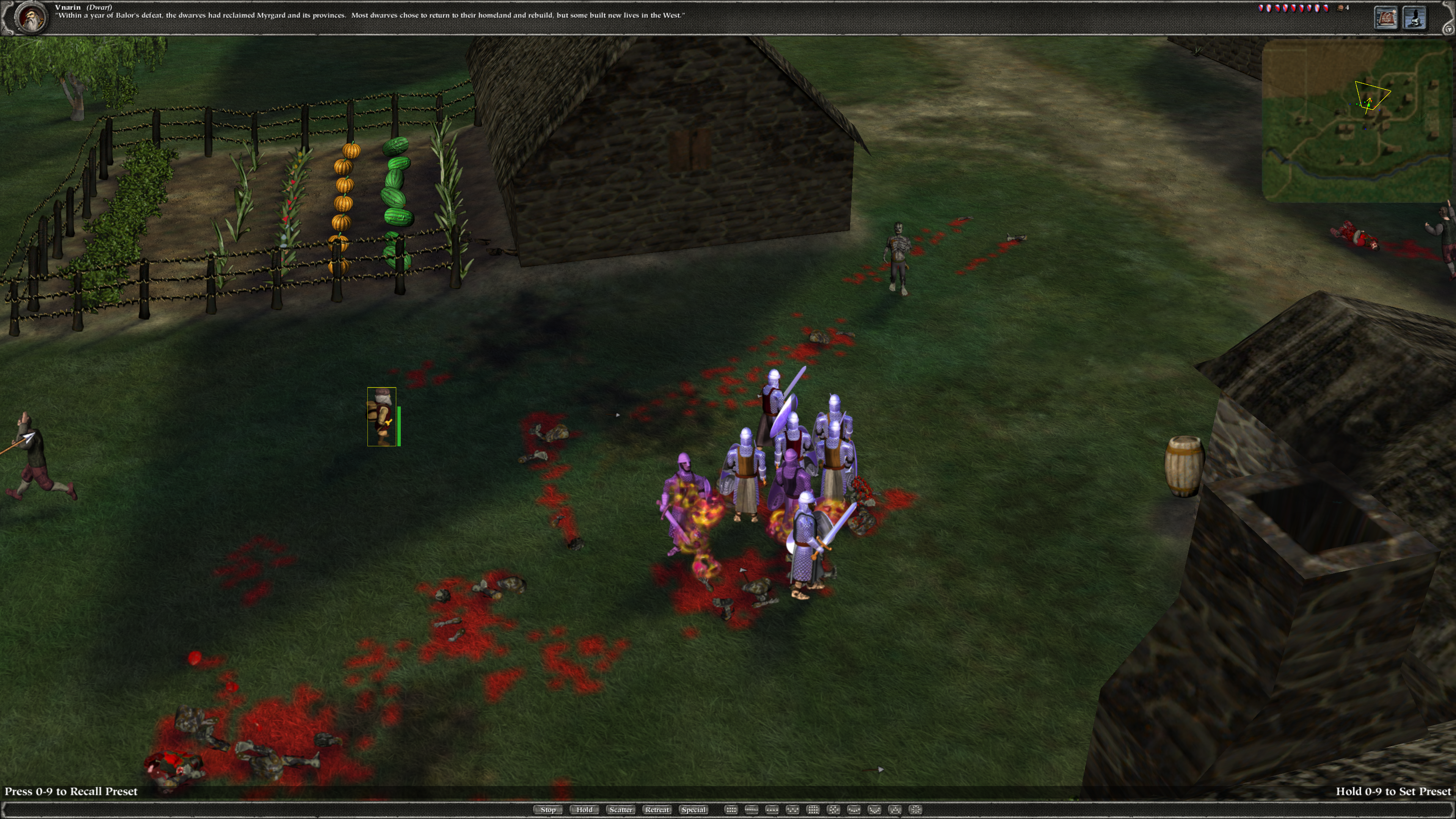
I am, of course, referring to Myth, Bungie’s series of low-fantasy strategy games developed between the original Marathon trilogy and Halo: Combat Evolved. It’s a curious island in Bungie’s FPS-focussed history, one you’d be forgiven for not having visited or even knowing about in the terrifyingly futuristic year of 2026.
Halo is something of a false floor in Bungie’s past anyway, tending to obscure everything its success was built upon. But it doesn’t help that you can’t buy the Myth games online anywhere, while getting them to run on modern machines requires you to jump through a bunch of hoops.
This is particularly wild when you consider what a big deal the Myth games were when they arrived, a shot in the arm for a genre that had quickly become bogged down in Command & Conquer clones. The irony here is that Bungie had not initially intended to get into strategy game development.
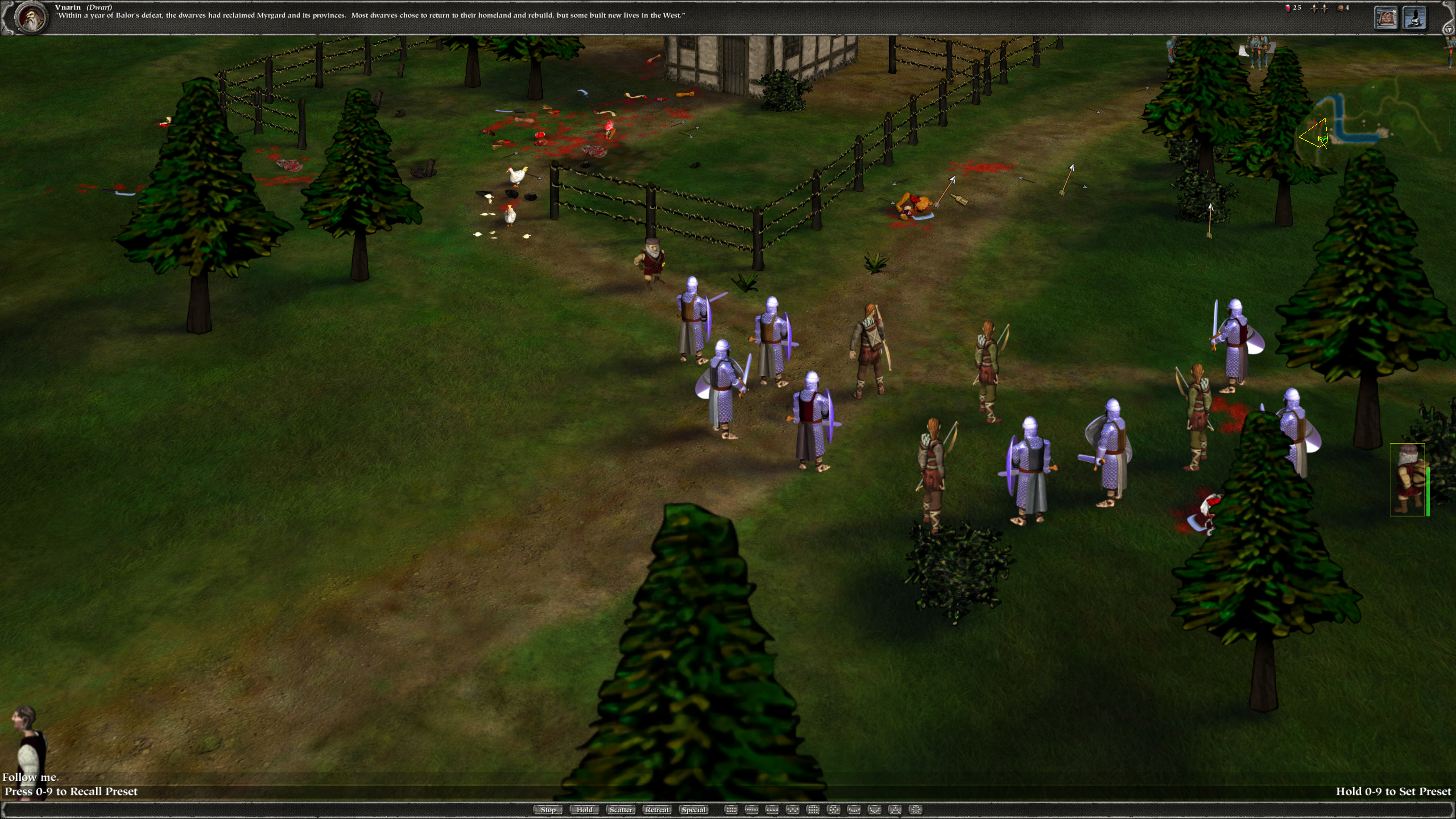
Following Marathon Infinity, released in 1996, Bungie had planned to develop another FPS, this one in true 3D. But at some point, Bungie’s Jason Jones decided the project was too similar to Quake, and responded by pivoting to a completely different genre.
Bungie had not initially intended to get into strategy game development.
Myth’s design was a direct response to the trajectory of strategy games post-C&C, streamlining the base-building, army-rushing loop of C&C and its brethren into pure, tactical squad management.
Thrusting players into a grisly low-fantasy world terrorised by hordes of undead, Myth sees players assume control of small forces of warriors, archers and dwarven artillerymen (plus a few other units later in the game). Each mission assigns you specific objectives, like defending a bridge or escorting a village leader through the wilderness. Inevitably, the wretched minions of the Fallen Lords will attack your party, usually in numbers greater than your own.
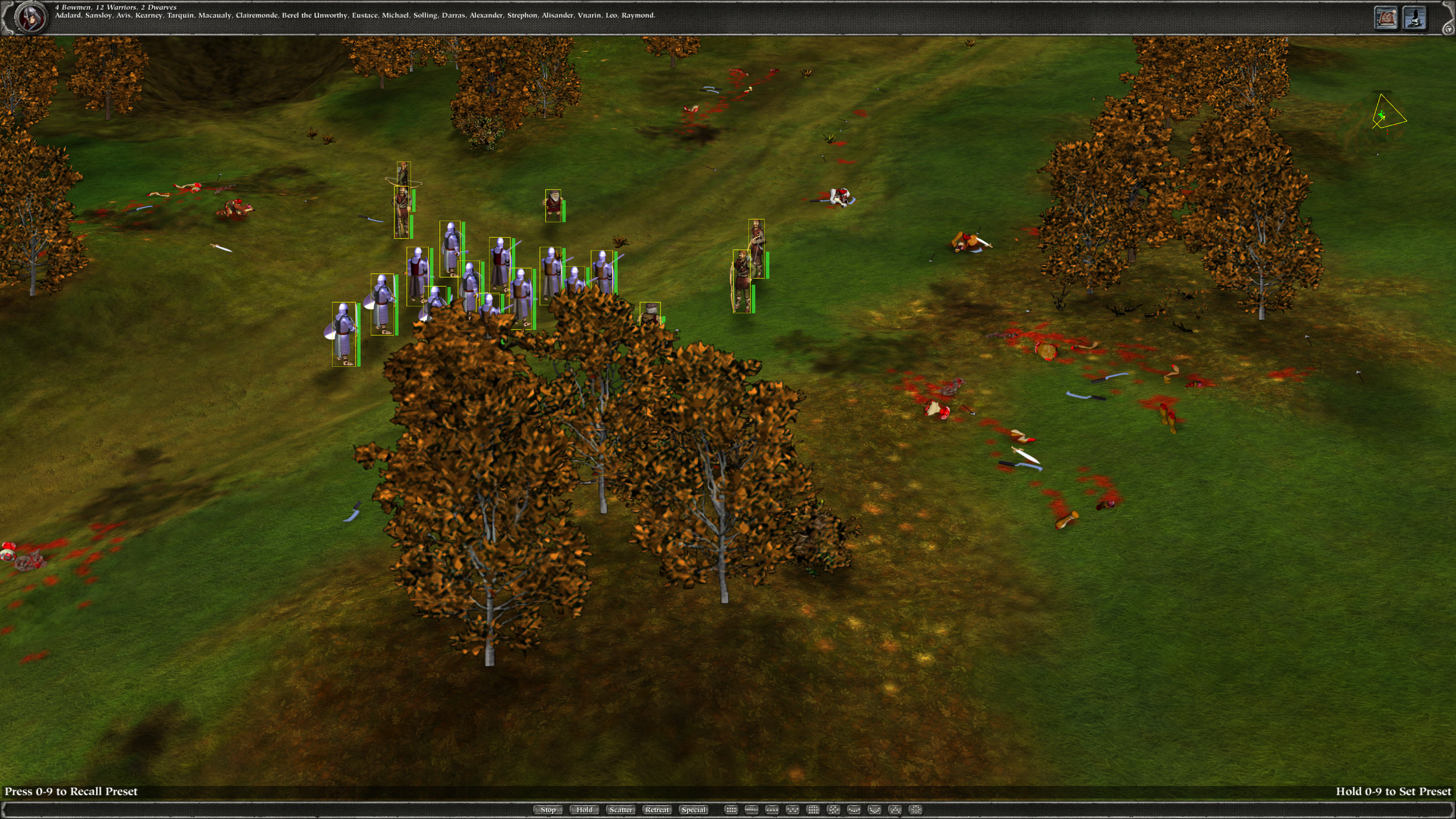
This means you need to use your wits to emerge triumphant. And more than most strategy games of this era, Myth really is a game about wits. Barring scripted reinforcements, the units you start a mission with are what you get to complete it, so you really need to maximise enemy casualties by minimising your own.
You’ll want to position your archers so they can thin out advancing enemies before they clash with your melee units like warriors and berserkers, and you’ll want those melee units in the right formation so that they can slice through enemy health bars as quickly as possible. Most of all, though, you’ll want your dwarves to bomb the un-living shit out of enemies before they have a chance to set a rotting finger on your other units.
It would be unfair to say that Myth’s greatness resides wholly in its Molotov-chucking dwarves. But they are what first grabs your attention, the special sauce that gives Myth a different flavour from other strategy games of the time. As I’ve mentioned about three times at this point, these growling, grouchy warriors attack enemies by lobbing Molotov cocktails at them. But these incendiary bottles act more like grenades in Myth. Rather than setting enemies aflame, they blow them apart in a spectacular shower of blood and limbs.
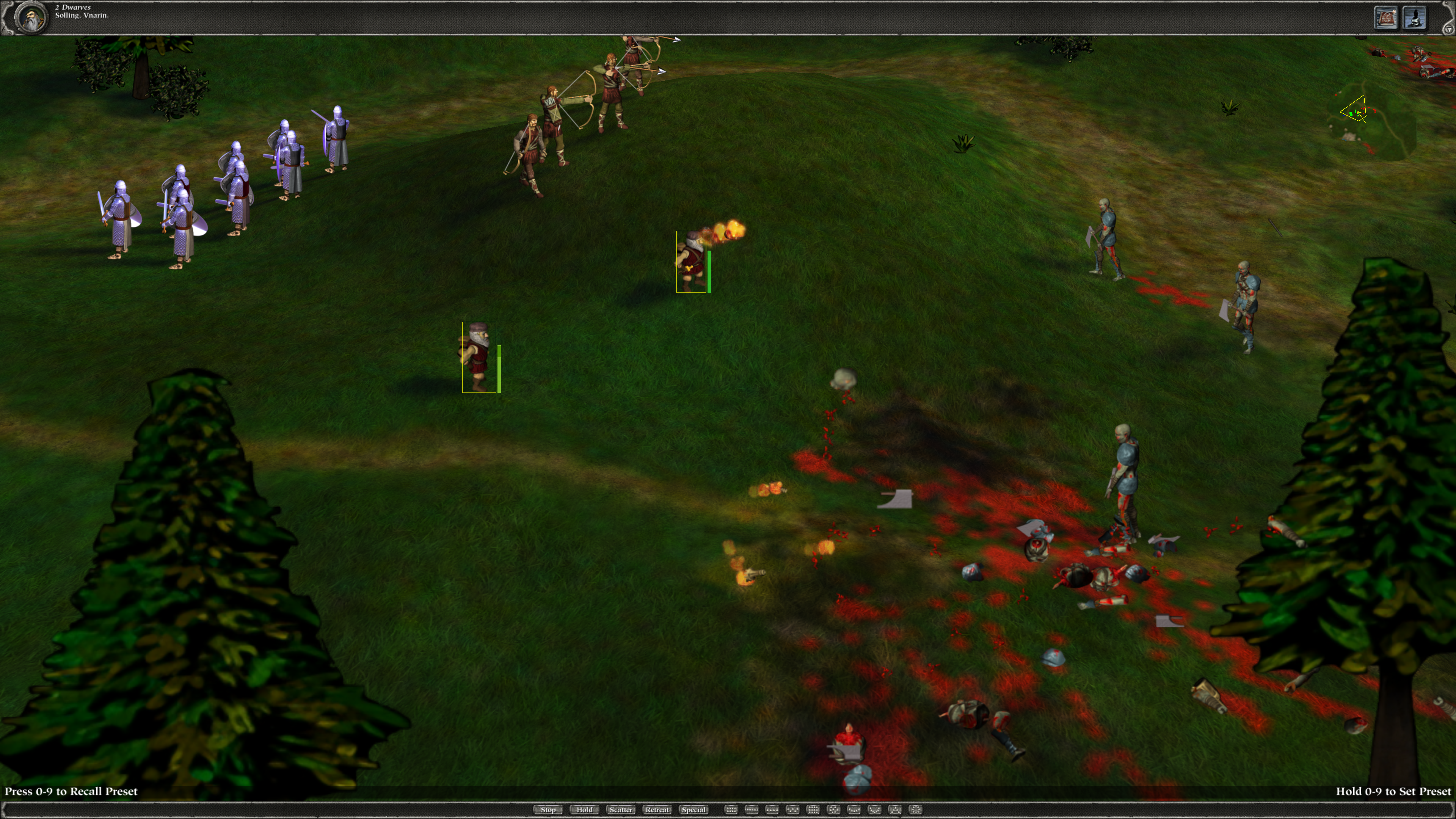
The effect was massively ahead of its time, made possible by Myth’s ridiculously advanced physics engine. All those zombie giblets bounce and roll in a way that wouldn’t become standard in games for several more years. The result is an interaction that simply never gets tiring, as elementally satisfying as blasting an imp with the shotgun in Doom.
Myth’s dwarves comfortably reside among gaming’s greatest strategy units.
Myth’s dwarves comfortably reside among gaming’s greatest strategy units. Yet while they seem ridiculously powerful, they’re not overpowered. Or rather, they are overpowered, but in such a way that counterintuitively balances the whole game.
See, while dwarves can take out huge clusters of enemies, they can also take out huge clusters of your own units. And Bungie is very good at building scenarios in a way that makes this a frequent possibility, pulling and stretching your forces so that one poorly timed throw could obliterate your entire front line. Molotovs also occasionally fizzle out due to rain or just bad luck, and since dwarves are all but useless in melee combat, you need to keep them protected.
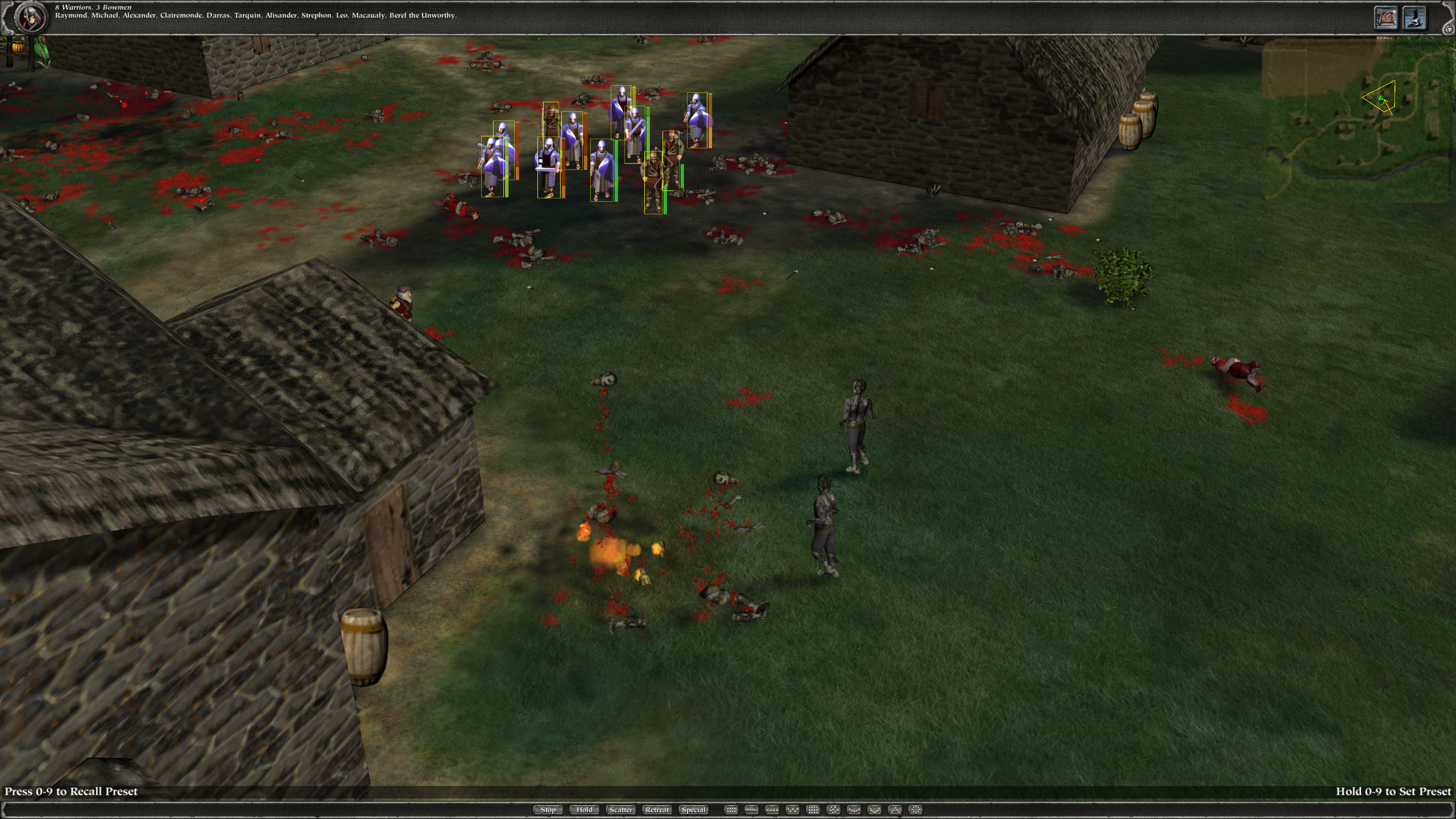
The downside of Myth’s design is that things can go very wrong very quickly, and you can easily put yourself in a situation where completing a mission becomes impossible. Indeed, the original Myth was criticised for its harsh difficulty upon its release. But there is something very appealing about the puzzle-like nature of its mission designs today, and bringing your forces through a mission unscathed is tremendously satisfying if you can pull it off.
Despite gaming being inundated with fantasy games over the last 30 years, there still isn’t another one really like Myth (apart from its two sequels, of course). Which makes it more of a shame that you can’t buy them, anywhere. While Myth and its sequel were developed by Bungie, the rights are held by Take Two Interactive and I suppose fantasy strategy games are a low priority when you have Grand Theft Auto 6 in your stable (though I’d love to see a Myth reboot developed by Firaxis).
There are ways to play Myth today, however, and in pretty robust form too. If you have a copy or ISO for Myth 2: Soulblighter, you can download the excellent Twice Born Edition, a thorough fan remaster of the 1998 sequel that makes Bungie’s RTS run beautifully on modern machines. There’s also a separate remake of the first game’s campaign available for Twice Born, as well as a full port of The Fallen Lords that reverts the changes made for Myth 2 into their original form. All of them are great ways to experience this weird tangent in Bungie’s history, and enjoy two of the most distinctive fantasy strategy games ever made.
2026 games: All the upcoming games
Best PC games: Our all-time favorites
Free PC games: Freebie fest
Best FPS games: Finest gunplay
Best RPGs: Grand adventures
Best co-op games: Better together