
Back in June, RuneScape studio Jagex held its first live event outside the UK (and its biggest to date): Deadman All Stars, an Old School RuneScape PvP tournament. I had the chance to talk to OSRS creative director Kieren Charles at the event, and he explained his philosophy on running the 13 year-old fork of the 25 year-old MMO amid its new lease on life.
“The game’s bigger now than it was in 2007,” Charles said of RuneScape’s overall health, while OSRS is now older than RuneScape was when Old School began in 2013. Last August, Old School hit an all-time player count record eclipsing any era or version of the game, and Charles estimated upwards of one million active subscribers just for Old School.
Charles himself was part of the original RuneScape phenomenon, but as a player, one of the core mid-to-late millennial cohort that made the game ubiquitous in middle schools during the golden age of MMOs. “I grew up with the game,” Charles told me. “I was 14 in the school library playing RuneScape. I was just the one who never quit.”
But why choose the 2007 iteration of RuneScape as a starting point? The game first launched in 2001, and had already undergone major revisions like the “RuneScape 2” update in 2004. Charles joined the OSRS team a few years after it started, but looking back, he characterized the choice as “kind of arbitrary, but based on what players deemed the sort of golden [age].”
“Players actually wanted the 2006 version, but we didn’t have a copy of that version of the game,” revealed Jagex senior communications manager Danni Amos. “A [Jagex employee] found the 2007 server in their desk drawer, and we had to boot it up, see if it works.”
Wisdom of the crowd
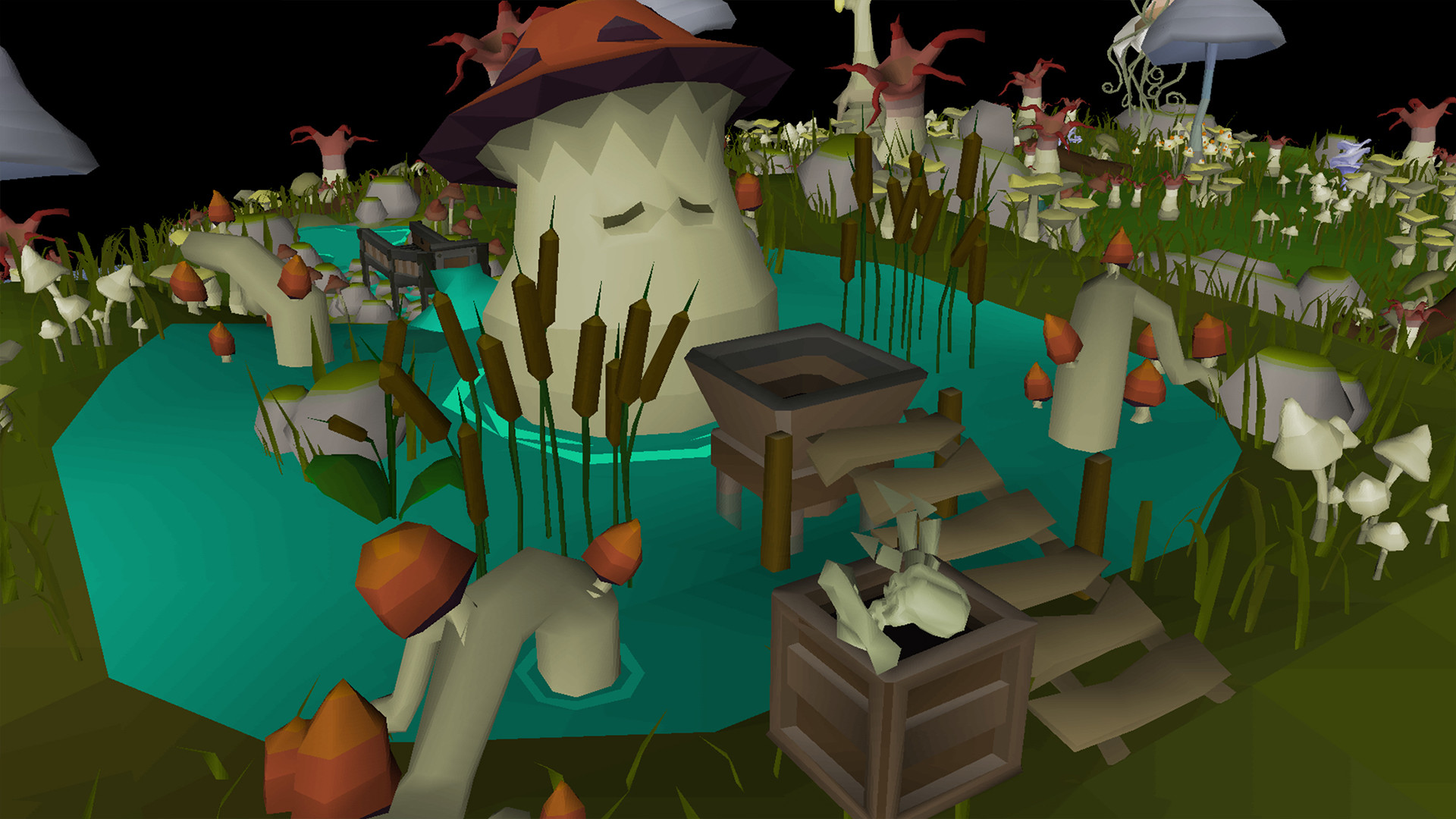
Old School is, as best as I can tell, the first instance of officially-supported ‘classic’ servers for an MMO. The first fan servers running preserved versions of transformed or discontinued MMOs preceded it, but the likes of WoW Classic were following Jagex’s lead. Charles believes that Old School’s community engagement leaves it the best of both worlds when it comes to fan-managed versus official throwback MMOs.
OSRS regularly gets new content, including full-scale expansions like 2024’s Varlamore. Those udpates need to match the Old School vibe, and Charles said one of the best compliments he gets is that the new stuff feels like it could have come out in ’06 or ’07. But all potential new additions are also put to a community vote before getting implemented, and if a feature or addition doesn’t meet the 70% approval minimum, it gets scrapped.
“We are already running an MMO that’s entirely decided by fans, but it’s backed by a huge development team who could still do things that are at scale,” said Charles. “With fan server versions, it’s never going to be at the same scale. It’s hard to imagine it having the number of players like you can have with an official version, nor the development support.”
It’s an approach he doesn’t necessarily recommend to every MMO developer, and the team has had stuff rejected which “really does suck in the moment,” according to Charles.
But they’ve reached a point where they don’t bring a feature to vote unless they’re confident players will dig it. Besides, Charles said he’d still rather have a proposed addition get rejected than “spend six months or a year of development time to then launch it and find out people hate it.”
While many great games come about from singular, forceful artistic visions, Charles described himself and his colleagues more as caretakers. “With Old School RuneScape, it’s what the community wants. We’re making it for them and looking after it for them,” he told me.
“I’m fortunate as a creative director to be able to inherit such a good foundation for what we do going forward. I was part of the community directly before I joined the studio. I know what that feeling is, and I want to make sure that we look after that and keep it going.”
2026 games: All the upcoming games
Best PC games: Our all-time favorites
Free PC games: Freebie fest
Best FPS games: Finest gunplay
Best RPGs: Grand adventures
Best co-op games: Better together