
Apart from the very occasional bundle, I can’t remember the last time we recommended a deal on a CPU. Monitors, yes. Gaming PCs, definitely. But not CPUs, because however well-priced they are, it’s hard to recommend a system upgrade when buying the rest of the system needed to go along with it is so damn expensive. I’m not entirely surprised, then, that Mercury Research says that desktop CPU shipments from AMD and Intel “in the second quarter are best described as ugly.”
According to the market research firm, this is the case despite growth in the overall CPU market:
“In spite of a decidedly gloomy outlook on client processors from the suppliers for the second quarter, actual results for both X86 and ARM CPUs were up strongly in the second quarter of 2026, with sequential quarterly growth of the total market exceeding 10 percent, far in excess of normal seasonal trends which call for a slight decline in the quarter.”
In other words, server and mobile (laptop) CPUs spanning x86 and ARM are doing well enough that the poor sales of x86 CPUs doesn’t damage the overall CPU market picture.
But for us gamers, those x86 ‘client’ CPUs are the important ones, as they’re what sit inside our gaming rigs.
Mercury says: “while server and mobile CPU shipments had strong growth, desktop CPU shipments declined on top of an already poor first quarter, resulting in a large on-year downturn in excess of 20%. Both AMD and Intel experienced significant on-year weakness in desktop CPUs—with AMD having relatively smaller declines—however on a sequential basis AMD’s declines were much smaller than Intel’s. As a result AMD gained share both sequentially and on year in desktop CPUs, in spite of lower shipments.”
In other words, both AMD’s and Intel’s desktop CPU sales seem to be falling down quite a steep hill, but Intel’s are falling a little quicker, meaning AMD is technically scooping up more market share in this space. It’s just that space itself is getting smaller.
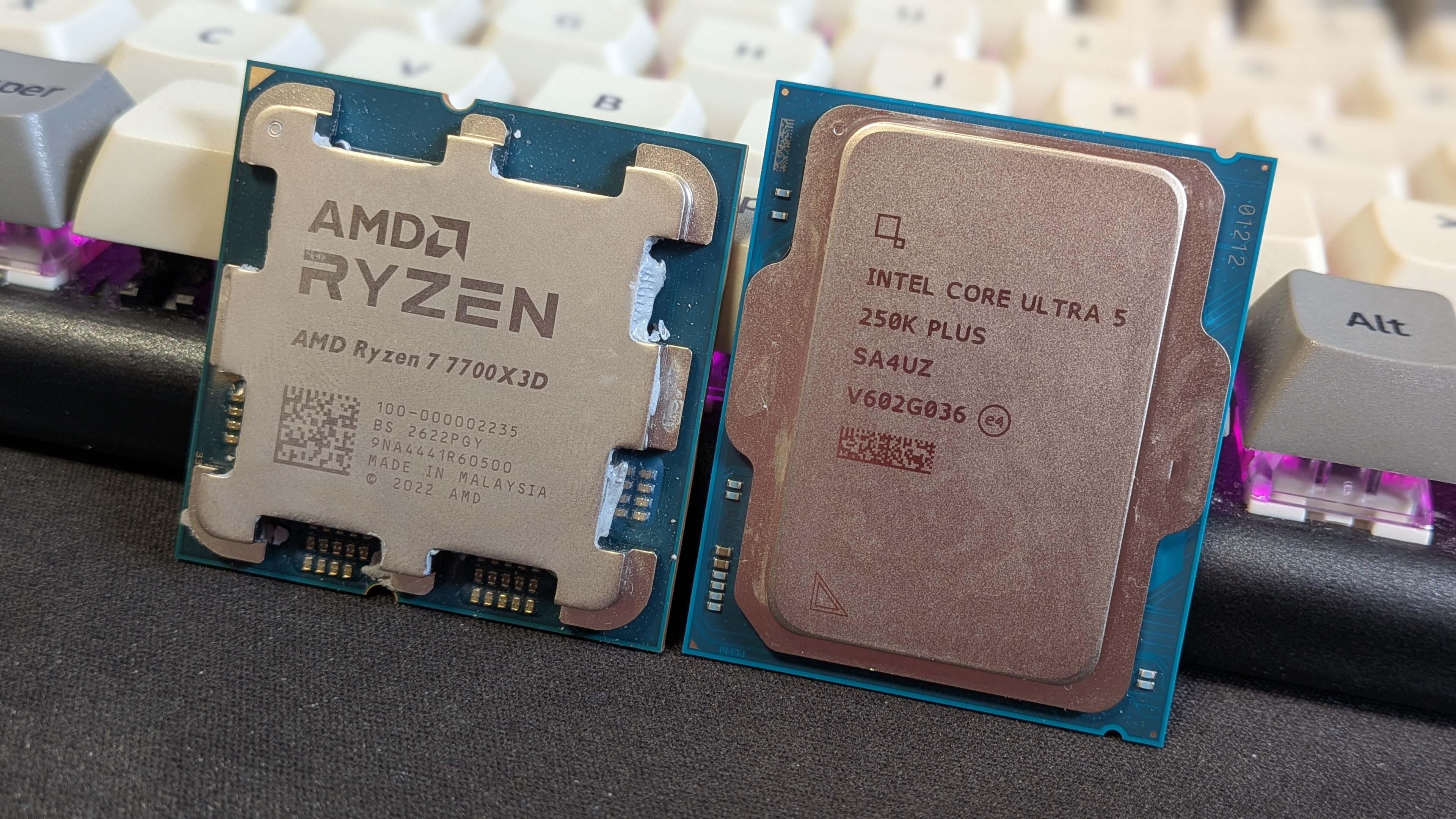
It’s worth noting that a lot of these CPU shipments are likely those being packaged in pre-built OEM PCs or sent to system builders to be fitted in pre-built gaming PCs. Which means the numbers likely reflect not just a decline in people buying standalone CPUs, but people buying fewer full system upgrades, and system builders less interested in pallets full of the things. We’ve already seen corroboration that the number of worldwide PC shipments is falling.
And let’s not forget that a lot of those who do buy a standalone CPU will be buying it alongside other components for a full system DIY upgrade. That means a motherboard, which is a reasonable cost; and RAM, which is absolutely not.
Given this, even if CPU prices remain stable, it’s no surprise we’re seeing fewer CPU shipments as more and more people are becoming reluctant to buy memory and storage at astronomical prices thanks to the global memory shortage.
It’s also worth noting that although client laptop CPUs are doing well, that’s not the case for everything in the world of portables. According to Counterpoint Research, for instance, the global smartphone market is expected to fall 14.3% this year due to cost pressures. The memory and component shortage, engendered by the AI server boom, is sure to keep affecting a whole bunch of products and industries. At least we only have to worry until, uhh, 2030 or beyond.