
What is it? A Witchery vampire RPG with a dark heart
Release date September 3, 2026
Expect to pay $70 / £60
Developer Rebel Wolves
Publisher Bandai Namco
Reviewed on RTX 3060 (laptop), Ryzen 5 5600H, 16GB RAM
Steam Deck TBC, but unlikely to be a good experience
Link Steam
35 hours into The Blood of Dawnwalker I’d already witnessed the aftermath of many barbaric slayings and village razings. I’d cleared out a site of industrial-scale slaughter, and partaken in an obscene medieval take on The Running Man. I’d sucked countless kiloliters of blood from humans, rats and monsters alike. But somehow, this exceptionally morbid horror RPG still had another novel way to make me wince.
I was exploring the depths of a troll-infected cave deep in the Carpathians. Coen of Laslea—me, the player-character—and his sketchy companion were looking for someone important. I hardly expected them to be living well, but the way I found them, pinned to a wall and half-consumed, exceeded my expectations for mainstream videogame cruelty.
For two years this human-shaped creature had been constantly eaten alive by grotesque kobalds. By dint of being a vampire, their flesh always grew back. They were a wall-mounted, self-replenishing feast of human meat, lost in a network of caves where they were unlikely to ever be found.
The Blood of Dawnwalker is one of the best blockbuster action RPGs I’ve played for years, probably since Elden Ring, but it’s unrelentingly violent and bleak to the point of sometimes being unintentionally funny. There is no hope in Rebel Wolves’ blood-slurried take on 1300s Romania, where brutal feudalism has been supplanted by populist vampirism. The Witcher 3 feels like daytime melodrama by comparison. I respect its severity, but I did yearn for a gutful of the Transylvanian white wine crowding my inventory.
Eerie vrakhiri
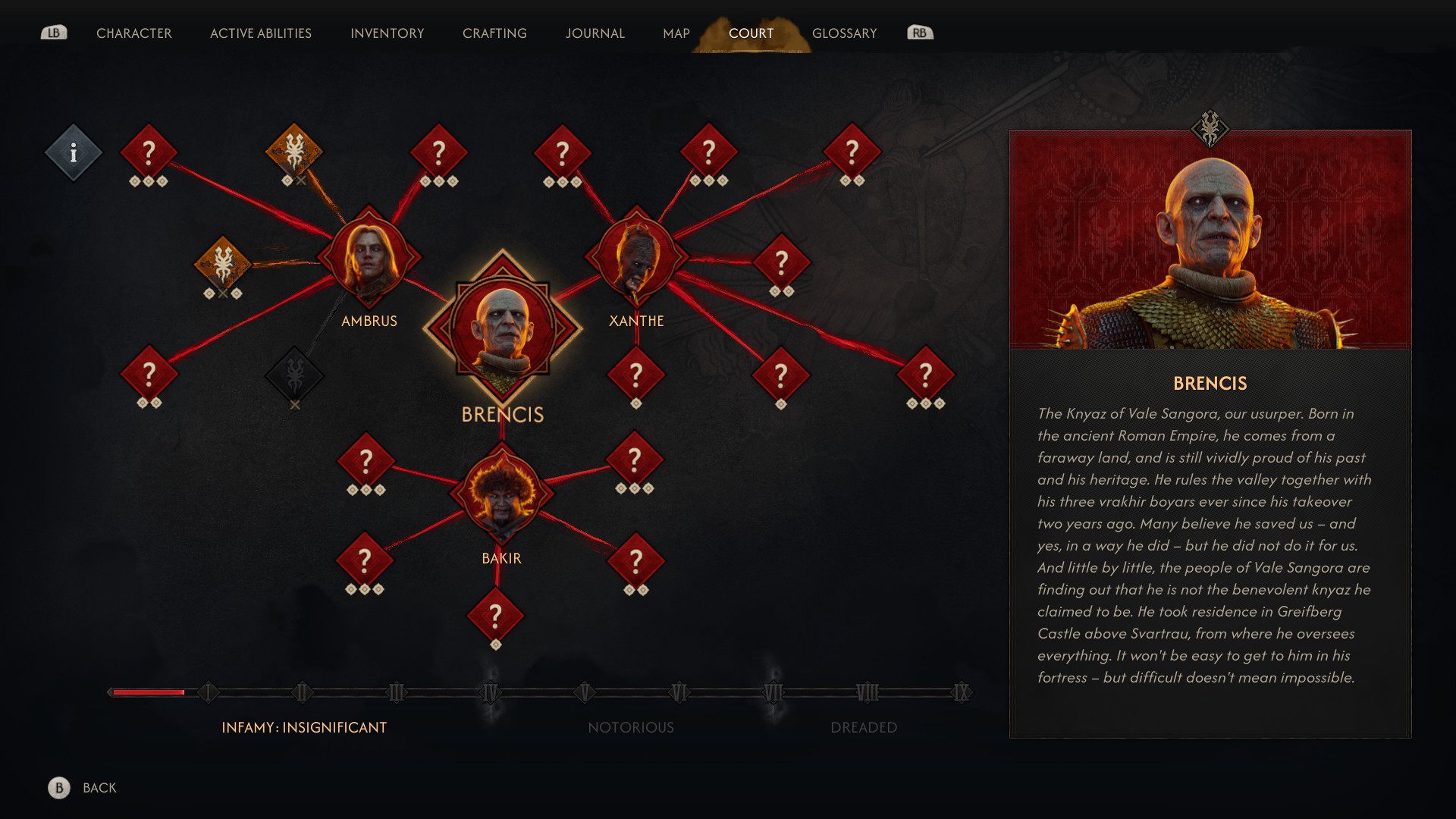
When we meet him, Coen is an everyman peasant working the land in Laslea. Years ago, Skender Dragosti, the murderous lord who formerly ruled over Laslea and the greater Vale Sangora region, had been conquered by Brencis, a century-old warfaring vrakhir, or vampire, sick of watching all that blood go to waste.
I can boil the Brencis’ blood, temporarily extract their souls, scream at them until they’re immobile, or possess them, all the better to turn them to my side.
Brencis is not as outwardly cruel as Skender but his manner of industrially harvesting the blood of Sangora’s peasants is frowned upon by some, while for others it’s a reasonable price to pay for the execution of their former oppressor. But when the slightest hint of resistance is detected in Laslea, Brencis and his men swoop on the village, raze it, and abduct Coen’s family. The Blood of Dawnwalker is about trying to get them back and, to varying degrees depending on your choices and temperament, also taking the fight to the vrakhiri.
Which is easier than it might otherwise be for a peasant, because Coen soon becomes a Dawnwalker: vampire by night and regular human by day. In this way, Rebel Wolves has its cake and eats it too. Coen can fight with swords at all times, but witchcraft and vampire powers can only be used by day and night respectively. He doesn’t need to cower in the shadows at sundown. He’s a very versatile bloodsucker.
It’s great fun to slay Brencis’ men. Coen’s swordplay is similar to Kingdom Come’s directional approach: I have to pay attention to how my foe is swinging all the better to block in that direction, and then exploit any weakness this opens up. This can be gruelling in the realism-focused Kingdom Come, but it’s much more approachable here, thanks to an icon signalling every incoming move that’s visible no matter how close or far the enemy is (this can be toggled off at higher difficulties).
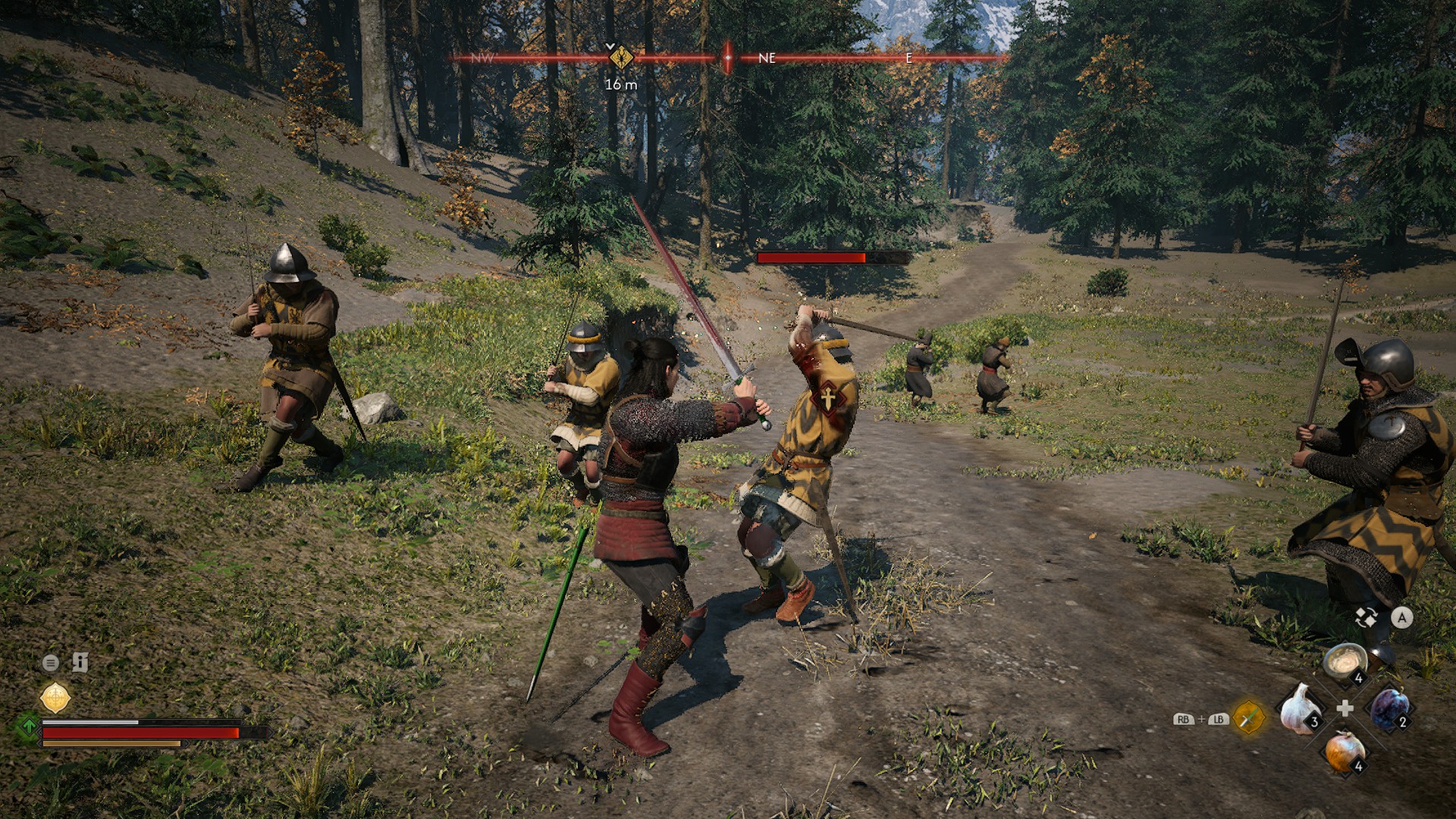
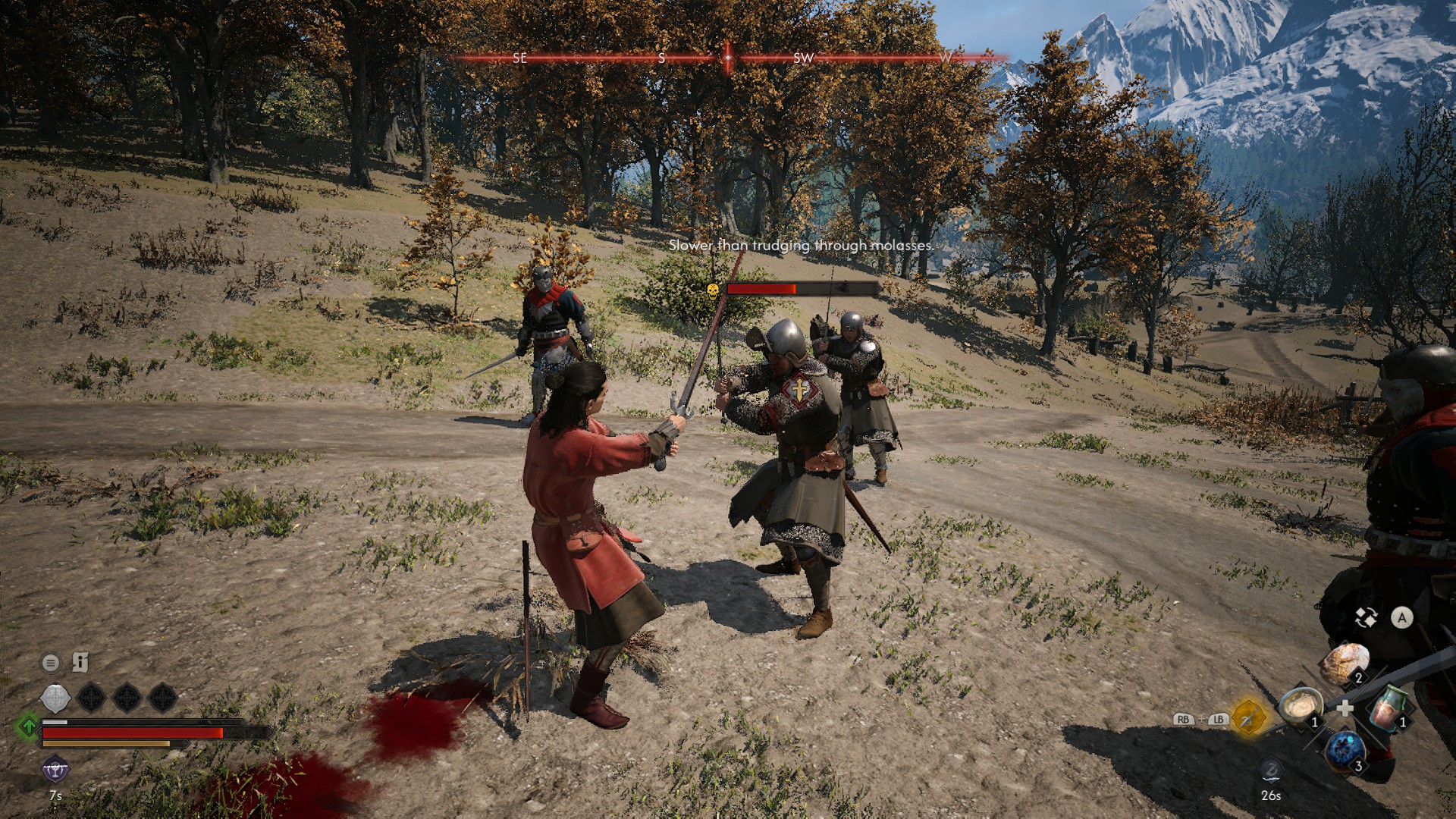
It’s also more approachable because I can trigger hectic waves of spectral crows in between strikes, or warp behind my enemies to suck their blood and replenish my health. I can boil the Brencis’ blood, temporarily extract their souls, scream at them until they’re immobile, or possess them, all the better to turn them to my side.
Like The Witcher 3 before it, The Blood of Dawnwalker borrows a lot from the quietly radical combat approach taken by Rocksteady’s Batman games. Like Geralt of Rivia, Coen “sticks” to and circle-strafes his primary target, but unlike Geralt of Rivia, Coen’s swordplay is precision-oriented and gratifying, albeit maybe a little too easy for hardened players. The lock on system can be imprecise—it’s always a pain on rare occasions when I want to choose an enemy rather than let the targeting choose for me—but I actually went out of my way to fight people and monsters, rather than avoid conflict like I thought I would (and which I mostly can’t, anyway). It helps that Coen’s skill trees are riddled with some truly overpowered delights.
Days gone
But it takes time to hone these skills, not to mention all the other minor and major perks and buffs in each of Dawnwalker’s three skill trees. And time is framed as a crucial currency in The Blood of Dawnwalker. Coen’s days are separated into 16 units of time, and nearly everything I do—from completing major quests through to levelling up my bloodsucking prowess—spends one or more units.
And my quest is urgent: Brencis’ coronation occurs in 30 days, and that’s my deadline for saving my family. After that they’re done for. Little wonder I don’t want to fetch slivovitz for one of my dad’s old war mates.
This pressure feels overwhelming at first. Should I prioritise assassinating Brencis’ three vassals, all the better to weaken the regime for a (presumed) final showdown? Is it really a good idea to spend my time doing the bidding of local witch and love interest Anca? As Dawnwalker’s early hours wore on, a handful of other urgencies emerged to complicate how Coen should spend his precious time, not least the fact that some tasks can only be completed by day or night.
By day 20 my Coen felt virtually unbeatable, and I had a small handful of promising ways to take the fight to Brencis.
The concept is similar to Persona and Majora’s Mask, but the way it’s implemented is the glue holding Dawnwalker’s jumble of familiar components neatly together. It encourages a more tactical approach to questing than I’m used to in action RPGs: I often found myself browsing my journal and plotting out how I’d make the next couple of days matter. This didn’t always involve heroics. For example, by day I’d buy up manuals from nine-to-five vendors, all the better to learn new skills, because spending skill points passes time. By night, with my vampiric shadowstep ability, I could access rooftops or cliff shelves inaccessible to mortals. Sometimes my plans would be waylaid by the sudden emergence of a time sensitive problem.
The calendar system sure does apply urgency to Coen’s task, at least at first. Urgency is almost always baked into the narrative of blockbuster RPGs, but it’s problematic to reflect that urgency in actual gameplay systems. Sure I want to save the world, and sure I want for my actions to matter. But I’d also like to pick some nirnroot and play some Gwent, thank you very much. There’s a reason the Pathologic games remain a niche concern.
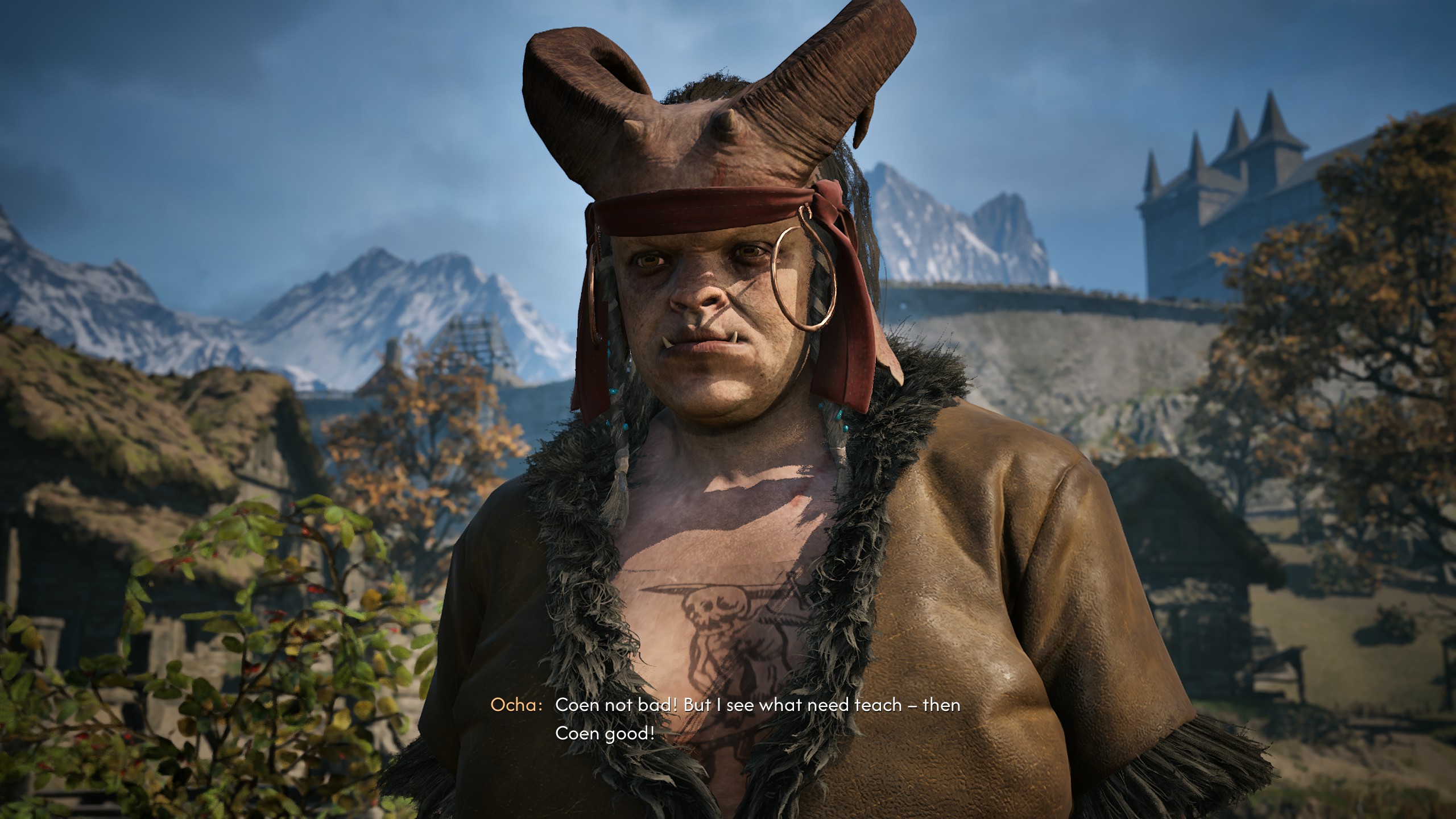
Rebel Wolves tries to sidestep this problem in a couple of ways. First, the player is always amply warned before embarking on a time-spending activity: I can waste as many IRL hours as I like harvesting St John’s-wort and the position of the sun or moon won’t change. It takes me knowingly triggering the passage of time for my precious hours to be spent.
Second, the pressure is largely illusory. By day 20 my Coen felt virtually unbeatable, and I had a small handful of promising ways to take the fight to Brencis. Maybe I could have fetched that old bastard his slivovitz after all.
But illusory or not—and it’ll likely depend on how much you drag your feet—the calendar system does give Dawnwalker a greater sense of choice and consequence than most of its big budget action contemporaries. It’s largely up to me how I’m going to save my family, when I’ll do it, in which order I’ll take measures to make it easier, or if I’ll bother at all. But I can’t deny it was deflating to discover that all my careful clock strategising was ultimately for nothing: pretty much everything of any importance can be tied up well before the 30 day deadline, with lots of frivolous traipsing around to boot.
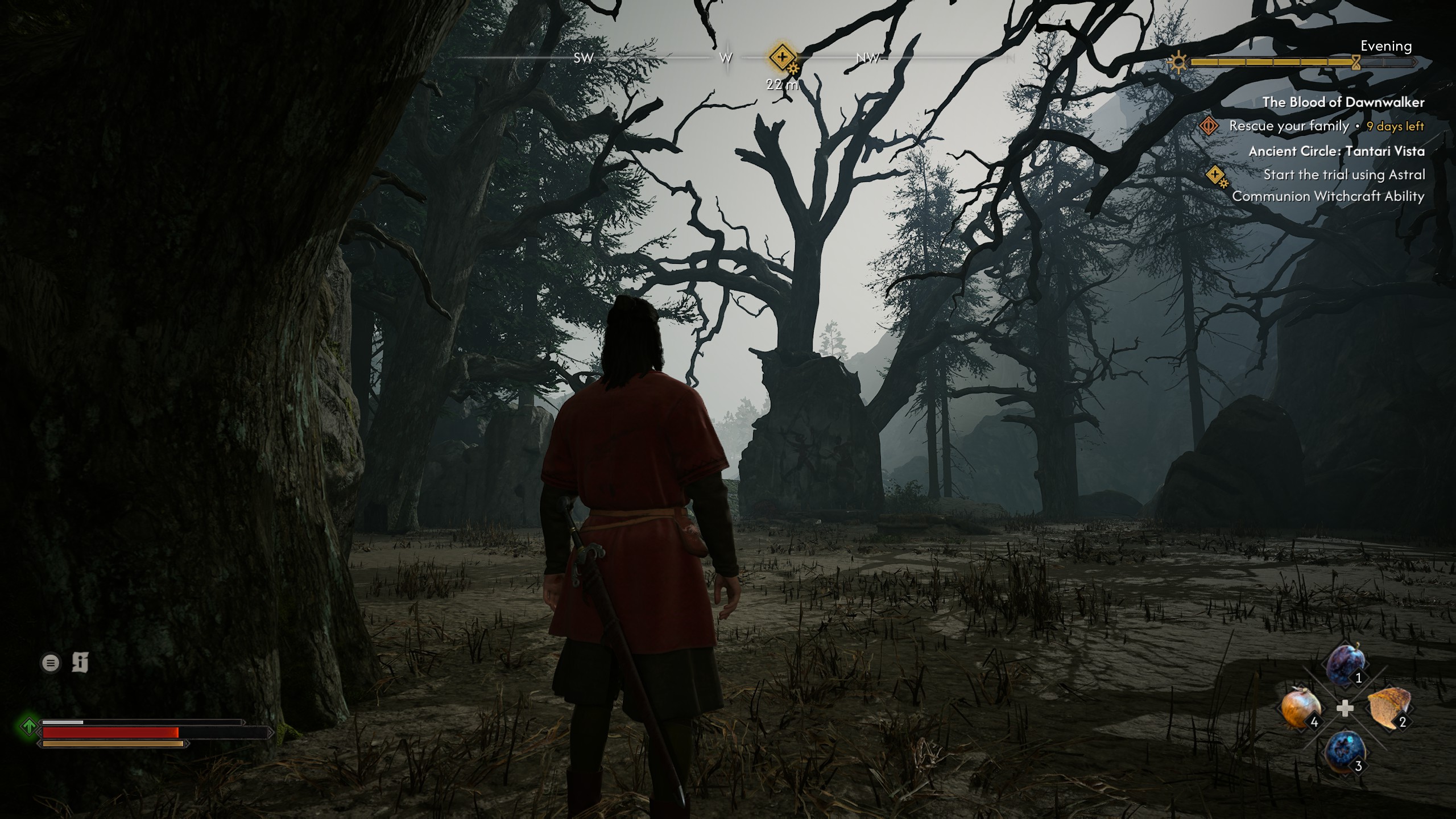
Despite this, it feels like Rebel Wolves learned the right lessons from Breath of the Wild or, before it, Gothic: Dawnwalker provides an explicit goal and then gestures vaguely at its world. Completing quests can either teach or strengthen Coen, but he has to find them first, and this is where players’ experiences may vary. I was on day 21, and pretty much ready to stick it to Brencis, when a colleague let slip that there was a major companion whose presence and attendant quest had eluded me for 30 hours.
Quests vary in size and interest. Some are long and winding; others amount to “kill these guys” or “follow these glowing yellow hints to an encounter”. I definitely got sick of searching for yellow hints, just as I did rotating an object for points of revelatory interest. But I never got sick of fighting, nor did I ever lose interest in the Vale of Sangora itself.
All in vein
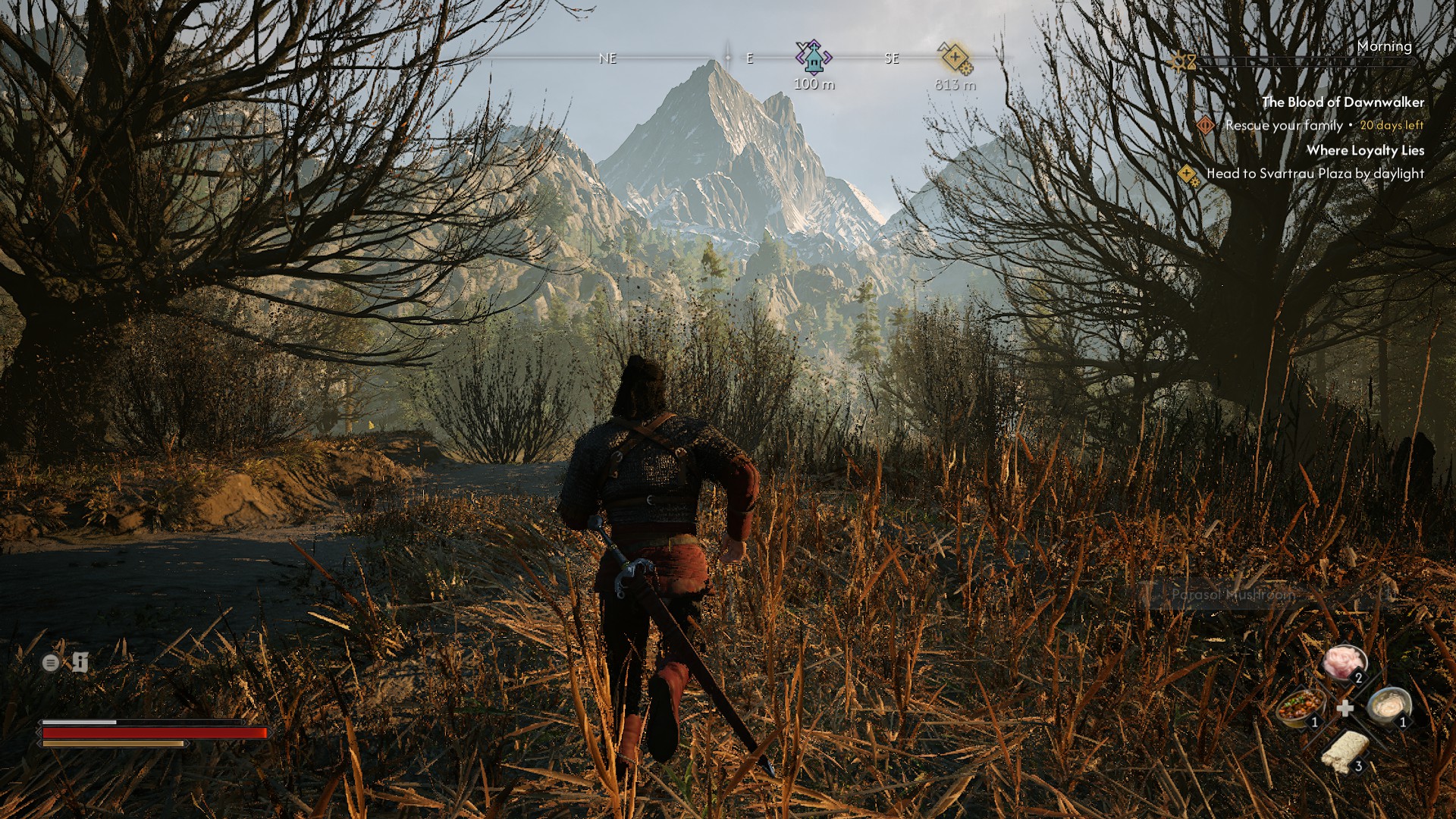
Maybe I’m just a sucker for European miserablism, but The Blood of Dawnwalker’s valley of bloodletting is one of my favourite open worlds since The Witcher 3. Its take on 1300s Romania is subtly daubed with fantasy, but like CD Projekt, Rebel Wolves has a knack for gorgeously downcast panoramas. Though Coen can move at lightning speed by dint of his vampire powers (by night he can even transform into a galloping wolf), I often found myself slow-walking the fir forest backroads and alpine highlands of Sangora, taking in sights reminiscent of Caspar David Friedrich’s landscape paintings or the covers of Tolkien-themed black metal albums. Though it’s not immune to open world busywork, Dawnwalker at least knows its open world needs to feel like a world and not a sandbox of mini-games. It’s a place I inhabited, rather than a map I traversed towards quests and rewards.
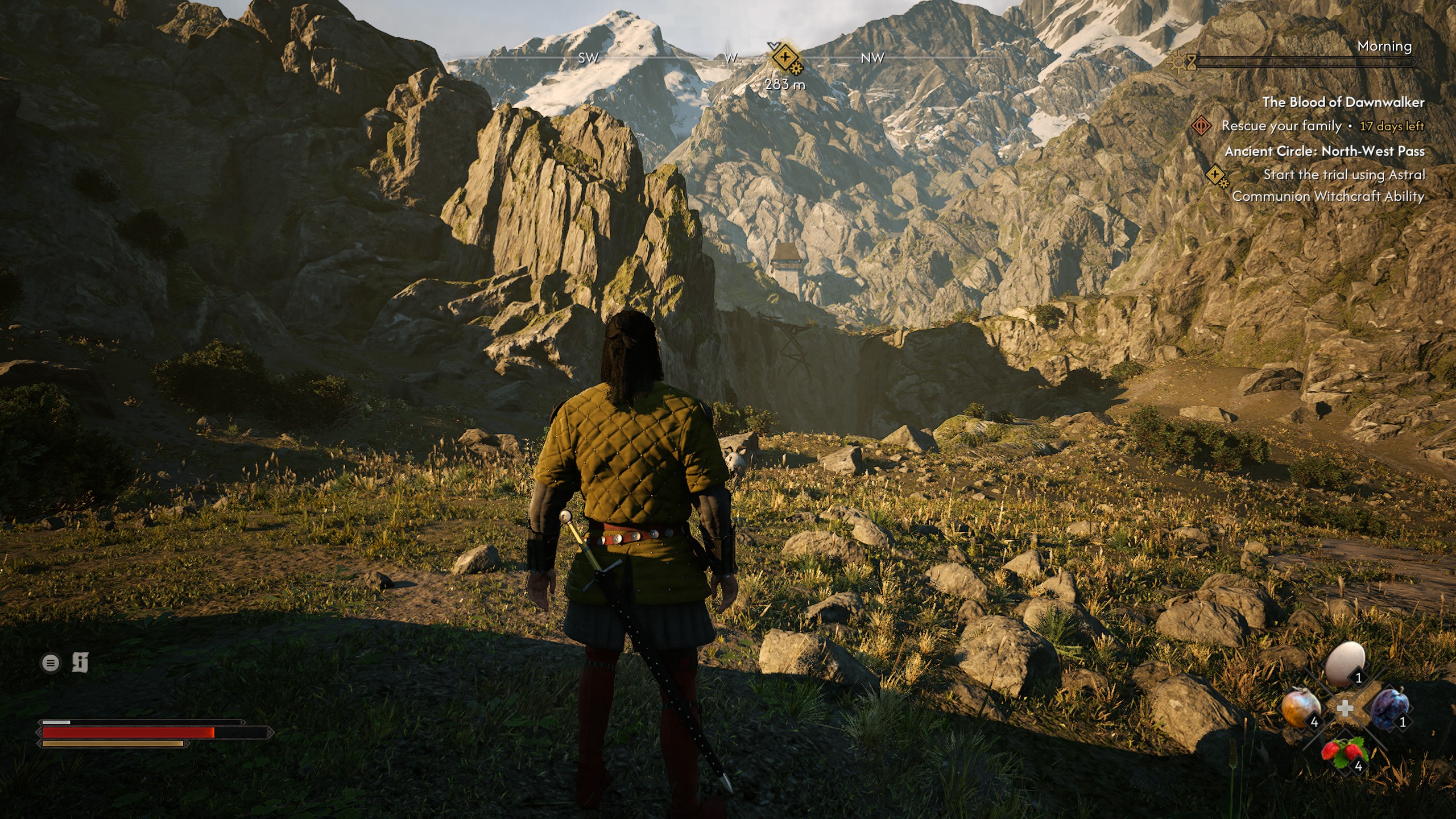
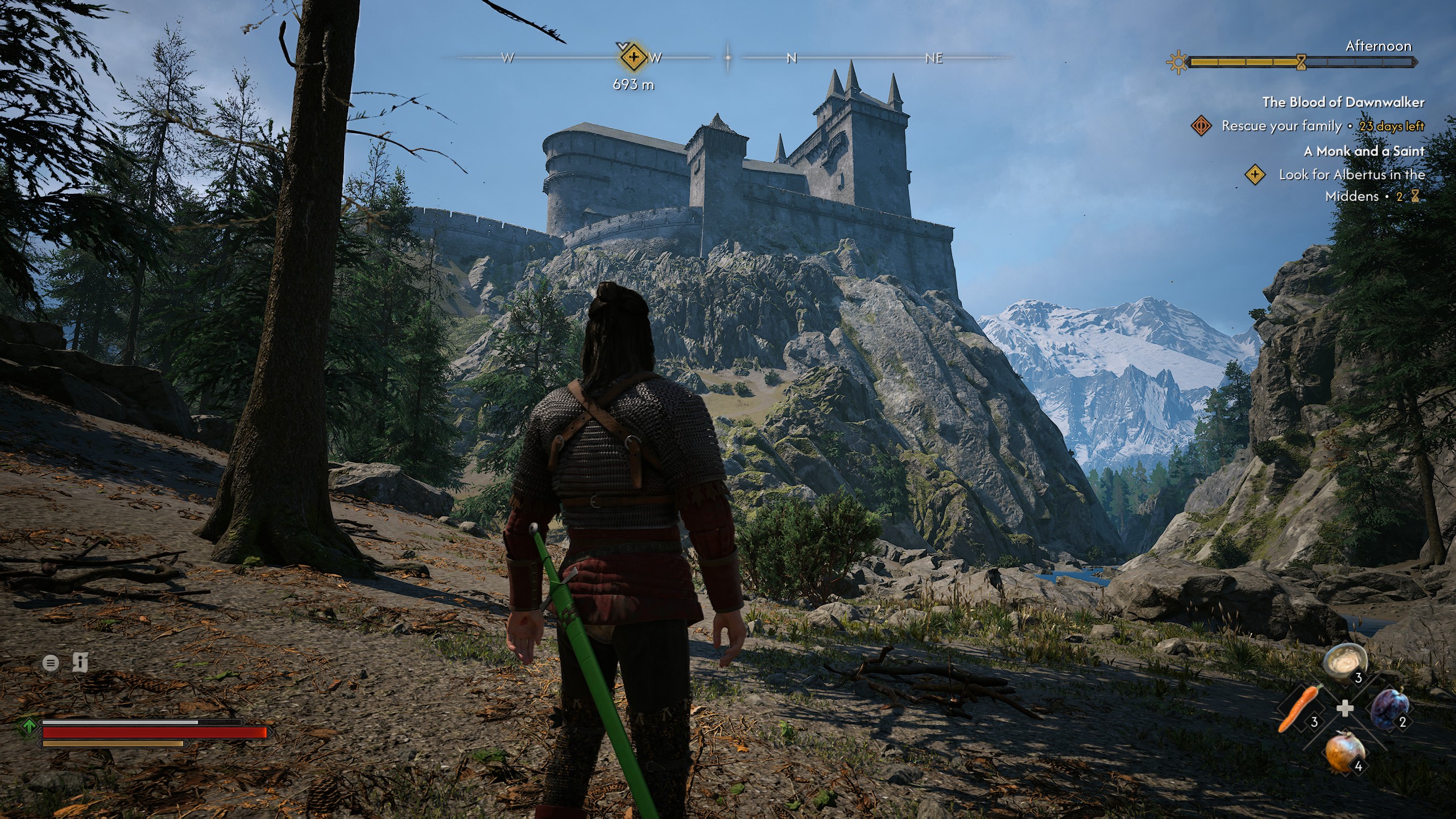
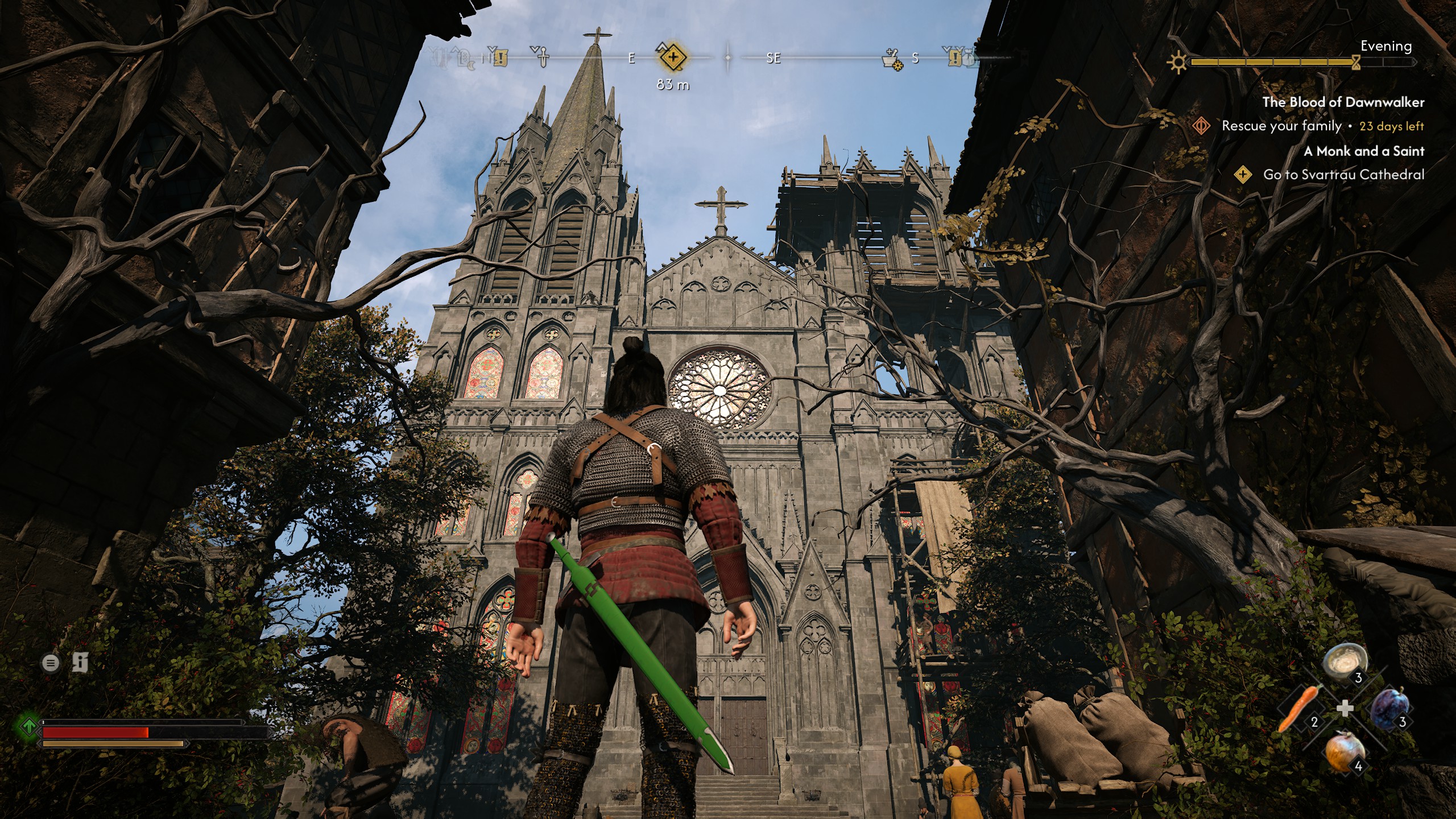
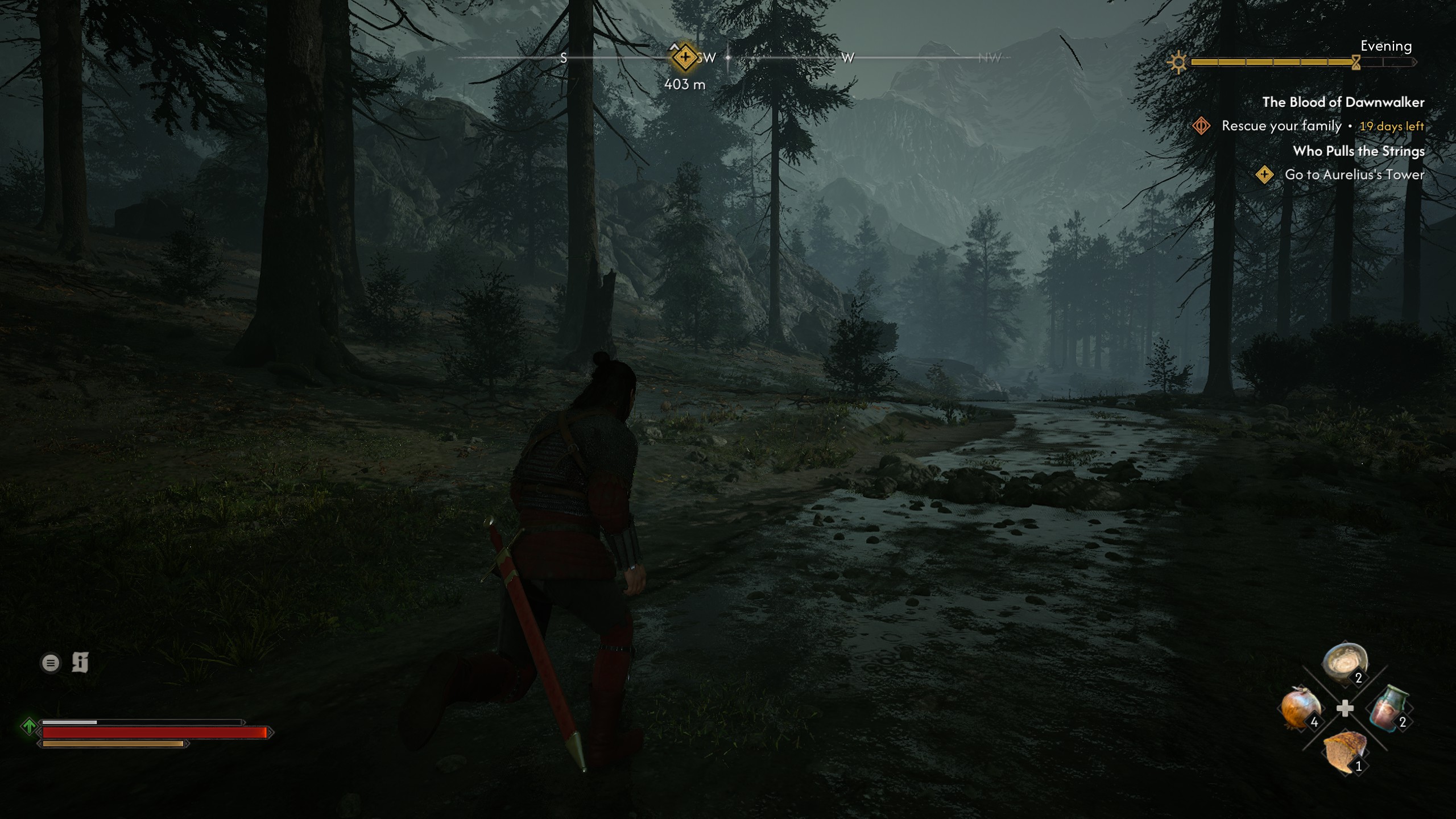
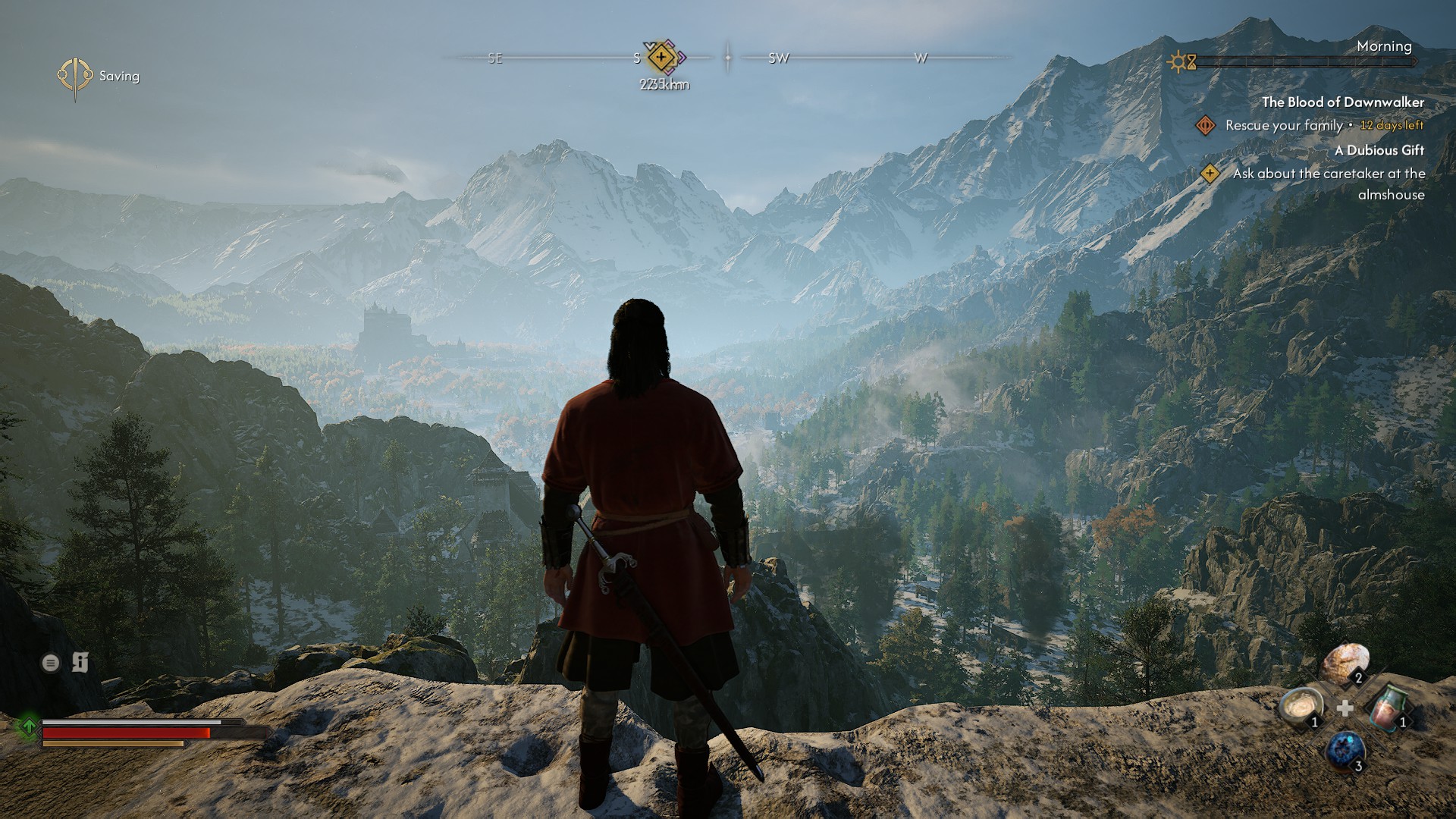
And like The Witcher 3, Rebel Wolves keeps a tighter leash on its fantastical leanings than most fantasy studios. Supernatural themes regularly puncture the bleak and rugged realism—this is, of course, a vampire game—but the fantasy elements only serve to emphasise the humdrum nastiness of the Sangora peasants’ lot: this is a world of hand-to-mouth poverty, tyrannous cruelty and materialised superstition. The latter almost feels like a delirious symptom of the former. I highly doubt Dawnwalker is an authentic rendering of 1300s peasant life in Romania or elsewhere, but it is determined to capture the phantasmagoric mystery of pre-enlightenment, and the horror and indignity of an oppressed people, without resorting to folksiness or misplaced nostalgia.
My allegiances—or rather, my notion of who was the worst of various competing evils—were in constant flux.
Boy, is this an unremittingly pessimistic experience. Choices are almost invariably between two evils. Quests move inexorably towards bad or worse endings. Rarely did I ever select a dialogue option with complete confidence that it was the right or magnanimous thing to say. In fact, by the end, I had my Coen acting very much at odds with how I envisioned him in the early hours. My allegiances—or rather, my notion of who was the worst of various competing evils—were in constant flux. I experienced three endings (there are more) and not one of them offered any hope.
And this is what I admire most about The Blood of Dawnwalker. In the opening hours it clocks as an almost on-the-nose allegory for 20th century European history—Brencis equals incoming communism, Skender equals outgoing monarchy—but by the end it registers as a more universally human story about the vile extremes of power, the powerlessness of its subjects, and the latter’s susceptibility to persuasion when nothing feels real except tragedy and toil. It’s also—and I find myself sometimes forgetting this aspect entirely—a vampire story. None of its narrative components are especially original, but they cohere into something viscerally affecting. There is no morally righteous way to solve the problems of this world.
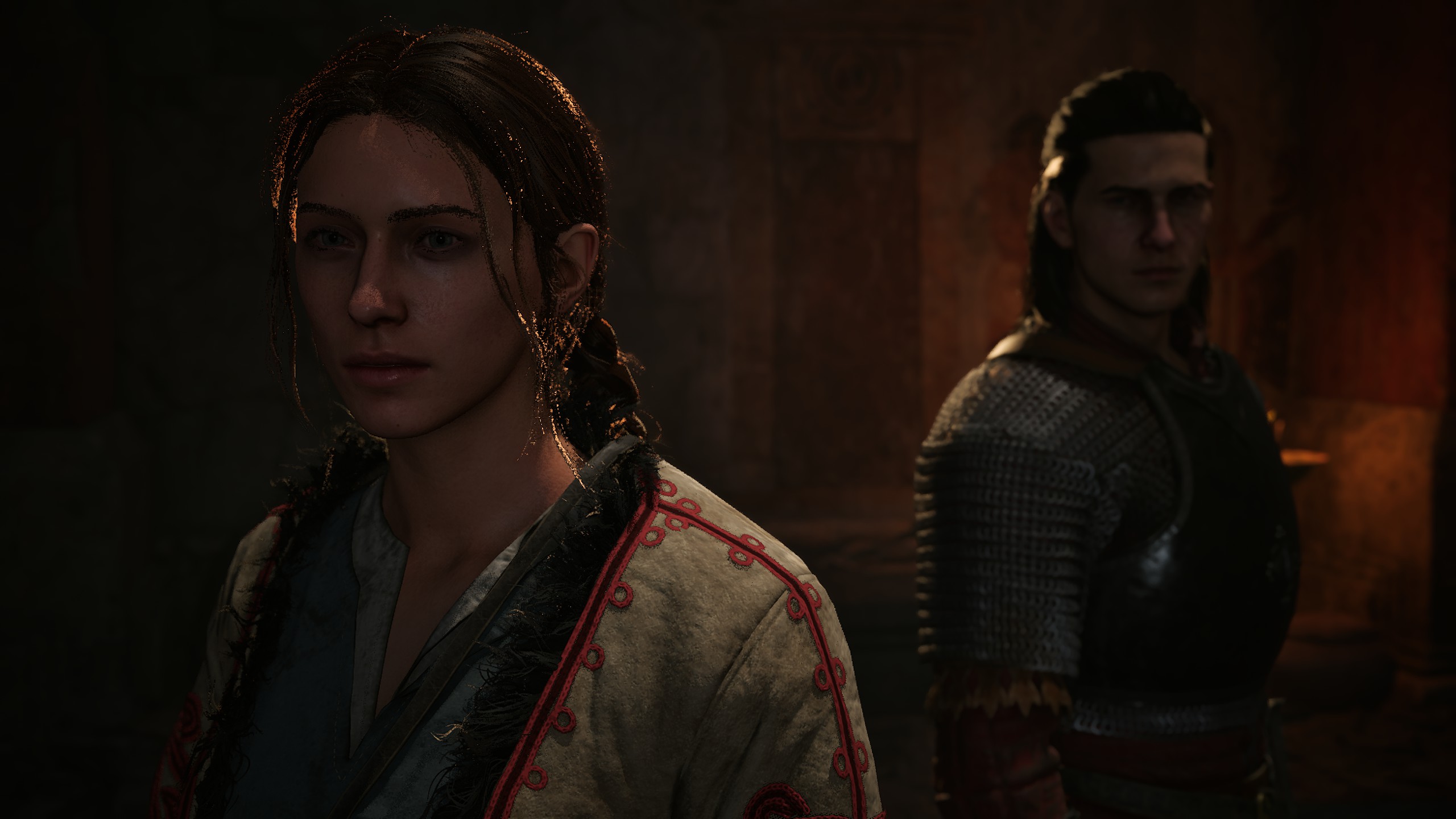
It’s a very well optimised game too. On my unimpressive system I was generally able to stick to 60 fps on low at 1080p, and even at these settings I found Dawnwalker gorgeous.
Life drain
It’s understandable to feel exhausted after playing Dawnwalker, despite its relatively modest 40 hour runtime. It can be so doggedly miserable that you just have to laugh at it, and I did laugh occasionally, but not for the rare and minor sparks of light. When these occur, it feels like being shaken from a disturbing dream. I mostly laughed for shock at its audacity. There are no heroes here. Everything, always, sucks. I learned nothing, but I felt a lot.
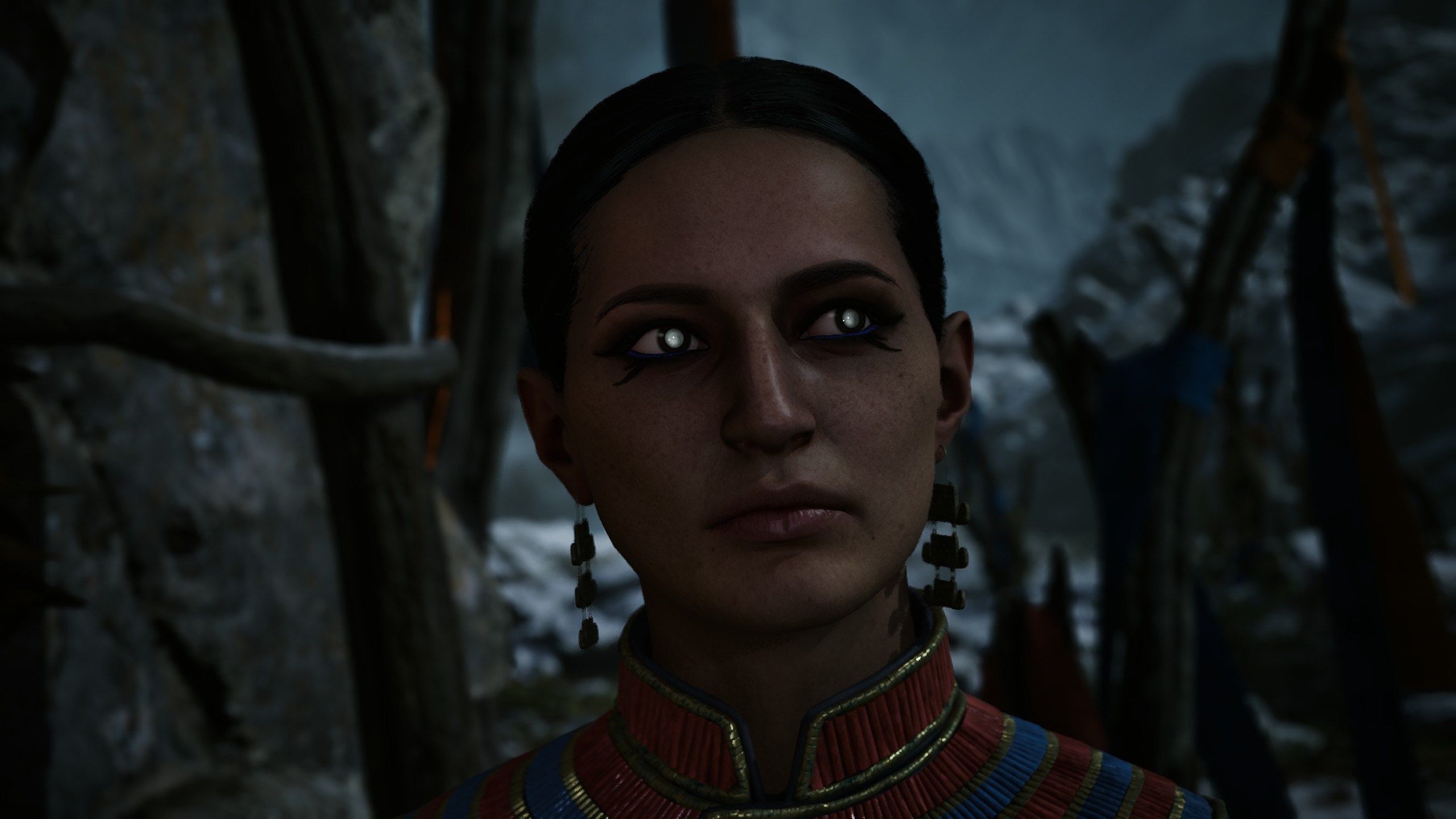
Blood of Dawnwalker is an effective piece of worldbuilding and storytelling then, but it doesn’t make good on its promise as an innovative piece of RPG design. Maybe Rebel Wolves worried that too many players would fall afoul of the passage of time and thus loosened its severity. Certainly, the prologue implies a greater role for this system than what eventuates. In the end, Dawnwalker doesn’t have the courage to allow this system to show its fangs. I feel like if it did, we’d have a modern classic on our hands.
It also suffers some commonplace open world trappings. There are lots of icons denoting almost identical tasks. There are Ubisoft-style towers to scale. The freedom of fast travel tends to diminish the scale of the world with time (why doesn’t fast travel incur a time cost?).
But I mention these shortcomings out of a sense of almost begrudging responsibility: despite its obvious indebtedness to The Witcher, The Blood of Dawnwalker is a distinctly dismal horror RPG whose unyielding darkness and sense of benighted adventure will leave more of an impression than any of its flaws. I hope this series gets the chance to return with a fiercer appetite for my blood.