
If you need to build yourself a PC, you will want as much freedom to be creative as possible, and Formula V’s Air Power G10 not only promises some neat ways of messing with its layout, but comes with a whole heap of fans and a sweet aesthetic at the same time.
But alas, there’s a big elephant in the room here in the form of its PSU space, and its ‘almost budget but not quite as budget as other budget cases’ price point makes it awkward when you consider the white variant is $10 more than the Black, Black Rose, and Wooden models. There’s a lot here to love, but just enough to loathe that it’s not a go-to “cheapish” case pick.
Buy if…
✅ You don’t want to buy more case fans: The Power G10 has five 120 mm case fans, which is good enough that you won’t need any more.
Don’t buy if…
❌ You just want a white build: The likes of Corsair offer cheaper white cases.
❌ You have a chunky PSU: With a max size of 160 mm, this case can’t fit the chunkiest of PSUs in it.
Features
|
Size |
Mid-tower |
|
Motherboard support |
ATX / Micro-ATX / ITX |
|
Dimensions |
235 × 500 × 489 mm |
|
Maximum GPU length |
420 mm |
|
Radiator support |
Up to 360 mm (top) |
|
PSU support |
ATX 160 mm |
|
Fan support |
3 x 120mm (front), 3 x 120 or 2 x 140 mm (top), 2 x 120 mm (bottom), 1 x 120 or 1 x 140 mm (rear), 2 x 140 mm (side) |
|
Fans included |
5 x 120 mm (three front, one bottom, one rear) |
|
Storage bays |
1 x 3.5-inch and 2 x 2.5-inch |
|
Front panel |
1 x USB Type-C, 2 x USB 3.0 Type-A, 1 x audio jack |
|
Price |
$100 for White, Black Titanium, and Dark Blue / $90 for Black, Black Rose Gold, and Wood |
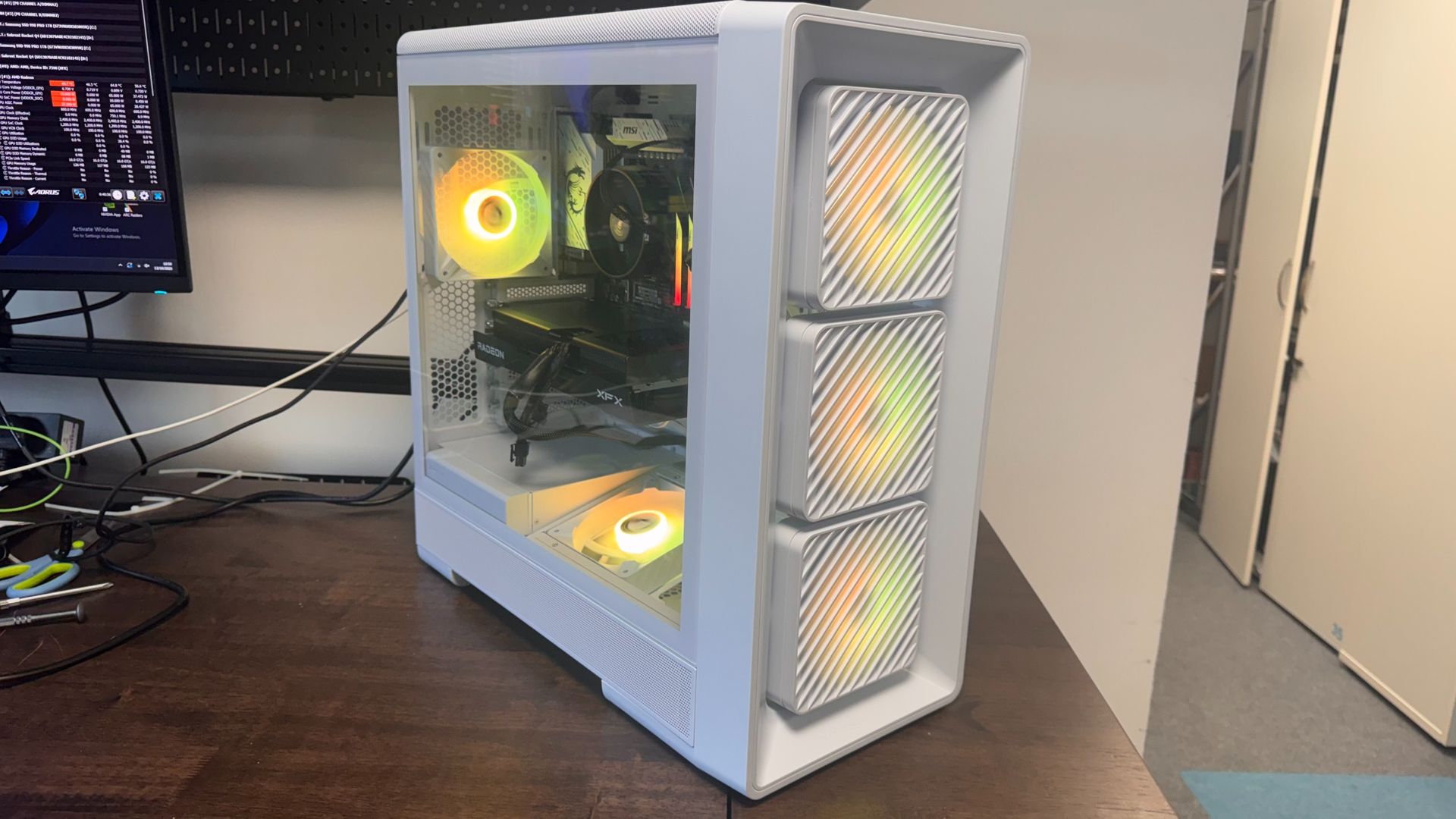
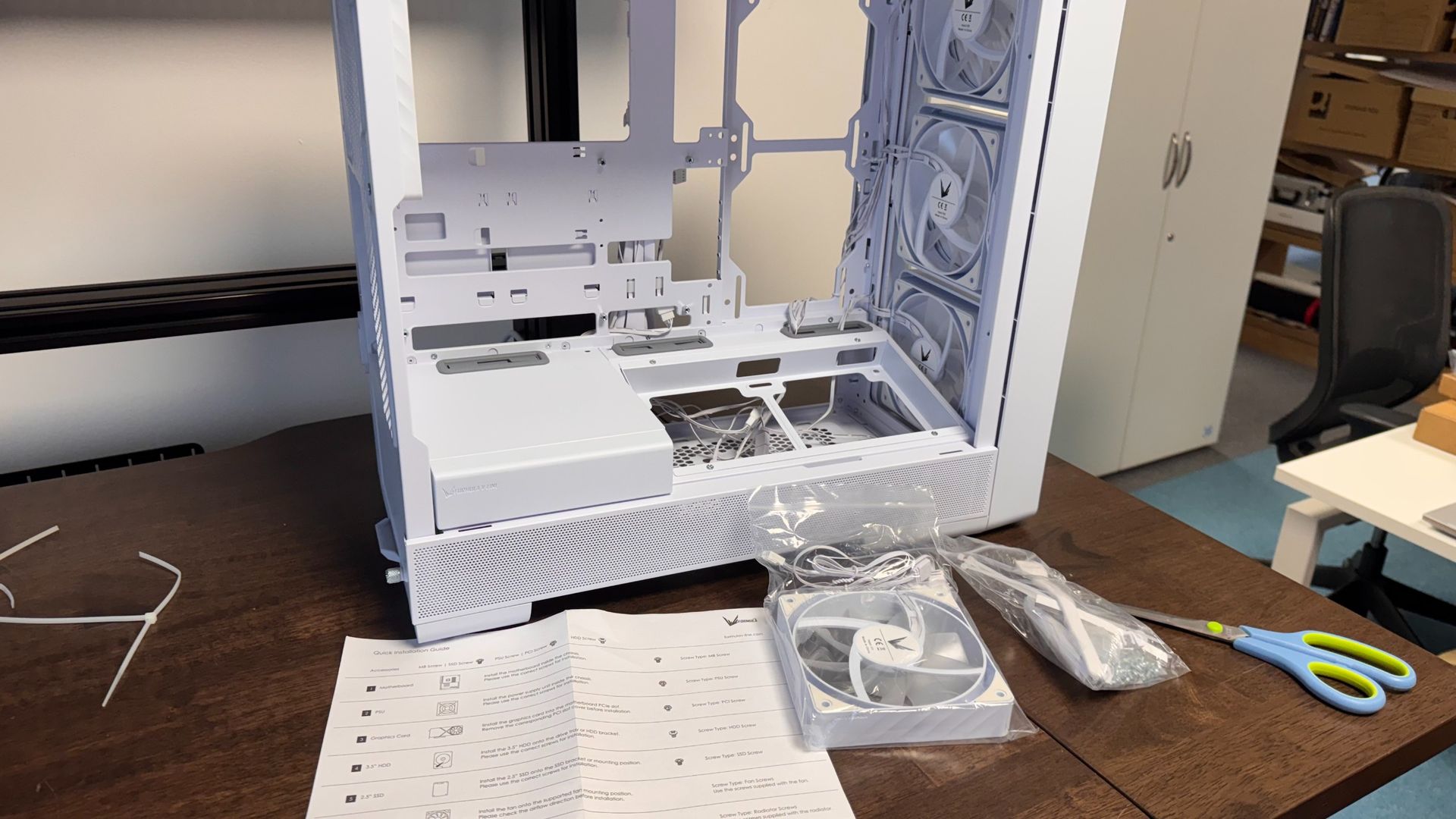
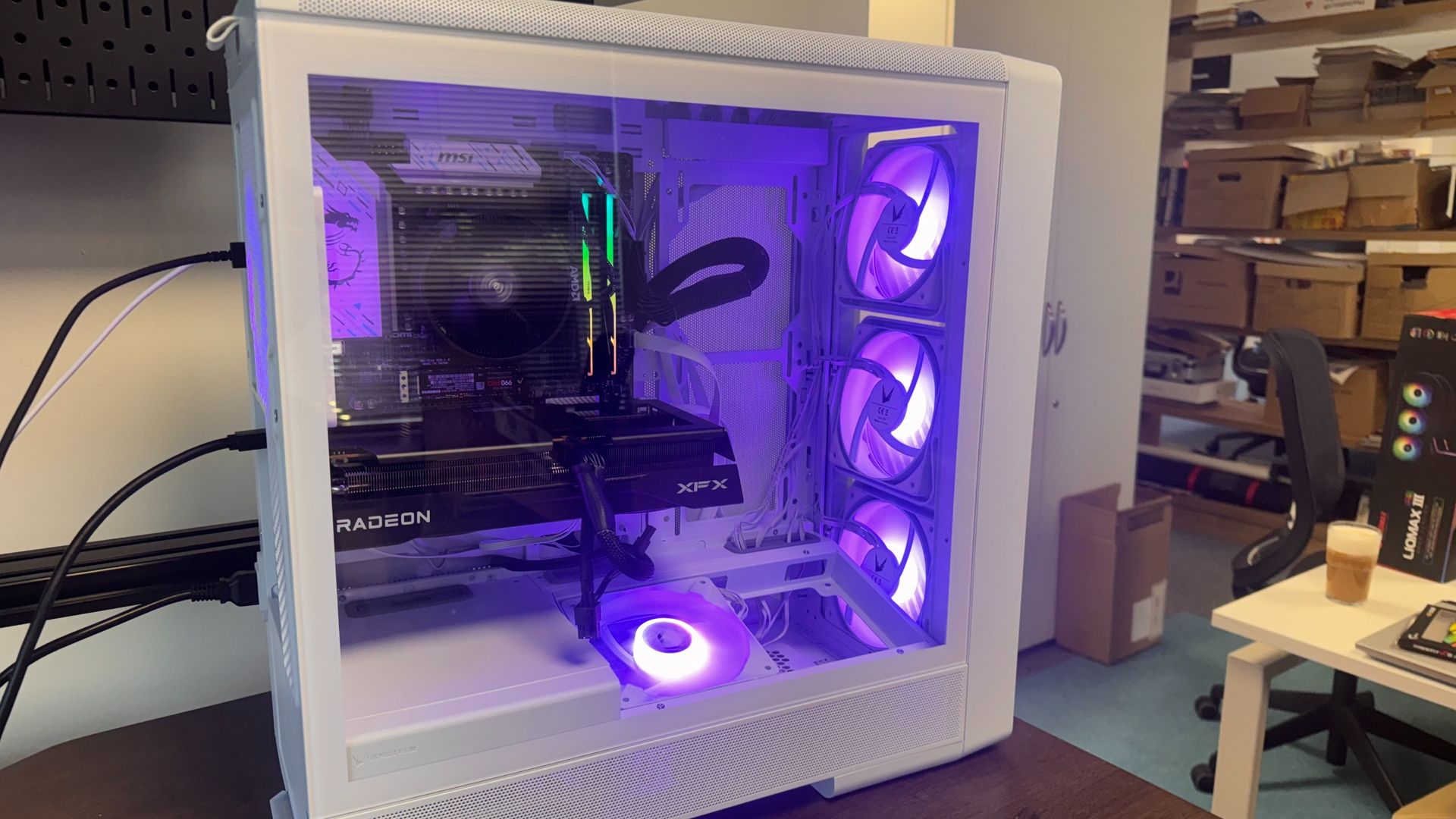
The Air Power G10 is interesting in a few ways. First, it has three 120 mm fans pre-installed at the front that are able to swivel up and down. They come with dust filters too, which is a nice touch. These are daisy-chained around the back of the case, which means you can simply connect these to the rear fan and bottom fan (all of which are included in the box), then into your motherboard.
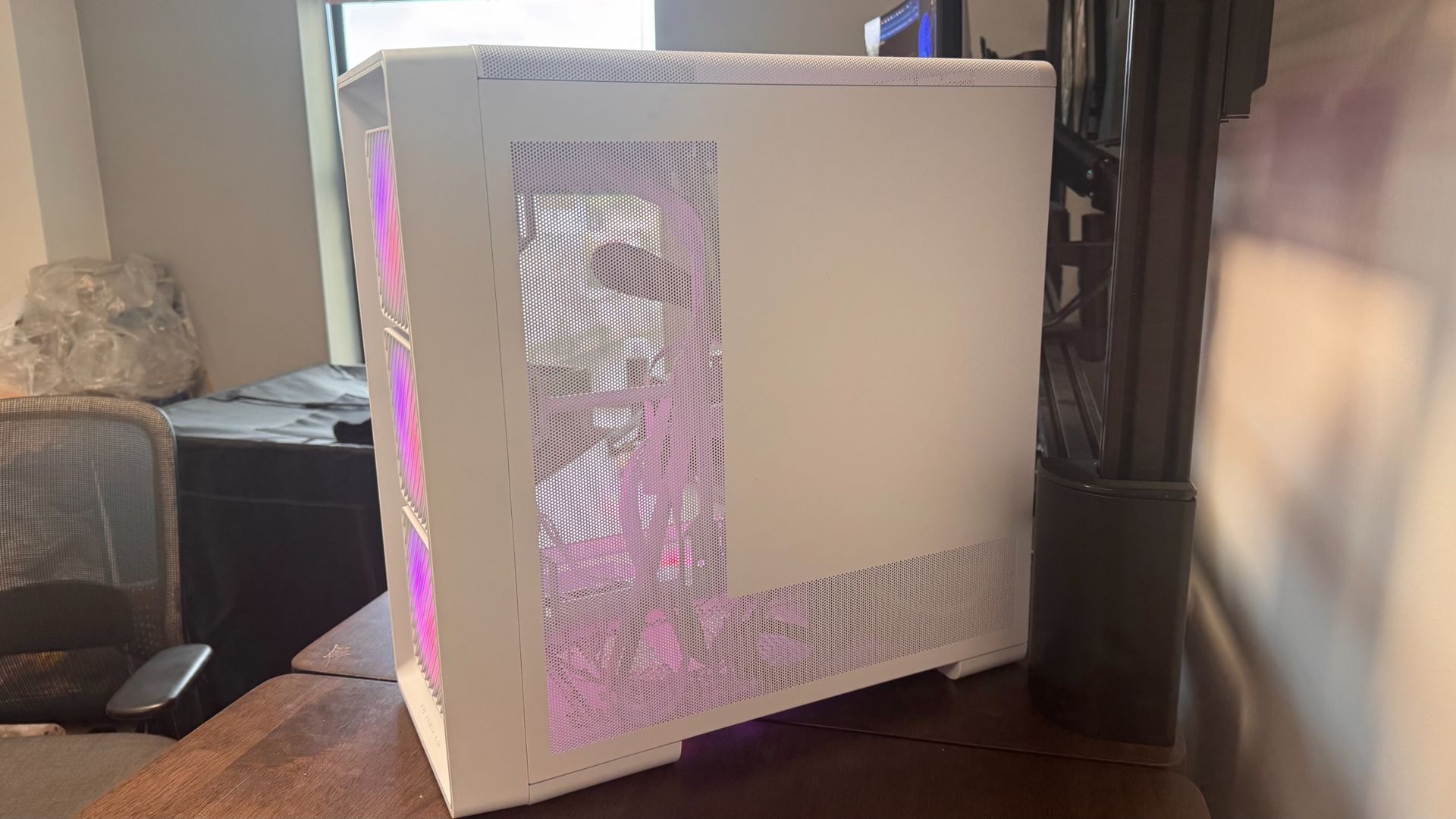
You can take the front, top, and sides off the G10 without any tools; with tools, you can take off the PSU shroud and swap it with the bracer on the bottom for the rear fans. This is a relatively niche bit of customisation, but should you need to swap around the PSU position or want your fans pointing directly under the graphics cards, it’s pretty simple to do so.
Formula V provides the 3D design files for the front panel. With these, you can design and attach your own panels and fan braces. I like a lot of the decisions made with the Air Power G10, and building a PC in it is not only easy but even rather fun thanks to a decent amount of open space and convenient access.
Installation
If you have the right PSU, installation in the Air Power G10 is super easy. That’s a pretty big if, though. In the box, you get three front fans preinstalled and daisy-chained. You also get a back fan pre-installed, then one bottom fan, which is not installed. Simply connect the three back fans to the front fan and the bottom fan, then plug them into your motherboard, and you are good to go.
The case only supports PSUs up to 160 mm in length, which means many power supplies we had on hand simply would not fit in it. I tried with the Be Quiet! Dark Power 12, and Dark Power Pro, as well as the Cooler Master V1000. These three are bigger than the 160 mm Formula V advertises the Air Power G10 can fit, but it means you can’t just grab any old PSU and throw it in. I had to shrink down to the Corsair SF600, a small-form-factor power supply, to get it hooked up with what we had in the office.
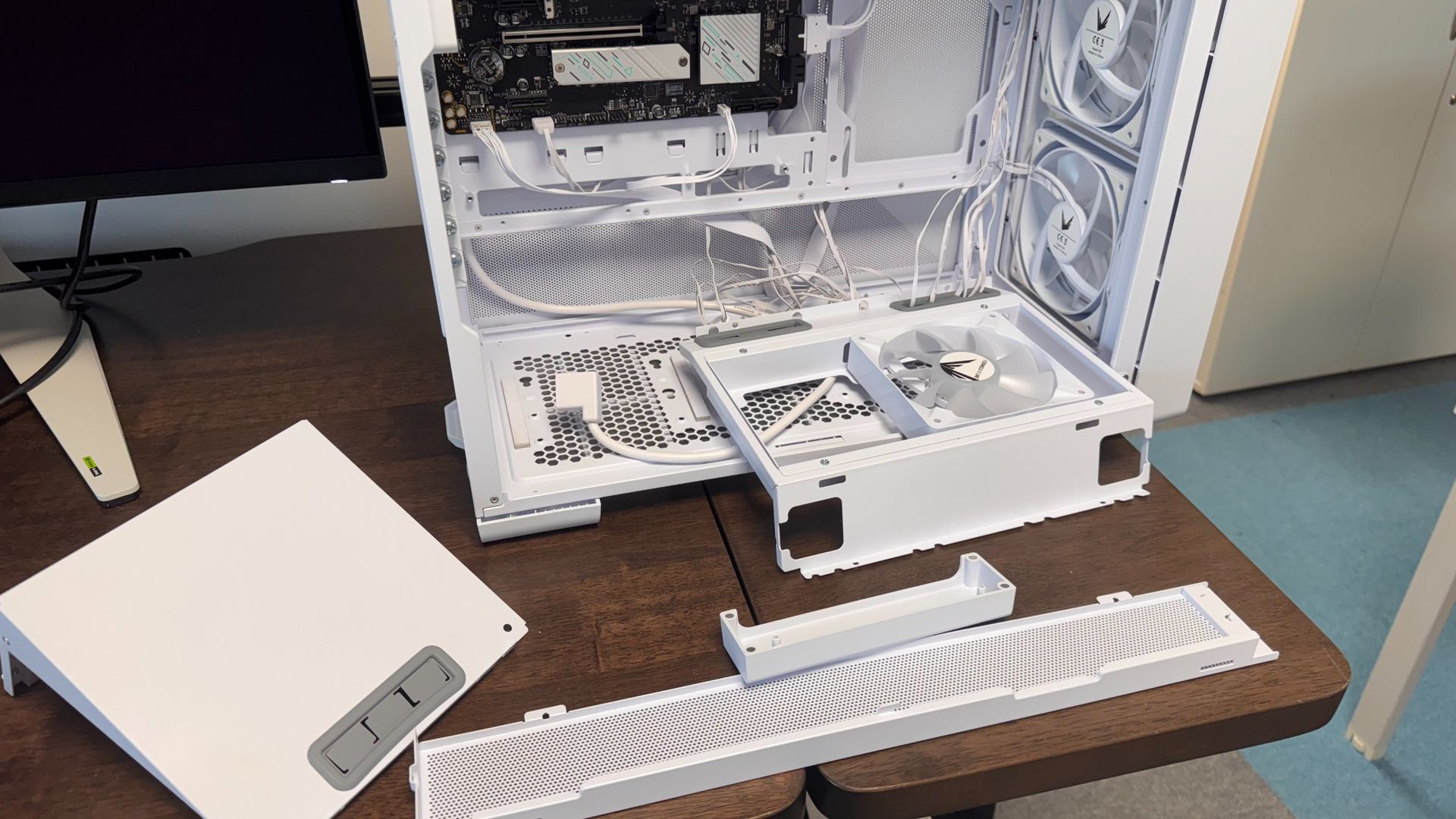
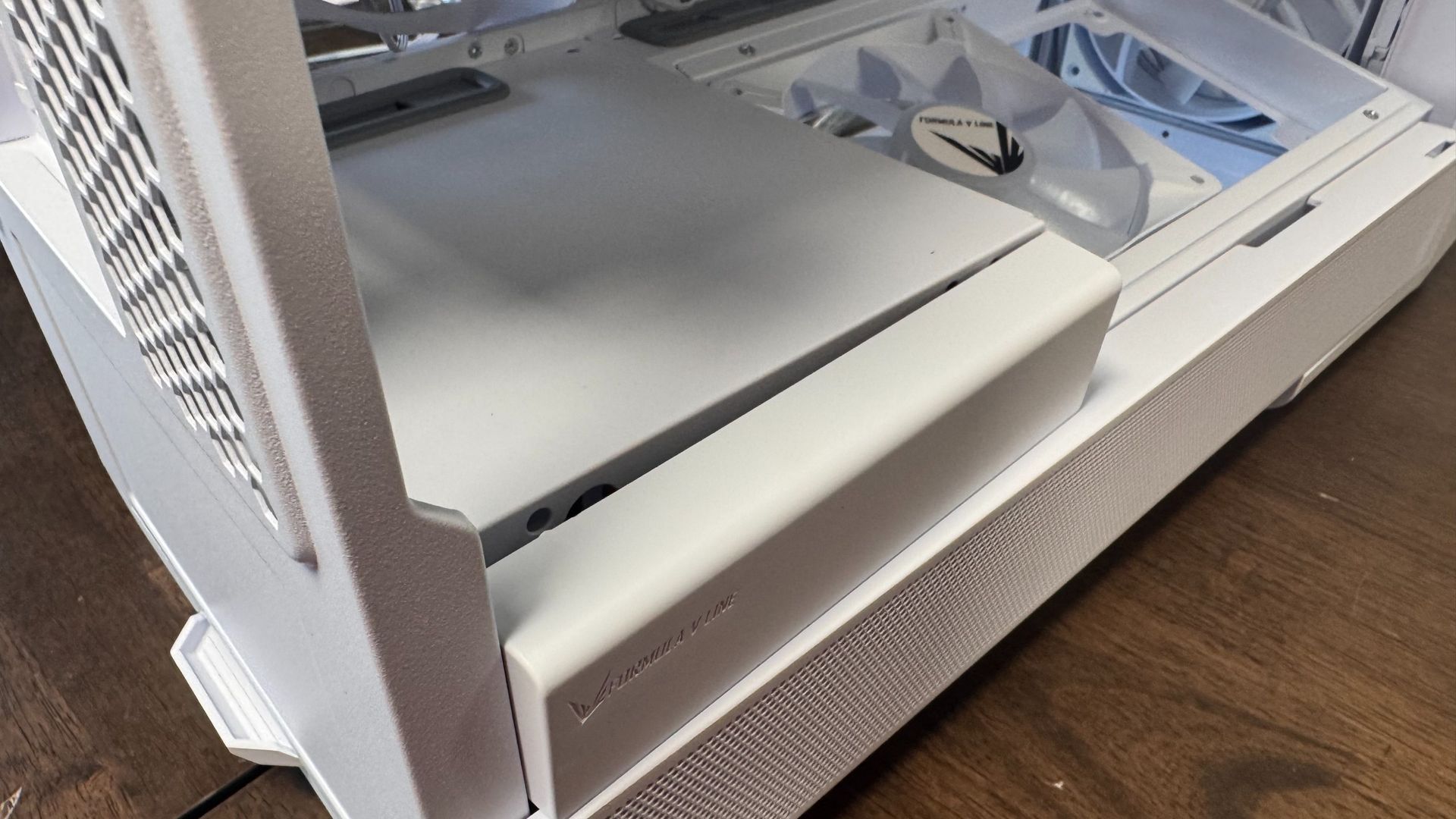
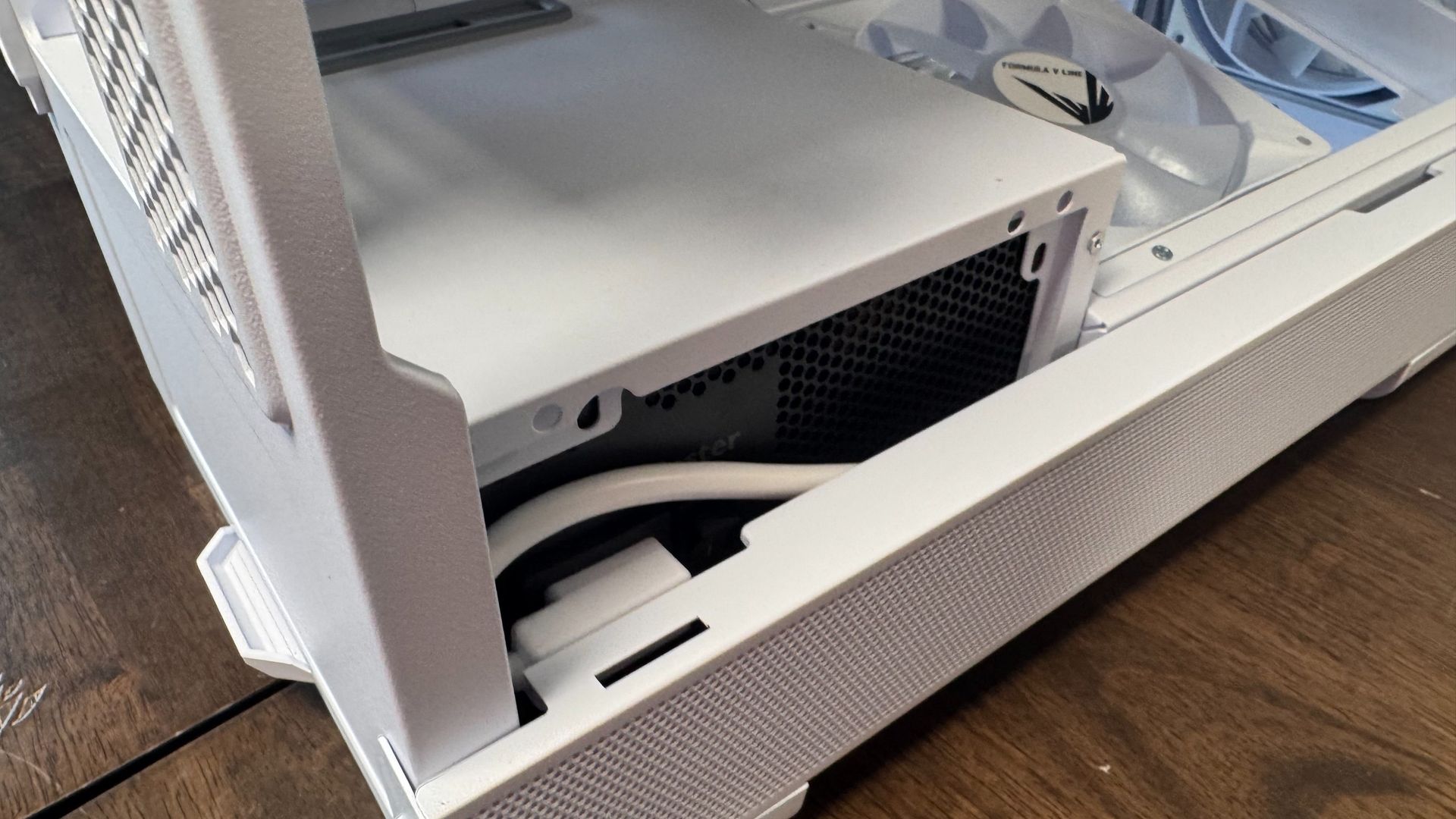
You can take off the shroud above it, but that only gives the PSU some unnecessary headroom; it doesn’t give much more length. And an exact 160 mm or less is a pretty tight squeeze, especially when you consider some PSU cables can be rather chunky and might have to be pressed against the side of the case for prolonged periods of time.
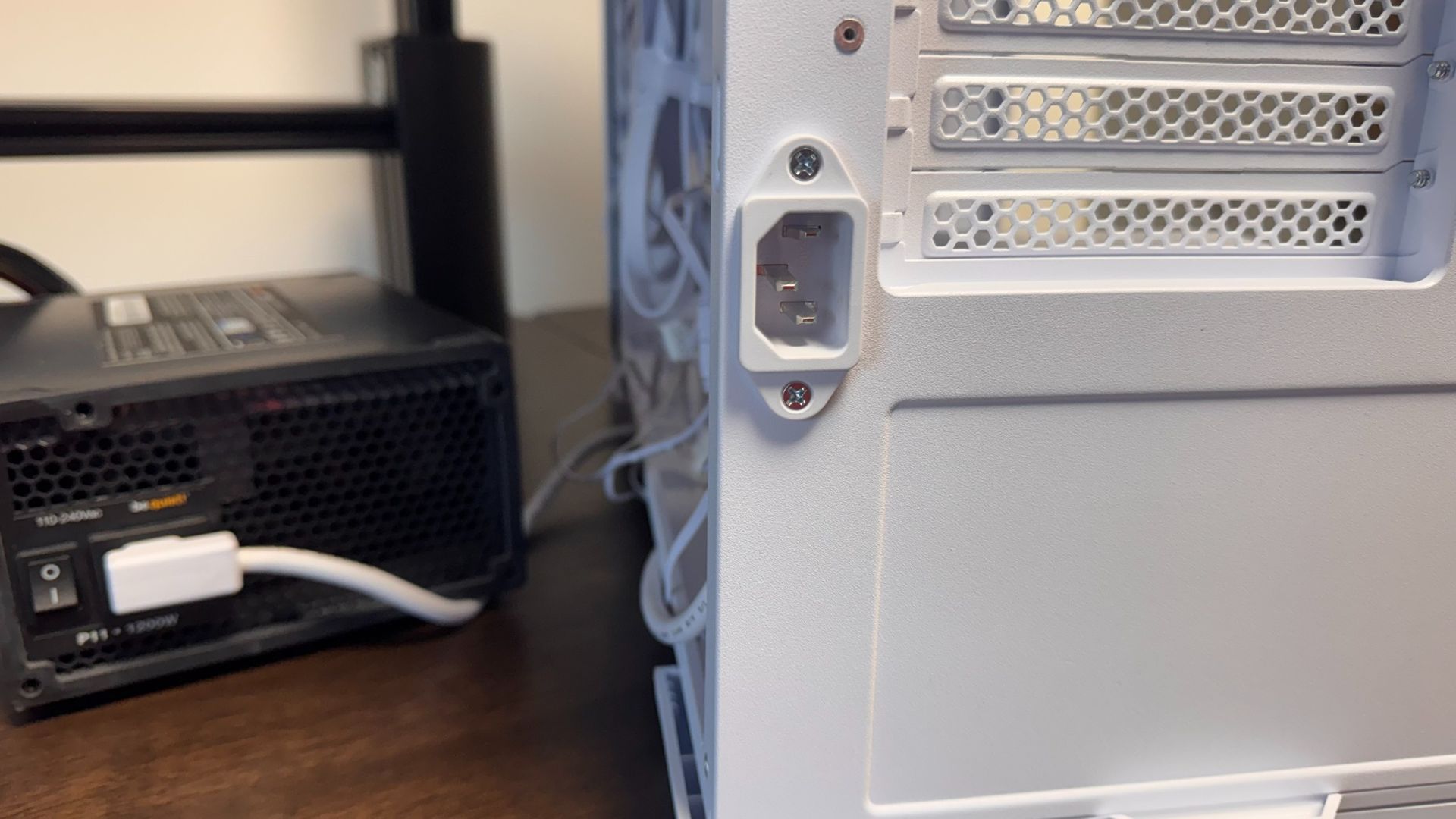
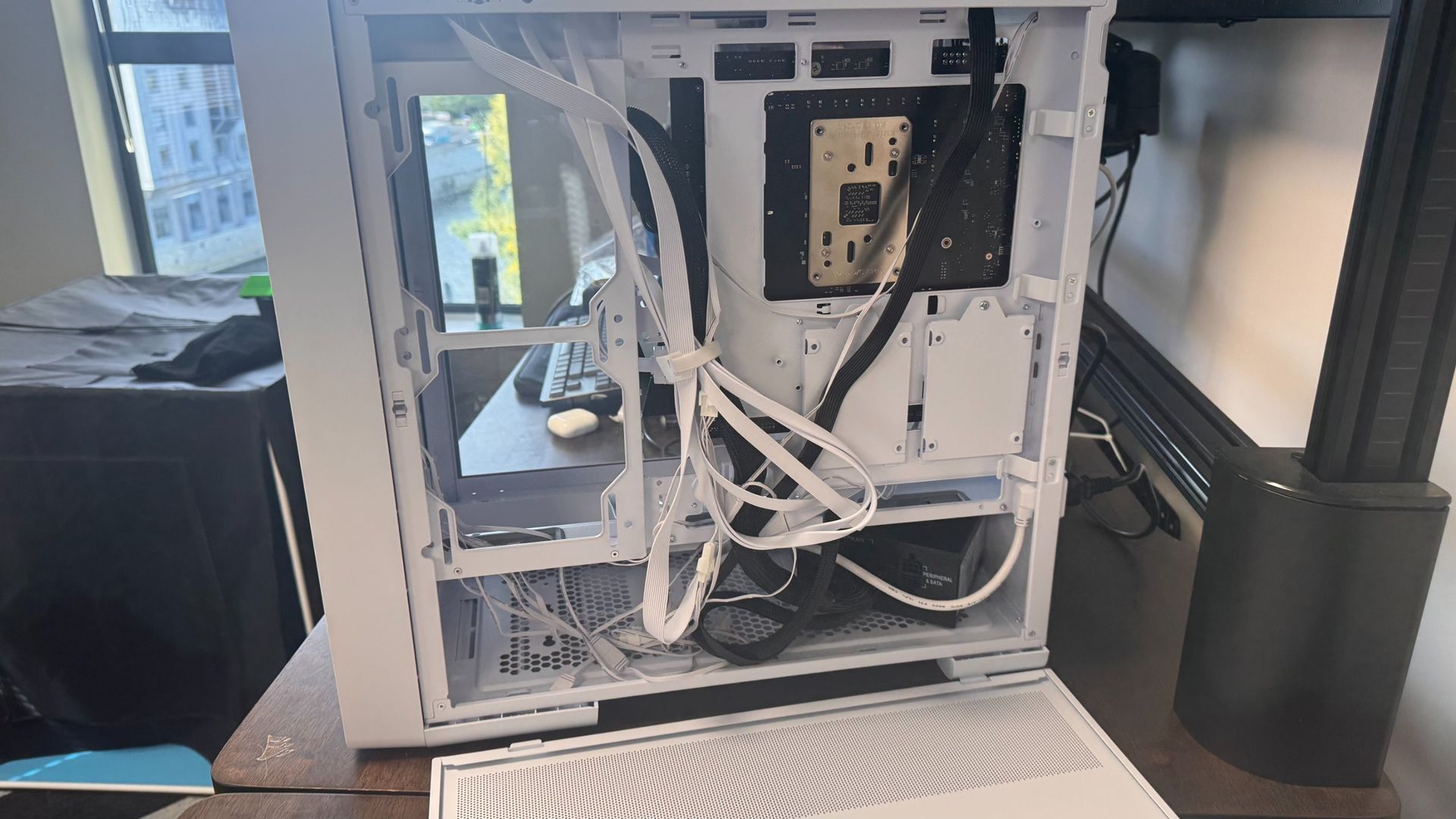
The case comes with a neat power cable that hooks from the back of the case underneath the rear fans, and then near the front to get to the PSU. This means your power cable will be colour-coded with your rig, but it also means you have to swap the PSU section and bottom fan shroud if your PSU power port is on the wrong side. You can take out this cable, but it leaves a big gap at the back of the case, which cheapens the clean aesthetic of the build.
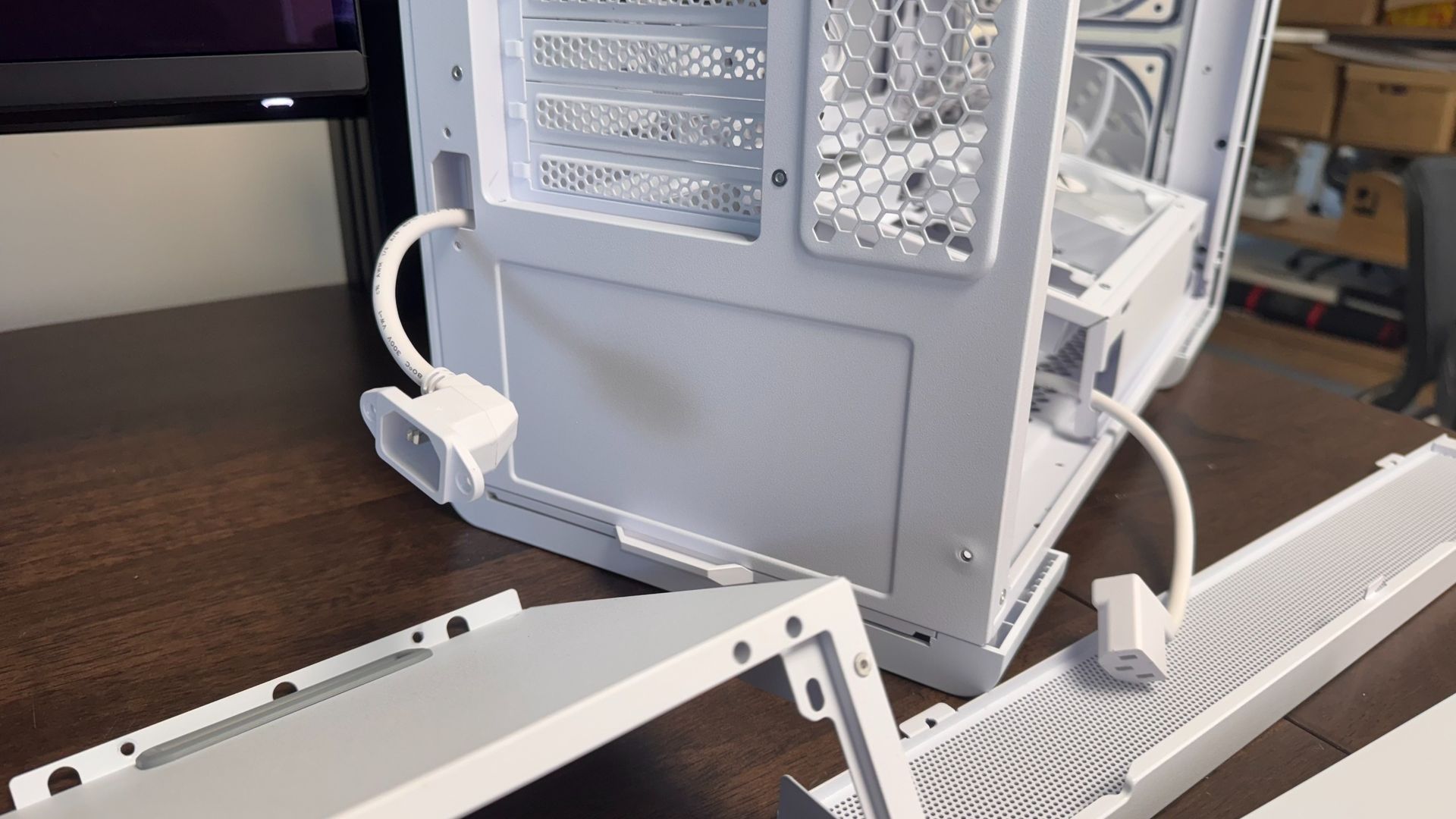
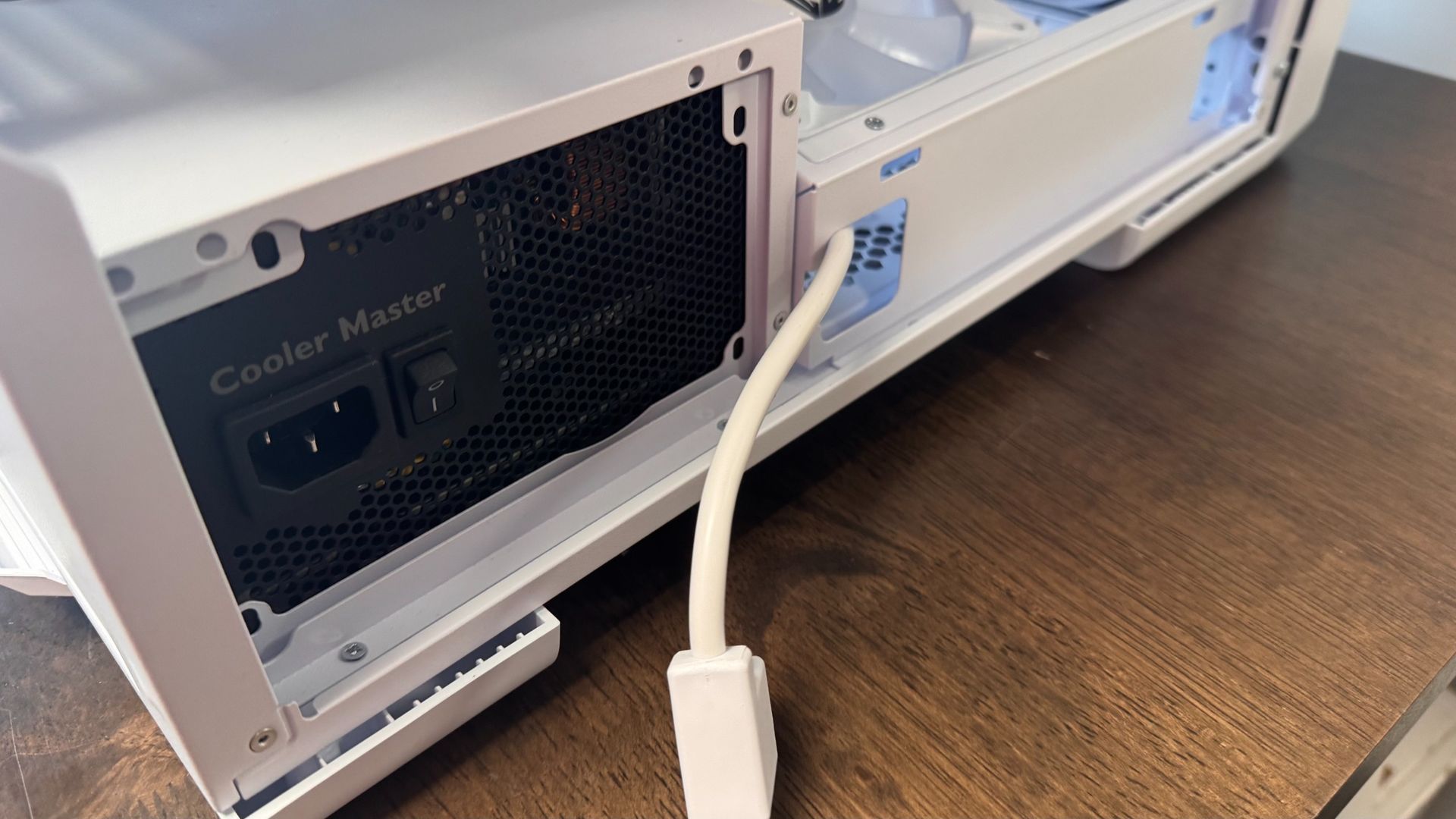
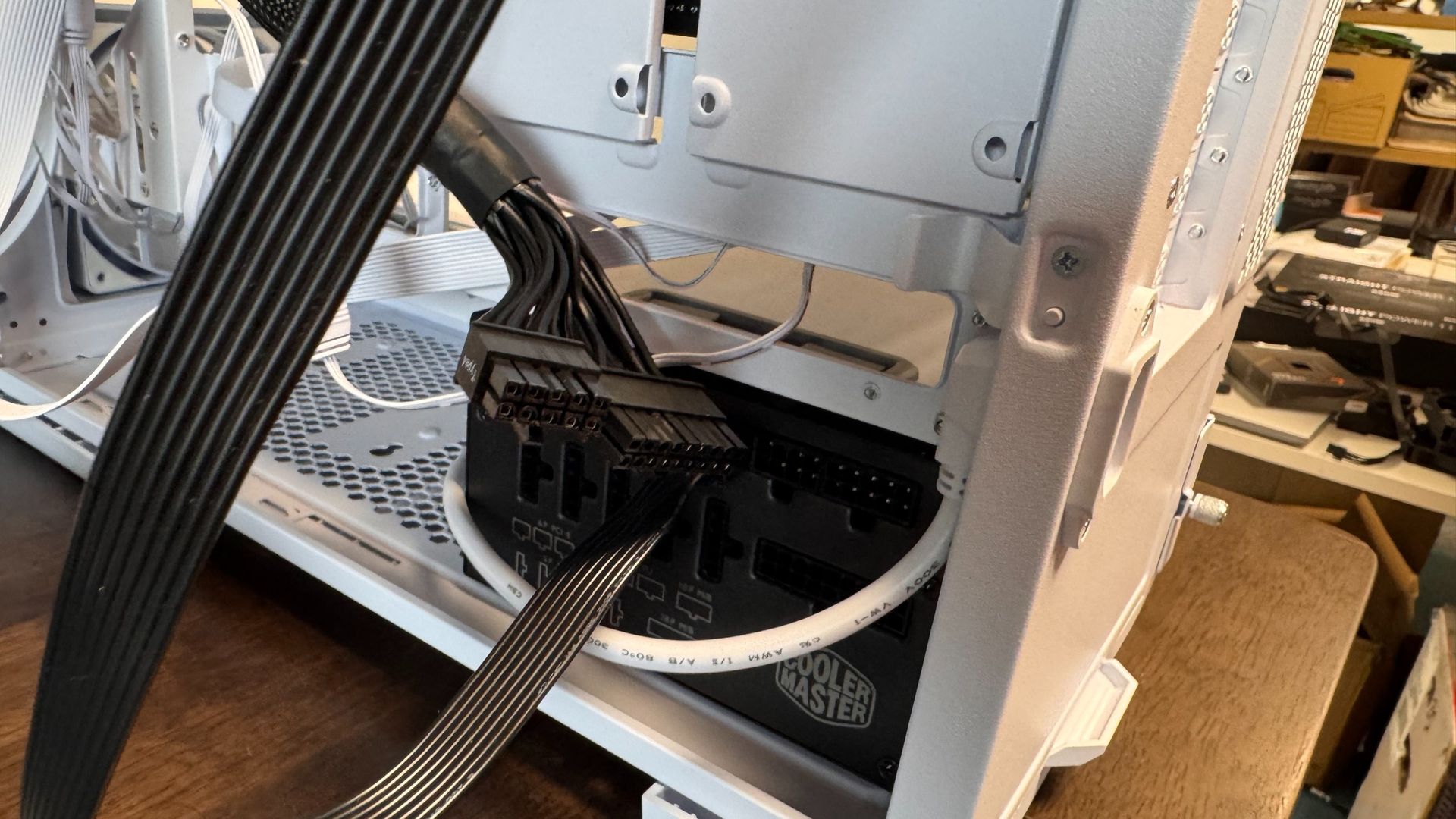
Given you can open up the case from almost every angle but the back without any tools, I found myself only using the screwdriver in very select cases, like fastening the motherboard and kitting the AMD stock CPU cooler. You do need a screwdriver, but only sparingly, which also means having to keep track of fewer screws as you build.
PSU problems out of the way, the G10 has plenty of empty space in the back for cable management, and there are a couple of ties in the box once you’re happy with it all. I’m no cable management pro, but I managed to get it looking tidy enough in a short amount of time. A big benefit of the three front fans being preinstalled is that they’re relatively plug-and-play.
Aesthetics
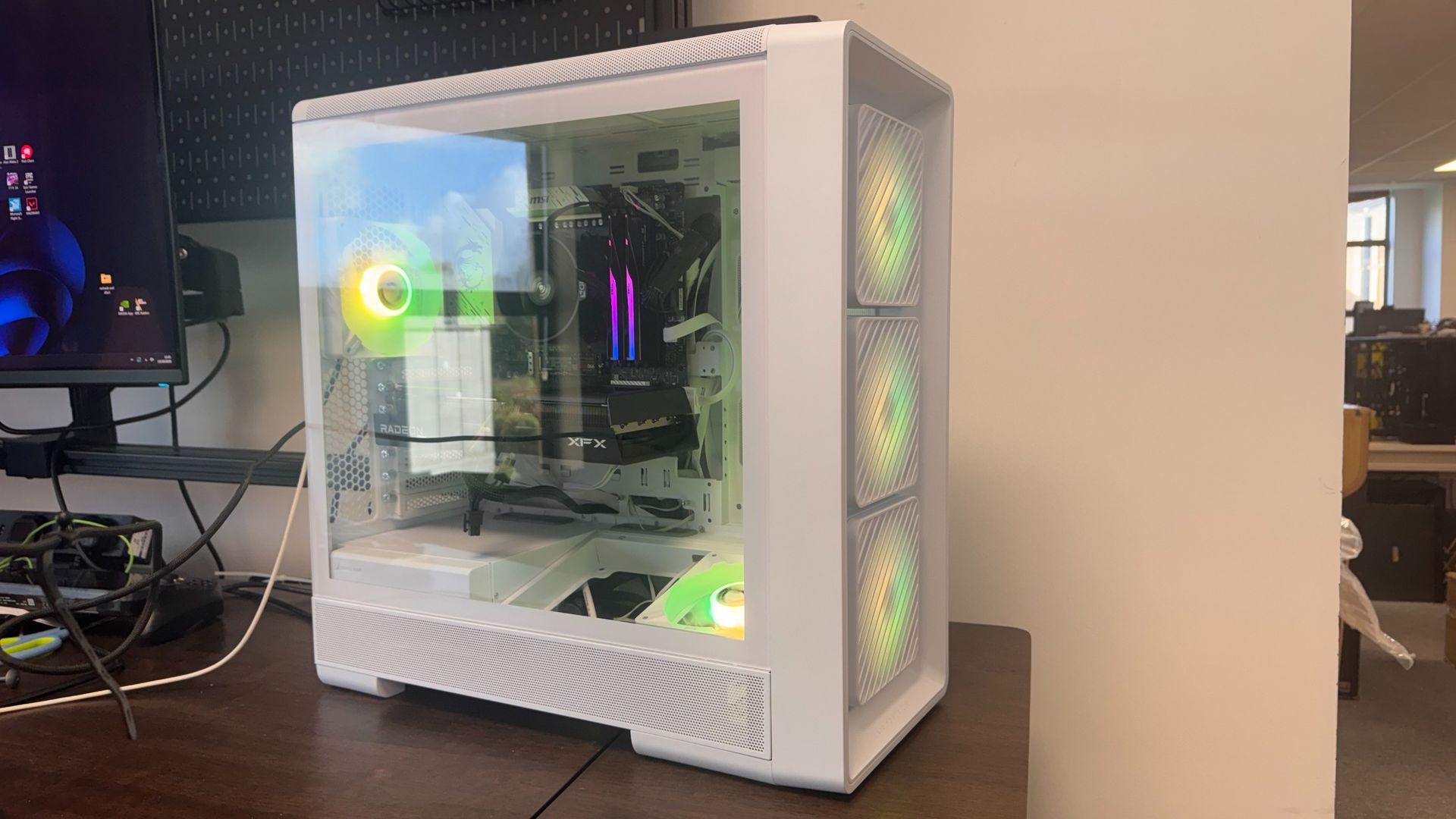
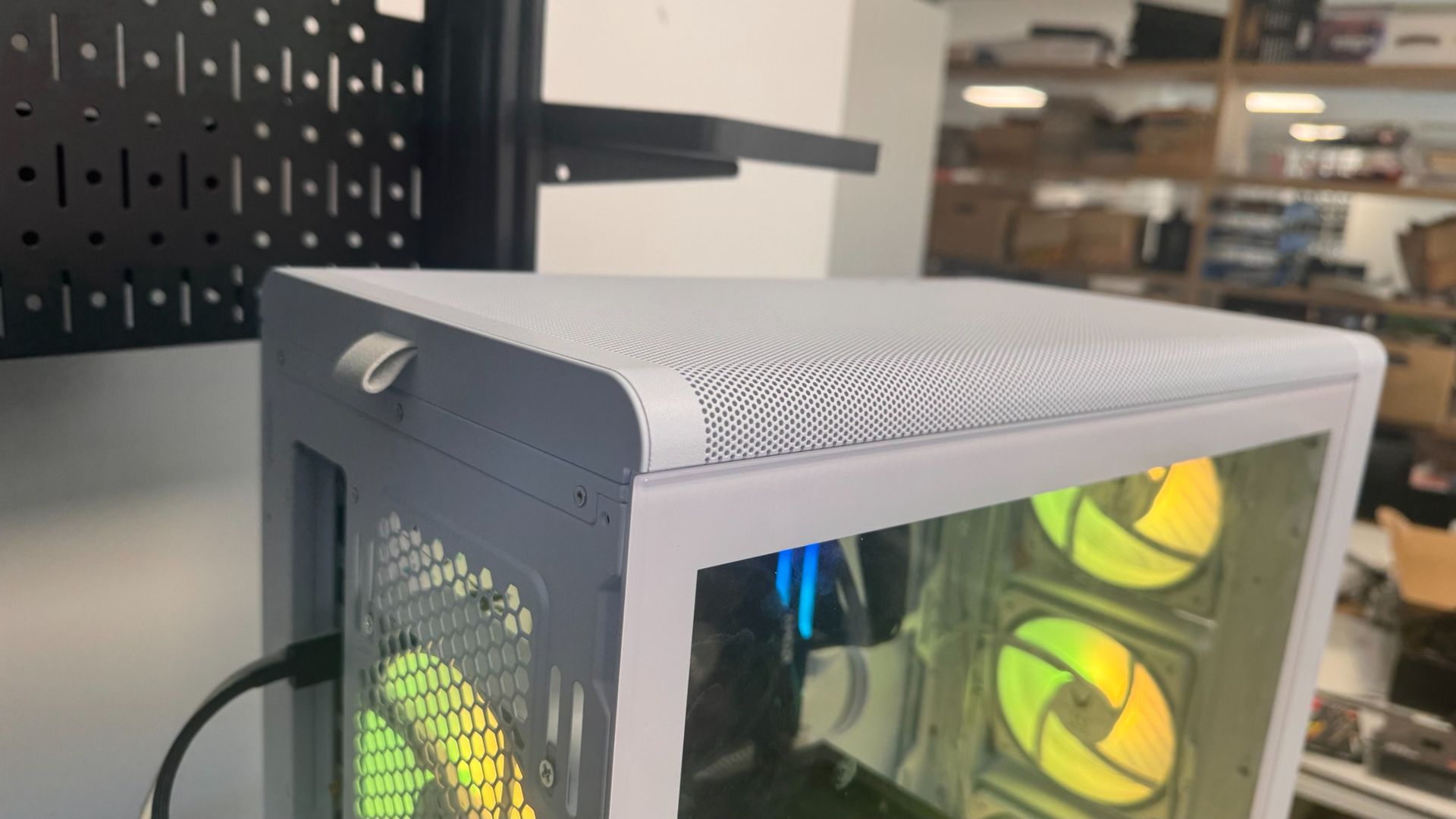
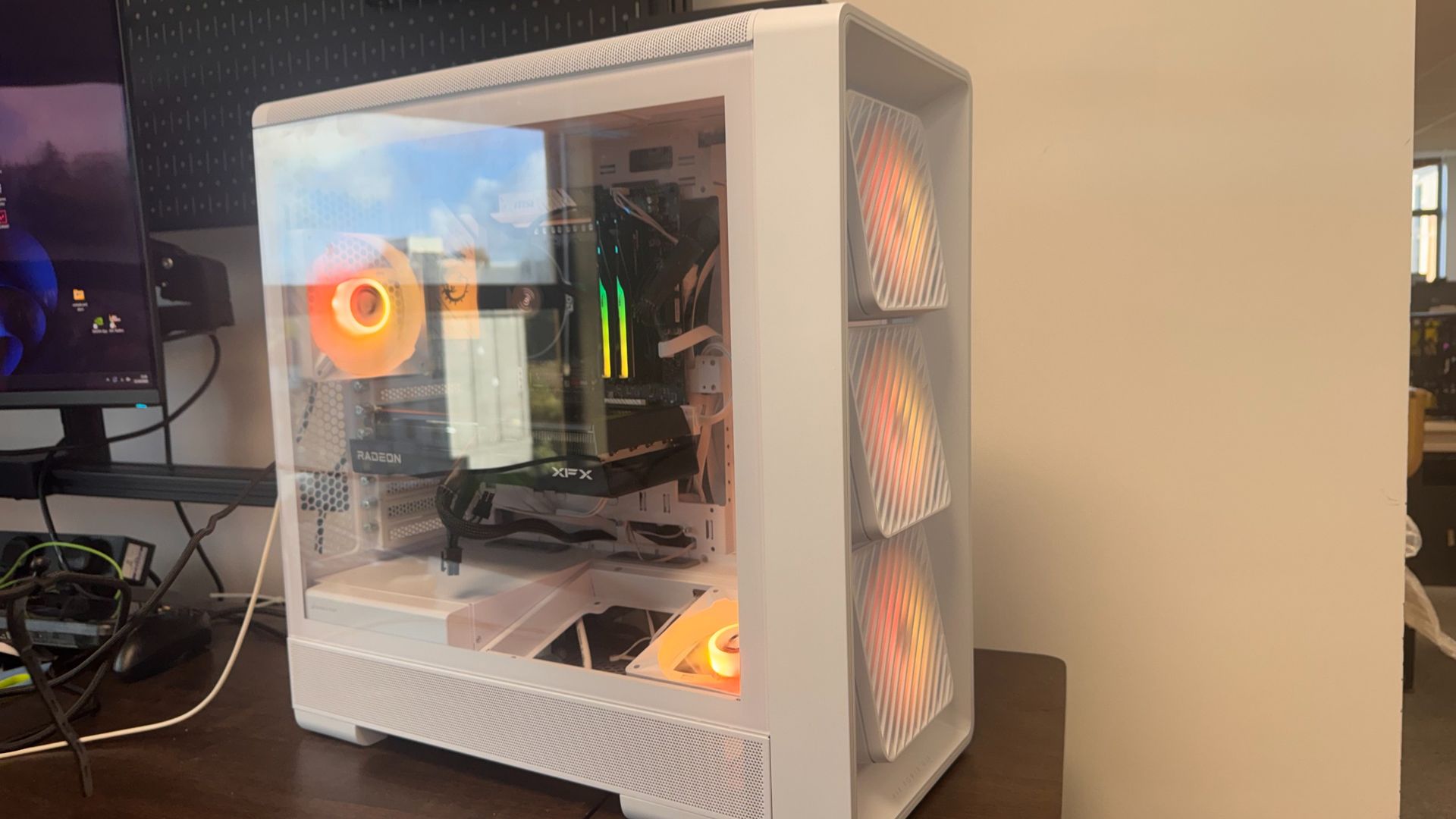
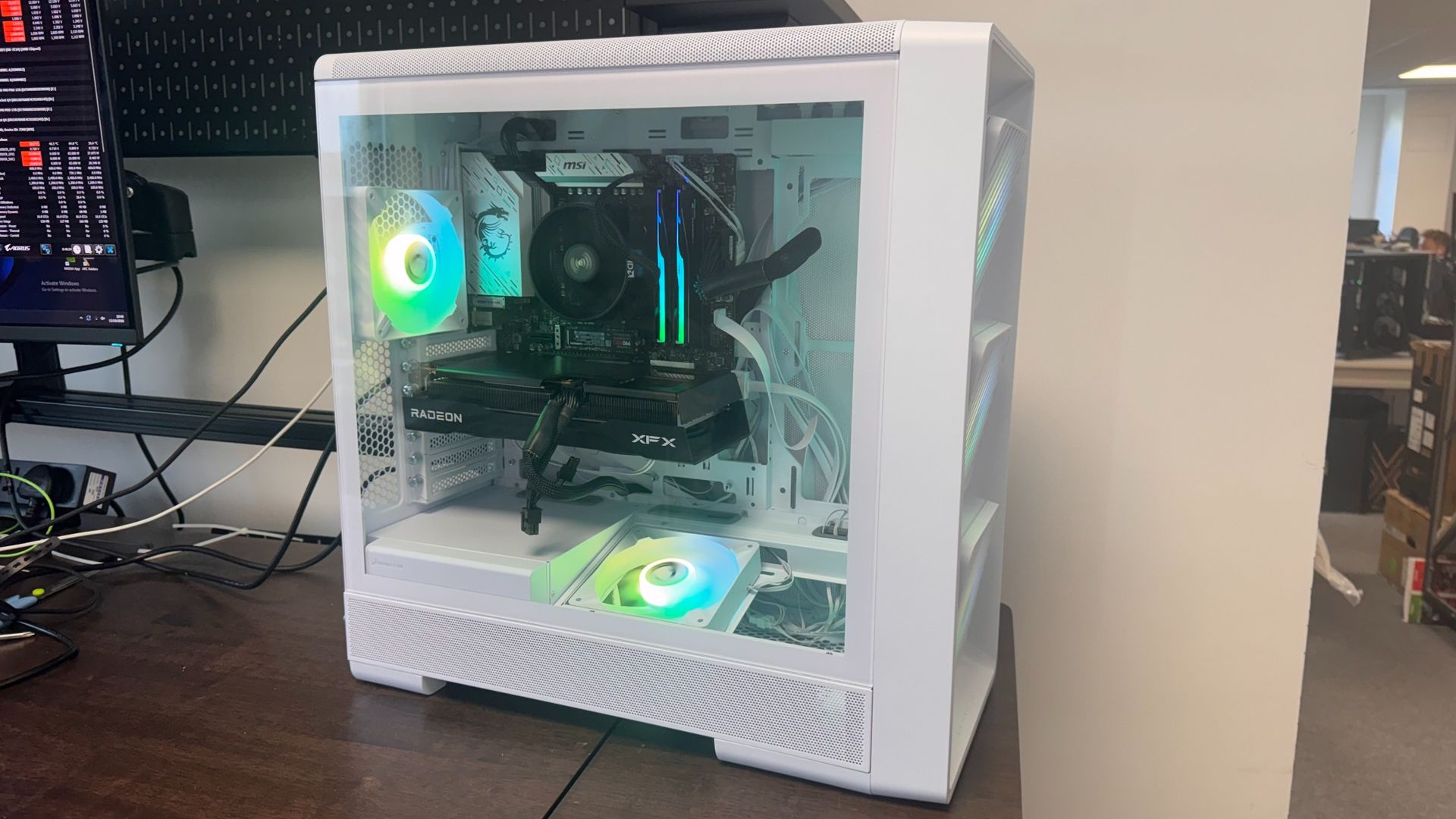
Aesthetics are the name of the game with the white model I got my hands on, especially when you consider it fetches $10 more than some of its non-white counterparts. And for that, it does look pretty sweet. The white steel is only ever disrupted by the silver of the screws, and they look tidy in application too. The top even has a small leather-like handle.
It is a lovely-looking case that looks even better when all the fans are spinning (assuming you daisy-chained it correctly).
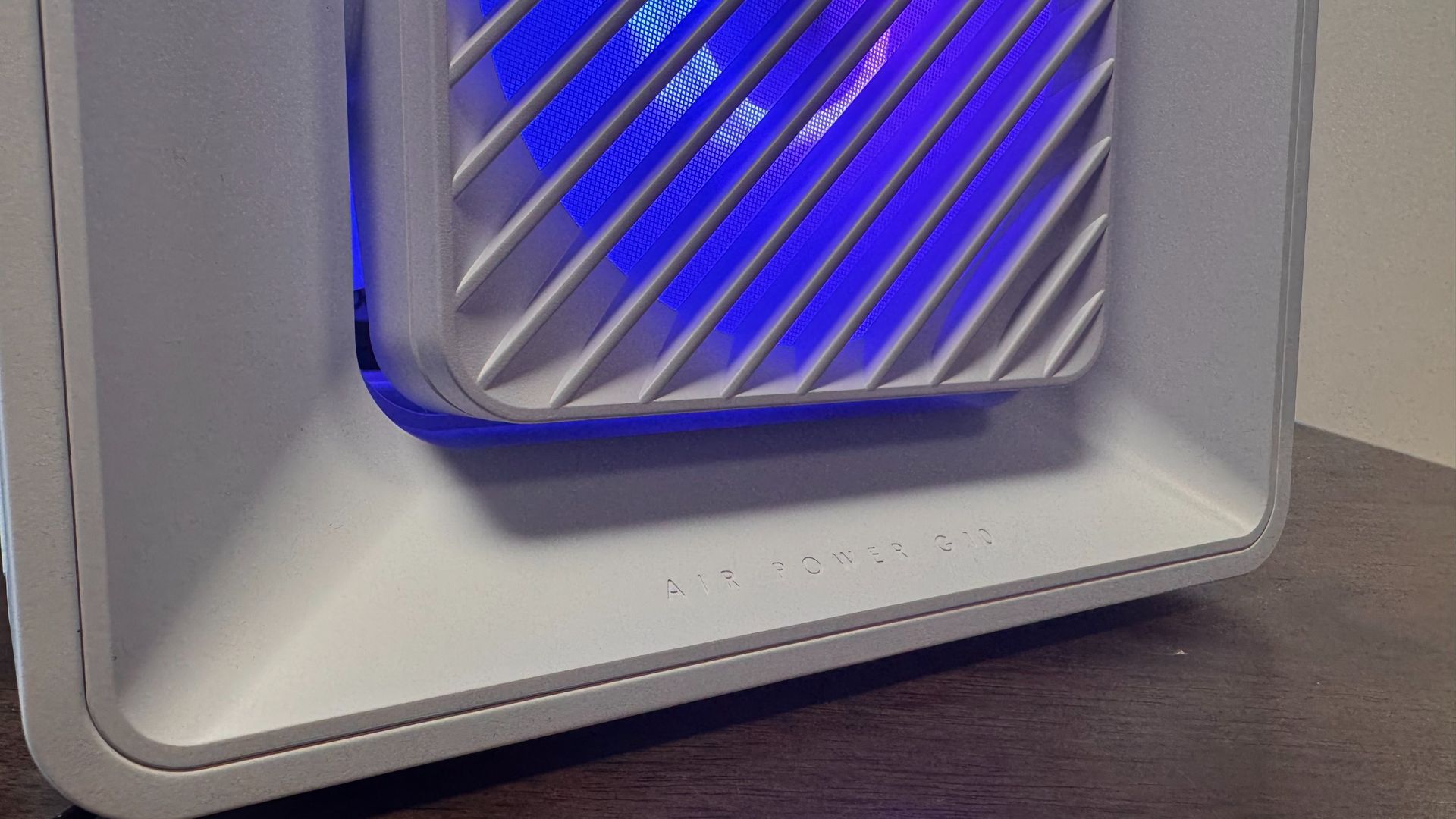
I didn’t even commit to an all-white build, and still found myself casually staring into its pretty spinning fans on more than one occasion. I even quite like the three-fan front panel, and its RGB lighting. It’s sunken into the front panel, but sleek enough to look quite clean. The Air Power G10 manages to look like its own unique case without getting ugly in the process, which is an impressive feat.
Thermals
Formula V Line Air Power G10 Temperatures
Recorded with only the case fans that come with the G10 and a stock AMD CPU cooler
Max
Minimum
Average
| Product | Value |
|---|---|
| Formula V Line Air Power G10 | 64.8 Max, 56.4 Minimum, 59 Average |
Max
Minimum
Average
| Product | Value |
|---|---|
| Formula V Line Air Power G10 | 91 Max, 81 Minimum, 75 Average |

The rig I built was kitted with an AMD Ryzen 5 7600X, an XFX Swift AMD Radeon RX 9060 XT, 32 GB of memory, and two SSDs. Thanks to it being a large case and coming fitted with five 120 mm fans, the Air Power G10 has some rather solid temps. In a whole suite of gaming tests, the 9060 XT only ever got to a maximum of 64.8 °C and an average of 57 °C.
The CPU, on the other hand, got up to a max temperature of 91 °C, with an average of 81 °C. That’s pretty high, but not the fault of the case. I stuck a simple stock AMD cooler on the CPU, and a 360 mm cooler up top would keep those CPU temps down. Still, airflow is solid in the case with the fans set to the positions Formula V intends (three on the front, one in the rear and one on the bottom).
Though I noticed a shift of about a degree on average when pushing the front fans up or down, that’s well within the standard deviation, so I’d say it makes little to no difference which way you point them. You could perhaps get slightly better cooling out of a specific angle when you place the PC near a breeze or on the other side of a fan, but I’d recommend making your rig as uncomplicated as possible.
I also noticed the GPU temperature going up ever so slightly when pointing the bottom fan back towards the PSU, which is, again, within a standard deviation.
Value
$100 for the white variant pushes the Power G10 just out of budget and instead into ‘slightly above budget’ in my book. The Corsair 3200D is $30 less, supports PSUs up to 180 mm (though it has a slightly smaller GPU space), and it even comes in white too. It only comes with three Corsair RS120 fans, but for that $30 difference, you could pick up a five-pack of Arctic P12 Pro to add to the party. They’re not hard to pick up for cheap on Newegg or Amazon either.
For $20 more, you can pick up the excellent Phanteks XT View Matrix (which also comes in white), and this one also comes with three pre-installed 120 mm fans. This is all to say there isn’t a shortage of sweet white cases.
The Air Power G10 is certainly unique enough in the looks and modularity department to intrigue me, but it’s not cheap enough that it’s automatically worth a punt with its flaws, and It’s no longer super difficult to get a pretty white case for cheap.